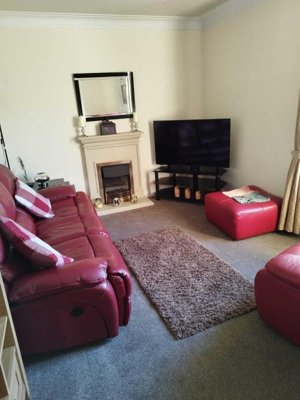
Browse 17 rental homes to rent in Workington, Cumberland from local letting agents.
£685/m
10
0
48
Source: home.co.uk
Source: home.co.uk
Terraced
3 listings
Avg £650
Flat
2 listings
Avg £613
Apartment
1 listings
Avg £695
Bungalow
1 listings
Avg £800
End of Terrace
1 listings
Avg £630
Ground Flat
1 listings
Avg £795
Semi-Detached
1 listings
Avg £975
Source: home.co.uk
Source: home.co.uk
The rental market in Workington benefits from the town's position as a major centre of population in West Cumbria. Property prices in the area show significant affordability compared to national averages, with homedata.co.uk reporting an average sold price of £131,166 over the past twelve months and home.co.uk indicating an overall average of £149,263. This lower purchase price environment translates into more accessible rental levels, making Workington an attractive option for tenants seeking value without compromising on connectivity to employment centres. The CA14 3 postcode area, which covers much of Workington, has seen house prices grow by 6.4% in the past year, suggesting continued demand that supports the rental sector.
Property types available for rent in Workington span the full range of housing stock found in the town. Terraced houses dominate much of the residential areas, reflecting the historical industrial development of the area during the coal mining and steel-making era. Semi-detached properties provide family accommodation in established neighbourhoods, while detached houses offer more space in suburban locations. Flats above commercial premises in the town centre and purpose-built apartment blocks serve those seeking lower-maintenance urban living. Recent new build developments including Solway View by Persimmon Homes at Marsh Drive and The Rowans by Gleeson Homes at Ashfield Road have added modern options to the rental market, with two, three, and four-bedroom properties available at various price points.
Our inspectors have surveyed hundreds of properties throughout the Workington area, giving us particular insight into the condition of different property types and ages. We find that terraced properties dating from the Victorian period often present different maintenance considerations compared to post-war semi-detached houses or modern new-builds. When evaluating rental properties, understanding the construction era and materials helps predict potential issues such as damp penetration, roof condition, or the presence of original plumbing and electrical systems that may need updating.
The rental market has seen 220 residential property sales in Workington over the past year, representing a decrease of 72 transactions compared to the previous year. This contraction in sales activity can affect rental availability as fewer properties come to market for both sale and rent. Tenants looking for specific property types should be prepared to act quickly when suitable properties become available, particularly for larger family homes or properties in popular catchment areas near good schools.

Workington's character reflects its heritage as a Georgian resort town that grew into a Victorian industrial powerhouse before transitioning to its modern role in the regional economy. The town centre features three designated Conservation Areas that preserve its architectural character: Portland Square from 1974, Brow Top from 1974, and St. Michaels designated in 2002. Within these areas, 58 listed buildings showcase the town's architectural legacy, including the Grade I listed Workington Hall and seven Grade II* structures. The mix of sandstone-fronted Georgian terraces, Victorian terraces built for industrial workers, and later twentieth-century developments creates a varied streetscape that defines different neighbourhoods throughout the town.
The population of Workington stands at approximately 21,275 in the built-up area, with an average age of 45 years that reflects Cumbria's demographic profile as an area attractive to both families and those seeking quieter lifestyles. The town serves as a retail and service centre for the surrounding rural area, with New London Road offering high street shopping and the curvilinear Retail Park providing larger stores. Daily amenities include supermarkets, independent shops, healthcare facilities, and a range of eateries serving the local community. The proximity to the Lake District National Park, accessible via the A66 and A595, adds recreational appeal for residents who value access to mountains, lakes, and countryside without the premium property prices found in central Lake District towns.
Employment in Workington has evolved from its historical dependence on coal mining and steel-making towards diversified sectors including chemicals, cardboard packaging, waste management, and computer recycling. The British Cattle Movement Service maintains offices in the former steelworks buildings, while the Port of Workington continues handling cargo and has become a strategic asset for the energy sector. The nearby Lillyhall industrial estate and the wider Energy Coast Innovation Zone centred on Sellafield provide additional employment opportunities that drive housing demand across the Workington area.
We understand how important it is for tenants to feel settled in their chosen neighbourhood. Workington offers distinct residential areas with different characteristics - from the characterful Victorian terraces close to the town centre to quieter suburban streets with more modern housing. Each neighbourhood has its own rhythm and amenities, and our local knowledge helps you identify which area best matches your lifestyle requirements, whether you prioritise proximity to work, schools, transport connections, or specific property features.

Education provision in Workington serves students from primary through to further education, with several schools serving the town and surrounding villages. Primary education is delivered through a network of infant and junior schools across different neighbourhoods, providing foundation stage and Key Stage 1 education within reasonable distances of most residential areas. Secondary education concentrates on larger establishments that serve wider catchment areas, reflecting the dispersed population pattern of West Cumbria. Parents renting in Workington should research specific school catchments, as admission policies often prioritise proximity and may be oversubscribed in popular areas.
For students progressing beyond GCSE, the West Lakes Academy at Egremont provides secondary education with a strong academic record, while those seeking sixth form provision can access courses at Workington Academy or travel to further education colleges in Whitehaven and Carlisle. The town falls within the catchment area for several secondary schools, and families with children should carefully consider how school admissions work when choosing where to rent. Grammar school provision exists in Cumbria through selective testing at age eleven, with schools in nearby towns accessible to those willing to travel or arrange transport.
Early years childcare and preschool facilities operate throughout Workington, with private nurseries and preschool classes attached to primary schools providing options for families with young children. The availability of quality childcare influences rental demand significantly in family-oriented neighbourhoods, and those relocating for work should verify local provision before committing to a rental property. School performance data, including examination results and Ofsted inspection outcomes, is publicly available and should form part of any family's rental location research. We recommend visiting potential schools and speaking to staff before finalising your rental decision, as the right educational fit makes a significant difference to family life.
Our experience helping families move to Workington has shown us how important school catchment areas are to tenants with children. We maintain up-to-date information on local school performance and admissions zones, helping you identify which rental properties fall within desirable school catchments. Properties in popular school zones often attract higher rental demand, so understanding this factor early in your search helps you prioritise suitable properties and budget accordingly for potentially competitive areas.

Workington occupies a strategic position on the West Cumbrian coast with good road connections serving the wider region. The A66 provides the main east-west corridor, linking Workington to Penrith and the M6 motorway beyond, while the A595 runs north-south along the coast through Maryport, Whitehaven, and towards the Lake District. The town sits approximately 20 miles from the M6 junction at Penrith, making direct access to the national motorway network straightforward for those with vehicles. The road network carries traffic efficiently for most of the day, though the A66 can experience congestion during peak travel periods and holiday weekends when Lake District traffic increases.
Public transport options from Workington include bus services connecting the town to surrounding villages and nearby towns including Whitehaven, Maryport, and Cockermouth. The train station at Workington provides connections on the scenic Cumbrian Coast Line, with services running north to Carlisle and south to Barrow-in-Furness. Journey times include approximately 45 minutes to Carlisle by train, while Whitehaven is accessible within 20 minutes. However, those commuting daily to major employment centres outside Cumbria should note that rail connections to cities like Manchester and London require changes and significantly longer journey times, making Workington more suitable for those working locally or those willing to embrace a commute-heavy lifestyle.
For air travel, Newcastle International Airport and Liverpool John Lennon Airport offer the most practical connections from Cumbria, both accessible via the M6 corridor. Edinburgh and Glasgow airports require longer road journeys but provide international connectivity for business and leisure travel. Within the town, cycling infrastructure has developed in recent years, and flat routes along the coast and into surrounding countryside provide options for commuters who live close enough to their workplace. Parking provision varies by neighbourhood, with town centre residents often requiring permits while suburban areas typically offer off-street parking.
We always advise tenants to consider their transport requirements carefully when choosing where to rent in Workington. The location of your potential rental property relative to your workplace, the train station, bus routes, and local amenities can significantly affect your daily quality of life. Properties near the town centre offer excellent access to services on foot, while those in suburban locations may require a vehicle for practical everyday living. Our team can help you evaluate transport connectivity when viewing properties, ensuring you choose a location that matches your commuting needs and lifestyle preferences.

Before viewing properties in Workington, arrange a rental budget agreement in principle from a mortgage broker or financial adviser. This document demonstrates to landlords and letting agents that you can afford the monthly rent and associated costs, giving your application credibility in a competitive market. Having your finances arranged before property viewings shows professionalism and helps you focus on suitable properties within your budget.
Spend time exploring different areas of Workington to find the neighbourhood that suits your lifestyle needs. Consider proximity to your workplace, schools if you have children, transport connections, and the type of property you require. Each area has distinct characteristics from the Victorian terraces near the town centre to modern developments on the outskirts. We can provide detailed guidance on different neighbourhoods, including insights into local amenities, school catchments, and the typical condition of properties in each area.
Browse available rental listings through Homemove and local letting agents in Workington. Schedule viewings of properties that meet your criteria, taking time to assess the property condition, garden or outdoor space, parking provision, and the general state of repair. Ask the agent about the tenancy terms, deposit amount, and any fees applicable. We recommend viewing multiple properties before making a decision, as comparing different options helps you understand what represents good value in the local market.
For rental properties, particularly older Victorian or Edwardian terraces common in Workington, consider booking a professional inventory check and condition survey. This protects your deposit at the end of the tenancy and ensures any existing issues are documented before you move in. RICS surveyors in Workington offer inventory and survey services from £350, providing and protecting your interests as a tenant. Our inspectors are experienced in surveying Workington's varied housing stock and can identify issues specific to local construction methods.
Once you have found a suitable property, submit your rental application through the letting agent or landlord. Provide all required documentation including proof of identity, evidence of income or employment, references from previous landlords, and your credit check consent. Be prepared to pay a holding deposit to take the property off the market. Applications in popular areas can be competitive, so having all documentation ready helps your application proceed smoothly.
Review the tenancy agreement carefully before signing, ensuring you understand your rights and responsibilities, the rent amount and payment schedule, the deposit protection scheme that will hold your deposit, the length of the tenancy, and any break clause provisions. Your deposit will be protected in a government-approved scheme within 30 days of receiving it. We recommend reading the agreement thoroughly and asking questions about any clauses you do not understand before committing to the tenancy.
Renting property in Workington requires attention to several area-specific factors that can significantly impact your tenancy experience. Flood risk represents a primary consideration for any tenant in this coastal town, as Workington has experienced severe flooding from the River Derwent, most notably during Storm Desmond in December 2015 when record river levels caused extensive damage. Low-lying areas near the river, including properties at Glenfield Place, Meadow Edge, Workington Hall Mill, Hall Brow, and Curwen Park, fall within flood warning zones. Prospective tenants should check the Environment Agency flood risk maps and consider the flood history of any specific property before committing to a tenancy.
The mining heritage of Workington creates potential complications for property condition and structural integrity. Properties in areas with documented coal workings may be subject to subsidence risk, and a mine shaft collapse under Hunter Street properties in November 2018 demonstrates that these risks can result in property demolition. While not all properties face this level of risk, tenants should be aware that older terraced houses in particular may have experienced movement over their lifetime. A professional survey or inventory check before moving in documents any existing cracks or structural issues that predate your tenancy. Our surveyors are familiar with Workington's mining legacy and can advise on properties that may require particular attention.
Building materials in Workington reflect the town's industrial heritage and local geology. Many Victorian and Edwardian properties feature sandstone construction with slate roofs, materials that require ongoing maintenance and may show signs of weathering or repair work. Those renting older properties should inspect the condition of roofs, gutters, and external walls during any viewing, noting any signs of damp penetration or structural movement. Properties in Conservation Areas may have restrictions on external alterations, so tenants planning any modifications should seek permission from the landlord and local planning authority before proceeding. We have surveyed many properties in Workington's Conservation Areas and understand the character of these historic buildings.
The local geology also presents shrink-swell considerations for some properties. Workington lies on Carboniferous rocks including Coal Measures, with Quaternary sediments up to 30 metres thick concealing much of the solid rock. These weak clays, silts, and peat can cause foundation difficulties, particularly in a large area of west Workington. Properties on potentially problematic ground may show signs of movement or subsidence, and our inspectors pay particular attention to foundations and structural elements when surveying properties in affected areas.
Coastal erosion represents another consideration for properties in certain Workington locations. The shoreline between Workington and Maryport has been heavily modified by historical industrial waste tipping, forming artificial slag banks. Erosion of these banks is a key risk that can impact coastal structures and properties. While major flood defences have been constructed in some areas including Barepot, these defences can be outflanked during severe weather events as demonstrated during Storm Desmond. Tenants should research the specific location of any property they are considering and understand the historical flood and erosion context of the area.

While specific rental price data varies by property type and location, Workington's affordable property market supports accessible rental levels compared to national averages. The average sold price of £131,166 to £149,263 indicates a market where monthly rents for typical properties would generally fall below those in major cities. Two-bedroom terraced houses typically command lower rents than three-bedroom semi-detached properties, while flats in the town centre offer the most affordable entry point. Contact local letting agents for current rental listings that match your requirements and budget.
Properties in Workington fall under Cumberland Council's jurisdiction for council tax purposes. The band assigned to a specific property depends on its assessed value as of April 1991, with bands ranging from A (lowest) to H (highest). You can find the council tax band for any specific property through the Valuation Office Agency website using the property address. As a guide, many terraced properties in Workington fall into bands A or B, while larger detached houses may be in higher bands. Council tax bills vary depending on the band, so checking this before renting helps you budget for this ongoing monthly cost.
Workington offers good primary and secondary education options serving the local population. Primary schools in the town include St. Joseph's Catholic Primary School, Westfield Primary School, and St. Mary's Catholic Primary School, among others. Secondary education is provided by Workington Academy and other establishments serving the town catchment area. School performance changes over time, and parents should consult current Ofsted reports and examination results when choosing where to rent. The West Lakes Academy at Egremont serves some Workington families and has achieved strong results in recent years. Families should verify which schools serve specific addresses, as school catchments can affect rental property desirability in certain areas.
Workington has reasonable public transport connections for a town of its size. The train station serves the Cumbrian Coast Line with services to Carlisle and Barrow-in-Furness, with approximately 45 minutes to Carlisle. Bus services operated by Stagecoach and other providers connect Workington to surrounding towns including Whitehaven, Maryport, and Cockermouth. However, daily commuting to major cities outside Cumbria is not practical by public transport, making Workington most suitable for those working locally or with flexible commuting arrangements. The town is approximately 20 miles from the M6 motorway at Penrith for those with vehicles.
Workington offers excellent value for renters seeking affordable accommodation in a historic Cumbrian town with good local amenities and access to the Lake District. The town provides practical day-to-day living with shopping facilities, healthcare services, and education provision, while the lower property prices translate into more accessible rents than larger cities. Employment opportunities in the energy, logistics, and manufacturing sectors support the local rental market. The main considerations include flood risk awareness in certain areas near the River Derwent, the condition of older housing stock that predominates in some neighbourhoods, and the limited public transport connectivity for long-distance commuting.
Standard practice in Workington follows national regulations, with deposits capped at five weeks rent for properties with annual rent below £50,000. Your deposit must be protected in a government-approved scheme (Deposit Protection Service, MyDeposits, or Tenancy Deposit Scheme) within 30 days of receiving it. Fees payable may include referencing fees, check-in costs, and sometimes administration charges, though tenant fees were banned for most tenancies from June 2019. Always request a full breakdown of costs from your letting agent before committing to a property. Our team can explain the typical costs involved and help you understand what to expect when renting in Workington.
Understanding the financial commitment of renting in Workington helps you budget accurately and avoid surprises during the tenancy process. The deposit represents the largest upfront cost, typically equivalent to five weeks rent for properties with annual rental income below £50,000. This cap means that for a property with monthly rent of £600, your deposit would be £1,380. The deposit is refundable at the end of your tenancy, subject to deductions for damage beyond normal wear and tear, unpaid rent, or other breaches of your tenancy agreement. Make sure you receive detailed inventory documentation at the start of your tenancy to protect yourself from unfair deductions.
Additional costs beyond rent and deposit include referencing fees to cover credit checks and verification of your employment and income. Some letting agents charge administration fees for processing the tenancy, though these have been significantly reduced since the Tenant Fees Act 2019 banned most charges. Check-in fees cover the cost of a third-party company documenting the property condition when you move in, and you may need to pay for a professional clean at the end of your tenancy if the property is not left in the required condition. Moving costs, contents insurance, and utility setup fees complete the picture of upfront costs.
Monthly costs during your tenancy include rent paid in advance, typically monthly, along with utility bills if not included in the rent. Council tax is payable to Cumberland Council and varies by property band, while contents insurance protects your personal belongings. TV licence fees apply if you watch live television, and you may need to budget for TV and broadband packages. Those renting flats may have service charges or ground rent to pay, so clarify these details before signing your tenancy agreement. A clear understanding of all costs ensures you can afford the property both initially and throughout the tenancy.
We always recommend that tenants in Workington arrange a professional inventory check before moving into any rental property. This is particularly important given the age of much of the local housing stock. Properties in areas with mining history may have pre-existing structural issues, while older sandstone and slate properties can show signs of wear that might be mistaken for tenant damage at the end of a tenancy. Our inventory and condition survey services cost from £350 and provide comprehensive documentation that protects both you and your deposit.

From 4.5%
Get your finances organised before renting in Workington
From £30
Credit checks and employment verification
From £395
Professional property condition report for older homes
From £85
Energy performance certificate for rental properties
Properties to Rent In London

Properties to Rent In Plymouth

Properties to Rent In Liverpool

Properties to Rent In Glasgow

Properties to Rent In Sheffield

Properties to Rent In Edinburgh

Properties to Rent In Coventry

Properties to Rent In Bradford

Properties to Rent In Manchester

Properties to Rent In Birmingham

Properties to Rent In Bristol

Properties to Rent In Oxford

Properties to Rent In Leicester

Properties to Rent In Newcastle

Properties to Rent In Leeds

Properties to Rent In Southampton

Properties to Rent In Cardiff

Properties to Rent In Nottingham

Properties to Rent In Norwich

Properties to Rent In Brighton

Properties to Rent In Derby

Properties to Rent In Portsmouth

Properties to Rent In Northampton

Properties to Rent In Milton Keynes

Properties to Rent In Bournemouth

Properties to Rent In Bolton

Properties to Rent In Swansea

Properties to Rent In Swindon

Properties to Rent In Peterborough

Properties to Rent In Wolverhampton

Enter your details to see if this property is within your budget.
Loans, cards, car finance
Estimated property budget
Borrowing + deposit
You could borrow between
Typical borrowing
Monthly repayment
Est. at 4.5%
Loan-to-value
This is an estimate only. Your actual budget may vary depending on interest rates, credit history, and personal circumstances. For an accurate affordability assessment, speak to one of our free mortgage advisors.
This calculator provides estimates for illustrative purposes only and does not constitute financial advice. Your home may be repossessed if you do not keep up repayments on your mortgage. Estimates based on 4.5% interest rate, repayment mortgage. Actual rates depend on your circumstances.
Homemove is a trading name of HM Haus Group Ltd (Company No. 13873779, registered in England & Wales). Homemove Mortgages Ltd (Company No. 15947693) is an Appointed Representative of TMG Direct Limited, trading as TMG Mortgage Network, which is authorised and regulated by the Financial Conduct Authority (FRN 786245). Homemove Mortgages Ltd is entered on the FCA Register as an Appointed Representative (FRN 1022429). You can check registrations at NewRegister or by calling 0800 111 6768.