Browse 5 rental homes to rent in Walcott from local letting agents.
The rental market in Walcott reflects the broader trends across North Norfolk, where semi-detached properties form the predominant housing stock, accounting for approximately 76% of transactions in the NR12 0NE postcode area according to ONS data. Average sale prices in North Norfolk show detached properties commanding around £402,000, semi-detached homes averaging £268,000, terraced properties at £225,000, and flats and maisonettes at £153,000. While these figures represent sale prices rather than rentals, they provide useful context for understanding property values in the Walcott area. Rental prices tend to be more accessible than these purchase prices suggest, making coastal village living achievable for renters who may not have the capital for home ownership.
A significant development opportunity exists off Ostend Road in Walcott, where Flagship Homes is delivering 23 affordable homes for rent, comprising 13 houses, eight flats, and two bungalows, all offered at below market rent prices. This development, situated in the Ostend Gap area which lies only 110 metres from the coast at its nearest point, provides valuable additional rental stock to the local market and may offer opportunities for those eligible for affordable housing. The North Norfolk rental market has experienced modest price adjustments, with average house prices in the district decreasing by approximately 3.6% over the year to December 2025, according to ONS data. This trend may influence rental pricing and availability as the market continues to evolve, potentially creating opportunities for renters in the coming months.
Holiday chalets in the Walcott area indicate the tourism sector's importance to the local economy, with visitors drawn by the proximity to beaches and coastal attractions throughout the year. This seasonal demand can occasionally affect rental availability, as some properties may be offered as holiday lets rather than long-term rentals. For those seeking stable long-term accommodation, we recommend checking with local letting agents about availability and any properties transitioning from holiday use to Assured Shorthold Tenancies.

Walcott is a coastal village that embodies the relaxed, friendly character typical of North Norfolk communities. The village centre features essential amenities including a convenience store, cafes, a traditional country inn, and a well-regarded chip shop that draws visitors from surrounding villages. The local church, All Saints Church, stands as a heritage feature on the southwestern outskirts of the village, approximately 604 metres from the Ostend Road development site, reflecting the area's historical significance and providing a focal point for community events. The village hall serves as a focal point for local events and gatherings, supporting the strong community spirit that defines Walcott. Malthouse Farm, located west of the Ostend Road development site at approximately 325 metres distance, adds to the area's rural character and heritage landscape.
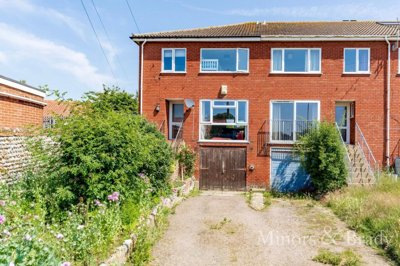
The built environment in Walcott reflects its coastal heritage and development through the late twentieth century. Properties in the Ostend Gap area to the north consist mainly of bungalows and houses constructed during the 1980s and 1990s, featuring characteristic red brick walls and red pantile roofs that are typical of North Norfolk construction. Terraced dwellings in the area often display rendered finishes to rear elevations, demonstrating the practical approach to coastal construction that addresses exposure to Norfolk's coastal weather. The village maintains an intimate scale with two-storey terraced housing mixed alongside single-storey bungalows, creating an accessible environment for residents of all ages and mobility levels. Holiday chalets in the area indicate the tourism sector's importance to the local economy, with visitors drawn by the proximity to beaches and coastal attractions throughout the seasons.
Residents of Walcott enjoy easy access to neighbouring villages like Bacton, which hosts the nearest primary school and village hall facilities, located just a short drive from the village centre. The A149 coast road provides the main route connecting Walcott to Cromer to the west and Great Yarmouth to the east, making nearby towns readily accessible for shopping, healthcare, and employment. The village's position along this route means that while it maintains a peaceful village atmosphere, essential services and amenities are never far away. For those considering renting in Walcott, visiting the village at different times of day and week can help you understand the atmosphere and community dynamics before committing to a tenancy.

Families considering renting in Walcott will find educational facilities available in the nearby village of Bacton, located within easy reach by car or the local bus services connecting the two villages. Bacton hosts a primary school and preschool facility, serving the local community with early years and primary education for children from reception age through to Year 6. The presence of these facilities within a short distance makes Walcott suitable for families seeking coastal living while maintaining access to local schooling without the need for lengthy daily commutes. For secondary education, students typically travel to larger towns in North Norfolk, with several secondary schools available across the district including options in North Walsham and Cromer.
Parents should research specific catchment areas and admissions criteria when considering rental properties, as school places can be competitive in popular villages where demand sometimes exceeds available places. Norfolk County Council maintains detailed information about school admissions, catchment boundaries, and transport arrangements on its website, allowing parents to verify which schools serve specific addresses in Walcott before committing to a rental property. Transport to secondary schools is often provided or arranged by the local authority for those living beyond walking distance, though journey times from Walcott to secondary schools in market towns should be factored into family planning.
The village setting provides opportunities for outdoor learning and activities that complement formal education, with children growing up in Walcott benefiting from access to beaches, coastal paths, and the natural environment of North Norfolk. These experiences offer rich educational benefits beyond the classroom, supporting physical development, environmental awareness, and an appreciation for Norfolk's unique coastal landscape. Local community facilities support youth development and social activities through the village hall and church groups, helping families integrate into village life and build lasting connections with neighbours. Higher education options are accessible via public transport links to Norwich, where the University of East Anglia and Norwich University of the Arts provide degree-level courses for older students.

Walcott sits within the NR12 postcode area of North Norfolk, offering connections to the wider county via a network of local bus services and road links that link coastal communities to market towns. The village lies along the A149 coast road, which serves as the primary artery for both local journeys and longer-distance travel, connecting Walcott to Cromer to the west and Great Yarmouth to the east. For residents who commute, planning journeys is essential given the rural nature of local transport provision, with most residents relying on private vehicles for daily commutes and essential journeys to larger towns for shopping, healthcare, and employment. The nearest train stations are in North Walsham and Cromer, offering connections to Norwich and the East Anglia rail network.
Norwich provides direct services to London Liverpool Street, with journey times making day commuting to the capital feasible for those who work remotely part of the week or travel occasionally for business. Norwich Airport provides domestic and international flights, serving residents who travel frequently for business or leisure, with regular connections to major UK hubs and European destinations. Cyclists and walkers enjoy the scenic routes around Walcott, with coastal paths and country lanes offering opportunities for active travel, though the rural nature of surrounding roads means cyclists should exercise appropriate caution on busier routes.
Parking provision in the village accommodates residents with vehicles, though those considering renting should clarify parking arrangements with landlords before committing to a property, particularly for terraced houses or flats in converted buildings where off-street parking may be limited. For those without private vehicles, the reduced public transport frequencies compared to urban areas mean that planning ahead is essential for accessing services, appointments, and social activities in nearby towns. Some residents find that combining remote working with occasional journeys to larger centres provides the best balance when living in Walcott, taking advantage of the village's peaceful environment while maintaining necessary connectivity.

Before viewing rental properties in Walcott, obtain a rental budget agreement in principle from a financial provider. This document demonstrates to landlords and letting agents that you can afford the monthly rent, giving your application credibility in a competitive market where rental properties can attract multiple enquiries quickly. Many financial providers offer budget in principle agreements specifically for rental purposes, and the process is typically straightforward, often completed online within minutes. Having this documentation ready before you begin your property search allows you to move quickly when you find a suitable property, avoiding delays that could result in missing out to other applicants.
Spend time exploring Walcott and surrounding villages to understand the neighbourhood before committing to a rental property. Visit local amenities including the convenience store, cafes, country inn, and chip shop to get a feel for daily life in the village. Check travel times to your workplace or schools, and familiarise yourself with the village atmosphere at different times of day to understand noise levels, traffic patterns, and community activity. Understanding the community helps ensure the location matches your lifestyle expectations and that you are comfortable with the pace of life in a rural coastal village.
Contact local letting agents to arrange viewings of available rental properties in Walcott, as properties can be let quickly in this sought-after coastal location. Take notes during viewings, photograph properties if permitted, and ask questions about the condition of the property, which appliances are included, and any recent maintenance work that has been carried out. Enquire specifically about the age and condition of the roof, the state of the plumbing and heating systems, and any known issues with damp or ventilation that are common in coastal properties. Viewing multiple properties helps you compare options and identify the best value.
Once you find a suitable property, submit your rental application promptly with all required documentation to avoid delays in the referencing process. This typically includes proof of identity such as passport or driving licence, evidence of income or employment including payslips or bank statements, references from previous landlords if you have rented before, and your budget in principle documentation. Providing complete information speeds up the referencing process and demonstrates your organisation and seriousness as a potential tenant to landlords and letting agents.
Your letting agent will conduct tenant referencing checks, including credit checks, employment verification, and landlord references if applicable. Once approved, you will receive and sign your tenancy agreement, which outlines the terms, rent amount, deposit amount, and conditions of your tenancy in Walcott. Take time to read the agreement carefully before signing, noting the length of the fixed term, the notice period required by both parties, and any clauses relating to maintenance responsibilities, alterations, or subletting. Your deposit will be protected in a government-approved Tenancy Deposit Scheme within 30 days of you paying it, and you will receive information about which scheme is being used.
Arrange your move by coordinating utilities transfer, contents insurance, and removal logistics well in advance of your move-in date. Contact your energy suppliers to set up accounts for gas and electricity, and inform your water company that you are moving into the property, as water rates for rental properties in Walcott are typically paid by the tenant. On move-in day, complete an inventory check with your landlord or letting agent to document the property's condition thoroughly, noting any existing damage or wear to protect your deposit when the tenancy ends. Taking dated photographs during the inventory provides additional evidence of the property's condition at the start of your tenancy.
Renting a property in a coastal village like Walcott requires careful consideration of specific factors that differ from urban renting, particularly regarding environmental risks and property maintenance. The coastal location means potential exposure to coastal erosion and flooding risks, particularly for properties closer to the seafront in areas like the Ostend Gap which lies only 110 metres from the coast at its nearest point. Research has identified that some land in Walcott could be lost to the sea by 2105, making it worth understanding the specific position of any property you are considering renting relative to the coastline and any coastal defence measures in place. Prospective tenants should enquire about any flood risk assessments, property insurance implications, and the landlord's approach to coastal maintenance when viewing properties.
Properties in the Ostend Gap area, built in the 1980s and 1990s, may require attention to roof conditions, rendering, and the general upkeep typical of properties of this age in a coastal environment. Red brick construction with red pantile roofs is common in the area, and these materials can be susceptible to moss growth and weathering in coastal conditions. A thorough inspection before signing a tenancy agreement helps identify any maintenance concerns that might affect your enjoyment of the property or result in disputes at the end of your tenancy. Check the condition of windows, doors, and any rendered surfaces, as coastal exposure can lead to damp penetration and deterioration of external finishes over time.
Understanding the tenure and condition of rental properties in Walcott is essential for making an informed decision about your rental commitment. Most properties in the village are likely to be let on Assured Shorthold Tenancies with fixed terms of six or twelve months, though longer terms may be available for those seeking stability. Tenants should clarify what is included in the rent, such as water rates, council tax, and any communal service charges for flats or bungalows in managed developments. The local authority for Walcott falls under North Norfolk District Council, and council tax bands vary by property, so checking which band applies and the associated annual cost helps with budgeting. Checking the energy performance certificate rating helps understand potential heating costs, which can be significant in older properties during Norfolk winters when coastal winds can increase heating requirements.

Rental prices in Walcott reflect the broader North Norfolk market, which offers more affordable options compared to larger towns in the region. While specific rental figures vary by property type and condition, the sale prices in the NR12 0NE postcode area provide useful context for property values, with semi-detached homes averaging around £268,000 and terraced properties at approximately £225,000 according to ONS data. Rental prices typically sit below these purchase prices on a monthly basis, making coastal village living accessible for renters who may not have the capital for home ownership. The Flagship Homes development off Ostend Road adds affordable rental options to the local market, with 23 properties offered at below market rent including houses, flats, and bungalows. For current rental listings and accurate pricing, check our property search platform which updates regularly with available rentals in Walcott and the surrounding North Norfolk area.
Properties in Walcott fall under North Norfolk District Council's jurisdiction for council tax purposes, and the village encompasses properties across various council tax bands from A through to H. The specific band for any property is based on its valuation characteristics, with band A properties carrying the lowest annual charge and higher bands attracting proportionally greater council tax payments. Specific band information for individual properties in Walcott can be obtained from North Norfolk District Council's website or by contacting the council directly, and this information is also recorded on the property's Energy Performance Certificate. When renting, clarify with your landlord or letting agent which council tax band applies to the property, as this cost is typically the tenant's responsibility in addition to rent and is not usually included in rental payments. Budgeting for council tax alongside your rent ensures you have a complete picture of monthly costs before committing to a tenancy agreement.
The nearest primary school to Walcott is located in the neighbouring village of Bacton, serving families with children of primary age who can walk, cycle, or use the local bus service to reach school. Bacton also hosts a preschool facility for early years education, providing childcare options for families with younger children in the local community. For secondary education, students usually travel to schools in larger North Norfolk towns such as North Walsham or Cromer, and the local authority typically provides transport for those living beyond walking distance from their allocated school. When renting in Walcott, parents should research specific school catchments, admissions policies, and any transport arrangements available by contacting Norfolk County Council's education department or checking their website for the most current information on school admissions and catchment area boundaries.
Public transport options in Walcott reflect its status as a rural coastal village, with local bus services providing the primary means of public travel for those without private vehicles. The A149 coast road serves as the main route through the village, connecting Walcott to surrounding villages and towns including Cromer to the west and Great Yarmouth to the east, with bus stops along this route serving the village. The nearest railway stations are in North Walsham and Cromer, offering connections to Norwich and the East Anglia rail network where direct services run to London Liverpool Street and Cambridge. Norwich Airport provides domestic and international flights for residents who travel frequently, making Walcott viable for those who need national or international connectivity despite the limited local public transport options.
Walcott offers an attractive option for renters seeking coastal village life in North Norfolk, providing essential local amenities including shops, cafes, a pub, and the popular local chip shop, all within a friendly community setting. Access to beaches and coastal walks makes the area popular with those who enjoy outdoor activities and the natural environment of the Norfolk coastline. The presence of affordable rental housing through developments like Flagship Homes provides opportunities for a range of renters, and the village's position along the A149 means larger towns are accessible for those who need them. However, prospective tenants should consider factors such as limited public transport requiring vehicle ownership in most cases, awareness of coastal erosion risks in certain areas, and the practical implications of living in a small rural village where amenities are more limited than in urban areas. For those who value peaceful coastal living with community spirit and are comfortable with rural village life, Walcott presents an appealing renting destination.
Standard deposits on rental properties in England are capped at five weeks' rent, calculated based on your annual rental price for properties with annual rent below £50,000, providing important protection for tenants against excessive deposit demands. Your deposit must be protected in a government-approved Tenancy Deposit Scheme within 30 days of you paying it, and the landlord must provide you with written information about which scheme is protecting your money and how to get it back at the end of your tenancy. In addition to deposits, tenants typically pay a holding deposit to secure a property while referencing is completed, usually capped at one week's rent and deducted from your final deposit payment if you proceed with the tenancy. Other potential costs include referencing fees charged by some letting agents, administration charges for processing your application, and check-in fees for the inventory assessment, though many of these fees were banned under the Tenant Fees Act 2019. First-time renters should budget for initial costs including rent in advance, deposit, and moving expenses, and should always request a full breakdown of all costs before committing to a rental application.
Walcott is a coastal village and as such carries specific environmental risks that prospective tenants should understand before committing to a rental property in the area. The village's position on the North Norfolk coast means that properties closer to the seafront, particularly in the Ostend Gap area which lies only 110 metres from the coast at its nearest point, may be subject to coastal erosion risks over time. Research has indicated that some land in Walcott could be lost to the sea by 2105, and while this represents a long-term timeframe, it is worth understanding the specific position of any property relative to the coastline and any existing coastal defence measures. Flood risk from the sea is also a consideration for properties in low-lying coastal areas, and tenants should ask landlords about any flood history, insurance implications, and what protections are in place for the property. Checking the property's position on Environment Agency flood maps and understanding the implications for buildings insurance and contents insurance helps ensure you are comfortable with the level of risk before signing a tenancy agreement.
The rental market in Walcott offers a variety of property types reflecting the village's mixed housing stock developed over several decades. Terraced dwellings in the village often feature red brick construction with rendered finishes to rear elevations, providing practical accommodation at various price points for renters. Detached and semi-detached bungalows are common in areas like the Ostend Gap, built during the 1980s and 1990s with characteristic red brick walls and red pantile roofs that are typical of North Norfolk construction. Flats are available in the village including those offered through the Flagship Homes development off Ostend Road, providing options for those seeking smaller or more manageable accommodation. The village's mix of property types and ages means that rental properties can vary significantly in condition, heating efficiency, and maintenance requirements, making property viewings essential before committing to a tenancy.
From 4.5%
Get a rental budget in principle to strengthen your rental application
From £199
Comprehensive tenant referencing services for landlords and letting agents
From £85
Energy Performance Certificate for rental properties
Understanding the financial commitment involved in renting helps you budget effectively for your move to Walcott and avoid unexpected costs during the tenancy application process. The initial costs typically include rent in advance, a security deposit, and potentially a holding deposit to secure the property while references are checked by your letting agent or landlord. Security deposits are capped at five weeks' rent for properties with annual rent below £50,000, and this amount must be protected in a government-approved Tenancy Deposit Scheme within 30 days of you paying it, giving you important protections as a tenant. When your tenancy ends, the deposit is returned minus any deductions for damage beyond fair wear and tear or unpaid rent, and you have the right to dispute any deductions you believe are unfair through the deposit protection scheme.
Additional fees to budget for when renting in Walcott may include referencing fees charged by some letting agents, administration charges for processing your application, and costs for inventory services that document the property's condition at the start and end of your tenancy. Some agents charge flat fees while others calculate charges based on services provided, so it is worth asking for a complete breakdown before proceeding with your application. As of 2024, tenant fees are largely banned under the Tenant Fees Act 2019, meaning charges for things like viewing, credit checks, and tenancy agreements are generally covered by the landlord or included in permitted payments rather than charged separately to tenants. Monthly rent payments continue throughout your tenancy, and you will be responsible for council tax, utilities, and contents insurance as outlined in your tenancy agreement, with these costs typically paid separately from your rent payment.
First-time renters should also consider moving costs, furniture purchases if the property is unfurnished, and setting up utility accounts with gas, electricity, and internet providers. Some properties in Walcott may use oil or LPG for heating rather than mains gas, which requires budgeting for fuel deliveries and tank maintenance. Obtaining a rental budget agreement in principle before your property search demonstrates financial readiness and strengthens your application in competitive rental situations where landlords may have multiple enquiries. Our platform can connect you with financial providers who offer rental budget agreements, helping you prepare your finances before you begin searching for properties in Walcott. Planning ahead for all costs associated with moving and renting ensures a smoother transition to your new home and helps you avoid financial stress during your tenancy.

Properties to Rent In London

Properties to Rent In Plymouth

Properties to Rent In Liverpool

Properties to Rent In Glasgow

Properties to Rent In Sheffield

Properties to Rent In Edinburgh

Properties to Rent In Coventry

Properties to Rent In Bradford

Properties to Rent In Manchester

Properties to Rent In Birmingham

Properties to Rent In Bristol

Properties to Rent In Oxford

Properties to Rent In Leicester

Properties to Rent In Newcastle

Properties to Rent In Leeds

Properties to Rent In Southampton

Properties to Rent In Cardiff

Properties to Rent In Nottingham

Properties to Rent In Norwich

Properties to Rent In Brighton

Properties to Rent In Derby

Properties to Rent In Portsmouth

Properties to Rent In Northampton

Properties to Rent In Milton Keynes

Properties to Rent In Bournemouth

Properties to Rent In Bolton

Properties to Rent In Swansea

Properties to Rent In Swindon

Properties to Rent In Peterborough

Properties to Rent In Wolverhampton

Enter your details to see if this property is within your budget.
Loans, cards, car finance
Estimated property budget
Borrowing + deposit
You could borrow between
Typical borrowing
Monthly repayment
Est. at 4.5%
Loan-to-value
This is an estimate only. Your actual budget may vary depending on interest rates, credit history, and personal circumstances. For an accurate affordability assessment, speak to one of our free mortgage advisors.
This calculator provides estimates for illustrative purposes only and does not constitute financial advice. Your home may be repossessed if you do not keep up repayments on your mortgage. Estimates based on 4.5% interest rate, repayment mortgage. Actual rates depend on your circumstances.
Homemove is a trading name of HM Haus Group Ltd (Company No. 13873779, registered in England & Wales). Homemove Mortgages Ltd (Company No. 15947693) is an Appointed Representative of TMG Direct Limited, trading as TMG Mortgage Network, which is authorised and regulated by the Financial Conduct Authority (FRN 786245). Homemove Mortgages Ltd is entered on the FCA Register as an Appointed Representative (FRN 1022429). You can check registrations at NewRegister or by calling 0800 111 6768.