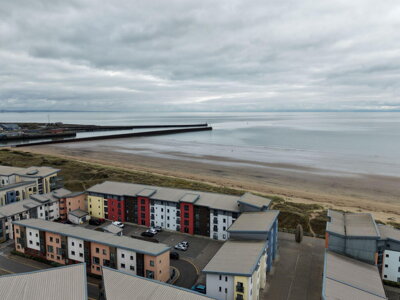
Pick the right path and we'll point you to the next step.
I'm the homeowner
Track this property, get market updates, and list it on Home when you're ready to sell or let.
I'm an estate agent
Claim your branch on Home.co.uk, list your properties for free, and reach buyers actively searching your area.
From riverside apartments to country cottages, search hundreds of thousands of properties for sale, to rent, and recently sold, all enriched with three decades of market data.
Browse 2 rental homes to rent in Swansea, Cymru / Wales from local letting agents.
Studio apartments feature open-plan living spaces without separate bedrooms, incorporating sleeping, living, kitchen, and bathroom facilities. The Swansea studio market includes properties in modern apartment complexes, converted Victorian and Georgian buildings, and purpose-built developments.
£750/m
5
1
77
Source: home.co.uk
Showing 5 results for Studio Flats to rent in Swansea, Cymru / Wales. 1 new listing added this week. The median asking price is £750/month.
Source: home.co.uk
Flat
5 listings
Avg £795
Source: home.co.uk
Source: home.co.uk
In Swansea, renting and buying feed into the same market, which keeps things moving without tipping into frenzy. homedata.co.uk records 7,800 property sales across the Swansea postcode area in the last 12 months, down 15.8% year on year. Most sales sat in the £150,000-£200,000 band at 23.4%, with £100,000-£150,000 next at 22.2%. To us, that points to a broad run of affordable homes, especially terraces and semis, and that often filters through to lettings as well. So renters are usually choosing from flats, smaller houses and family stock, not just one dominant type.
By type, the gap is clear. homedata.co.uk puts Swansea averages in December 2025 at £332,000 for detached homes, £215,000 for semis, £172,000 for terraces and £113,000 for flats. Over the same year, prices rose 6.4%, ahead of the 5.0% rise across Wales, with semi-detached homes up 7.6% and flats up 2.8%. home.co.uk listings also point to active new-build supply, from Beacon Hill in SA1 with 3-bed terraces from £260,000 to Penllergaer schemes starting at £250,000 and going up to £425,995. For renters, that matters, because it shows where landlords may be buying and which parts of Swansea have the newest stock coming through.

Swansea has the feel of a working city, but with the coast never far from view. Its housing mix shows how it has grown over time, with 34.5% of households in semi-detached homes and 18.0% in private rented accommodation, according to the 2021 census profile for the city. That 18.0% matters. It tells us renting here is established, with proper local knowledge in the market rather than a patchy afterthought. From what we see, renters often settle into a few recognisable patterns, central flats for convenience, inland family streets for more room, or coastal districts for a different pace.
What stands out in Swansea is how different one district can feel from the next. The City and County of Swansea has 31 conservation areas and more than 500 listed buildings, including a small number of Grade I landmarks, so the streetscape runs from older terraces to newer seafront schemes. The local jobs picture is mixed too, with public administration, education and health making up 38.3% of employment, distribution, hotels and restaurants 24.2%, and banking, finance and insurance 19.9%. That goes some way to explaining why the same rental market is searched by students, NHS staff, office workers and households putting down longer roots.
Most families we speak to in Swansea start with the school map, not the house itself. Sensible move. The city is home to Swansea University and the University of Wales Trinity Saint David, and further education is anchored by Gower College Swansea. Primary and secondary provision is spread across the city rather than packed into one pocket, so location checks matter early. As Wales uses Estyn for inspection, we suggest reading the latest Estyn reports alongside catchment maps from the City and County of Swansea before you get too far into a search.
For school-led searches, certain places come up again and again, Sketty, Uplands, Mumbles, Morriston and Penllergaer. Those districts often hold onto tenants for longer spells because they combine parks, shops and travel options with established schools and nurseries. University location also has an effect, since student demand can change the rental mix near campus and around the city centre. If schooling is high on your list, we always advise checking admissions rules, walking the route at school-run time, then confirming the rental sits inside the catchment you need.

Commuting is one reason many tenants stay in Swansea longer than they first expected. Direct rail services run to Cardiff and London Paddington, with Cardiff typically about an hour away and London usually under three hours on the faster services, timetable allowing. Buses cover the centre and outer suburbs well, which helps if you are based near the station, along the seafront or in an area where parking is tight. For plenty of renters, being able to get around without a car is a real advantage.
The road side is strong as well, with the M4 corridor keeping Swansea plugged into south Wales employment hubs and the wider motorway network. Cycling has improved around the centre and by the waterfront, so shorter trips can work even if you do not drive every day. In older terraces and city-centre flats, parking can be the detail that settles the decision, especially where on-street spaces are limited or permit-controlled. Anyone travelling across the region should test journey times at rush hour, not only off-peak, because routes such as the A483, A4067 and roads feeding the M4 can feel very different.
Get a rental budget agreement in principle first, so you know what you can comfortably afford before we start booking viewings.
Check central districts, suburban streets and coastal spots against your commute, school needs and parking requirements, then narrow it down.
The homes that tend to make practical sense in Swansea do not wait around for long, especially tidy semis, city flats and places near rail or bus routes.
Before committing, ask about the deposit size, holding deposit rules, tenant referencing and exactly what comes with the tenancy, including furnishings or parking.
Older Swansea homes need a close look. Watch for damp, poor ventilation, water staining, tired windows and the general wear that can build up over time.
Before move-in, confirm the inventory, meter readings and the agreed date, then keep copies of every document from day one.
Condition carries real weight in Swansea because so much of the stock is older. Parts of South Wales sit on clay-rich ground, which can lead to shrink-swell movement, and the city’s mining heritage leaves a legacy risk of subsidence in some areas, so cracks and uneven floors are worth checking carefully at a viewing. Flood risk is another local factor, especially near the coast, along the river corridor and in surface-water hotspots after heavy rain. If you are considering low-lying streets, basement rooms or homes near the waterfront, Natural Resources Wales flood mapping is well worth a look.
Those 31 conservation areas can affect more than appearance. In Swansea, they may limit changes to windows, external finishes and front boundaries. In older terraces and flats, ask if the building is leasehold, because service arrangements and block management can shape day-to-day living even when you are renting. Ground rent is usually the landlord’s concern, but service charges and communal upkeep still influence how the building is run and how willing the landlord is to keep standards up. With any flat, we ask about bin storage, entry systems, boiler age and the condition of communal areas, because those details often tell the real story behind the rent.

The latest rental figure from home.co.uk puts average private rent in Swansea at £827 a month in January 2026, up 6.8% year on year. Set beside that, homedata.co.uk shows an average house price of £209,000 in December 2025, which helps explain why rental demand stays wide across the city. Central flats can land either side of that average depending on finish, parking and how close they are to the university or the seafront. In Sketty, Penllergaer and Morriston, larger family houses can sit above the city average where extra space or gardens come with them.
Council tax here is set by the City and County of Swansea, and the amount follows the valuation band, not simply the postcode. In Wales, the bands run from A to I. That means a small flat, a mid-range terrace and a larger detached house can each sit in very different bands. We always tell renters to ask the letting agent or landlord for the exact band before committing, especially when two homes have similar rents. Once utilities and parking are added, it can shift the monthly budget more than people expect.
There is no single answer to the school question in Swansea. It turns on catchment, travel route and the age of your children. Across the city you will find primary and secondary schools, with Swansea University, the University of Wales Trinity Saint David and Gower College Swansea covering higher and further education. Wales uses Estyn rather than Ofsted, so we recommend checking the latest Estyn report for each school on your shortlist. Catchment lines can move around busy suburbs, which is why we would always confirm the exact boundary before an offer goes in on a rental property.
Getting around Swansea is usually straightforward by south Wales standards. Rail services connect the city with Cardiff and London Paddington, and bus coverage reaches well across central districts and suburbs. For some renters that means a car is optional, provided the neighbourhood is chosen carefully. Cycle routes are improving as well, especially towards the waterfront and the city centre, which can make shorter commutes easier. If your working hours are irregular, check the last train or bus home before signing any tenancy.
As a rental market, Swansea covers a lot of ground. You have coastline, universities, jobs and a broad mix of homes in one city. The population is about 251,300, with around 111,000 households, and the private rented sector is established enough that tenants are part of a mature market rather than a thin one. SA1, Sketty, Penllergaer, St Thomas and the city centre all suit different ways of living. We think it works especially well for renters who want flexibility, straightforward travel and enough variation between districts to choose the pace that fits.
Upfront costs in Wales are fairly clear-cut. Holding deposits are normally capped at one week’s rent and security deposits at six weeks’ rent, so you should know the position before move-in. On top of that, budget for the first month’s rent, moving costs and any furniture or parking extras not included in the tenancy. If buying later is part of the plan, the current UK deposit thresholds are 0% up to £250,000, 5% from £250,000-£925,000, 10% from £925,000-£1.5 million and 12% above that, with first-time buyer relief at 0% up to £425,000 and 5% from £425,000-£625,000. Even as a renter now, it helps to keep that longer-term picture in view.
Area choice usually comes down to what matters most day to day. Central renters often start with SA1, the seafront and the city centre because newer apartments and convenience sit higher on the list there. Families more often look towards Sketty, Penllergaer, Morriston and other suburban districts where gardens, schools and parking can be easier to manage. Coastal locations and conservation areas also draw plenty of attention, especially where the street scene feels settled. In the end, commute time, space, beach access or school catchment tends to be the deciding factor.
Begin with the basics. Check for damp, test the heating, look at the windows, run the hot water and inspect the state of the bathroom and kitchen. After that, move onto Swansea-specific points such as flood risk, parking, flat block management and whether the property sits inside a conservation area with planning restrictions. In older homes, ask about cracks, roof condition and any record of subsidence or mining-related movement. A good viewing here should feel methodical, because the useful clues are often in the small details.
Renting in Swansea is usually simpler to budget for than buying, but the upfront bill still needs planning. Expect a holding deposit, a security deposit and the first month’s rent. Then add moving costs, laundry, broadband setup and any parking permit you may need. Deposit rules in Wales are clear, which makes it easier to compare homes on a like-for-like basis instead of getting caught out later. If the property is furnished, ask for a precise list of what is included, because the inventory affects both move-in cost and move-out hassle.
For plenty of renters, the real calculation is not only the deposit, but what the home adds up to over 12 months. home.co.uk shows Swansea’s average private rent at £827 a month, while homedata.co.uk records the city’s average house price at £209,000, which is a useful reminder that ownership costs sit above most rental budgets. If you are renting with a longer plan in mind, keep watching the sales side as well, because homes in the £150,000-£200,000 range accounted for 23.4% of all Swansea sales over the last year. Having both sets of figures helps when deciding whether a place feels affordable now and still sensible later.
Properties to Rent In London

Properties to Rent In Plymouth

Properties to Rent In Liverpool

Properties to Rent In Glasgow

Properties to Rent In Sheffield

Properties to Rent In Edinburgh

Properties to Rent In Coventry

Properties to Rent In Bradford

Properties to Rent In Manchester

Properties to Rent In Birmingham

Properties to Rent In Bristol

Properties to Rent In Oxford

Properties to Rent In Leicester

Properties to Rent In Newcastle

Properties to Rent In Leeds

Properties to Rent In Southampton

Properties to Rent In Cardiff

Properties to Rent In Nottingham

Properties to Rent In Norwich

Properties to Rent In Brighton

Properties to Rent In Derby

Properties to Rent In Portsmouth

Properties to Rent In Northampton

Properties to Rent In Milton Keynes

Properties to Rent In Bournemouth

Properties to Rent In Bolton

Properties to Rent In Swansea

Properties to Rent In Swindon

Properties to Rent In Peterborough

Properties to Rent In Wolverhampton

Enter your details to see if this property is within your budget.
Loans, cards, car finance
Estimated property budget
Borrowing + deposit
You could borrow between
Typical borrowing
Monthly repayment
Est. at 4.5%
Loan-to-value
This is an estimate only. Your actual budget may vary depending on interest rates, credit history, and personal circumstances. For an accurate affordability assessment, speak to one of our free mortgage advisors.
This calculator provides estimates for illustrative purposes only and does not constitute financial advice. Your home may be repossessed if you do not keep up repayments on your mortgage. Estimates based on 4.5% interest rate, repayment mortgage. Actual rates depend on your circumstances.
Homemove is a trading name of HM Haus Group Ltd (Company No. 13873779, registered in England & Wales). Homemove Mortgages Ltd (Company No. 15947693) is an Appointed Representative of TMG Direct Limited, trading as TMG Mortgage Network, which is authorised and regulated by the Financial Conduct Authority (FRN 786245). Homemove Mortgages Ltd is entered on the FCA Register as an Appointed Representative (FRN 1022429). You can check registrations at NewRegister or by calling 0800 111 6768.

We use cookies to show you personalised content and improve your experience of our website. Find out more in our Privacy policy and Cookie policy.