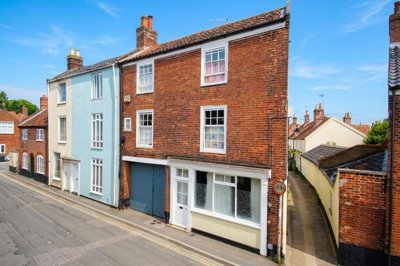
Browse 8 rental homes to rent in Mettingham, East Suffolk from local letting agents.
£0/m
0
0
0
Source: home.co.uk
The rental market in Mettingham reflects the broader East Suffolk property landscape, where strong demand for rural homes continues to outpace supply. Unlike larger towns, Mettingham has no active new-build developments within the NR35 postcode area, meaning rental options predominantly consist of period properties and converted agricultural buildings rather than modern apartment complexes. This scarcity of new rental stock means prospective tenants often face competition for available properties, particularly those seeking move-in ready homes.
The village's housing stock skews heavily towards detached and semi-detached homes, consistent with the wider Suffolk pattern where detached properties account for 35.8% of residential sales, followed by semi-detached at 28.9%, terraced at 27.5%, and flats at just 7.8%. Tenants seeking rental accommodation in Mettingham should expect to find character cottages, converted barns, and historic farmhouses built with traditional materials including red brick, plastered facades, and flint walling. These construction methods reflect the local building heritage but also introduce specific considerations for maintenance and repair that differ from modern properties.
For renters considering a longer-term commitment, the strong upward trajectory in Mettingham's property values indicates continued demand for homes in this area. The combination of limited rental supply, high desirability, and the absence of new-build development creates a market where properties tend to be snapped up quickly by those who are prepared. Registering with local letting agents before properties are formally listed can provide a crucial advantage in this competitive rural market.

Life in Mettingham offers a tranquil pace that contrasts sharply with urban living. The village sits within the rolling chalk plains of Suffolk, with mature hedgerows, farmland, and woodland creating a patchwork landscape that changes beautifully with the seasons. Residents enjoy access to extensive walking routes, cycling paths, and waterways, with the River Waveney providing a natural northern boundary that connects Mettingham to the broader waterways of The Broads National Park. This makes the area particularly attractive to those who work from home or have flexible commuting arrangements.
The presence of numerous listed buildings throughout the village, including medieval structures dating back to the era of Mettingham Castle and its associated college, gives the settlement a timeless quality that newer developments simply cannot replicate. The Grade I listed All Saints' Church, with its rare round tower, stands as the village's historical significance, while properties like Benstead Farmhouse, Bridge Farmhouse, and The Red House showcase the architectural heritage that defines much of Mettingham's character. Living in such an environment means becoming part of a community where history is not just preserved but actively celebrated.
Local amenities in the village itself are limited, reflecting its small scale, but the nearby market towns of Bungay and Beccles provide essential services including supermarkets, healthcare facilities, and independent shops. Bungay, situated just a few miles away, offers a range of conveniences from greengrocers to antique dealers, while Beccles provides additional shopping options and rail connections to Norwich and London Liverpool Street. This balance of village peace with accessible town facilities makes Mettingham particularly attractive to professionals seeking rural serenity without sacrificing convenience for daily necessities.

Transport connections from Mettingham reflect its rural character, with residents relying primarily on private vehicles and local bus services for daily travel. The village sits off the B1062 road, which connects to the wider Suffolk road network providing access to neighbouring towns and villages. Concerns have been raised regarding flooding on the B1062 road itself, with the road experiencing water accumulation during heavy rainfall events. Prospective tenants without private vehicles should factor this into their decision-making, as any disruption to the main access road could affect their ability to travel.
For commuters working in Norwich, which lies approximately 20 miles to the north, driving is typically the most practical option, though journey times can extend significantly during peak hours and particularly during the summer tourist season when The Broads National Park attracts considerable visitor traffic. The journey to Norwich typically takes around 40 minutes outside of rush hours but can extend to well over an hour during busy periods. Those working in London will find that Norwich station provides access to direct trains reaching London Liverpool Street in around two hours, making Mettingham a viable base for professionals who divide their working week between home and the capital.
Public transport options include bus services connecting Mettingham to surrounding towns including Bungay and Beccles, though frequencies are limited with potentially only a handful of services per day. The nearest railway stations are located in Beccles and Brampton, offering connections to Norwich and the wider national rail network. Cyclists benefit from quiet country lanes that crisscross the surrounding countryside, though the local geology featuring clay-rich soils means some roads can become muddy and potentially slippery during wet weather. Parking at properties in Mettingham is generally straightforward, with most homes offering off-street parking or garaging, a significant advantage over town living where parking constraints can prove frustrating for households with multiple vehicles.

The majority of rental properties available in Mettingham are period buildings constructed using traditional methods that differ significantly from modern construction. Red brick, plastered facades, and flint walling are common materials found throughout the village, reflecting centuries of local building tradition. These materials were chosen for their availability and durability in the local climate, but they require different maintenance approaches compared to modern brick or block construction. Understanding these materials helps tenants appreciate why certain maintenance tasks require specialist attention.
Given the age of properties in Mettingham, where medieval structures and buildings dating back several centuries are common, prospective tenants should be aware of defects frequently found in older housing stock. Rising damp is particularly common in properties built before damp-proof courses became standard, occurring where groundwater penetrates through permeable brickwork or lime mortar. The London Clay formation present in East Suffolk contributes to clay-rich soils that are susceptible to shrink-swell behaviour, meaning the ground volume changes with variations in moisture content. This geological factor can lead to subsidence or heave, particularly during prolonged dry spells or periods of heavy rainfall.
Timber decay, including dry rot and woodworm, is another concern in older properties, particularly in roof voids, floor structures, and areas with poor ventilation. Roof defects such as missing or broken tiles, sagging roof structures, and damaged flashing are also frequently encountered in period properties that may not have received regular maintenance. Additionally, outdated electrical installations and plumbing systems in older buildings may not meet current safety standards, which is worth considering when evaluating a property for rent. Requesting information about recent electrical tests and plumbing inspections provides valuable insight into the property's condition before committing to a tenancy.

Renting in a village like Mettingham requires careful attention to several factors that may not feature prominently in urban property searches. The flood risk associated with proximity to the River Waveney deserves serious consideration, as the village has experienced flooding incidents including water entering Mettingham Village Hall during Christmas 2020. Isolated low-lying properties along the tidal River Waveney are identified as flood warning areas in Suffolk, and prospective tenants should ask landlords specifically about flood history, drainage systems, and any flood prevention measures installed at the property. Checking the Gov.uk flood information service for the specific property address provides additional context about potential flood risk.
The presence of clay soils throughout East Suffolk introduces potential shrink-swell behaviour that can affect property foundations, particularly during prolonged dry spells or periods of heavy rainfall. This geological consideration is especially relevant given the age of many properties in Mettingham, where numerous listed buildings and medieval structures indicate a significant proportion of older housing stock. Trees located near properties can exacerbate shrink-swell issues by extracting moisture from the clay substrate during dry weather. A thorough survey can identify any existing movement or vulnerability to structural issues before committing to a tenancy.
Conservation area restrictions and listed building status affect many properties in Mettingham, meaning tenants should understand that permission may be required for certain alterations or improvements. The northern section of the parish falls within The Broads National Park, introducing additional planning considerations and aesthetic requirements that help preserve the area's distinctive character. These factors contribute significantly to the village's charm but require tenant awareness regarding what modifications are permitted during a tenancy. Before signing a tenancy agreement, prospective tenants should clarify with the landlord which maintenance responsibilities fall to them and which remain with the property owner.

Understanding the full cost of renting in Mettingham extends well beyond monthly rent payments. Tenant referencing fees typically range from £100 to £300 depending on the agency and depth of checks required, covering credit history verification, employment confirmation, and previous landlord references. Many letting agents also charge administration fees for processing the tenancy, though these have become less common following regulatory changes designed to increase transparency in the rental sector. Budget typically totals between one and six weeks' rent upfront, plus moving costs, contents insurance, and potential survey fees if arranging professional assessments of older properties.
The security deposit, capped at five weeks' rent for properties with annual rental values below £50,000, is held in a government-approved deposit protection scheme for the duration of the tenancy. In Mettingham, where rental values for character properties may command premium prices reflecting the area's desirability and the quality of period accommodation available, tenants should budget accordingly for this upfront cost. An inventory check at the start of the tenancy protects both parties by documenting the property's condition in detail, and tenants should ensure they receive a copy and raise any discrepancies before signing the check-in report.
Additional moving costs include removal van hire, utility connection fees, and contents insurance, which is strongly recommended even for furnished properties where the landlord's insurance typically covers only the building itself. First-time renters in England may benefit from Zero Deposit guarantees, which reduce upfront costs to around one week's rent instead of five weeks, though these schemes involve higher overall fees spread across the tenancy. Getting a rental budget agreement in principle before property hunting helps establish affordability and demonstrates seriousness to landlords in competitive rural markets where multiple applications for desirable properties are common.

Before searching for rental properties in Mettingham, obtain a rental budget agreement in principle from a lender. This document confirms how much you can afford to spend on rent each month, providing clarity on your search parameters and demonstrating financial credibility to landlords in this desirable Suffolk village. Having this agreement in place before beginning your property search allows you to focus only on properties within your budget range and strengthens your position when making an application against competing tenants.
Take time to understand Mettingham's character by visiting at different times of day and week, particularly during different seasons given the village's rural setting and proximity to The Broads National Park. Check flood risk for specific properties using the Gov.uk flood information service, explore nearby towns for essential amenities, and understand the planning restrictions that affect many period properties in this conservation-conscious village. Speaking with existing residents provides invaluable insights into day-to-day living that cannot be gained from property listings alone.
Contact local letting agents and register your interest in rental properties, specifying your requirements and desired move-in date. In a village with limited rental stock, early viewing appointments and flexible availability are advantageous. Take photographs and notes during viewings to help compare properties later, paying particular attention to the condition of period features, signs of damp or structural movement, and the age and condition of electrical and plumbing installations.
For older properties in Mettingham, which form the majority of the housing stock, consider a RICS Level 2 survey before committing to a tenancy. The average UK cost for this professional assessment is around £455, typically ranging between £416 and £639, potentially higher for larger properties. A survey identifies structural issues, damp, timber decay, and defects that might not be apparent during a standard viewing, providing negotiating leverage if issues are discovered or simply before committing to a tenancy in a period property.
Review the tenancy agreement carefully, paying attention to the length of the initial term, notice periods, rent review clauses, and responsibilities for maintenance and repairs. In period properties with listed building status or conservation area restrictions, clarify who is responsible for maintaining historic features and any planning restrictions affecting modifications. Understanding these terms before signing helps prevent disputes during the tenancy and ensures you know exactly what is expected from both tenant and landlord.
Once references are approved and tenancy documents are signed, arrange buildings insurance, transfer utilities into your name, and conduct a thorough check-in inventory. Document all conditions with photographs and ensure you receive a copy of the signed inventory before paying any deposit. Taking time over the check-in process protects your deposit when you eventually vacate the property, as any damage not documented at check-in may be attributed to your tenancy.
While specific rental price data for Mettingham is not published, the sold property market shows average prices around £633,750 to £697,500 according to recent market data. Rental values in this East Suffolk village typically reflect a significant proportion of monthly rent relative to property values, with period cottages and converted agricultural buildings commanding premium rates due to their character and limited availability. The absence of new-build developments in the NR35 postcode area means that rental prices are largely determined by the quality and condition of the existing period housing stock, with well-presented historic properties often achieving the highest rents in the village.
Properties in Mettingham fall under East Suffolk Council's jurisdiction and are subject to council tax based on the valuation band assigned by the Valuation Office Agency, ranging from Band A for lower-value properties through to Band H for the most expensive homes. Given Mettingham's heritage properties, including the Grade I listed All Saints' Church, Grade II* listed Mettingham Hall, and numerous Grade II listed buildings, many homes may fall into mid-to-higher bands reflecting their value and character. Check the East Suffolk Council website using the property address for exact banding information, and factor council tax into your overall budget when considering rental affordability.
Mettingham itself does not have a school within the village, so children typically travel to schools in neighbouring communities. Primary education is available in nearby villages and towns, with Bungay and Beccles offering primary schools serving the Mettingham catchment area. Beccles in particular provides several primary school options within reasonable travelling distance. Secondary education options include high schools in the surrounding market towns, with transport arrangements varying by school. Parents should confirm current catchment areas with East Suffolk Council, as school admissions can be competitive in popular rural areas and catchment boundaries are subject to change.
Public transport options from Mettingham are limited, reflecting its rural village status with a population of around 211 residents. Bus services operate connecting the village to nearby towns including Bungay and Beccles, but frequencies are low with potentially only a handful of services per day. The nearest railway stations are Beccles and Brampton, providing connections to Norwich and the wider rail network, with Norwich offering direct services to London Liverpool Street taking around two hours. Residents without private vehicles should carefully assess whether current bus timetables meet their employment and lifestyle needs, particularly given the village's distance from major urban centres.
Mettingham offers an exceptional quality of life for renters seeking rural tranquility in a historically significant East Suffolk village with a strong sense of community. The stunning natural environment, proximity to The Broads National Park, abundance of listed period properties, and beautiful chalk plains countryside create an appealing atmosphere that is hard to replicate elsewhere. However, prospective tenants should consider the limited local amenities requiring travel to nearby towns for most services, flood risk from the River Waveney, and the need for private transport or flexible working arrangements. The village particularly suits those who value countryside living, appreciate period properties, and have flexibility in their commuting arrangements.
Renting in Mettingham typically involves several upfront costs beyond monthly rent, including a security deposit equivalent to five weeks' rent which is standard for most tenancies and held in a government-approved deposit protection scheme. Tenant referencing fees range from £100 to £300, while administration charges vary by agency depending on the services provided. Budget typically totals between one and six weeks' rent upfront, plus moving costs, contents insurance, and potential survey fees if arranging professional assessments of older properties. First-time renters may benefit from Zero Deposit guarantee schemes which reduce upfront costs to around one week's rent instead of five weeks, though the total fees spread across the tenancy may be higher.
From 4.5%
Confirm your renting budget before searching properties in Mettingham
From £99
Credit checks and employment verification for renting
From £455
Professional property survey for older homes
From £85
Energy performance certificate for rental properties
Properties to Rent In London

Properties to Rent In Plymouth

Properties to Rent In Liverpool

Properties to Rent In Glasgow

Properties to Rent In Sheffield

Properties to Rent In Edinburgh

Properties to Rent In Coventry

Properties to Rent In Bradford

Properties to Rent In Manchester

Properties to Rent In Birmingham

Properties to Rent In Bristol

Properties to Rent In Oxford

Properties to Rent In Leicester

Properties to Rent In Newcastle

Properties to Rent In Leeds

Properties to Rent In Southampton

Properties to Rent In Cardiff

Properties to Rent In Nottingham

Properties to Rent In Norwich

Properties to Rent In Brighton

Properties to Rent In Derby

Properties to Rent In Portsmouth

Properties to Rent In Northampton

Properties to Rent In Milton Keynes

Properties to Rent In Bournemouth

Properties to Rent In Bolton

Properties to Rent In Swansea

Properties to Rent In Swindon

Properties to Rent In Peterborough

Properties to Rent In Wolverhampton

Enter your details to see if this property is within your budget.
Loans, cards, car finance
Estimated property budget
Borrowing + deposit
You could borrow between
Typical borrowing
Monthly repayment
Est. at 4.5%
Loan-to-value
This is an estimate only. Your actual budget may vary depending on interest rates, credit history, and personal circumstances. For an accurate affordability assessment, speak to one of our free mortgage advisors.
This calculator provides estimates for illustrative purposes only and does not constitute financial advice. Your home may be repossessed if you do not keep up repayments on your mortgage. Estimates based on 4.5% interest rate, repayment mortgage. Actual rates depend on your circumstances.
Homemove is a trading name of HM Haus Group Ltd (Company No. 13873779, registered in England & Wales). Homemove Mortgages Ltd (Company No. 15947693) is an Appointed Representative of TMG Direct Limited, trading as TMG Mortgage Network, which is authorised and regulated by the Financial Conduct Authority (FRN 786245). Homemove Mortgages Ltd is entered on the FCA Register as an Appointed Representative (FRN 1022429). You can check registrations at NewRegister or by calling 0800 111 6768.