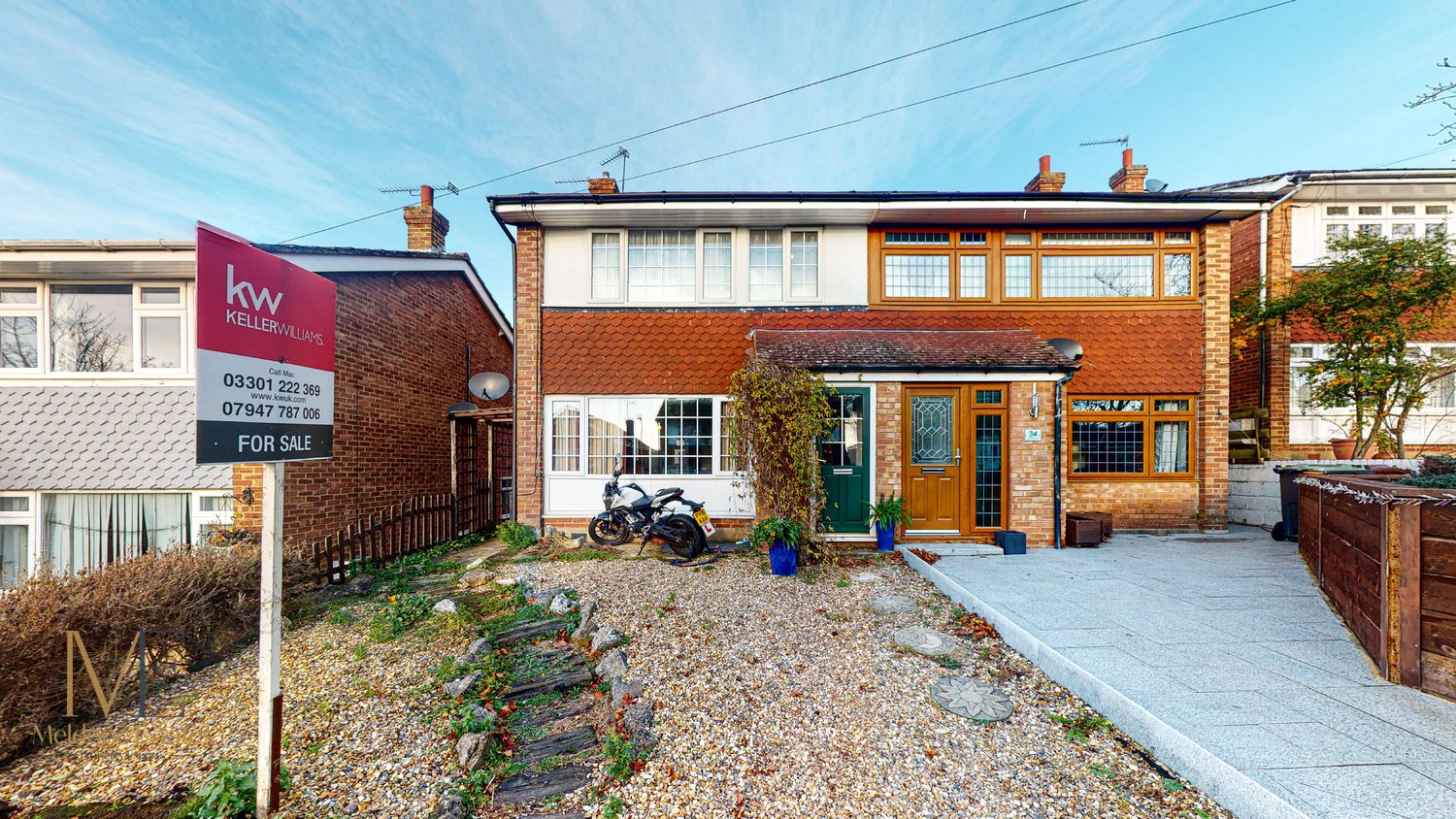
Browse 9 rental homes to rent in Longfield and New Barn from local letting agents.
The rental market in Longfield and New Barn reflects the area's popularity among families and professionals alike. Our data shows that property values in the local area average around £526,488 for those seeking to purchase, with rental prices varying according to property type and size. Detached homes command the highest values, averaging approximately £704,498, while semi-detached properties sit at around £482,887. For renters, this translates to a selection of quality homes across different price points, with semi-detached and terraced properties offering excellent value for families seeking generous living spaces without the premium associated with larger detached homes.
Recent market trends indicate a slight cooling in property prices, with values decreasing by 2.4% over the past twelve months according to Rightmove data. This shift has created opportunities for renters, as some property owners may be more open to negotiation on longer-term tenancies. The area has seen 100 property sales in the last twelve months, demonstrating continued market activity. New build developments such as The Nurseries by David Wilson Homes on Main Road, DA3 7PL, offer 3, 4, and 5-bedroom homes ranging from £579,995 to £819,995 for those seeking to purchase. Meanwhile, Longfield Place by Bellway, also on Main Road, provides 2, 3, and 4-bedroom options from £429,995 to £699,995, adding modern alternatives to the local housing stock.
For renters specifically, the market offers excellent variety. Two-bedroom flats typically rent from around £1,000 to £1,400 per month, providing affordable options for individuals or small families. Three-bedroom semi-detached homes may range from £1,400 to £1,800 per month, while four and five-bedroom detached properties can command rents of £1,800 to £2,500 per month depending on condition, location, and whether gardens or parking are included. This range means renters can find properties matching various budgets and space requirements within the Longfield and New Barn area.

Longfield and New Barn form a welcoming community within the Dartford district of Kent, offering residents a blend of rural charm and modern conveniences. The ward, which also encompasses Southfleet, has a population of approximately 10,767 residents across 4,008 households according to the ONS Census 2021. The predominant housing stock reflects the family-oriented nature of the area, with 41.5% detached properties and 33.1% semi-detached homes providing spacious accommodation for residents. Terraced properties account for 16.2% of housing, while flats make up 9.2%, offering options for various household types and budgets.
The local landscape is characterised by the chalk geology of the North Downs formation, with areas of Clay-with-flints creating the rolling Kentish countryside that residents enjoy. Traditional brick construction, often in characteristic red or brown tones, defines much of the local architecture, reflecting typical Kentish building styles that have evolved over decades of development in the area. Properties range from post-war semis built during the mid-twentieth century expansion to newer homes constructed as part of recent developments like The Nurseries and Longfield Place. This variety means renters can choose between characterful older properties with established gardens and modern homes with contemporary fittings and energy-efficient construction.
Community amenities include local shops, pubs, and recreational facilities within the village centre, while the nearby towns of Dartford and Gravesend provide broader retail and entertainment options for those seeking more extensive amenities. The area maintains a low risk of river and coastal flooding, though some localised depressions and roads may experience surface water flooding during periods of heavy rainfall. Residents appreciate the balance between peaceful village living and access to the services offered by larger nearby towns, making Longfield and New Barn particularly attractive to those who want the best of both worlds in their daily lives.

Education provision in Longfield and New Barn makes the area particularly attractive to families considering a rental property. Parents renting in the area should research specific catchment areas and admission arrangements, as these can significantly impact school placement decisions and vary depending on the primary or secondary school you are targeting. The presence of quality schools within reasonable distance adds to the family-friendly reputation of Longfield and New Barn and influences which neighbourhoods prove most popular with families.
Longfield itself is served by local primary schools that cater to children from Reception through Year 6, with several options in the surrounding villages providing additional choices for families. Parents are advised to check current admission policies, as some schools give priority to siblings of existing pupils or those living within specific distances from the school gates. Many families renting in Longfield and New Barn prioritise proximity to primary education, making areas closer to local schools particularly sought after in the rental market. School performance data from Ofsted reports and government assessment results can help parents identify the strongest options when selecting a rental property.
For families with older children, secondary education in Kent operates through a selective system, with grammar schools providing an academic pathway for suitable students. Parents should be aware of the testing process, typically taken in Year 6, when considering secondary education options. Comprehensive schools in the wider Dartford area and further education colleges in nearby towns serve students who do not sit the grammar school entrance tests or prefer alternative educational approaches. Good transport links mean that secondary schools and colleges in Gravesend, Dartford, and surrounding areas are accessible, making this an excellent location for families with children at various stages of their education.

Transport connectivity ranks among Longfield and New Barn's strongest attributes, making it an excellent choice for renters who commute to work. Longfield railway station provides regular services to London Victoria, with the journey taking approximately one hour. This direct link to the capital opens up employment opportunities across London while allowing residents to enjoy the benefits of village life outside the city. The station is well-situated within the village, making it accessible to residents across the parish and a key factor in the area's popularity with commuters.
Road connections are equally impressive, with the A2 providing direct access to the M25 motorway, creating routes to London, the Channel ports, and the wider motorway network. For those working in logistics, retail distribution, or manufacturing sectors common in the Thames Gateway area, the road network offers convenient access to employment in places like Dartford, Gravesend, and the wider Kent region. Bus services connect Longfield with surrounding towns, offering public transport options for those not within walking distance of the station. Parking facilities at Longfield station are valued by residents who combine rail travel with driving, with commuters able to leave their vehicles and continue their journey by train into London.
For commuters working locally rather than in the capital, the location provides easy access to employment in Dartford town centre, the Oracle business park in Gravesend, and the various industrial and commercial areas along the Thames Gateway corridor. The M25 junction 2 at Darford provides access to the wider motorway network for those travelling further afield for work. This combination of rail and road links makes Longfield and New Barn particularly attractive to professionals working in diverse sectors across the South East, whether they are employed in London, the Thames Gateway regeneration zones, or local businesses in the Dartford and Gravesham area.

Renting a property in Longfield and New Barn requires careful consideration of several area-specific factors that can affect your tenancy experience. The local geology, dominated by chalk with areas of Clay-with-flints, means that some properties may be susceptible to shrink-swell movement, which can cause foundation issues over time. Clay soils expand when wet and contract during dry periods, potentially affecting properties with shallow foundations or those with significant nearby tree cover. Prospective renters should request information about any history of structural problems or subsidence, particularly for older properties constructed before modern building regulations.
A thorough inspection of walls, floors, and foundations can reveal early signs of movement that might require attention during your tenancy. Look for cracks in plasterwork, particularly those that appear suddenly or are wider at the top than the bottom, as these can indicate foundation movement. Doors and windows that stick or fail to close properly can also suggest structural issues caused by ground movement. While landlords are generally responsible for addressing defects that affect habitability, understanding the potential for future problems helps you make an informed decision before committing to a tenancy.
Flood risk awareness is essential when choosing a rental property in this area. While river and coastal flooding present minimal concerns given the inland location of Longfield and New Barn, surface water flooding can occur in localised depressions and along certain roads during heavy rainfall. Properties in lower-lying areas of the parish may be more susceptible to surface water accumulation during exceptional weather events. Reviewing flood risk information for specific addresses and considering ground floor living arrangements is advisable when evaluating potential rental properties in this part of Kent.

The housing stock in Longfield and New Barn reflects decades of development, from traditional brick-built properties constructed in the post-war period through to brand-new homes in recent developments. Traditional brick construction, typically using red or brown brick in characteristic Kentish styles, dominates much of the older housing stock. These properties often feature solid wall construction, which can present challenges with insulation and damp management compared to more modern cavity wall construction. Understanding the construction type of your potential rental property helps you assess ongoing heating costs and maintenance requirements during your tenancy.
Common defects in older properties across the area include damp issues, which may be rising damp due to failed or missing damp-proof courses, penetrating damp from defective rainwater goods or weathering, or condensation resulting from inadequate ventilation. Properties built before the 1970s may have original single-glazed windows, older heating systems, and insulation standards that fall below modern expectations, leading to higher energy costs. Timber defects such as rot or woodworm can affect structural elements and joinery in properties of any age, particularly where maintenance has been neglected. Roof problems, including leaks, slipped tiles, or deteriorated felt, are common issues that affect both traditional and modern properties.
Properties in Longfield and New Barn benefit from generally good flood resilience given the low river and coastal flood risk, though surface water flooding remains a consideration in some localised areas. The chalk geology provides good natural drainage in most locations, but areas with clay deposits may experience more prolonged water retention after rainfall. Modern developments like The Nurseries and Longfield Place typically feature contemporary construction methods, cavity wall insulation, and modern building services that reduce the likelihood of many common defects. However, even newer properties can experience issues with snagging items or problems with building quality that warrant a careful inspection before you sign your tenancy agreement.
Contact lenders or brokers to secure a rental budget agreement before beginning your property search. This document demonstrates your financial capacity to landlords and agents, strengthening your application against other renters in what can be a competitive market. A rental budget agreement helps you understand exactly what you can afford each month, preventing wasted time viewing properties outside your price range and giving you confidence when making offers on suitable homes.
Explore Longfield and New Barn's neighbourhoods, amenities, and transport options to identify areas that match your lifestyle needs. Consider commute times to your workplace, school catchment zones if you have children, and proximity to local facilities like shops, pubs, and recreational spaces. Each neighbourhood within the parish has its own character, from the busier village centre near Longfield station to quieter residential areas in New Barn and the surrounding countryside.
Contact local letting agents to schedule viewings of properties that match your criteria. View multiple properties to compare condition, location, and value before making a decision. Take notes during each viewing and photograph any concerns you identify, as this documentation helps you compare properties later and provides a record of the property's condition at the time of viewing. Many letting agents offer virtual viewings for initial assessment before arranging physical appointments.
Once you have found your ideal property, submit a formal tenancy application with references, proof of income, and your rental budget agreement. Be prepared to pay holding fees to take the property off the market while references are checked. Your application should include employment details, previous landlord references if applicable, and bank statements demonstrating your financial stability. Strong applications with complete documentation process more quickly than those missing essential information.
Your landlord will arrange for referencing checks, which typically include credit checks, employment verification, and landlord references from previous tenancies. Allow time for this process to complete smoothly, as delays in providing additional information can extend the overall timeline. Most referencing processes complete within a week or two for straightforward applications, though international applicants or those with complex financial situations may require additional time.
Review the tenancy terms carefully, including the deposit amount, rent payment schedule, and length of tenancy. Once satisfied, sign the agreement and arrange for your deposit to be protected in a government-approved scheme within 30 days of the tenancy start date. Your deposit protection certificate and prescribed information should be provided by your landlord, and you should receive details of how to contact the relevant scheme. Familiarise yourself with the inventory check-in report, as this document records the condition of the property at the start of your tenancy and will be used to assess any deductions at the end of your tenancy.
While specific rental price data was not included in our research, the average purchase price in Longfield and New Barn is approximately £526,488. Rental prices vary significantly based on property type, with detached homes commanding higher rents than flats or terraced properties. Two-bedroom flats typically rent from around £1,000 to £1,400 per month, while three-bedroom semi-detached homes may range from £1,400 to £1,800 per month depending on condition and location. Four and five-bedroom detached properties can command rents of £1,800 to £2,500 per month depending on whether they include gardens, parking, or premium features. Current market conditions with a 2.4% price decrease may create opportunities for negotiated rental terms, particularly for tenants willing to commit to longer tenancy agreements.
Properties in Longfield and New Barn fall under Dartford Borough Council for council tax purposes. Council tax bands range from A through H and are based on property valuation as determined by the Valuation Office Agency. Most properties in the area typically fall within bands C through E, though specific bands depend on individual property values and characteristics. Prospective renters should request the council tax band from the landlord or letting agent, as this forms part of the ongoing cost of renting a property alongside rent, utilities, and other charges. Band D properties in Dartford currently pay around £1,900 to £2,000 per year in council tax, which works out to approximately £158 to £167 per month.
Longfield and New Barn offer access to several primary schools serving the local community, with additional options in surrounding villages that fall within the Dartford borough admission arrangements. Parents should research specific school performance data from Ofsted reports and government assessment results when choosing a rental property, as catchment areas can significantly influence school placement and properties closer to popular schools are often in high demand among renting families. Secondary education options in the wider Dartford area include both comprehensive and grammar schools, with Kent's selective education system providing academic pathways for suitable students who pass the entrance tests typically taken in Year 6.
Public transport connectivity in Longfield and New Barn is excellent, centred on Longfield railway station which provides regular services to London Victoria with a journey time of approximately one hour, making the capital accessible for daily commuters without the expense of driving and parking. Bus services connect the area with Dartford, Gravesend, and surrounding villages, offering options for those without car access for local journeys and shopping trips. The A2 trunk road passes nearby, providing road connections to the M25 motorway and beyond, connecting Longfield and New Barn to the wider South East road network. This combination of rail and road links makes the area particularly attractive to commuters working in London or the wider Thames Gateway region.
Longfield and New Barn offer an excellent quality of life for renters seeking a balanced lifestyle in Kent, combining village character with strong transport connections, quality schools, and good local amenities that serve residents day-to-day. The community feel, with a population of around 10,767 across 4,008 households, creates a friendly atmosphere while remaining close to larger towns for those seeking more extensive entertainment, shopping, or employment options. The area has a good mix of traditional housing stock and new developments, meaning renters can choose between character properties and modern homes depending on their preferences and budget. Recent market conditions with a slight softening in property prices may benefit renters through more competitive pricing and potentially negotiable terms with landlords.
Standard deposits for rental properties in Longfield and New Barn are equivalent to five weeks' rent, capped under the Tenant Fees Act 2019, which means if your monthly rent is £1,500, your deposit would be £1,731.25 as the maximum permitted amount. Additional upfront costs typically include the first month's rent and potentially a holding fee to secure the property while references are checked, with holding fees capped at one week's rent under the same legislation. Other permitted fees under the Tenant Fees Act are limited and should be clearly explained by your letting agent, who is required to provide a written explanation of all charges before you commit to a property. First-time renters should budget for furniture and moving costs in addition to rental deposits.
Given the mix of property ages in Longfield and New Barn, common defects include damp issues ranging from rising damp in properties with missing or failed damp-proof courses to penetrating damp from defective rainwater goods and condensation resulting from inadequate ventilation or insulation. Timber defects such as rot or woodworm can affect structural elements and joinery, particularly in properties where maintenance has been neglected or where there is a history of damp problems. Properties on the local clay soils may experience shrink-swell movement affecting foundations, especially during extended dry periods or where trees are removing moisture from the ground. Older properties may have outdated electrical systems, plumbing issues, or inadequate insulation leading to higher energy costs. A thorough inspection before signing a tenancy agreement can identify existing issues, and landlords are generally responsible for addressing defects that affect habitability under the terms of the tenancy agreement and relevant legislation.
From 4.5%
Pre-qualification document demonstrating your financial capacity to landlords and agents
From £25
Comprehensive checks including credit history, employment verification, and previous landlord references
From £400
Detailed assessment of property condition, ideal for older homes or those showing signs of wear
From £85
Energy performance certificate required for all rental properties
Understanding the full cost of renting in Longfield and New Barn extends beyond monthly rent to include various upfront and ongoing expenses that should be factored into your moving budget. Standard deposits are capped at five weeks' rent under the Tenant Fees Act 2019, providing protection for both parties while limiting upfront costs for tenants and ensuring deposits remain manageable for most renters. The first month's rent is payable before or on the tenancy start date, meaning new renters should budget for two months' rent plus deposit as a minimum, which for a property at £1,400 per month would total £3,233.33 in upfront costs.
Holding fees, while sometimes requested to secure a property, are capped at one week's rent and should be refunded or credited toward your first month's rent upon completion of the referencing process. Our platform recommends obtaining a rental budget agreement in principle before beginning your search, as this financial pre-qualification strengthens your application and helps you understand exactly what you can afford without overstretching your monthly budget. This proactive approach demonstrates to landlords that you are a serious, financially prepared applicant in what can be a competitive rental market where multiple applications are common for desirable properties.
Ongoing costs while renting include council tax, utility bills, internet, and contents insurance that should be budgeted alongside your monthly rent payments. Properties in Longfield and New Barn will have energy performance ratings that indicate running costs, with older properties potentially requiring higher heating expenditure due to less effective insulation and older heating systems. Contents insurance is particularly advisable in areas with established housing stocks where theft or accidental damage may not be covered by landlord insurance policies. Planning for these ongoing costs before committing to a tenancy ensures you can comfortably afford your new home without financial strain.

Properties to Rent In London

Properties to Rent In Plymouth

Properties to Rent In Liverpool

Properties to Rent In Glasgow

Properties to Rent In Sheffield

Properties to Rent In Edinburgh

Properties to Rent In Coventry

Properties to Rent In Bradford

Properties to Rent In Manchester

Properties to Rent In Birmingham

Properties to Rent In Bristol

Properties to Rent In Oxford

Properties to Rent In Leicester

Properties to Rent In Newcastle

Properties to Rent In Leeds

Properties to Rent In Southampton

Properties to Rent In Cardiff

Properties to Rent In Nottingham

Properties to Rent In Norwich

Properties to Rent In Brighton

Properties to Rent In Derby

Properties to Rent In Portsmouth

Properties to Rent In Northampton

Properties to Rent In Milton Keynes

Properties to Rent In Bournemouth

Properties to Rent In Bolton

Properties to Rent In Swansea

Properties to Rent In Swindon

Properties to Rent In Peterborough

Properties to Rent In Wolverhampton

Enter your details to see if this property is within your budget.
Loans, cards, car finance
Estimated property budget
Borrowing + deposit
You could borrow between
Typical borrowing
Monthly repayment
Est. at 4.5%
Loan-to-value
This is an estimate only. Your actual budget may vary depending on interest rates, credit history, and personal circumstances. For an accurate affordability assessment, speak to one of our free mortgage advisors.
This calculator provides estimates for illustrative purposes only and does not constitute financial advice. Your home may be repossessed if you do not keep up repayments on your mortgage. Estimates based on 4.5% interest rate, repayment mortgage. Actual rates depend on your circumstances.
Homemove is a trading name of HM Haus Group Ltd (Company No. 13873779, registered in England & Wales). Homemove Mortgages Ltd (Company No. 15947693) is an Appointed Representative of TMG Direct Limited, trading as TMG Mortgage Network, which is authorised and regulated by the Financial Conduct Authority (FRN 786245). Homemove Mortgages Ltd is entered on the FCA Register as an Appointed Representative (FRN 1022429). You can check registrations at NewRegister or by calling 0800 111 6768.