Pick the right path and we'll point you to the next step.
I'm the homeowner
Track this property, get market updates, and list it on Home when you're ready to sell or let.
I'm an estate agent
Claim your branch on Home.co.uk, list your properties for free, and reach buyers actively searching your area.

From riverside apartments to country cottages, search hundreds of thousands of properties for sale, to rent, and recently sold, all enriched with three decades of market data.
Browse 1 rental home to rent in Glasgow, Scotland from local letting agents.
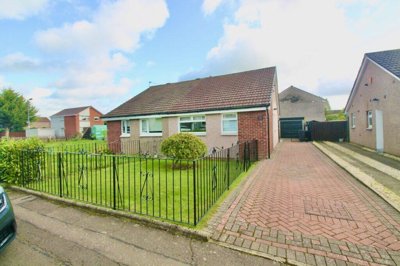
The 2 bed house market features detached, semi-detached, and terraced properties with two separate bedrooms plus living spaces. Properties in Glasgow range from Victorian and Edwardian period homes to modern new builds, with pricing varying across different neighbourhoods.
£995/m
3
0
68
Source: home.co.uk
Showing 3 results for 2 Bedroom Houses to rent in Glasgow, Scotland. The median asking price is £995/month.
Source: home.co.uk
Semi-Detached
2 listings
Avg £995
Terraced
1 listings
Avg £1,350
Source: home.co.uk
Source: home.co.uk
Glasgow lets on the back of a housing mix that still leans hard towards flats. Across the city, renters are choosing between traditional tenements, converted buildings and modern apartment schemes, which keeps demand steady in central neighbourhoods as well as the outer suburbs. home.co.uk listings point to active new-build supply in Glasgow too, including Hamiltonhill's 650-home masterplan, 25 Burnbank Gardens with 48 flats for social rent, and NorthBridge, where 2-bedroom apartments start from £254,995. Older stock still defines the city, but these newer homes add another option, especially for renters focused on energy efficiency.
The sales picture tells us a lot about confidence across Glasgow. homedata.co.uk records show an average sold price of £243,544 last year, up 7% year on year, with 10,416 sales recorded across 2023. There is a clear gap by property type, with flats at £187,016, terraced homes at £228,902 and semi-detached homes at £273,120. For renters, that spread matters. One area can include compact one-bed flats close to the centre, then larger family houses further out, and value is often shaped as much by location, building age and energy performance as by bedroom count.
Most of the fresh development is landing in Glasgow's regeneration corridors. At The Victoria site in the Southside, the range runs from 1 to 4 bedroom homes, while Royale Meadows has 2, 3 and 4 bedroom homes priced from £207,000 to £346,000. They are not purpose-built rental blocks, but they still help explain the pull of the city for movers looking for newer stock and better insulation. That has a knock-on effect for tenants, because it broadens choice in the private rented sector and in resale-led neighbourhoods nearby.

District by district, Glasgow changes quickly. The centre is busy and easy to cover on foot. The West End has a café scene and a strong student presence, while the Southside reads as more residential, and the outer districts contain more family housing and newer estates. Flats dominate here far more than in many other parts of Scotland, so the rental market is shaped by tenement living, shared closes and compact urban streets. Glasgow has its own rhythm.
Sandstone still sets the tone in much of Glasgow. Blonde and red sandstone tenements turn up again and again in older districts, along with slate roofs, decorative stonework and traditional close entrances. Geology matters as well, because the city sits on clay soil that can shrink and swell as moisture levels change, which is why damp, movement and repair history get close attention from local buyers and renters. We see that most clearly in older tenements and conversions, where an inspection can reveal far more than the kerbside view suggests.
Demand stays high for a reason. Glasgow is a large urban area with a high share of single-adult households and one of Scotland's strongest rental cultures, so there is a regular flow of students, working adults, families and older tenants looking for a place that fits. New homes in Hamiltonhill, Burnbank Gardens, Garthamlock, Pollokshaws and Darnley all sit within Glasgow city boundaries, which matters if you want to remain in the city rather than edge into nearby towns. That distinction is not trivial, because a similar-looking spot on the map can mean a very different commute, council tax bill or local feel.
For many families, the search starts with the catchment map, not the street list. Glasgow has a wide spread of council primaries and secondaries, along with established independent schools, so the choice is there, but the exact answer depends on the address. Names that come up again and again include Jordanhill School, Hillhead High School, Notre Dame High School, The Glasgow Academy and Hutchesons' Grammar School. One side of a road can fall into a different catchment from the other, so we would always check the precise council boundary before taking on a tenancy.
Post-16 education has a big effect on Glasgow's rental market. The University of Glasgow, the University of Strathclyde and Glasgow Caledonian University bring students, staff and researchers into the city, and City of Glasgow College adds more demand for central homes. That is one reason furnished flats around the city centre, the West End and nearby districts stay busy in term time. Renting with children changes the calculation a bit, because school runs, clubs and day-to-day travel all need to work as well.
School choice in Glasgow is rarely just about results. A West End address may suit a household that wants established schools and an urban setting, while Southside areas can give renters more space and a quieter feel without giving up the convenience of staying inside the city. Glasgow is big enough that the right school for one household can be the wrong one for the next. We usually suggest building the shortlist around schools first, then looking at travel, garden space and the surrounding streets.

Getting around Glasgow is relatively straightforward, and renters tend to stick with the city because of it. Central Station and Queen Street tie Glasgow into Edinburgh, the west coast, Ayrshire and the wider rail network, while the Subway gives a quick loop through the centre and west side. Buses cover plenty of the gaps, especially in districts away from rail stations. That opens up a simple trade-off, quieter living in one area, city access without driving every day.
Drivers have solid road options too. The M8, M74 and M77 make it easier to reach central Scotland, the north and the west, which helps if your week is split between city work and regional travel, or if airport access matters from the west side. Parking is less straightforward in some tenement districts, where streets were laid out long before modern car ownership levels. We would never assume on-road parking is simple, so it is sensible to check permit rules, visitor spaces and the number of bays before agreeing a tenancy.
Walking and cycling can work very well in Glasgow, but much depends on the route. Central districts suit people on foot, and some residents find that shops, cafés, stations and work all become manageable once they choose the right area. The most practical commute is often mixed rather than fixed, rail or Subway on some days, bus on others, with occasional driving. That flexibility is part of what keeps the rental market broad.
Before viewings start, we recommend getting a rental budget agreement in principle so you know what you can comfortably afford in Glasgow's different neighbourhoods.
Start by choosing between the centre, West End, Southside or a quieter outer area, then weigh up travel times, flat style and local facilities.
Good rentals in Glasgow do not hang around for long, so arrange viewings early and bring ID, proof of income and references.
Before committing, check the lease length, the deposit, the furnishing level, the pets policy and any bills or common charges included.
Pay attention to damp, ventilation, heating performance, stair condition, security and signs of water ingress or movement.
After your application is accepted, complete the references, pay the deposit, go through the inventory and photograph the property on day one.
Glasgow's older housing can look fantastic, but it needs a careful check. Sandstone tenements often bring real character, though they can also show damp, cracking, timber rot or older heating systems that need closer attention. The clay soil beneath the city can play into shrink-swell movement, so what looks like a minor cosmetic mark may point to a wider maintenance issue. Where repairs have already been done, we would ask how long the problem has been resolved and whether the work was properly inspected.
Flood risk deserves proper attention in Glasgow, especially near rivers, the Clyde corridor and places exposed to heavy surface water. The city has a long history of summer flooding, and water can build up quickly after intense rain because of the mix of sewer systems, overland flow and urban drainage. Lower ground level flats, or homes near a known watercourse, call for extra questions about previous incidents, drainage upgrades and any insurance concerns. A reliable landlord or letting agent should be able to say whether the building has had water ingress before, and how quickly it was dealt with.
Traditional streets and conservation areas can limit what can be changed in a home. Across Glasgow, there are many places where natural sandstone, suitable sash windows and sympathetic materials matter, so tenants should not assume every alteration will be allowed. In flats, day-to-day issues such as factoring arrangements, stair cleaning, bin storage, bike storage and entry security often count for more than garden size. We treat the building as part of the decision, not just the flat, because shared areas can shape comfort far more than the bedroom total.

What we can say is that homedata.co.uk records put Glasgow's average sold price at £243,544 last year, which helps explain the wide spread in rental values between flats, terraces and larger family houses. In day-to-day searching, the main differences usually come down to district, property age and energy efficiency. For a clearer sense of what your budget can actually secure, get a rental budget agreement in principle before booking viewings.
Council tax in Glasgow is set by the individual property, not simply by the area. Two homes on the same street can sit in different bands, even when they look similar from the outside. Older tenement flats often come in lower than larger family houses, but the only safe way to know is to check the exact address with Glasgow City Council before signing a tenancy. It can alter the true monthly cost more than many renters expect.
The right school depends on the exact street and its catchment rules. Families often look closely at Jordanhill School, Hillhead High School, Notre Dame High School, Hutchesons' Grammar School and The Glasgow Academy, but age, admissions route and commute will decide what works for your household. Catchment areas can move quickly, so check the council map before choosing a flat. We would only treat school access as settled once the schools are confirmed.
For a Scottish city, Glasgow gives renters plenty of ways to get around. Central Station, Queen Street Station and the Subway cover a lot on their own, and bus services fill many of the remaining gaps, which means a car is not always necessary, particularly in central districts and around the West End. Drivers are still well served by the M8, M74 and M77. Where easy travel is high on the list, Glasgow usually stacks up well.
Glasgow can work very well as a renting city, especially if you want choice, character and solid connections across the network. A high share of renters, a housing market dominated by flats, and a mix of tenements, modern apartments and regeneration-led new homes all contribute to that. homedata.co.uk records also show 10,416 sales across 2023, which points to a market with plenty of movement in and out of the city. The bigger question is usually which part of Glasgow suits the way you live.
In Scotland, tenant fees are much lighter than they were, so the main upfront costs are usually the deposit and the first month's rent. Deposits are normally capped at no more than two months' rent, and we would always want a written breakdown of every payment due before anything is agreed. For a furnished property, check whether there is any other move-in cost, such as a holding payment or advance rent. Getting the charges in writing keeps surprises to a minimum.
There are a few Glasgow-specific issues worth checking, and older homes need the closest look. Clay soil can contribute to movement. Sandstone tenements may show damp or other maintenance problems. Some parts of the city also face fluvial or surface water flooding. Ask about ventilation, roof repairs, drainage and any past water ingress, especially in ground-floor flats or homes close to watercourses. A quick inspection now can prevent a bigger problem later.
The headline rent is only part of the cost in Glasgow. Most renters also need to budget for the deposit, the first month's rent and moving costs, and Scotland's ban on tenant letting fees has made that side of the process simpler than it used to be. In older tenement flats, there can also be higher heating bills, communal maintenance and occasional repair contributions, which may affect monthly outgoings more than a small difference in rent. When you compare homes, the useful figure is total monthly cost.
In Glasgow, the better value often comes from choosing the right type of property for the building, not just chasing the lowest listed figure. A bright modern flat can cost more at the start but save money on energy use, while a sandstone tenement may give you more space and a stronger feel for the area, provided it has been properly maintained. Ask for the inventory, check meter readings, confirm what is included and understand any common charges before move-in. We think the right home is the one that matches your budget, your commute and the way you actually live.
Properties to Rent In London

Properties to Rent In Plymouth

Properties to Rent In Liverpool

Properties to Rent In Glasgow

Properties to Rent In Sheffield

Properties to Rent In Edinburgh

Properties to Rent In Coventry

Properties to Rent In Bradford

Properties to Rent In Manchester

Properties to Rent In Birmingham

Properties to Rent In Bristol

Properties to Rent In Oxford

Properties to Rent In Leicester

Properties to Rent In Newcastle

Properties to Rent In Leeds

Properties to Rent In Southampton

Properties to Rent In Cardiff

Properties to Rent In Nottingham

Properties to Rent In Norwich

Properties to Rent In Brighton

Properties to Rent In Derby

Properties to Rent In Portsmouth

Properties to Rent In Northampton

Properties to Rent In Milton Keynes

Properties to Rent In Bournemouth

Properties to Rent In Bolton

Properties to Rent In Swansea

Properties to Rent In Swindon

Properties to Rent In Peterborough

Properties to Rent In Wolverhampton

Enter your details to see if this property is within your budget.
Loans, cards, car finance
Estimated property budget
Borrowing + deposit
You could borrow between
Typical borrowing
Monthly repayment
Est. at 4.5%
Loan-to-value
This is an estimate only. Your actual budget may vary depending on interest rates, credit history, and personal circumstances. For an accurate affordability assessment, speak to one of our free mortgage advisors.
This calculator provides estimates for illustrative purposes only and does not constitute financial advice. Your home may be repossessed if you do not keep up repayments on your mortgage. Estimates based on 4.5% interest rate, repayment mortgage. Actual rates depend on your circumstances.
Homemove is a trading name of HM Haus Group Ltd (Company No. 13873779, registered in England & Wales). Homemove Mortgages Ltd (Company No. 15947693) is an Appointed Representative of TMG Direct Limited, trading as TMG Mortgage Network, which is authorised and regulated by the Financial Conduct Authority (FRN 786245). Homemove Mortgages Ltd is entered on the FCA Register as an Appointed Representative (FRN 1022429). You can check registrations at NewRegister or by calling 0800 111 6768.

We use cookies to show you personalised content and improve your experience of our website. Find out more in our Privacy policy and Cookie policy.