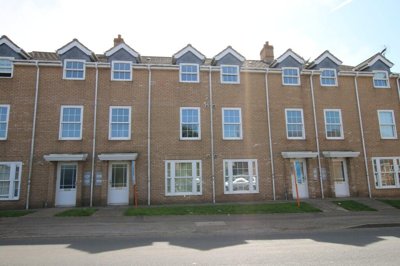
Browse 86 rental homes to rent in Fenland, Cambridgeshire from local letting agents.
Studio apartments feature open-plan living spaces without separate bedrooms, incorporating sleeping, living, kitchen, and bathroom facilities. The Fenland studio market includes properties in modern apartment complexes, converted Victorian and Georgian buildings, and purpose-built developments.
£700/m
19
0
47
Source: home.co.uk
Showing 19 results for Studio Flats to rent in Fenland, Cambridgeshire. The median asking price is £700/month.
Source: home.co.uk
Flat
19 listings
Avg £696
Source: home.co.uk
Source: home.co.uk
The Fenland rental market presents attractive opportunities for tenants seeking space and value. Detached properties command the highest rents, typically reflecting their larger footprints and private garden spaces that are particularly valued in family households. With average purchase values around £323,000 for equivalent ownership, detached rentals offer premium accommodation suitable for larger families or those working from home who require dedicated office space and outdoor areas.
Semi-detached homes represent the most active segment of the market, with prices rising 8.6% over the past year, demonstrating strong demand from families and professionals alike. These properties offer an ideal balance between space and affordability, typically featuring two to three bedrooms, a front and rear garden, and off-street parking. The 8.6% price growth in this category outpaced the overall 7.0% market increase, suggesting that semi-detached properties are in particularly high demand among the tenant population in Fenland. Families renting semi-detached homes in towns like March or Wisbech benefit from proximity to local schools, parks, and community facilities while enjoying the generous proportions that make these properties so popular.
Terraced properties offer an accessible entry point to the rental market, with average prices around £168,000 for equivalent ownership values, making them popular among first-time renters and smaller households. Many Victorian and Edwardian terraces in Fenland market towns feature generous room sizes, high ceilings, and original features that newer constructions often lack. Flats and maisonettes provide the most affordable rental options in Fenland, with average values around £96,000. These properties are commonly found in the town centres of March and Wisbech, offering convenient access to shops, restaurants, and public transport connections including the Cambridgeshire Loop railway stations that serve the area.
The 7.0% overall price growth over twelve months signals sustained buyer confidence in the Fenland market, which translates into a competitive but stable rental environment. First-time buyers paid an average of £203,000 in December 2025, a 7.5% increase from December 2024, indicating that the market remains active despite broader economic uncertainty. For tenants, this means that while competition for the best rental properties can be keen, the market offers genuine variety across all property types and price points. The average price of a home purchased with a mortgage in Fenland was £232,000 in December 2025, up from £216,000 in December 2024, reflecting continued demand that keeps the rental sector dynamic and well-supplied.

Fenland takes its name from the distinctive landscape that defines this corner of Cambridgeshire. The area is characterised by its remarkably flat, low-lying topography, formed over centuries through the extensive drainage of wetlands that once covered the region. The underlying geology consists predominantly of alluvial deposits, including silt, clay, peat, and sand, creating the fertile conditions that have made this one of the most productive agricultural areas in Britain. When you rent in Fenland, you become part of a landscape shaped by water management and rural industry, where drainage channels and pumping stations remain essential infrastructure protecting homes and farmland alike.
The market towns that anchor Fenland provide essential services and community life for surrounding villages. Wisbech, often described as the capital of the Fens, features elegant Georgian architecture along the historic waterfront and hosts regular markets drawing visitors from across the region. The town centre features the familiar pattern of narrow streets opening onto expansive market squares, lined with independent shops, cafes, and traditional public houses. Wisbech's concentration of listed buildings and historic architecture reflects its importance as a trading centre through centuries of fenland development, from medieval times through to the agricultural boom of the nineteenth century.
March, the largest town, serves as a key service centre with major supermarkets, healthcare facilities, and educational institutions. The town grew significantly during the railway era and retains excellent transport connections that continue to serve residents today. March station sits on the Ely to Peterborough line, providing regular services to Cambridge and connections to the national rail network via Peterborough. The town offers a comprehensive range of high street retailers alongside independent businesses, while the nearby town of Chatteris provides additional shopping and leisure options for those seeking smaller community atmospheres.
Whittlesey, another historic market town within Fenland, retains much of its medieval character with buildings dating back several centuries and a traditional market square that continues to host weekly markets. The town sits close to the A605, providing convenient road access to Peterborough and the A1(M) beyond. Chatteris, the smallest of the four main market towns, offers particularly affordable property values and a close-knit community feel, making it popular among first-time renters and those seeking to maximise their housing budget while enjoying the fenland lifestyle. The towns preserve a strong sense of community with annual events, local sports clubs, and active neighbourhood watch schemes that make renting here particularly appealing for families and those seeking a friendly welcome.

Families considering renting in Fenland will find a comprehensive network of educational establishments across all levels. Primary schools serve the various towns and villages, with several schools in the area holding positive Ofsted ratings and strong reputations for pastoral care. In Wisbech, primary schools such as St. Peter's CofE Primary School and Elm Road Primary School serve the local population, while March hosts establishments including Westwood Primary Academy and All Saints Interchurch CofE Primary School. Parents should visit schools directly where possible and speak to existing parents to gain a full picture of each institution's culture and academic performance beyond published statistics.
Secondary education is provided through secondary modern schools and academy converters in the larger towns, while several institutions offer sixth form provision for students continuing their education beyond GCSE. Thomas Clarkson Academy in Wisbech and Neale-Wade Academy in March provide secondary education with sixth form facilities, serving students from across their respective catchment areas. These schools have undergone improvements in recent years, with both institutions gaining academy status and investing in facilities that enhance the educational experience available to local students. Parents should research individual school catchments carefully, as admission policies vary and popular schools can fill quickly during term time.
Further education opportunities are available at colleges in nearby Peterborough and Cambridge, accessible via the reliable transport connections that link Fenland to these larger cities. The College of West Anglia, with campuses in King's Lynn and Cambridge, provides vocational and A-level courses that serve students from across the fenland region. For families prioritising educational choices, renting in Fenland allows time to assess local school performance data and secure placements at preferred institutions before committing to a longer-term move or purchase in the area. The relatively short commute times to Cambridge and Peterborough via the railway network mean that students can also access further education options in these larger cities without requiring a house move.

Transport connectivity from Fenland centres on the railway lines serving the market towns with direct connections to Cambridge, Peterborough, and London. The Cambridgeshire Loop line provides regular services to Cambridge, with journey times making daily commuting feasible for those working in the city. March station offers direct services to Cambridge, with journey times of approximately 45 minutes making it practical for daily commuters who work in the city but wish to live in the more affordable fenland area. Wisbech currently lacks a direct railway service following the closure of the Wisbech branch line, though proposals for restoration have been discussed periodically, and residents currently rely on bus connections to access rail services at March or Peterborough.
Peterborough station, offering East Coast Main Line services to London King's Cross in under an hour, is accessible from several Fenland towns by rail or bus. The A47 trunk road runs through the area connecting Wisbech to Peterborough and Norwich, providing the primary route for car travel to these destinations. The A141 provides routes toward Cambridge via Huntingdon, connecting to the A14 and M11 motorway for faster access to Cambridge and beyond. For those commuting to Cambridge by car, the journey from March takes approximately one hour via the A142 and A14, though traffic conditions on the A14 can extend journey times significantly during peak hours.
Bus services operated by various providers connect smaller villages to the larger towns, though service frequencies vary and those planning commutes should verify timetables carefully. The Stagecoach in Cambridgeshire bus network provides services within Fenland and connections to Peterborough and Cambridge, with more frequent services on the main routes between market towns. Rural services to smaller villages may operate only during weekday business hours, making car ownership practically essential for those living outside the main towns. Cycling infrastructure has improved in recent years, particularly around the town centres, though the flat landscape makes cycling practical for longer distances despite the lack of dedicated cycle lanes on major routes. For tenants considering their commute options, renting in Fenland first allows you to test transport arrangements before committing to the area permanently.

Renting properties in Fenland requires careful attention to factors specific to this distinctive landscape. Flood risk is the most significant environmental consideration, as the low elevation and proximity to numerous rivers and drainage channels creates potential for both river flooding and surface water flooding during periods of heavy rainfall. The Fenland area is crisscrossed by an extensive network of drains and rivers, including the River Nene and the River Great Ouse catchment areas, all of which require careful management to protect properties from water ingress. The relatively flat topography means that heavy rainfall can lead to surface water accumulating rather than draining away quickly, creating flood conditions even in areas not directly adjacent to rivers.
Tenants should enquire about the flood history of any property, check whether previous flooding has been recorded, and consider the availability of flood insurance, which can be more expensive in high-risk areas. Properties elevated above ground level or with well-drained gardens may offer better protection against water ingress, though during severe weather events no property in the lower-lying parts of Fenland can be considered entirely without flood risk. Properties in areas like the Old River Nene floodplain or near drainage channels running through Wisbech and March require particular scrutiny. Landlords should be able to provide information about any flood events that have affected the property and any measures taken to mitigate future flooding, such as the installation of flood barriers or pump systems.
The geological composition of Fenland, with its clay and peat deposits, introduces potential for ground movement that can affect properties over time. Shrink-swell risk, where the ground contracts or expands due to moisture changes, represents risks particularly for older properties with shallow foundations. This risk is most pronounced in areas where clay content is highest, as clay absorbs water readily and changes volume significantly with moisture fluctuations. Peat deposits, common in the fenland substrate, can also shrink dramatically when drained or when water tables change, leading to subsidence issues that may affect buildings above. When renting, it is worth asking about any history of structural movement, cracks in walls, or previous underpinning work.
Given the age of much of the housing stock in market towns like Wisbech and March, problems with damp, roof condition, and outdated electrical systems are also commonly encountered and should form part of your pre-tenancy checks. Many Victorian and Edwardian properties in Fenland were built before modern electrical standards, meaning that wiring may be outdated, sockets may be insufficient for modern needs, and fuse boxes may lack the safety features of contemporary consumer units. Rising damp is common in older properties with solid walls and inadequate damp-proof courses, while penetrating damp can affect properties where roof coverings or external render have deteriorated. A thorough property survey before signing your tenancy agreement can identify these issues and provide documentation that protects you from being held responsible for pre-existing problems when you eventually move on.

Contact lenders or brokers to arrange a rental budget agreement in principle before beginning your property search. Having a clear understanding of your monthly budget helps narrow your search to properties you can genuinely afford and demonstrates your reliability to landlords and letting agents when you make enquiries. In Fenland, where rental prices vary significantly between property types, establishing your budget early prevents disappointment and helps you focus on properties that match your financial situation. Budget calculators available online can help you understand how much rent you might expect to pay based on local property values and typical rental yields in the Fenland area.
Spend time exploring different towns and villages within Fenland to find the neighbourhood that best suits your lifestyle. Consider commute times to work, proximity to schools if you have children, access to shops and amenities, and the general character of each area. The market towns of Wisbech, March, Whittlesey, and Chatteris each offer different amenities and atmospheres, so visiting each before committing to a search area can prevent costly mistakes. Renting allows you to experience these factors firsthand before committing to a purchase, and Fenland's relative affordability compared to other parts of Cambridgeshire means you may have more flexibility in your choices than in more expensive markets.
Contact local letting agents to arrange viewings of properties that match your criteria. Take notes during each viewing, photograph the property condition, and ask about the length of the current tenancy and reason for vacating. Pay attention to signs of damp, the condition of fixtures and fittings, and the behaviour of any existing neighbours. In Fenland's market towns, many properties are let through local independent letting agents rather than national chains, so building relationships with these agents can give you access to properties before they appear on mainstream listing sites. Ask agents about the local rental market conditions, typical tenancy lengths, and any properties coming to the market soon that might match your requirements.
Consider commissioning a RICS Level 2 Survey on any property you are seriously considering, particularly given the area-specific risks of flooding and ground movement in Fenland. A professional survey identifies structural issues, electrical problems, and maintenance concerns that may not be visible during a standard viewing, potentially saving you significant expense or trouble later. Given the prevalence of older properties in the Fenland market towns, surveys can reveal issues with foundations, damp courses, roof structures, and electrical wiring that require attention. While surveys are typically associated with property purchases, tenants can also benefit from understanding the condition of their potential new home, and some surveys can be arranged on behalf of prospective tenants with landlord permission.
Once you have chosen a property, your letting agent will prepare a tenancy agreement. Read this carefully before signing, paying attention to the deposit amount, notice periods, included appliances, and any restrictions on pets or modifications. Ensure you receive written confirmation of the deposit protection scheme being used, which must be a government-approved scheme under the terms of the Housing Act 2004. Standard deposits amount to five weeks rent and must be protected within 30 days of receipt. Tenants should also confirm arrangements for inventory checks, garden maintenance responsibilities, and procedures for reporting maintenance issues during the tenancy.
Arrange for inventory checks at the start of your tenancy, ensuring all contents and condition details are documented with photographs where possible. Set up utility accounts, council tax, and any other recurring payments promptly, notifying the relevant providers of your move-in date and meter readings. Take meter readings on the day you move in to ensure you only pay for your own consumption rather than any usage by previous occupants. Contact the local authority to establish which council tax band applies to your rental property, as this varies between properties and represents an ongoing monthly cost alongside rent and utility bills. Building contents insurance should be arranged before or on the day you move in, as this protects your belongings against damage, theft, or flooding during your tenancy.
While specific rental price data was not available in our research, the average house price in Fenland was £235,000 in December 2025, representing a 7.0% year-on-year increase. Detached properties average around £323,000, semi-detached around £215,000, terraced around £168,000, and flats around £96,000. These purchase prices provide useful context for understanding rental values in the area, with rents typically falling within a similar proportional relationship to local incomes and property values. The semi-detached market showed the strongest growth at 8.6%, suggesting strong demand for this property type among tenants seeking family accommodation.
Council tax bands in Fenland vary by property, with bands ranging from A through to H depending on the value and type of property. The Fenland District Council collects council tax and sets annual rates based on these bands, with lower bands applying to properties of lower value. Terraced properties and smaller flats typically fall into bands A to C, while larger detached properties may be in bands E to H. Tenants should ask landlords or letting agents for the specific council tax band of any property they are considering, as this forms part of the regular monthly costs of renting alongside rent and utility bills. Council tax payments in Fenland are generally lower than in many other parts of Cambridgeshire due to the more affordable property values in the area.
Fenland hosts several primary and secondary schools serving the local population, with individual Ofsted ratings varying across institutions. Primary schools in the area include St. Peter's CofE Primary School and Elm Road Primary School in Wisbech, and All Saints Interchurch CofE Primary School in March, among others serving the various towns and villages. Secondary options include Thomas Clarkson Academy in Wisbech and Neale-Wade Academy in March, both offering sixth form provision. Parents should consult the Ofsted website for the latest inspection results and consider visiting schools directly to assess their suitability for individual children. The area connects to further education colleges in nearby Cambridge and King's Lynn via reliable transport links, providing progression routes for older students beyond local secondary schools.
Public transport in Fenland includes regular bus services connecting towns and villages, though frequencies vary and rural services may be limited on weekends and evenings. The Cambridgeshire Loop railway serves March station with direct connections to Cambridge, while Peterborough station provides access to East Coast Main Line services including trains to London King's Cross in under an hour. Wisbech currently relies on bus connections to access rail services, as the town lacks its own railway station following historical closures. The A47 and A141 roads provide the main routes for car travel, connecting Fenland to Peterborough, Cambridge, and Norwich. For tenants considering their commute options, renting in Fenland first allows you to test transport arrangements before committing to the area permanently.
Renting in Fenland offers excellent value compared to many parts of Cambridgeshire and the wider East of England, with lower average property values translating into more affordable rents than you'll find in Cambridge, Huntingdon, or Peterborough city centres. The area provides a high quality of life for families and those seeking space, with strong community networks, good local schools, and access to the distinctive fenland landscape. The market towns offer comprehensive amenities including supermarkets, healthcare facilities, and leisure options that mean most daily needs can be met locally. The main considerations include flood risk awareness given the low-lying geography, ensuring adequate transport arrangements, and understanding the age and condition of the local housing stock before committing to a tenancy. Many rental properties are Victorian or Edwardian constructions with character and solid traditional build quality, though they may require attention to damp proofing, electrical updates, or roof maintenance.
Standard deposits for rental properties in Fenland typically amount to five weeks rent, held in a government-approved deposit protection scheme throughout your tenancy. This deposit must be protected within 30 days of receipt and tenants should receive written confirmation of which scheme is being used. Additional upfront costs include the first month rent in advance, typically payable before you receive keys to the property, along with referencing fees if required by your landlord or agent. A holding deposit may be required to secure a property while referencing checks are completed, which may be offset against your first rent payment or retained if you fail referencing checks. Professional referencing services typically cost between £25 and £100 depending on the provider and depth of checks required. First-time renters should also consider potential rental budget arrangement fees, contents insurance, and the cost of moving belongings when calculating their overall moving budget.
Fenland is widely recognised as an area with significant flood risk due to its low elevation and proximity to numerous rivers and drainage channels. The area is crisscrossed by an extensive network of drains and rivers, including the River Nene and the River Great Ouse catchment areas, both of which can cause flooding during periods of heavy rainfall or when water levels rise downstream. Surface water flooding is also a concern in the flat fenland landscape, where heavy rain may not drain away quickly. Tenants should ask landlords about the flood history of any property, check whether previous flooding has been recorded, and verify that appropriate flood insurance is in place. Properties in elevated positions or on well-drained ground may offer lower flood risk, though no property in the lower-lying parts of Fenland can be considered entirely without risk during severe weather events.
The geology of Fenland, with its clay and peat deposits, creates potential for ground movement that can affect properties over time. Shrink-swell risk occurs when clay soils contract during dry periods and expand when wet, causing movement that can stress building foundations and lead to structural issues. Peat deposits, common throughout the fenland area, can shrink dramatically if water tables drop or if the ground dries out, leading to subsidence that affects buildings above. These risks are most significant in older properties with shallow foundations that were not designed to accommodate ground movement. When renting in Fenland, ask about any history of structural movement, cracks in walls, or previous underpinning work, and consider commissioning a survey to assess the property's foundation condition and susceptibility to ground movement issues.
From 4.5% APR
Get pre-approved for your renting budget from £4.5% APR
From £25
Professional referencing to secure your rental property
From £350
Professional property survey ideal for older homes and first rentals
From £75
Energy performance certificate for your rental property
Properties to Rent In London

Properties to Rent In Plymouth

Properties to Rent In Liverpool

Properties to Rent In Glasgow

Properties to Rent In Sheffield

Properties to Rent In Edinburgh

Properties to Rent In Coventry

Properties to Rent In Bradford

Properties to Rent In Manchester

Properties to Rent In Birmingham

Properties to Rent In Bristol

Properties to Rent In Oxford

Properties to Rent In Leicester

Properties to Rent In Newcastle

Properties to Rent In Leeds

Properties to Rent In Southampton

Properties to Rent In Cardiff

Properties to Rent In Nottingham

Properties to Rent In Norwich

Properties to Rent In Brighton

Properties to Rent In Derby

Properties to Rent In Portsmouth

Properties to Rent In Northampton

Properties to Rent In Milton Keynes

Properties to Rent In Bournemouth

Properties to Rent In Bolton

Properties to Rent In Swansea

Properties to Rent In Swindon

Properties to Rent In Peterborough

Properties to Rent In Wolverhampton

Enter your details to see if this property is within your budget.
Loans, cards, car finance
Estimated property budget
Borrowing + deposit
You could borrow between
Typical borrowing
Monthly repayment
Est. at 4.5%
Loan-to-value
This is an estimate only. Your actual budget may vary depending on interest rates, credit history, and personal circumstances. For an accurate affordability assessment, speak to one of our free mortgage advisors.
This calculator provides estimates for illustrative purposes only and does not constitute financial advice. Your home may be repossessed if you do not keep up repayments on your mortgage. Estimates based on 4.5% interest rate, repayment mortgage. Actual rates depend on your circumstances.
Homemove is a trading name of HM Haus Group Ltd (Company No. 13873779, registered in England & Wales). Homemove Mortgages Ltd (Company No. 15947693) is an Appointed Representative of TMG Direct Limited, trading as TMG Mortgage Network, which is authorised and regulated by the Financial Conduct Authority (FRN 786245). Homemove Mortgages Ltd is entered on the FCA Register as an Appointed Representative (FRN 1022429). You can check registrations at NewRegister or by calling 0800 111 6768.