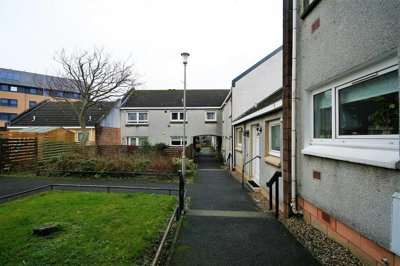
Browse 39 rental homes to rent in East Dunbartonshire from local letting agents.
Studio apartments feature open-plan living spaces without separate bedrooms, incorporating sleeping, living, kitchen, and bathroom facilities. The East Dunbartonshire studio market includes properties in modern apartment complexes, converted Victorian and Georgian buildings, and purpose-built developments.
East Dunbartonshire has established itself as one of Scotland's most sought-after residential areas, and the rental market reflects this sustained popularity. Property prices across the area have shown consistent growth, with the overall average rising 3.9% over the twelve months to December 2025, reaching approximately £1,405 pcm. While this growth rate sits slightly below the Scotland-wide average of 4.9%, it demonstrates the stable, long-term appeal of the area rather than speculative bubbles. Historical data shows that prices have recovered from a 2023 peak dip of around 6%, with current values now approximately 4% above the previous year and 6% beyond the 2023 high point. For renters, this price resilience indicates a secure market where properties hold their value, providing confidence that your chosen neighbourhood will remain desirable throughout your tenancy. ===NEXT===
The mix of property types available to rent in East Dunbartonshire caters to diverse household needs and budgets. Flats and maisonettes represent the most accessible entry point, with average values around £915 pcm, making them popular choices for first-time renters and young professionals. This segment has shown more modest growth at 1.8% over the past year, suggesting stabilising demand in the starter property market. Terraced properties, averaging £1,140 pcm, often provide the ideal balance of space and affordability for small families, with prices in this segment showing the strongest growth at 5.8% over the past year. Semi-detached homes, averaging £1,367 pcm, dominate the sales market and also feature prominently in the rental sector, offering three-bedroom family accommodation that remains in consistently high demand. ===NEXT===
Detached properties, while commanding premium rents reflecting their £3,399 pcm average value, provide generous living space and gardens that families often prioritise. The significant price differential between property types means that renting rather than buying in East Dunbartonshire can offer substantial savings, particularly for those not yet ready to commit to purchase. Over the last decade, 18,442 properties have sold in East Dunbartonshire, demonstrating the sustained transaction volumes that reflect the area's residential popularity. This active market means

For renters seeking modern accommodation, East Dunbartonshire offers several new build developments that provide contemporary living within this established residential area. At Weaver's Brae in Kirkintilloch, located off Market Road, a range of terraced and detached homes are available with prices starting from around £311,000 for terraced properties such as the Arisaig plot, while detached options like the Brodick and Bargower plots command prices in the region of £416,000 to £420,000. This development offers modern construction with the convenience of Kirkintilloch's town centre amenities within walking distance, making it attractive for renters who prefer contemporary fittings and energy-efficient homes.
In Bishopbriggs, the Eden at Boclair Mews development on South Crosshill Road features modern flats that appeal to first-time renters and professionals seeking low-maintenance accommodation. With prices around £279,995 for selected apartments, this development demonstrates the premium that modern specifications command in this sought-after area. Properties in new build developments often carry slightly higher rents reflecting their contemporary amenities, superior insulation, and reduced maintenance requirements. Renters choosing modern properties benefit from potentially lower utility bills due to improved energy efficiency ratings, though availability in the rental market from these developments may vary.

East Dunbartonshire encompasses a distinctive blend of urban convenience and natural beauty that makes it immediately appealing to newcomers. The area spans from the urban fringes immediately north of Glasgow, where towns like Bearsden and Bishopbriggs offer seamless commuting access, through to the scenic transitional landscape where the Campsie Fells and Kilpatrick Hills begin their rise. This geography provides residents with remarkable flexibility: city employment and cultural amenities within easy reach, yet a sense of separation and space that distinguishes East Dunbartonshire from Glasgow itself. The population of approximately 109,000 maintains a community atmosphere where neighbours recognise each other and local businesses thrive, without the anonymity of larger urban centres.
The economic profile of East Dunbartonshire reinforces its appeal as a residential destination. With unemployment at just 2.5% and economic activity rates of 76.3%, the area supports a prosperous population with strong household incomes. Average weekly earnings of £823 reflect the professional character of residents, many of whom commute to Glasgow for employment in finance, professional services, healthcare, and education. The area ranks as the fourth most expensive location in Scotland for homeownership affordability, with residents typically needing to devote over five times their annual income to purchase the average property. Lower-quartile income households face even steeper challenges, requiring over 6.5 times their income for market entry-level homes. These affordability dynamics contribute to strong rental demand from those who cannot or choose not to purchase at current price levels.
Local employment plays a significant role in the area's economy, with public services, retail, and the emerging waterfront tourism sector providing opportunities closer to home. The area's transition from historical reliance on heavy industry to modern service-sector employment has created a diverse economic base that continues to attract professional residents. This economic strength translates into well-maintained properties, thriving local amenities, and a built environment that retains its character and value over time. Household projections indicate continued growth, with the number of households expected to increase by over 5% to reach 49,129 by 2032, suggesting sustained demand for rental accommodation in the area.

Families searching for properties to rent in East Dunbartonshire will find an education landscape that contributes significantly to the area's desirability. The council area maintains a strong network of primary schools, many of which serve clearly defined catchment areas that renters should investigate before committing to a property. Several primary schools in Bearsden, Kirkintilloch, and Bishopbriggs have earned excellent reputations for both academic achievement and the breadth of extracurricular opportunities they offer pupils. Bearsden Primary and Mosshead Primary in Bearsden consistently attract interest from families, as do schools in Milngavie and Lenzie where the balance of accessibility and residential quality creates appealing family neighbourhoods.
The transition to secondary education is managed through the catchment school system, with schools such as Bishopbriggs Academy, Kirkintilloch High School, and Bearsden Academy serving their respective communities with comprehensive curriculum offerings. These secondary schools have established academic records that reflect the overall educational ambition of the area. For families seeking faith-based education, St. Mary's in Kirkintilloch and St. Ninian's High School in Kirkintilloch provide denominational options with established reputations. The presence of quality denominational schools adds to the breadth of educational choice available within the council area, allowing families to align schooling decisions with their values and preferences.
Beyond state education, East Dunbartonshire provides access to denominational schools for families seeking faith-based education, including St. Ninian's High School in Kirkintilloch. The area also attracts interest from families considering independent schooling options, with several respected private schools located within reasonable commuting distance in Glasgow's West End. For older students, sixth form provision allows pupils to continue their education locally, while Glasgow's renowned universities and colleges remain accessible for daily commuting or as progression pathways. Parents renting in the area should confirm current catchment boundaries and school enrollment policies directly with East Dunbartonshire Council, as these can influence which properties best serve a family's educational needs.

Transport connectivity ranks among East Dunbartonshire's most significant advantages for renters working in Glasgow or beyond. The area is served by an efficient rail network, with stations at Bearsden, Hillfoot, and Milngavie on the West Highland Line providing direct services to Glasgow Queen Street in approximately 15-25 minutes depending on the station. Bishopbriggs railway station offers similarly convenient access to the city centre, making car-free commuting entirely feasible for city workers. These rail connections transform otherwise distant suburbs into practical daily commute options, allowing residents to enjoy residential living without accepting excessive travel times.
Bus services complement the rail network, providing connections across the council area and onwards to Glasgow's city centre and surrounding towns. The M80 motorway passes through the eastern part of the area, connecting Kirkintilloch to Stirling and providing access to the wider Central Scotland motorway network for those who drive to work. Residents of Kirkintilloch and the surrounding area benefit from this road connectivity, though the absence of a heavy rail station in Kirkintilloch means that commuting to Glasgow typically relies on bus connections or driving to nearby stations. For those working in Stirling or further afield, the M80 provides convenient access that residents of more westerly towns would not enjoy.
Within the area itself, local road connections are generally good, though congestion on key routes during peak hours reflects the high proportion of commuters travelling to Glasgow. The A809 through Bearsden and Milngavie, and the A803 through Kirkintilloch, carry significant traffic volumes during morning and evening rush hours. For cyclists, ongoing investment in active travel infrastructure has improved conditions, though the hilly terrain in some areas requires appropriate fitness levels. The Campsie Fells and Kilpatrick Hills, while presenting recreational opportunities for outdoor enthusiasts, also create challenging cycling routes that may deter less experienced riders. Parking provision varies by location, with town centre flats typically offering limited parking while suburban properties more commonly include driveways or garages.

Renting property in East Dunbartonshire requires attention to several area-specific factors that differ from other Scottish locations. Flood risk deserves careful consideration, as East Dunbartonshire has experienced significant flooding events, particularly in August 2006 and during the autumn of 2013, which prompted a major flood alleviation scheme completed in November 2014. The scheme included a wetland area in Colquhoun Park that helps manage water flows and provides improved protection for surrounding neighbourhoods. While the system provides significantly improved protection, prospective tenants should investigate whether any specific properties or streets fall within SEPA's flood risk zones, particularly those near watercourses or in low-lying areas.
The Council works within the Clyde and Loch Lomond Flood Risk Management Plan and requires Flood Risk Assessments for proposed developments near watercourses where historical flooding issues exist or where SEPA's flood maps indicate potential risk. For climate change resilience, guidance recommends a +20% allowance on the estimated 1 in 200 year peak flow when assessing future flood risk. Properties in areas like the Colquhoun Park area of Clydebank received direct benefit from the flood alleviation works, but awareness of local drainage patterns and historical flooding remains prudent for any prospective tenant. Your letting agent should be able to advise on any specific flood history affecting a property, and the SEPA flood mapping service provides publicly accessible information about flood risk for any address.
The presence of listed buildings and conservation areas throughout East Dunbartonshire adds character to many neighbourhoods but brings specific considerations for renters. With 15 Category A listed buildings in the area, including significant works by architects David Hamilton and Alexander Thomson, properties in historic areas may be subject to restrictions on alterations or improvements. Notable examples include Lennox Castle and Bardowie Castle, which dates to the 16th century and represents one of the oldest listed structures in the council area. Numerous Category B listed buildings are found throughout wards including Bearsden, Kirkintilloch, and Lenzie, contributing to the architectural diversity that makes these neighbourhoods so visually appealing.
While tenants are generally not responsible for listed building consent, which remains with the property owner, understanding that your rental property sits within a heritage context may explain certain property features or limitations. Properties within designated conservation areas benefit from protections that help maintain the visual character of the neighbourhood, which generally supports property values and the quality of the residential environment. The architectural heritage, from historic castles through Victorian and Edwardian terraces to contemporary developments, contributes to the visual appeal that makes East Dunbartonshire neighbourhoods so attractive, but awareness of this context enriches the renting experience and helps tenants appreciate the character of their chosen home.

Before viewing properties to rent in East Dunbartonshire, obtain a rental budget agreement in principle from a lender if you plan to eventually purchase in the area. This demonstrates to letting agents and landlords that you are a serious, qualified tenant with a clear understanding of your budget. Gather required documentation including proof of identity, employment references, and previous landlord references if available. Understanding the affordability context of East Dunbartonshire, where the average property costs over five times annual household income, helps set realistic rental expectations.
Browse available rentals across East Dunbartonshire's towns including Bearsden, Bishopbriggs, Kirkintilloch, Lenzie, Milngavie, and the surrounding villages. Consider both the location relative to your workplace and the access to transport links, schools, and local amenities that will shape your daily life. Properties in popular areas like Bearsden and Bishopbriggs often attract multiple interested parties, so prompt action when you find suitable properties is advisable. New build developments in Kirkintilloch and Bishopbriggs may offer modern rental options alongside traditional housing stock.
When you find a property you wish to rent, submit your tenancy application promptly. This typically involves completing referencing checks covering your credit history, employment status, and rental history. Be prepared to provide payslips, bank statements, and employer references. In competitive areas of East Dunbartonshire where rental demand consistently outstrips supply, landlords may request additional information or interviews to help select between multiple strong applicants. Being well-prepared with complete documentation strengthens your application significantly.
Once your referencing is satisfactory, you will receive your tenancy agreement for review. Before signing, carefully check the inventory of fixtures and fittings to avoid disputes at tenancy end. Your deposit (capped at five weeks rent under Scottish tenancy regulations) will be protected in a government-approved scheme within 30 days of receiving it, and you should receive confirmation of this protection directly. Take time to understand your responsibilities under the tenancy agreement, including maintenance obligations and any restrictions on pets or modifications.
Coordinate your move-in date with the outgoing tenant or landlord. Take meter readings, collect keys, and complete your notification to relevant utilities and services. Register with local doctors and dentists if you are new to the area, as NHS registration in Scotland operates through a separate system from England. Familiarise yourself with East Dunbartonshire Council services available to residents, including bin collections, recycling facilities, and local authority contacts for any housing-related issues during your tenancy.
Understanding the costs associated with renting in East Dunbartonshire helps you budget accurately and avoid surprises during your property search. Scottish tenancy law provides significant protections for renters, including caps on deposits and restrictions on fees that some other UK regions do not enjoy. The maximum security deposit a landlord can request is five weeks rent, and this must be protected in a government-approved scheme within 30 days of receiving it. Your deposit protection certificate should be provided to you, giving you security that your money will be returned fairly at tenancy end, minus any legitimate deductions for damage or unpaid rent.
Beyond the deposit, prospective tenants should budget for several other costs when entering a rental agreement in East Dunbartonshire. Most letting agents charge an administration fee for processing your tenancy, though under Scottish regulations these must be reasonable and clearly explained in advance. You will typically need to pay the first month's rent in advance, often paid alongside your deposit before keys are released. Additional costs include references and credit checks (usually covered by your application fee), and potential charges for changing tenancy details if circumstances change during your lease period.
As you budget, remember that East Dunbartonshire's strong rental market means prices reflect local demand, and properties in convenient locations near stations or good schools command premium rents. The affordability challenges facing potential buyers in East Dunbartonshire, where average prices have risen by £62,450 over five years, contribute to rental demand from those who cannot access the sales market. This sustained demand supports rental prices at levels that reflect the area's desirability. Request a full breakdown of all costs from your letting agent before committing to a property, and ensure you understand exactly what is included in any fees charged.

While specific rental price data for East Dunbartonshire varies by property type and location, the sales market provides useful context for understanding rental values. With an average property value of £262,000 and detached properties averaging £511,000, rental prices reflect the significant investment required to purchase in this area. Flats and smaller properties provide the most accessible rental options, with prices in this segment showing more modest growth at 1.8% annually. Family homes command higher rents that reflect their greater size and the strong demand from households seeking three-bedroom accommodation. Contact local letting agents for current market rates on the specific property type and location you are seeking.
Council tax in East Dunbartonshire follows the standard Scottish banding system from A through H, with your property's banding based on its value as assessed by the Scottish Assessors at the time of valuation. The actual council tax amount depends on your property's band and the current rate set by East Dunbartonshire Council, which funds local services including education, waste collection, and roads maintenance. You can check your property's council tax band through the Scottish Assessors' portal online, and the council's website provides current rates and any applicable discounts for single occupancy, students, or other circumstances that may reduce your liability.
East Dunbartonshire offers strong educational provision across primary and secondary levels that contribute significantly to the area's desirability for families. Notable primary schools include Bearsden Primary and Mosshead Primary in Bearsden, both of which have established excellent reputations. For families seeking denominational education, St. Mary's in Kirkintilloch provides a well-regarded Catholic primary option. Secondary schools such as Bishopbriggs Academy, Kirkintilloch High School, and Bearsden Academy maintain good academic records, while St. Ninian's High School serves those seeking faith-based secondary education. Families should verify current catchment areas with the council, as these directly influence school placement for rental properties.
East Dunbartonshire benefits from excellent rail connections serving Bearsden, Hillfoot, and Milngavie stations on the West Highland Line, with direct services to Glasgow Queen Street in 15-25 minutes depending on your station. Bishopbriggs railway station provides similarly convenient city centre access. Bus services provide additional connectivity across the area and to surrounding towns, while the M80 motorway serves Kirkintilloch and the eastern part of the council area. The absence of a heavy rail station in Kirkintilloch is partially offset by reliable bus services, though residents generally find that proximity to one of the rail stations significantly enhances commuting convenience and adds to the desirability of the surrounding neighbourhood.
East Dunbartonshire consistently ranks among Scotland's most desirable residential areas, combining strong community atmosphere with excellent amenity provision and outstanding transport links to Glasgow. The area's economic prosperity, with unemployment at just 2.5% and average weekly earnings of £823, supports a stable rental market where demand from professional residents remains consistent. Household projections show continued growth, with the number of households expected to increase by over 5% to 49,129 by 2032, indicating sustained demand for rental accommodation. The mix of property types from modern apartments to traditional family homes accommodates diverse household needs, while the area's character and amenities make it a genuinely pleasant place to live.
Under Scottish tenancy law, your security deposit is capped at a maximum of five weeks rent and must be protected in a government-approved scheme within 30 days of the landlord receiving it, giving you protection for its return at tenancy end. Application fees for referencing and credit checks apply, though these must be clearly disclosed in advance and are not permitted to be excessive under Scottish letting regulations. You will also pay the first month's rent in advance, typically alongside your deposit before keys are released. Ask your letting agent for a full breakdown of all costs before committing to a property, and ensure you receive written confirmation of deposit protection arrangements.
East Dunbartonshire has identified flood risk from rivers, surface water, groundwater, and drainage systems, with significant historical events occurring in August 2006 and October 2013. A major flood alleviation scheme was completed in November 2014, including a wetland area in Colquhoun Park, which improved protection for many areas. Before renting, check whether your prospective property falls within SEPA's flood risk zones, particularly for locations near the River Clyde or local watercourses. The Council works within the Clyde and Loch Lomond Flood Risk Management Plan and recommends a 20% climate change allowance when assessing future flood risk. Your letting agent or landlord should be able to advise on any specific flood history affecting the property.
East Dunbartonshire has significant architectural heritage, including 15 Category A listed buildings considered of national or international importance. Notable examples include works by David Hamilton such as Lennox Castle, properties designed by the celebrated architect Alexander Thomson, and Bardowie Castle which dates to the 16th century. Numerous Category B listed buildings are found throughout wards including Bearsden, Kirkintilloch, and Lenzie, contributing to the visual character of these established neighbourhoods. Properties within conservation areas or adjacent to listed buildings may be subject to planning restrictions that affect what alterations are permitted. While listed building consent remains the owner's responsibility, understanding your property's heritage context enriches the renting experience in this architecturally distinguished area.
From £5/month
Protect your belongings in your new East Dunbartonshire rental
Included
Set up gas, electric and broadband for your new home
From £25
Complete referencing checks to support your rental application
From £350
Expert property survey if you're buying in East Dunbartonshire
Properties to Rent In London

Properties to Rent In Plymouth

Properties to Rent In Liverpool

Properties to Rent In Glasgow

Properties to Rent In Sheffield

Properties to Rent In Edinburgh

Properties to Rent In Coventry

Properties to Rent In Bradford

Properties to Rent In Manchester

Properties to Rent In Birmingham

Properties to Rent In Bristol

Properties to Rent In Oxford

Properties to Rent In Leicester

Properties to Rent In Newcastle

Properties to Rent In Leeds

Properties to Rent In Southampton

Properties to Rent In Cardiff

Properties to Rent In Nottingham

Properties to Rent In Norwich

Properties to Rent In Brighton

Properties to Rent In Derby

Properties to Rent In Portsmouth

Properties to Rent In Northampton

Properties to Rent In Milton Keynes

Properties to Rent In Bournemouth

Properties to Rent In Bolton

Properties to Rent In Swansea

Properties to Rent In Swindon

Properties to Rent In Peterborough

Properties to Rent In Wolverhampton

Enter your details to see if this property is within your budget.
Loans, cards, car finance
Estimated property budget
Borrowing + deposit
You could borrow between
Typical borrowing
Monthly repayment
Est. at 4.5%
Loan-to-value
This is an estimate only. Your actual budget may vary depending on interest rates, credit history, and personal circumstances. For an accurate affordability assessment, speak to one of our free mortgage advisors.
This calculator provides estimates for illustrative purposes only and does not constitute financial advice. Your home may be repossessed if you do not keep up repayments on your mortgage. Estimates based on 4.5% interest rate, repayment mortgage. Actual rates depend on your circumstances.
Homemove is a trading name of HM Haus Group Ltd (Company No. 13873779, registered in England & Wales). Homemove Mortgages Ltd (Company No. 15947693) is an Appointed Representative of TMG Direct Limited, trading as TMG Mortgage Network, which is authorised and regulated by the Financial Conduct Authority (FRN 786245). Homemove Mortgages Ltd is entered on the FCA Register as an Appointed Representative (FRN 1022429). You can check registrations at NewRegister or by calling 0800 111 6768.