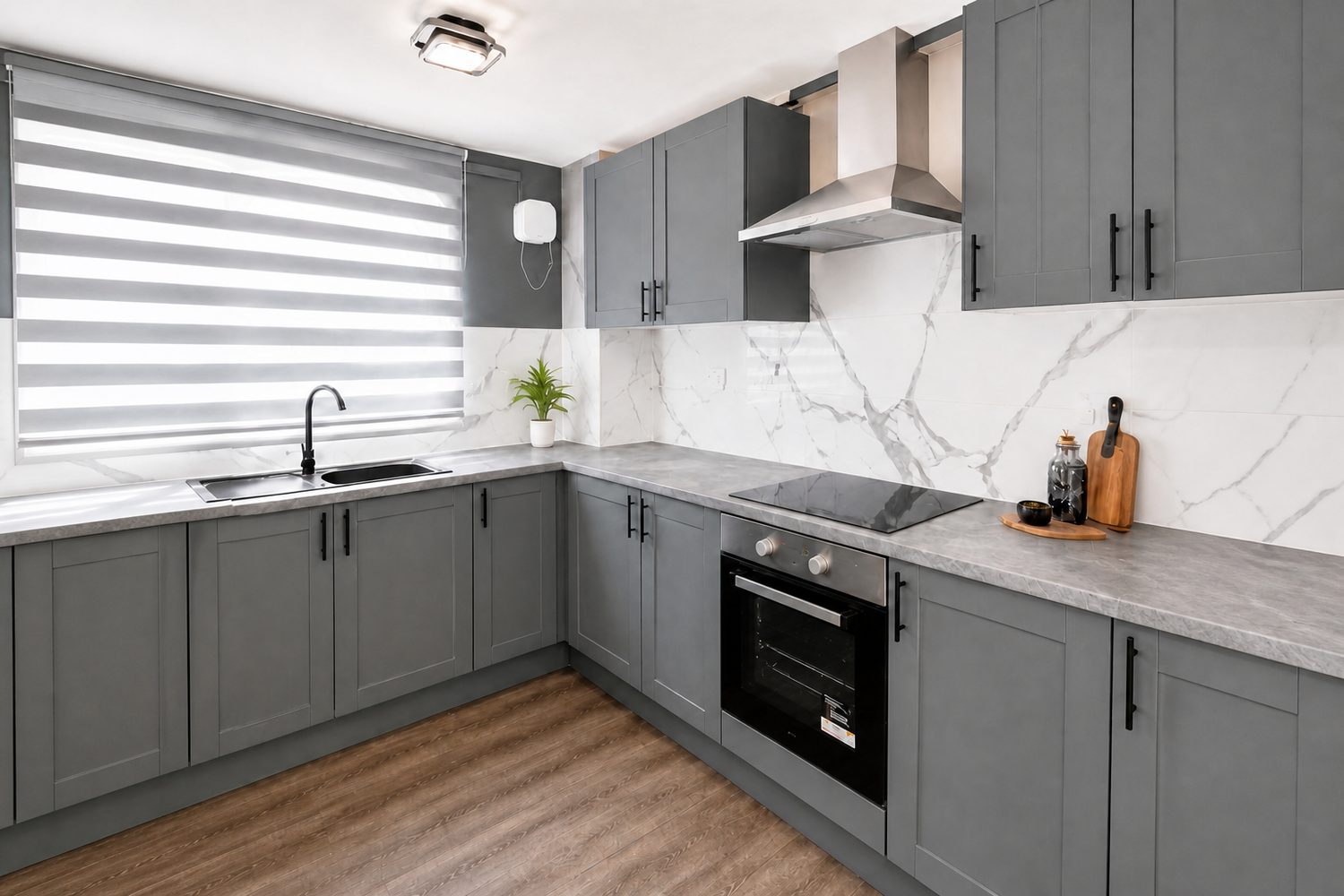
Browse 9 rental homes to rent in Danbury, Chelmsford from local letting agents.
£0/m
0
0
0
Source: home.co.uk
The Danbury property market demonstrates the characteristics of a desirable Essex village with strong commuter appeal. While our platform focuses on rental properties, understanding the broader sales market provides useful context for prospective tenants. The average property price in Danbury stands at approximately £612,471, reflecting the premium associated with village living in this area. Detached properties command the highest prices, with averages around £809,240, while semi-detached homes typically sell for £485,000 and terraced properties around £360,000. Flats in Danbury remain relatively scarce, averaging £250,000, which contributes to limited rental supply in this category.
Property prices in Danbury have shown remarkable stability, decreasing by just 1% over the past twelve months according to market data from Rightmove and Zoopla. This stability makes Danbury an attractive option for renters who may be considering future purchase, as property values have proven resilient despite broader national fluctuations. With 66 property sales recorded in the past year, the area maintains active market movement, suggesting continued demand from buyers who appreciate the village lifestyle and strategic location. The presence of new build developments, including St. Clare Meadows by Bellway on Main Road and The Mulberries by Crest Nicholson nearby, demonstrates ongoing investment in the area that influences the wider property market.

Danbury occupies a gravel plateau in rural Essex, offering residents sweeping views across the surrounding countryside while maintaining excellent connections to urban centres. The village derives much of its character from the blend of architectural styles found throughout its streets, from the imposing Georgian and Victorian properties lining the main roads to the more modest inter-war and post-war housing that forms the backbone of residential areas. Many properties are constructed from the distinctive red and yellow stock brick traditional to Essex, with rendered finishes and timber-frame elements adding visual variety to the streetscape. The London Clay underlying the area supports mature trees and vegetation, creating the wooded, verdant character that makes Danbury so distinctive.
The property age distribution across Danbury reveals a village with significant heritage alongside modern housing. The historic core contains a substantial proportion of pre-1919 properties, particularly within the Conservation Area surrounding St. John the Baptist Church, where Grade I listed Danbury Palace and numerous Grade II listed buildings contribute to the area's distinctive character. Post-war development between 1945 and 1980 added considerable family housing to the village, while post-1980 construction has continued with individual builds and larger estates. This mix means renters encounter properties across all age ranges, from charming period cottages with original features to contemporary homes with modern insulation and systems.
The village centre offers practical amenities including a convenience store, pharmacy, and several independent shops serving everyday needs. Dining options include traditional pubs such as The Bakers Arms and The Fat Bear, where residents can enjoy locally sourced food and a warm community atmosphere. The nearby Danbury Park provides excellent recreational facilities, with open green spaces suitable for family activities, dog walking, and informal sports. Cultural life in Danbury is enriched by the presence of historic properties including the Grade I listed Danbury Palace and numerous Grade II listed buildings concentrated within the designated Conservation Area around the church. These heritage assets create a sense of place and history that newer developments cannot replicate.

Education provision in Danbury serves families well, with Danbury Park School serving as a significant local employer and the primary educational institution for younger children in the village. This primary school provides education for children from Reception through to Year 6, establishing itself as a focal point of community life. For secondary education, students typically travel to schools in nearby Chelmsford, which offers a selection of academy schools and grammar schools serving the wider area. The presence of quality educational options both within the village and in surrounding areas makes Danbury an attractive location for families with children of all ages.
Families considering renting in Danbury should research catchment areas carefully, as school places are allocated based on proximity to the institution. The grammar school system in Essex provides academically selective options for secondary students, with schools in Chelmsford regularly featuring among the county's highest performers. For younger children, Danbury Park School and other nearby primary schools in villages such as Woodham Walter and Sandon provide local alternatives. Higher education facilities are readily accessible in Chelmsford and Southend, while London universities are within reasonable commuting distance for older students. The village's demographic profile, with its mix of families, professionals, and retirees, creates a balanced community where educational provision remains a priority.

Danbury enjoys excellent connectivity despite its rural village setting, making it particularly attractive to commuters who work in London or Chelmsford. The village is strategically positioned with good access to the A414, which provides direct routes to Chelmsford city centre and the A12 trunk road connecting to Colchester and the wider motorway network. This road infrastructure makes car travel convenient for residents who need to reach major employment centres, retail parks, or recreational destinations across Essex and beyond. However, parking provision within the village itself can be limited, particularly during peak hours when on-street parking becomes more congested.
Public transport options from Danbury include bus services connecting the village to Chelmsford, providing an alternative to car travel for those working in the city or needing to access comprehensive rail services. Chelmsford railway station offers fast and frequent services to London Liverpool Street, with journey times typically around 35 to 40 minutes. This makes Danbury particularly appealing to commuters who work in the capital but prefer to live in a village environment away from urban density. Cycling infrastructure in the area has improved in recent years, with quiet country lanes providing pleasant routes for recreational cycling and occasional commuting journeys. For international travel, Stansted Airport is accessible within approximately 45 minutes by car, while Southend Airport offers another regional option.

Before beginning your property search in Danbury, obtain a rental budget agreement in principle from a financial provider. This document confirms how much rent you can comfortably afford, streamlining the application process and demonstrating your credibility to landlords and letting agents when you find a property you wish to rent. Budget calculators that account for your monthly income, existing commitments, and anticipated costs can help you establish a realistic renting budget that leaves room for council tax, utility bills, and other ongoing expenses.
Spend time exploring the village to understand which neighbourhoods suit your lifestyle. Consider proximity to schools, transport links, local amenities, and green spaces. The conservation area around St. John the Baptist Church offers historic character, while newer developments near Main Road provide modern facilities within walking distance of village facilities. Properties in the older parts of Danbury may have different maintenance requirements and rental terms compared to newer builds like those at St. Clare Meadows or The Mulberries.
Once you have identified suitable rental properties in Danbury, arrange viewings through Homemove or directly with local letting agents. View multiple properties to compare condition, facilities, and rental values. Pay attention to factors such as parking provision, storage space, and the condition of any appliances or fixtures included in the rent. Viewing properties at different times of day can reveal differences in noise levels, natural light, and parking availability that affect daily life.
Before signing any tenancy agreement for a property in Danbury, read the terms carefully and seek clarification on anything you do not understand. Standard Assured Shorthold Tenancies typically run for six or twelve months. Clarify responsibilities for maintenance, utility bills, and any restrictions on pets or modifications to the property. Given Danbury's conservation area designation, additional restrictions may apply to listed properties or those within the conservation boundary, so confirm these details before committing.
Landlords will require tenant referencing checks, which typically include credit checks, employment verification, and landlord references from previous rentals. Prepare payslips, bank statements, and identification documents in advance to speed up this process. Some landlords may also require a guarantor, particularly for higher-value rental properties or those with premium features such as large gardens, period features, or proximity to Danbury Park.
Before receiving keys to your new Danbury rental, complete a thorough inventory check documenting the condition of the property and any existing damage. This protects you from being held responsible for pre-existing issues when your tenancy ends. Consider arranging an EPC assessment if one is not already provided, as this gives you information about the energy efficiency of your new home. For older properties in Danbury, an EPC can highlight whether improvements to insulation or heating might be worthwhile during your tenancy.
Renting in Danbury presents unique considerations shaped by the village's geography, geology, and planning context. The London Clay underlying much of Danbury creates a moderate to high shrink-swell risk, which can affect properties with mature trees or poor drainage. Prospective tenants should look for signs of subsidence or structural movement, particularly in older properties or those with large gardens containing established vegetation. Properties constructed before 1980 may have experienced movement over time, and a careful inspection of walls, door frames, and ceilings can reveal potential issues that warrant further investigation before committing to a tenancy.
The substantial proportion of older properties in Danbury means that common defects frequently encountered include damp issues, roof deterioration, and outdated electrical systems. Rising damp affects many period properties with solid walls and no damp-proof course, while penetrating damp can occur where roof tiles have slipped or lead flashing has deteriorated. Electrical systems in properties built before the 1990s may not meet current standards, and prospective tenants should check consumer unit age, socket condition, and whether modern earthing is present. Properties with timber-frame elements, whether traditional or contemporary, should be checked for woodworm, rot, or other timber defects that may require treatment.
The conservation area designation covering Danbury's historic core brings planning restrictions that affect what tenants can and cannot do with their rental properties. Listed buildings within the village are subject to additional controls over external alterations, which means landlords of these properties may restrict modifications. Interior decorations and minor changes should be discussed with landlords and potentially seeking planning permission. Surface water flooding represents a consideration in lower-lying areas of the village, particularly around the village centre, and renters should inquire about flood risk history when viewing properties in these locations. Buildings insurance typically covers flooding from surface water, but tenants should verify this with their landlord and consider obtaining contents insurance appropriate to the flood risk profile of the property.

Understanding the full cost of renting in Danbury extends beyond monthly rent to include various upfront fees and ongoing expenses. The most significant initial cost is the security deposit, typically equivalent to five weeks' rent, which landlords hold as protection against damage or unpaid rent during the tenancy. This deposit must be protected in a government-approved scheme within 30 days of receiving it, and tenants should receive written confirmation of where their money is held. In addition to deposits, most landlords require the first month's rent in advance, meaning new tenants should budget for approximately six weeks' rent in total before receiving keys to their new home.
Reference checking fees form another category of upfront cost, with charges varying depending on whether your landlord or letting agent conducts these checks directly or through a third-party provider. Typical referencing costs range from £100 to £300, covering credit checks, employment verification, and previous landlord references. Some properties may require an upfront administrative fee for processing the tenancy, though transparency around these charges has improved following recent legislation. The Tenant Fees Act 2019 caps holding deposits at one week's rent and restricts the fees landlords and agents can charge, so prospective tenants should verify which charges are permitted under current legislation.
Moving costs, including van hire or removal services, can add several hundred pounds to the total cost of establishing a new home. Prospective tenants should also budget for ongoing costs such as council tax, utility bills, contents insurance, and internet services, all of which will be in addition to monthly rent. Properties in Danbury typically fall within council tax bands C through F, with the actual band depending on the specific property. Energy costs vary significantly depending on property age and insulation quality, with older period properties generally less efficient than modern new builds, a factor worth considering when comparing rental properties across different styles and ages of housing.

While specific rental price data for Danbury requires current listing searches, the broader property market provides useful context for understanding rental values in the area. The average sales price in Danbury is approximately £612,471, with detached properties averaging £809,240 and flats around £250,000. Rental prices in Danbury typically reflect the premium associated with village living, with two-bedroom properties generally commanding lower rents than three or four-bedroom family homes. The presence of new build developments like St. Clare Meadows and The Mulberries indicates ongoing investment in the area that influences both sales and rental values. For accurate current rental pricing, searching Homemove's listings database provides the most up-to-date information on properties available in the village.
Properties in Danbury fall under Chelmsford City Council's jurisdiction for council tax purposes. Band valuations for properties across Essex reflect market values as of April 1991, meaning a property's council tax band does not directly correspond to its current market value. Most residential properties in Danbury fall within bands C through F, with the mix of older period properties, inter-war housing, and post-war family homes creating variety across the local tax base. Properties in the conservation area or those with historical features may have different band assessments compared to more modern equivalents. Prospective tenants should verify the council tax band for any specific property during their search, as this represents an ongoing cost that should be factored into the overall rental budget.
Danbury Park School serves as the primary educational institution within the village, providing education for children from Reception through to Year 6. This school represents a significant local asset and community hub, serving families from Danbury and surrounding villages. For secondary education, students typically attend schools in Chelmsford, where options include both comprehensive schools and grammar schools for academically selective students. The nearest grammar schools are located in Chelmsford and can be reached via the bus services connecting Danbury to the city. Families should research specific school catchments and admissions criteria when choosing a rental property in Danbury, as school place allocation is based on proximity and demand in this popular village location.
Public transport options from Danbury include bus services connecting the village to Chelmsford, where comprehensive rail services provide access to London Liverpool Street in approximately 35 to 40 minutes. While Danbury itself does not have a railway station, the bus connections make car-free commuting feasible for those working in Chelmsford or needing to access the wider rail network. The village is well-served by the A414 road, providing direct routes to Chelmsford and connections to the A12 for travel across Essex. Residents without cars may wish to verify specific bus timetables and service frequency when considering a rental property in Danbury, as frequencies may be limited during evenings and weekends on some routes.
Danbury offers an excellent quality of life for renters seeking village living within commuting distance of London and Chelmsford. The village combines historic character with practical amenities, including local shops, pubs, and recreational facilities. The community atmosphere is strong, with numerous events and activities organised throughout the year. Green spaces including Danbury Park provide opportunities for outdoor recreation, while the conservation area designation ensures the village retains its distinctive character. The main consideration for renters is the limited rental supply, as Danbury's property market is relatively small compared to larger towns. Properties do become available periodically, and registering with local letting agents increases the chances of finding suitable accommodation market.
Standard practice in Danbury follows national norms, with security deposits typically set at five weeks' rent and held in a government-approved protection scheme. The first month's rent is payable in advance, meaning new tenants should budget for approximately six weeks' rent upfront before accounting for any referencing or administrative fees. Reference checks typically cost between £100 and £300 depending on the provider and whether a guarantor is required. Removal costs, furniture purchases, and utility setup fees represent additional costs to consider when budgeting for a move. The Tenant Fees Act 2019 governs what landlords and agents can charge, with holding deposits capped at one week's rent and refundable against the first month's rent or returned if the tenancy does not proceed.
Given that a significant proportion of properties in Danbury were built before 1980, prospective tenants should be aware of common issues affecting older homes in the area. London Clay subsoil creates a risk of subsidence or heave, particularly in properties with mature trees or poor drainage, so look for signs of structural movement such as diagonal cracking or sticking doors and windows. Damp problems, including rising damp and condensation, frequently affect period properties with solid walls and limited ventilation. Roof condition deserves attention in older homes, where slipped tiles, degraded felt, or failing leadwork can lead to water ingress. Electrical systems in properties built before the 1990s often require updating to meet current standards, so check whether the consumer unit has been replaced and whether modern earthing is present.
Danbury is situated inland and does not face coastal flood risk, but surface water flooding represents a consideration in certain areas of the village. Low-lying areas around the village centre and locations near smaller watercourses and tributaries have a medium to high risk of surface water flooding during periods of heavy rainfall. Prospective tenants should inquire about flood risk history when viewing properties in these locations and consider whether adequate drainage is present. Buildings insurance typically covers flooding from surface water, but tenants should verify this with their landlord and consider obtaining contents insurance appropriate to the flood risk profile of the specific property.
Financial guidance to help you understand what rent you can afford
From 4.5%
Employment and credit checks to support your rental application
From £99
Professional property assessment before you commit to a rental or purchase
From £450
Energy performance certificate for your rental property
From £85
Properties to Rent In London

Properties to Rent In Plymouth

Properties to Rent In Liverpool

Properties to Rent In Glasgow

Properties to Rent In Sheffield

Properties to Rent In Edinburgh

Properties to Rent In Coventry

Properties to Rent In Bradford

Properties to Rent In Manchester

Properties to Rent In Birmingham

Properties to Rent In Bristol

Properties to Rent In Oxford

Properties to Rent In Leicester

Properties to Rent In Newcastle

Properties to Rent In Leeds

Properties to Rent In Southampton

Properties to Rent In Cardiff

Properties to Rent In Nottingham

Properties to Rent In Norwich

Properties to Rent In Brighton

Properties to Rent In Derby

Properties to Rent In Portsmouth

Properties to Rent In Northampton

Properties to Rent In Milton Keynes

Properties to Rent In Bournemouth

Properties to Rent In Bolton

Properties to Rent In Swansea

Properties to Rent In Swindon

Properties to Rent In Peterborough

Properties to Rent In Wolverhampton

Enter your details to see if this property is within your budget.
Loans, cards, car finance
Estimated property budget
Borrowing + deposit
You could borrow between
Typical borrowing
Monthly repayment
Est. at 4.5%
Loan-to-value
This is an estimate only. Your actual budget may vary depending on interest rates, credit history, and personal circumstances. For an accurate affordability assessment, speak to one of our free mortgage advisors.
This calculator provides estimates for illustrative purposes only and does not constitute financial advice. Your home may be repossessed if you do not keep up repayments on your mortgage. Estimates based on 4.5% interest rate, repayment mortgage. Actual rates depend on your circumstances.
Homemove is a trading name of HM Haus Group Ltd (Company No. 13873779, registered in England & Wales). Homemove Mortgages Ltd (Company No. 15947693) is an Appointed Representative of TMG Direct Limited, trading as TMG Mortgage Network, which is authorised and regulated by the Financial Conduct Authority (FRN 786245). Homemove Mortgages Ltd is entered on the FCA Register as an Appointed Representative (FRN 1022429). You can check registrations at NewRegister or by calling 0800 111 6768.