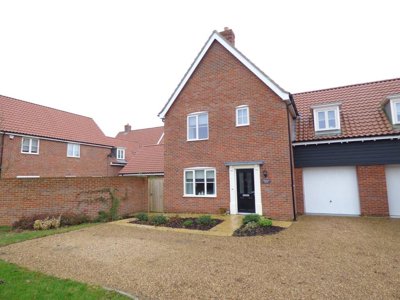
Browse 1 rental home to rent in Coney Weston from local letting agents.
The rental market in Coney Weston reflects the broader West Suffolk area, where private renting accounts for 22.4% of household tenure according to Census 2021 data. Within Coney Weston specifically, approximately 30.57% of residents rent their homes either privately or socially, compared to the national average. This mix provides renters with options ranging from traditional cottages to modernised farm buildings, though the village's rural nature means available properties tend toward family homes rather than apartments. The limited supply inherent to a village of under 400 residents means rental opportunities appear less frequently than in urban centres, making it important to act quickly when suitable properties become available.
West Suffolk district-wide data shows terraced properties average £230,000, semi-detached homes £281,000, detached properties £450,000, and flats £147,000. For renters, monthly costs depend heavily on property type and condition, with older period properties often offering more space but potentially higher maintenance costs. The village's heritage, with several 17th-century buildings and numerous listed structures, means many rental properties feature traditional construction methods including timber-framing and flint work. Prospective renters should consider that properties in conservation-influenced areas may have specific maintenance requirements or restrictions. Getting a rental budget agreement in principle before viewings helps you understand your affordability range and demonstrates readiness to landlords.

Life in Coney Weston offers a quintessentially English rural experience, centred around community spirit and connection to the surrounding Suffolk countryside. The village name itself, derived from the Old English for "rabbit warren," hints at its agricultural heritage that remains evident today through working farms and rural businesses. Residents enjoy access to local amenities within the village itself, including The Swan public house serving as a social hub, alongside farms, builder's yards, a sawmill and timber yard, a wood sculpture yard, a cattery, and a nursery. This combination of traditional establishments and artisan businesses creates a characterful environment different from larger suburban developments.
The village sits within the wider West Suffolk district, which had a population of 179,951 in 2021, representing growth of 5.3% since 2011. However, Coney Weston itself has experienced slight population decline from 394 in 2011 to approximately 373 currently, reflecting broader rural depopulation trends affecting smaller villages across East Anglia. The area benefits from the diverse economy of West Suffolk, which has strong employment links to Cambridge and operates across sectors including tourism, horseracing, manufacturing, renewables, technology, and life sciences. For renters seeking genuine work-life balance away from urban congestion, Coney Weston provides an attractive proposition, though those requiring frequent city access should consider commuting times carefully.
The built environment in Coney Weston showcases Suffolk's architectural traditions, with buildings predominantly constructed using flint, red brick, and timber framing methods that have characterised the region for centuries. Traditional Suffolk plaster finished houses typically feature smooth rendering in neutral colours such as white, ivory, cream, and buff, contrasting with darker roof tiles of black or orange clay pantiles. Black or tarred weatherboarding appears on farm buildings and some period cottages. These traditional materials require understanding when renting older properties, as maintenance approaches differ from modern brick or render constructions. The presence of 19 listed buildings in the village ensures that its historic character is protected, meaning renovations and alterations follow strict guidelines preserving Suffolk's architectural heritage.

Families considering renting in Coney Weston should research school provision carefully, as the village itself has limited primary educational facilities. The closest primary schools are located in neighbouring villages and towns within the West Suffolk area, and catchment areas significantly influence school placement. Suffolk has a mix of community schools, foundation schools, and academies, with some areas served by grammar schools for secondary education. Parents should contact West Suffolk Council and individual schools directly to confirm current catchments, as these can change annually based on demand and capacity. The broader West Suffolk district includes primary schools in settlements like Ixworth, Stanton, and Bury St Edmunds, providing options for families willing to travel.
The secondary education landscape in West Suffolk features several well-regarded options, with Bury St Edmunds hosting notable secondary schools accessible to Coney Weston residents. For older students, sixth form provision and further education colleges exist in Bury St Edmunds, offering A-level courses and vocational qualifications. The proximity to Cambridge provides additional educational opportunities for older students considering university, with the city approximately 30-40 minutes away by car depending on traffic conditions. Suffolk County Council maintains school performance data and Ofsted reports that parents can consult to make informed decisions about education provision. When renting in Coney Weston, families should factor school transport arrangements into their decision-making, as limited public transport options may require private vehicle arrangements for school runs.

Transport connectivity from Coney Weston reflects its rural village character, with residents typically relying on private vehicles for daily commuting and errand-running. The village sits approximately 6 miles northeast of Bury St Edmunds, the nearest larger town with comprehensive shopping, healthcare, and recreational facilities. Major road connections include the A14 trunk road, which provides access to Cambridge to the northwest and Ipswich to the southeast, connecting residents to broader regional employment centres. The A143 passes through nearby towns, linking Coney Weston to Diss and the Norfolk border to the north. For commuters working in Bury St Edmunds, daily travel by car typically takes 15-25 minutes depending on exact start and end points.
Public transport options serving Coney Weston are limited, consistent with rural Suffolk's sparse bus network provision. The nearest railway stations are located in Bury St Edmunds and Diss, offering connections to Norwich, Cambridge, and London Liverpool Street via Ipswich. Bury St Edmunds station provides regular services to Cambridge and offers connections toward London, with journey times to London Liverpool Street approximately 90 minutes. For professionals commuting to Cambridge, direct road travel via the A14 remains the most practical option, though parking costs and congestion during peak hours should be considered. Cyclists should note that rural Suffolk roads range from quiet country lanes suitable for confident riders to busier A-roads requiring careful navigation. The nearest airport, Norwich International, provides domestic and European flights, while Stansted Airport is accessible via the A11/M11 corridor for international travel.

Contact mortgage brokers or financial advisers to establish how much you can afford in monthly rent. A rental budget agreement in principle gives you a clear spending limit and demonstrates financial credibility to landlords when you submit applications.
Explore the village and surrounding West Suffolk area personally. Visit The Swan pub, check local amenities, understand flooding history in the village, and speak to residents about their experience living in Coney Weston before committing to a rental property.
Browse our comprehensive listings for properties to rent in Coney Weston and the wider IP31 postcode area. Our platform aggregates listings from local letting agents and private landlords, giving you access to the full range of available rental properties.
Once you identify suitable properties, schedule viewings to assess condition, storage, natural light, and proximity to neighbours. Given Coney Weston's older housing stock, pay particular attention to roof condition, damp evidence, and the state of traditional building materials like timber framing and flint work.
When you find your preferred property, your letting agent will require references, proof of income, identification, and potentially a guarantor. For a village with heritage properties, landlords may request additional information about your plans for property maintenance.
Prior to moving in, request a comprehensive inventory report documenting the property condition, existing damage, and fixture and fitting details. This protects your deposit when you eventually leave, particularly important in older properties where wear may be expected but must be documented.
Renting properties in Coney Weston requires attention to factors specific to this rural Suffolk village, starting with the area's documented flooding history. Between December 2020 and January 2021, Coney Weston experienced significant highway flooding on The Street, with water depths reaching 200-300mm. Four properties suffered internal flooding during these incidents, and overland runoff from adjacent fields combined with ditch overflows to cause water encroachment into private gardens. A nearby Anglian Water foul water pumping station failure also resulted in sewage flooding, demonstrating the serious nature of drainage issues in the village. Prospective renters should ask landlords directly about any flooding history affecting the property and consider flood risk when evaluating ground-floor accommodation options.
The village's geology and construction present additional considerations for renters. While Suffolk generally has low shrink-swell potential in its underlying soils, clay deposits do exist in some areas and can cause subsidence or heave issues, particularly when moisture content fluctuates due to weather extremes or nearby tree roots. The presence of traditional Suffolk building materials including timber framing, flint work, and rendered plaster means that older properties may develop issues such as damp penetration, timber decay, or plaster cracking that differ from modern construction problems. Renters should inspect properties carefully for signs of damp, particularly in basements, ground-floor rooms, and areas behind furniture. Understanding that traditional materials require specific maintenance approaches helps set realistic expectations for property condition throughout your tenancy.
The concentration of listed buildings in Coney Weston, including 19 structures ranging from the Grade I Church of St Mary to numerous Grade II properties, indicates strict planning controls affecting the village's character. While renting does not directly impose listed building restrictions on tenants, landlords of listed properties may be unable or unwilling to permit certain alterations or improvements. If you require modifications such as satellite dishes, external fixtures, or internal structural changes, clarify these matters with your landlord before signing the tenancy agreement. Insurance costs for listed buildings may be higher, potentially reflected in rent or service charges, and maintenance responsibilities should be clearly documented in your tenancy agreement to avoid disputes at the end of your tenancy.

Specific rental price data for Coney Weston itself is not published separately, but the West Suffolk district shows rental costs higher than the England average. Detached properties across West Suffolk average £450,000 in sale price, semi-detached £281,000, terraced £230,000, and flats £147,000, with monthly rents typically ranging from £800-£1,500 depending on property size, condition, and location. Given Coney Weston's village status and older housing stock, individual properties may vary significantly based on size and standard of presentation. Contact local letting agents for current market rents on specific property types you are considering.
Properties in Coney Weston fall under West Suffolk Council's jurisdiction for council tax purposes. Council tax bands range from A to H based on property valuation, with most traditional Suffolk cottages and farm conversions potentially falling into bands B through E. You can check specific bandings using the Valuation Office Agency's online tool by entering the property address. West Suffolk Council sets annual council tax rates that vary by band and property classification, with discounts available for single occupants and certain exemptions applying to specific circumstances.
The nearest primary schools to Coney Weston are located in surrounding villages and in Bury St Edmunds, approximately 6 miles away. Parents should research individual school Ofsted ratings and contact West Suffolk Council to confirm current catchment areas, as these can change annually. Secondary education options in Bury St Edmunds include several well-regarded schools, with grammar school provision available for academically able students. For families considering renting in Coney Weston, school transport arrangements should be factored into your decision, as limited public bus services mean private vehicles are typically required for school runs.
Coney Weston has limited public transport connectivity consistent with its rural village status. The nearest railway stations are in Bury St Edmunds and Diss, providing services to Norwich, Cambridge, and London Liverpool Street. Bus services through the village are infrequent, making private vehicles the primary transport mode for most residents. The A14 trunk road provides road access to Cambridge and Ipswich, while Bury St Edmunds offers comprehensive bus services and rail connections for those able to travel there.
Coney Weston suits renters seeking genuine rural Suffolk living with strong community connections and historic village character. The village's 19 listed buildings, traditional architecture using flint and timber, and peaceful countryside setting create an attractive environment for those prioritising space and tranquility over urban conveniences. However, limited local amenities, flooding risks documented in 2020-2021, sparse public transport, and reliance on nearby Bury St Edmunds for services mean it appeals most to those with vehicles and flexibility regarding commute times. The housing affordability challenge in West Suffolk, with median house prices to earnings at 8.4 ratio, also affects rental affordability in this sought-after village location.
Standard rental deposits in England are capped at five weeks' rent, calculated as annual rent divided by 52 and multiplied by five. For properties with monthly rent of £1,000, this equates to approximately £1,154 deposit. Tenant referencing fees were banned in 2019, though some letting agents may charge administration fees that should be clarified upfront. Inventory check-in costs, typically £100-£300 depending on property size, are often deducted from your deposit at tenancy end based on condition comparisons. First-time renters may qualify for relief on certain fees, andHomemove can connect you with services for rental budgeting and tenant referencing to understand your full upfront costs.
From 4.5%
Compare rental budget rates and find the best deal
From £99
Expert tenant referencing to support your rental application
From £99
Professional inventory report to protect your deposit
From £80
Energy Performance Certificate for your rental property
Understanding the full financial commitment when renting in Coney Weston helps you budget accurately and avoid surprises during the application process. The most significant upfront cost is the security deposit, which is capped at five weeks' rent under the Tenant Fees Act 2019. For a property with monthly rent of £1,200, your deposit would be £1,385, held in a government-approved deposit protection scheme throughout your tenancy. This deposit is returned at the end of your tenancy, subject to any deductions for damage beyond fair wear and tear or unpaid rent. An inventory check conducted at the start of your tenancy documents the property condition, providing evidence for both parties if disputes arise regarding deposit deductions.
Additional costs to budget for include the first month's rent, typically payable in advance before you receive keys to the property. If you cannot secure a UK-based guarantor who agrees to cover rent if you default, you may need to pay rent upfront for six or twelve months, significantly increasing your initial cash requirement. Tenant referencing itself is now free from fees following the 2019 ban, though you will need to provide documentation including proof of identity, proof of address, and evidence of income such as payslips or bank statements. Students or those without regular income may require a guarantor or additional documentation to satisfy referencing checks.
For the older housing stock in Coney Weston, particularly the 17th-century buildings and properties featuring traditional Suffolk construction methods, renters should consider potential maintenance costs that might arise during tenancy. While landlords remain responsible for structural repairs and maintaining installations in proper working order, tenants are typically responsible for minor damage, general upkeep, and reporting issues promptly. The village's documented flooding history means tenants should understand their contents insurance requirements and the property's flood risk status. Homemove can connect you with rental budget services and tenant referencing support to navigate the financial aspects of securing your Coney Weston rental smoothly.

Properties to Rent In London

Properties to Rent In Plymouth

Properties to Rent In Liverpool

Properties to Rent In Glasgow

Properties to Rent In Sheffield

Properties to Rent In Edinburgh

Properties to Rent In Coventry

Properties to Rent In Bradford

Properties to Rent In Manchester

Properties to Rent In Birmingham

Properties to Rent In Bristol

Properties to Rent In Oxford

Properties to Rent In Leicester

Properties to Rent In Newcastle

Properties to Rent In Leeds

Properties to Rent In Southampton

Properties to Rent In Cardiff

Properties to Rent In Nottingham

Properties to Rent In Norwich

Properties to Rent In Brighton

Properties to Rent In Derby

Properties to Rent In Portsmouth

Properties to Rent In Northampton

Properties to Rent In Milton Keynes

Properties to Rent In Bournemouth

Properties to Rent In Bolton

Properties to Rent In Swansea

Properties to Rent In Swindon

Properties to Rent In Peterborough

Properties to Rent In Wolverhampton

Enter your details to see if this property is within your budget.
Loans, cards, car finance
Estimated property budget
Borrowing + deposit
You could borrow between
Typical borrowing
Monthly repayment
Est. at 4.5%
Loan-to-value
This is an estimate only. Your actual budget may vary depending on interest rates, credit history, and personal circumstances. For an accurate affordability assessment, speak to one of our free mortgage advisors.
This calculator provides estimates for illustrative purposes only and does not constitute financial advice. Your home may be repossessed if you do not keep up repayments on your mortgage. Estimates based on 4.5% interest rate, repayment mortgage. Actual rates depend on your circumstances.
Homemove is a trading name of HM Haus Group Ltd (Company No. 13873779, registered in England & Wales). Homemove Mortgages Ltd (Company No. 15947693) is an Appointed Representative of TMG Direct Limited, trading as TMG Mortgage Network, which is authorised and regulated by the Financial Conduct Authority (FRN 786245). Homemove Mortgages Ltd is entered on the FCA Register as an Appointed Representative (FRN 1022429). You can check registrations at NewRegister or by calling 0800 111 6768.