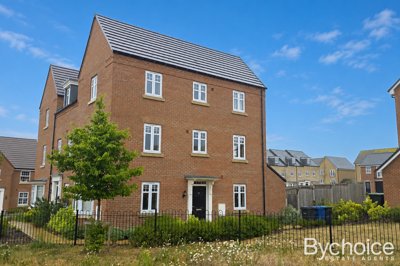
Browse 14 rental homes to rent in Bury St Edmunds from local letting agents.
The larger property sector typically features multiple bathrooms, substantial reception space, and private gardens or off-street parking. Four bedroom houses in Bury St Edmunds span detached, semi-detached, and occasionally terraced configurations, with styles ranging from period properties to modern executive homes.
The Bury St Edmunds rental market offers a diverse range of property types to suit various budgets and lifestyles, from characterful period properties in the historic core to contemporary homes on newer residential developments surrounding the town. Terraced properties represent a significant portion of the rental stock, particularly those dating from the Victorian and Edwardian eras, which feature high ceilings, original fireplaces, and spacious rooms that appeal to professionals and families alike. The town's residential suburbs, including areas around Nowton Road and the northern estates near the A14, offer additional options including semi-detached and detached family homes with generous gardens.
Current market data indicates that rental prices in Bury St Edmunds reflect the town's popularity as a place to live, with properties typically ranging from comfortable one-bedroom apartments to substantial family homes with multiple reception rooms. One and two-bedroom apartments in the town centre command rents that appeal to young professionals and commuters, while three and four-bedroom homes with gardens attract families seeking longer-term rentals. The town's proximity to major employment centres and its excellent transport links make it particularly attractive to commuters who wish to avoid the higher costs of living in Cambridge or London while maintaining access to these cities.
New build developments on the outskirts of town, such as those offered by Hopkins Homes, provide modern rental options for tenants seeking properties with contemporary fittings, energy efficiency, and lower maintenance requirements. These newer developments often feature open-plan living spaces, parking provision, and communal outdoor areas that appeal to tenants who prioritise convenience and modern standards of insulation and heating. The mix of historic and contemporary rental stock means that Bury St Edmunds can accommodate a wide range of rental preferences, from those who love the character of a period property to tenants who prefer the practical benefits of a newly constructed home.
The local rental market is shaped significantly by the presence of major employers including Greene King's brewing operations, West Suffolk Hospital, and the RAF bases at Honington and Lakenheath. These employers generate consistent demand for rental accommodation across all property types, supporting stable rental values throughout the economic cycle. Tenants working in healthcare, military, or brewing sectors often seek properties within cycling distance of their workplaces or with convenient access to the A14 for commuting. Families employed at these institutions particularly value rental properties in catchment areas for well-regarded schools such as King Edward VI School and St Benedict's Catholic School.
Bury St Edmunds offers a distinctive blend of historic charm and contemporary living that makes it one of Suffolk's most desirable towns for renters seeking a balanced lifestyle. The town centre centres around the magnificent Abbey Gardens, where the ruins of the 12th-century abbey provide a stunning backdrop for daily walks, weekend picnics, and community events throughout the year. The gardens feature beautifully maintained flower beds, ancient trees, and a popular cafe, creating an idyllic setting that residents consistently cite as one of their favourite aspects of life in the town. Beyond the gardens, the Georgian and Victorian architecture throughout the town centre creates an attractive streetscape that rewards exploration on foot.
The local economy benefits from several major employers that provide stable employment opportunities and sustain demand for rental properties across all sectors. Greene King's brewing operations remain central to the town's identity, while the West Suffolk Hospital serves as a significant healthcare employer and the RAF bases at Honington and Lakenheath contribute to the wider regional economy. These employers attract workers from across the region who frequently require rental accommodation while establishing themselves in the area. The stability of these major institutions means that tenant demand in Bury St Edmunds tends to be resilient even during broader economic fluctuations.
The retail sector thrives with a mix of national chains on the modern retail park and independent retailers concentrated in the historic Butter Market area, where artisan shops, antique dealers, and specialist food stores draw visitors from across the county. The twice-weekly markets and regular farmers markets reinforce the town's reputation for quality local produce and community spirit. Residents benefit from the convenience of modern amenities without sacrificing the character and community atmosphere that makes Bury St Edmunds distinctive. The town's cultural offerings include the Theatre Royal, independent cinemas, and a calendar of festivals that attract visitors throughout the year and contribute to the vibrant local atmosphere that renters consistently report as a major attraction.

Families considering renting in Bury St Edmunds will find a strong selection of educational establishments that consistently perform well in regional assessments, making the town a popular choice for parents at all stages of their children's education. The town hosts several well-regarded primary schools, including South Lee School and St Edmund's Catholic Primary, which serve their respective catchments and maintain good reputations for academic achievement and pastoral care. Properties within the catchment areas of these popular primary schools are particularly sought after by families, and rental premiums for well-located family homes near good schools are common in the local market.
Secondary education is served by King Edward VI School, a historic foundation with strong GCSE and A-level results, and St Benedict's Catholic School, both of which attract students from across the wider West Suffolk area and contribute to the town's appeal for family renters. King Edward VI School traces its origins to the 16th century and maintains high academic standards that make it a significant draw for families prioritising educational provision. St Benedict's provides faith-based education for Catholic families in the area and also achieves strong academic outcomes. Parents should verify current catchment boundaries and admission policies when selecting a rental property, as these can affect school placement.
For students pursuing further education, the West Suffolk College offers a comprehensive range of vocational and academic courses, providing local pathways into higher education and skilled employment without the need to travel to Cambridge or Norwich. The college maintains strong links with local employers, ensuring that students develop relevant skills for the regional job market and supporting the broader economic vitality of the Bury St Edmunds area. Young adults studying at West Suffolk College often seek rental accommodation in the town, contributing to demand for one and two-bedroom properties suitable for single occupants or sharers. Transport links to secondary schools across the wider area are well-established, with school bus services operating from surrounding villages and towns, extending the effective catchment for families who may be considering rental properties slightly outside the town itself while maintaining access to Bury St Edmunds schools.

Transport connections from Bury St Edmunds make the town particularly attractive to commuters who work in Cambridge, Ipswich, or the wider East Anglia region while enjoying a more affordable cost of living than can be found in larger cities. Bury St Edmunds railway station provides regular services to Cambridge, with journey times of approximately 35-45 minutes, and direct trains to London Liverpool Street via Cambridge that take around 90 minutes to two hours depending on the service. These rail connections make day commuting to professional roles in the technology and financial sectors feasible for residents who prefer the character and community of a market town over city living. Season ticket costs for commuting to Cambridge are significantly lower than equivalent journeys from London or other major commuter towns, representing a meaningful financial advantage for tenants who work in the technology sector.
Road access is equally well-developed, with the A14 trunk road running to the north of the town and providing connections to the A11 towards Norwich and the M11 motorway via Cambridge. The A143 offers routes to Diss and the Norfolk border, while the scenic Suffolk countryside surrounding Bury St Edmunds is easily accessible for weekend exploration and recreational driving. Tenants working at the RAF bases at Honington or Lakenheath benefit from straightforward road access via the A14, while those employed at West Suffolk Hospital can reach the site from most residential areas within 15 minutes by car or bicycle. Local bus services operated by various providers connect the town with surrounding villages and towns across West Suffolk, providing essential transport options for residents without car ownership.
The town has invested in cycling infrastructure in recent years, with designated routes making cycling a viable option for shorter commutes and everyday journeys. The flat terrain of the Suffolk landscape makes cycling accessible for most fitness levels, and many residents commute to West Suffolk Hospital and local schools by bicycle throughout the year. Commuters to Cambridge increasingly combine cycling with train travel, using the railway station's cycle storage facilities for the onward journey. For tenants prioritising sustainable transport options, rental properties near the railway station or along established cycling routes command particular interest in the local market.

Before viewing properties, obtain a rental budget agreement in principle from a lender to understand how much rent you can comfortably afford. This document demonstrates to landlords that you are a serious applicant with financially verified circumstances. Budget agreements typically consider your monthly income, existing financial commitments, and credit history to determine an appropriate rental ceiling. Having this information ready before starting your property search saves time and helps you focus on properties within your realistic budget.
Use our platform to explore different areas within Bury St Edmunds, from the historic town centre with its period properties to the quieter residential suburbs. Consider your commute requirements, proximity to schools, and access to local amenities when narrowing your search. The IP33 postcode area encompasses several distinct neighbourhoods, each with different characteristics regarding noise levels, parking provision, and proximity to green spaces. Families may prioritise areas near King Edward VI School or St Edmund's Catholic Primary, while commuters may focus on properties within easy reach of the railway station.
Once you have identified suitable properties, arrange viewings through the listed estate agents or landlords. Take the opportunity to inspect the property condition, ask about the lease terms, and Enquire about what is included in the rent. During viewings, check the condition of fixtures, fittings, and appliances, and note any maintenance issues that may need addressing before you move in. Properties in Bury St Edmunds range from well-maintained modern rentals to characterful period homes that may require more tolerant attitudes towards the minor imperfections that come with older construction.
If you wish to proceed with a property, complete the tenant application form and provide the required documentation, including proof of identity, proof of income, and references from previous landlords or employers. Letting agents in Bury St Edmunds typically require three months of bank statements, recent payslips or accounts, and contact details for previous landlords. Self-employed applicants should prepare tax returns and business accounts to demonstrate income stability. Providing complete documentation promptly speeds up the referencing process and improves your chances of securing a popular property.
Expect your prospective landlord to conduct referencing checks that verify your employment status, income, and rental history. Allow time for these checks to be completed before signing your tenancy agreement. Referencing typically takes between three and five working days but can take longer during busy periods or if previous landlords are slow to respond. Once referencing is complete and satisfactory, you will be invited to sign your tenancy agreement and pay the initial rent and deposit to secure your new home.
Prospective renters in Bury St Edmunds should carefully consider the flood risk associated with properties near the River Lark, as certain areas of the town are located within flood zones that may affect insurance costs and future saleability. Properties on low-lying ground near the river and in parts of the town centre should be researched using official flood risk maps before committing to a tenancy agreement. Surface water flooding can also occur during periods of heavy rainfall, particularly in older urban areas with drainage systems that predate modern requirements, so Enquire about any history of flooding when viewing properties in these locations. Landlords are required to provide an Energy Performance Certificate, but prospective tenants may wish to ask about any previous flooding incidents or drainage improvements that have been made.
The significant number of listed buildings and conservation areas in Bury St Edmunds means that many rental properties will be subject to planning restrictions that limit the alterations tenants can make to their homes. If you are considering renting a period property, understand that permission from the local planning authority may be required for changes such as installing double glazing, modifying fireplaces, or painting exterior walls. These restrictions preserve the character of the town's architecture but mean that your options for personalising the property may be more limited than in modern housing developments on the outskirts of town. Always clarify what changes are permitted before signing a tenancy agreement if the property's appearance matters to you.
The construction of rental properties in Bury St Edmunds varies considerably depending on age and location, with implications for comfort, energy efficiency, and maintenance costs. Victorian and Edwardian terraced properties were typically built with solid walls and traditional materials, offering excellent thermal mass but potentially higher heating costs than modern equivalents. These older properties often feature original features such as sash windows, fireplaces, and ceiling roses that contribute to their character but may require careful maintenance. Properties built after the 1980s will generally feature cavity wall construction and modern insulation standards, offering better energy efficiency but potentially less character than their period counterparts.
Electrical and plumbing systems should be assessed when viewing rental properties, particularly in older homes where wiring and pipework may not meet current standards. Properties with older electrical installations may require periodic testing and certification, and tenants should clarify who is responsible for maintaining and updating these systems during the tenancy. Asking about the age and condition of the boiler, heating system, and hot water cylinder provides useful information about potential maintenance costs during your tenancy. Modern developments from builders such as Hopkins Homes typically feature contemporary systems with guarantees that transfer to new tenants, offering regarding future maintenance expenses.

While specific rental price data fluctuates with the market, Bury St Edmunds offers rental properties across a wide price range reflecting the diversity of housing stock available. One and two-bedroom apartments typically command rents from around £800 to £1,400 per month in the town centre, while larger family homes with three or four bedrooms can range from £1,400 to £2,200 depending on location, condition, and garden provision. The town's popularity with commuters to Cambridge and its strong local economy help maintain stable rental values throughout the year, with seasonal variations typically being less pronounced than in coastal towns or university cities. Properties near the railway station or within good school catchment areas often attract premium rents compared to similar properties in less convenient locations.
Council tax bands in Bury St Edmunds are set by West Suffolk Council, with properties ranging from Band A for smaller properties through to Band H for the most valuable homes in the area. Most Victorian and Edwardian terraced properties fall into Bands B to D, while larger detached family homes in areas such as the northern residential estates or near the Abbey Gardens may be assigned higher bands. You can check the specific band for any property through the Valuation Office Agency website using the property address, and this information should be provided by your landlord or letting agent before you commit to a tenancy. Council tax payments in West Suffolk support local services including education, waste collection, and local authority facilities, and band information helps tenants budget accurately for all costs associated with renting a property.
Bury St Edmunds offers excellent educational options at all levels, with King Edward VI School and St Benedict's Catholic School providing well-regarded secondary education with strong academic records that consistently place them among the top-performing schools in Suffolk. Primary schools including St Edmund's Catholic Primary and South Lee School serve their respective catchments with good reputations for academic achievement and pastoral care, while several other primary schools in the area also achieve positive Ofsted outcomes. The town's educational provision consistently attracts families to the area, and properties within good school catchment zones often command a premium in the rental market. Parents should verify current catchment boundaries with West Suffolk Council, as these can change and may affect school placement applications.
Bury St Edmunds railway station provides regular direct services to Cambridge (35-45 minutes) and London Liverpool Street (approximately 90 minutes), making it practical for commuters working in these cities to live in Bury St Edmunds while benefiting from significantly lower rental costs than comparable properties in the capital. Local bus services operated by various providers connect the town with surrounding villages and towns across West Suffolk, providing essential transport options for residents without car ownership for shopping, healthcare appointments, and social visits. The town is well-served by the A14 trunk road for car travel, with connections to the A11 and M11 motorway making regional and national travel straightforward. Tenants working shifts at West Suffolk Hospital or the RAF bases may find that proximity to these major employers matters more than public transport access, depending on their working patterns.
Bury St Edmunds consistently ranks as one of the best market towns in England to live, combining historic character with comprehensive amenities and strong transport connections that make it attractive to a wide range of renters. The town offers a wide variety of rental properties to suit different budgets and lifestyles, from modern apartments in converted buildings to spacious family homes on the outskirts with generous gardens and off-street parking. The stable local economy, good schools, and high quality of life make it particularly attractive to families and professionals, while the manageable size of the town means that most amenities are easily accessible without relying on a car. Average rents in the area hover around £2,511 per calendar month, reflecting sustained demand that supports a healthy rental market with good property availability throughout the year.
When renting a property in Bury St Edmunds, you will typically be required to pay a security deposit equivalent to five weeks' rent, which must be protected in a government-approved tenancy deposit scheme within 30 days of receiving it. This means that for a property with monthly rent of £1,200, you would need approximately £1,385 as your security deposit, held separately from your monthly rent payment and returned at the end of your tenancy minus any legitimate deductions for damage or unpaid rent. Tenant referencing fees vary between letting agents but typically range from £100 to £300 per applicant, covering background checks, employment verification, and right to rent documentation. Some agents may also charge an administration fee for drawing up the tenancy agreement, and you should always request a full breakdown of costs before committing to a property to ensure you understand the total upfront cost of moving.
Bury St Edmunds is situated on the River Lark, and certain areas of the town are located within flood zones that prospective tenants should research before committing to a tenancy. Properties near the river and in low-lying parts of the town centre carry higher flood risk, which may affect buildings insurance premiums and could potentially impact your ability to insure contents adequately. Surface water flooding can also occur during periods of heavy rainfall, particularly in older urban areas with drainage systems that predate modern requirements. Your landlord or letting agent should be able to provide information about any history of flooding affecting the property, and you can verify flood risk for any specific address using the government's online flood risk checking tool before making a commitment.
From 4.5%
Understand how much rent you can afford before you start your search. Budget agreements help demonstrate financial credibility to landlords.
From £150
Comprehensive referencing checks that verify your employment, income, and rental history for landlords.
From £150
Detailed condition reports protect both tenants and landlords by documenting the property state at move-in.
From £85
Energy Performance Certificates are required for all rental properties and provide information about energy efficiency.
Understanding the full cost of renting in Bury St Edmunds is essential before beginning your property search, as the upfront costs extend beyond simply saving for your first month's rent and deposit. Most landlords and letting agents in Bury St Edmunds require a security deposit equivalent to five weeks' rent, which is protected in a government-approved scheme to ensure it is returned at the end of your tenancy minus any legitimate deductions for damage or unpaid rent. This means that for a property with monthly rent of £1,200, you would need approximately £1,385 as your security deposit, held separately from your monthly rent payment. The deposit protection schemes provide free dispute resolution if there is disagreement about deductions at the end of the tenancy, offering both tenants and landlords important protections.
Tenant referencing represents another upfront cost that applicants should budget for, with fees typically ranging from £100 to £300 depending on the letting agent and the depth of checks conducted. These fees cover employment verification, credit checks, and right to rent assessments that confirm your eligibility to rent in the United Kingdom. Some letting agents also charge administration fees for drawing up tenancy agreements, though transparency regulations mean that all fees must be disclosed in advance. First-time renters should factor in additional moving costs, including removal services, utility connection fees, and potential furniture purchases if transitioning from furnished to unfurnished properties. Utility setup often requires deposits for gas, electricity, and internet services, particularly for tenants without an established credit history in the UK.
Obtaining a rental budget agreement in principle before viewing properties helps you understand exactly what you can afford and demonstrates financial credibility to landlords competing for desirable rental properties in Bury St Edmunds. The budget process considers your monthly income, existing financial commitments, and credit history to determine an appropriate rental ceiling, giving you confidence when making offers on properties. Landlords with multiple applicants for popular properties often give preference to tenants who can demonstrate financial stability through pre-approved budgets and comprehensive referencing documentation. Having your finances organised before starting your property search positions you as a serious applicant and can help secure properties more quickly in competitive market conditions.

Properties to Rent In London

Properties to Rent In Plymouth

Properties to Rent In Liverpool

Properties to Rent In Glasgow

Properties to Rent In Sheffield

Properties to Rent In Edinburgh

Properties to Rent In Coventry

Properties to Rent In Bradford

Properties to Rent In Manchester

Properties to Rent In Birmingham

Properties to Rent In Bristol

Properties to Rent In Oxford

Properties to Rent In Leicester

Properties to Rent In Newcastle

Properties to Rent In Leeds

Properties to Rent In Southampton

Properties to Rent In Cardiff

Properties to Rent In Nottingham

Properties to Rent In Norwich

Properties to Rent In Brighton

Properties to Rent In Derby

Properties to Rent In Portsmouth

Properties to Rent In Northampton

Properties to Rent In Milton Keynes

Properties to Rent In Bournemouth

Properties to Rent In Bolton

Properties to Rent In Swansea

Properties to Rent In Swindon

Properties to Rent In Peterborough

Properties to Rent In Wolverhampton

Enter your details to see if this property is within your budget.
Loans, cards, car finance
Estimated property budget
Borrowing + deposit
You could borrow between
Typical borrowing
Monthly repayment
Est. at 4.5%
Loan-to-value
This is an estimate only. Your actual budget may vary depending on interest rates, credit history, and personal circumstances. For an accurate affordability assessment, speak to one of our free mortgage advisors.
This calculator provides estimates for illustrative purposes only and does not constitute financial advice. Your home may be repossessed if you do not keep up repayments on your mortgage. Estimates based on 4.5% interest rate, repayment mortgage. Actual rates depend on your circumstances.
Homemove is a trading name of HM Haus Group Ltd (Company No. 13873779, registered in England & Wales). Homemove Mortgages Ltd (Company No. 15947693) is an Appointed Representative of TMG Direct Limited, trading as TMG Mortgage Network, which is authorised and regulated by the Financial Conduct Authority (FRN 786245). Homemove Mortgages Ltd is entered on the FCA Register as an Appointed Representative (FRN 1022429). You can check registrations at NewRegister or by calling 0800 111 6768.