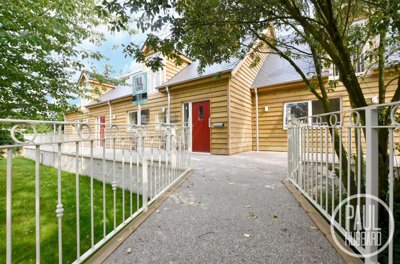
Browse 11 rental homes to rent in Burgh Castle from local letting agents.
The Burgh Castle rental market, while modest in scale, offers a diverse range of properties to suit different household needs and budgets. The village primarily features detached and semi-detached family homes, reflecting its residential character as a desirable village location rather than a high-density urban centre. Property types available for rent typically include traditional Norfolk cottages with characteristic brick and render exteriors, modern semi-detached houses built during various phases of development, and increasingly, contemporary homes from newer developments that have expanded the village's housing stock in recent years.
Sale prices in Burgh Castle have demonstrated consistent growth, with the overall average currently standing at approximately £280,000 and prices having increased by 1.8% over the past twelve months. Detached properties average £325,000, while semi-detached homes typically fetch around £220,000 and terraced properties £190,000. This upward trajectory in the sales market often influences rental values, as landlords adjust their expectations in line with property valuations and investment returns. For renters, this trend suggests that property values in the area remain robust, indicating a stable and desirable location with long-term appeal.
The presence of the Burgh Castle Place development by Lovell Homes, offering new homes from £249,995 for 2, 3, and 4-bedroom properties at postcode NR31 9QR, demonstrates continued investment in the village and contributes to the mix of housing available. The village has recorded 19 property sales in the past twelve months, a healthy transaction volume for a community of its size that indicates an active and fluid property market. For renters, this dynamism means that new properties become available regularly, and those searching for rental accommodation should act promptly when suitable homes are listed.
Our platform aggregates listings from local letting agents throughout the Great Yarmouth area, ensuring you have access to the most comprehensive selection of properties currently available to rent in Burgh Castle and the surrounding villages. The rental market in this part of Norfolk tends to move quickly, particularly for family-sized homes, so registering with multiple local agents can increase your chances of securing your preferred property. Many landlords in the village prefer long-term tenants given the nature of traditional Norfolk rental properties, so demonstrating stability in your referencing application can strengthen your position.

Life in Burgh Castle revolves around the village's extraordinary historical heritage and its position within the Broads National Park landscape. The village is perhaps most famous for the Burgh Castle Roman Fort, a scheduled monument of national importance that stands as testament to the area's significance during the Roman occupation of Britain. This ancient fortification, which once guarded the northern frontier of the Roman province, offers residents and visitors alike a tangible connection to nearly two thousand years of continuous human presence in this landscape. The Scheduled Monument status reflects the site's archaeological importance, and the earthworks remain visible across the area, forming an integral part of the village's distinctive character.
Beyond its Roman heritage, Burgh Castle offers residents a peaceful village lifestyle with essential amenities within easy reach. The community includes St Peter's Church, a listed building that forms another anchor of the village's historical identity, alongside various historic farmhouses and cottages that contribute to the conservation ethos of the area. The village's location between the River Waveney and Breydon Water places it within the Broads ecosystem, providing exceptional opportunities for walking, birdwatching, boating, and enjoying Norfolk's renowned natural landscapes. Residents often report that the quality of life in such settings, combined with reasonable property costs compared to more metropolitan areas, makes Burgh Castle an attractive proposition for families and retirees alike.
The demographic composition of Burgh Castle reflects a balanced community with families, couples, and individuals of various ages calling the village home. Many residents choose to commute to nearby Great Yarmouth for employment, while others work remotely, taking advantage of improved broadband connectivity that has made rural living increasingly viable for knowledge workers. The local economy benefits from tourism related to the Broads and the Roman Fort, as well as from agriculture in the surrounding countryside. The proximity to Great Yarmouth's offshore energy sector also influences the local housing market, as workers seek accommodation in pleasant village settings within reasonable commuting distance of the port facilities.
The village maintains a traditional Norfolk character with properties constructed predominantly from brick, often featuring render finishes that give the built environment its distinctive appearance. Traditional Norfolk red brick is common throughout the village, particularly in older properties around the historic core, while newer developments incorporate more varied materials including render and modern cladding systems. This architectural variety means that renters can choose between authentic period properties and contemporary homes, depending on their preferences and lifestyle requirements. The geology of the wider Norfolk area, characterised by glacial till deposits over chalk bedrock, influences foundation conditions throughout the village, and this is worth considering when evaluating the condition of older properties.

Families considering renting in Burgh Castle will find educational provision available both within the village and in the surrounding area. For primary education, children typically attend schools in nearby villages or in the greater Great Yarmouth area, with several primary schools serving the wider community. The education landscape in Norfolk is characterised by a mix of community schools and faith schools, providing parents with options to suit their preferences and values. Parents should research specific catchment areas and admission arrangements, as these can significantly influence school placement decisions and should be factored into rental property searches.
Secondary education in the area is served by schools in Great Yarmouth, which offers several secondary schools and colleges providing comprehensive education through to A-levels and vocational qualifications. Families should verify current school performance data and Ofsted ratings when selecting a rental property, as school quality can vary and catchment areas can change. The proximity of Norwich to the north provides additional options for secondary education, including grammar schools for academically able students, though admission to these schools is subject to the 11-plus examination and competitive entry processes.
For families prioritising educational outcomes, renting in Burgh Castle provides access to schools across the wider Great Yarmouth and Norfolk area, and many parents choose to factor school catchment boundaries carefully when selecting their rental property. Sixth form and further education provision is available at colleges in Great Yarmouth and Norwich, offering a range of academic and vocational courses for students continuing their education beyond GCSE. The accessibility of these facilities from Burgh Castle makes the village a viable option for families with children at various stages of their educational journey.
The journey to secondary schools in Great Yarmouth typically involves transport along the A47, which connects the village to the town centre in approximately 15-20 minutes by car. Several schools operate bus services from the surrounding villages, and parents should inquire about these arrangements when visiting potential rental properties. For families moving to the area with older children, the presence of the University of East Anglia and Norwich University of the Arts in Norwich provides higher education options within reasonable commuting distance, making Burgh Castle a practical long-term base for families planning for their children's future education.

Transport connectivity from Burgh Castle serves residents who need to commute for work or access amenities not available in the village itself. The village sits close to the A47 trunk road, which provides the primary route for travel to Great Yarmouth to the east and Norwich to the northwest. This major road connection significantly enhances the accessibility of Burgh Castle, reducing journey times to key employment centres and making the village a practical option for those working in larger towns but seeking village-style accommodation. The A47 continues westwards connecting to King's Lynn and the wider road network beyond.
For rail travel, the mainline railway station in Great Yarmouth provides connections to Norwich, with services continuing south to London Liverpool Street via Ipswich and Chelmsford. This rail access opens up employment opportunities and leisure destinations across the region and beyond, though many residents find that road transport remains more practical for everyday local journeys. Bus services operate throughout the Great Yarmouth area, connecting Burgh Castle with the town centre and surrounding villages, though frequency may be limited compared to urban routes, and residents without private vehicles should check current timetables carefully.
Cyclists and pedestrians can enjoy the relatively flat Norfolk landscape, with quiet country lanes suitable for cycling and scenic footpaths providing connections to neighbouring communities and the broader rights of way network. The proximity of the Broads also offers opportunities for travel by boat, with various waterways providing an alternative mode of transport for leisure and, in some cases, practical journeys. For residents working in the offshore energy sector from Great Yarmouth port, the short journey time makes Burgh Castle a convenient base, and the village's peaceful setting provides an appealing contrast to the industrial working environment.
Journey times from Burgh Castle to key destinations include approximately 10 minutes to Great Yarmouth town centre, 35 minutes to Norwich city centre, and around 2 hours to London Liverpool Street by train from Great Yarmouth station. Those considering renting in the village should factor these travel times into their commuting calculations, particularly if they work in Norwich or travel regularly to London for business. The village's position on the A47 also provides access to the Norfolk broads towns of Gorleston and Lowestoft, expanding the range of employment and leisure options available to residents.

Before you begin searching for properties, obtain a rental budget agreement in principle from a lender. This document demonstrates to landlords and letting agents that you can afford the rental payments, giving your application credibility and helping you understand exactly what rent you can comfortably afford each month. Many letting agents in the Great Yarmouth area will ask to see evidence of affordability before arranging viewings, particularly for higher-value properties.
Spend time exploring Burgh Castle to understand the local area. Visit at different times of day, check proximity to your workplace or school, explore local amenities, and consider practical factors such as flood risk areas. Parts of the village closer to the River Waveney and Breydon Water may be at elevated flood risk, and the Environment Agency provides detailed flood risk maps that prospective tenants should consult. Check the availability of public transport options that suit your lifestyle needs, and speak to existing residents about their experience of living in specific parts of the village.
Browse our comprehensive listings of properties to rent in Burgh Castle and contact local letting agents directly. Arrange viewings for properties that meet your requirements, taking notes on property condition, garden boundaries, and any maintenance concerns. Ask about lease terms, included fixtures and fittings, and what the tenancy agreement covers before committing. Given the mix of traditional and modern properties available, pay particular attention to the condition of older properties, checking for signs of damp, roof condition, and the state of original windows and doors.
While not always mandatory for rental properties, a professional survey such as a RICS Level 2 condition report can identify any defects or maintenance issues before you commit. For properties in Burgh Castle, given the mix of older traditional properties and modern homes, understanding the condition of the building, roof, plumbing, and electrics can save significant expense and hassle later. Common issues in older Norfolk properties include rising damp, outdated electrical wiring, and roof deterioration. Survey costs for typical 3-bedroom properties in the Norfolk area range from £450-£700.
Once you have agreed on a property, your letting agent will require references, proof of identity, right to rent documentation, and employment verification. You will also need to pay a holding deposit to take the property off the market while referencing is completed. Be prepared to provide bank statements, payslips, and contact details for previous landlords or employers. The referencing process typically takes 5-10 working days, during which time the holding deposit secures your position.
Review your tenancy agreement carefully before signing, ensuring you understand your rights and responsibilities, the deposit protection scheme that will hold your deposit, notice periods, and any clauses relating to property maintenance. Once signed, coordinate your move-in date, complete the inventory check, and report any discrepancies to your landlord promptly to avoid disputes when you eventually vacate. In properties that are listed buildings or in conservation areas, be aware that restrictions may apply to what alterations you can make during your tenancy.
Renting a property in Burgh Castle requires attention to several location-specific factors that potential tenants may not encounter in more urban settings. Flood risk is a primary consideration, as the village sits adjacent to the River Waveney and Breydon Water, both tidal water bodies that can present flood risk to properties in low-lying areas. Prospective tenants should check the Environment Agency flood risk maps for any specific property they are considering, and clarify with landlords what flood protection measures are in place, such as property elevations, flood barriers, or insurance provisions. Surface water flooding is also a potential risk in some areas, as is common across many parts of the UK.
The historical character of Burgh Castle means that many properties are older constructions, potentially featuring traditional building methods and materials that require different maintenance approaches than modern properties. Traditional Norfolk properties often feature brick construction with render finishes, lime mortar rather than cement, and original features such as sash windows and period fireplaces. Tenants renting older properties should understand that some level of maintenance is normal in character properties, and that features like single glazing or solid walls may result in higher heating costs during Norfolk's cool winters.
Conservation and listed building considerations can affect what alterations tenants may make to properties. If you are planning to redecorate, install fixtures, or make changes to a property, check whether it has any listed building status or falls within any conservation area designation. These protections are in place to preserve Burgh Castle's historic character, and any works may require consent from the local planning authority. For newer properties in developments such as Burgh Castle Place, restrictions may relate to development covenants or estate management rules rather than historic preservation, but should still be understood before signing a tenancy agreement.
The energy efficiency of rental properties is increasingly important for tenants, particularly given the current cost of energy. Older properties in Burgh Castle may have solid walls or limited insulation, resulting in higher heating costs, while newer builds typically offer better thermal performance. When viewing properties, ask about the EPC rating and consider the potential impact on your monthly outgoings. Our platform provides access to EPC information for listed properties, allowing you to compare energy costs across different homes before committing to a tenancy.

Specific rental price data for Burgh Castle is not published separately, but rental values in the village are influenced by the broader Great Yarmouth and Norfolk market. Properties in comparable Norfolk villages typically range from £650-£950 per month for a standard 2-bedroom home, with larger family properties commanding higher rents. The average sale price of £280,000 in Burgh Castle provides some indication of the investment values that underpin the rental market. For the most accurate current rental pricing, search our platform for properties currently listed, as these reflect real-time market conditions and property-specific factors such as condition, size, and included amenities. Detached family homes in the village typically command premium rents due to their relative scarcity in the rental market.
Properties in Burgh Castle fall under the Great Yarmouth Borough Council for council tax purposes. Council tax bands range from A to H, with the specific band depending on the property's assessed value. Most residential properties in the village fall within bands A through D, which represent the lower valuation bands typical for Norfolk property values. You can verify the exact council tax band for any specific property through the Valuation Office Agency website or by contacting Great Yarmouth Borough Council directly. Band A properties in this area typically pay around £1,200-£1,400 per year, while Band D properties may pay £1,700-£1,900 annually, though these figures should be confirmed with the council as they are subject to annual revision.
Primary schools in the wider Great Yarmouth area serve families from Burgh Castle, with several schools rated Good or Outstanding by Ofsted within reasonable travelling distance. Secondary education is provided by schools in Great Yarmouth itself, with further and higher education available at colleges in Great Yarmouth and Norwich. When searching for rental properties, parents should verify current school performance data, check admission catchment areas, and consider travel arrangements, as school placement is determined by address and availability. The journey from Burgh Castle to secondary schools in Great Yarmouth typically takes 15-20 minutes by car along the A47, and several schools operate bus services from the surrounding villages.
Burgh Castle is connected to surrounding areas by bus services running to and from Great Yarmouth, though service frequency is limited compared to urban areas. The nearest railway station is in Great Yarmouth, offering connections to Norwich and onward services to London Liverpool Street. For daily commuting, private vehicle ownership remains practically necessary for most residents, though the village's position on the A47 provides reasonable road access to nearby employment centres. Cyclists benefit from Norfolk's flat terrain and network of quiet country lanes. Bus routes connecting Burgh Castle to Great Yarmouth typically run several times daily on weekdays, with reduced services at weekends.
Burgh Castle offers renters an exceptional combination of village character, historical heritage, and access to the Broads National Park, making it an excellent choice for those seeking quality of life in a peaceful setting. The village provides a genuine community atmosphere with convenient access to the amenities and employment opportunities of Great Yarmouth. Properties available for rent reflect the village's mix of traditional and contemporary housing. The modest scale of the village and the rental market means that properties become available less frequently than in urban areas, so renters should act promptly when suitable homes are listed and be prepared for competition from other applicants.
When renting a property in England, the standard deposit is capped at five weeks' rent, calculated as the annual rent divided by 52 and multiplied by five. This deposit must be protected in a government-approved Tenancy Deposit Protection scheme within 30 days of receiving it. In addition to the deposit, you will typically pay a holding deposit equivalent to one week's rent to secure the property while referencing is completed. Other costs may include referencing fees, administration charges, and check-in fees, though the Tenant Fees Act 2019 limits what landlords and agents can legally charge. Budget for removal costs and any immediate purchases needed when furnishing an unfurnished or partially furnished property. For a typical £800 per month rental, expect to pay around £1,850 in deposit plus approximately £800 holding deposit, plus referencing and admin fees of around £200-£300.
From 4.5%
A mortgage in principle shows landlords you can afford rent
From £99
Essential credit and employment checks for your rental application
From £450
Identify defects before you commit to your rental
From £85
Check energy efficiency before signing your tenancy
Understanding the costs involved in renting a property in Burgh Castle helps you budget effectively and avoid surprises during the tenancy process. The tenancy deposit, capped at five weeks' rent under the Tenant Fees Act 2019, is the largest upfront cost you will face. This deposit must be protected in one of three government-approved schemes within 30 days of the start of your tenancy, and you should receive information about which scheme holds your deposit and how to retrieve it at the end of your tenancy. The purpose of this protection is to ensure you have recourse if disputes arise over deposit deductions at check-out.
Before you commit to a property, you will typically pay a holding deposit equivalent to one week's rent to take the property off the market while your referencing is completed. This holding deposit is usually offset against your move-in costs but is non-refundable if you decide not to proceed after referencing, or if you provide false information that leads to your referencing failure. If the landlord decides not to proceed, the holding deposit must be returned in full. Be honest and thorough when completing referencing applications to avoid complications that could result in losing this deposit.
For properties in Burgh Castle, given the mix of older traditional buildings and modern homes, renting a property without a professional survey could mean inheriting maintenance problems that were not disclosed. A RICS Level 2 condition report, typically costing between £450 and £700 for a 3-bedroom property in the Norfolk area, can identify issues with the building structure, roof, damp, electrics, and plumbing before you commit. While surveys are not legally required for rented properties as they are for purchases, they provide valuable information and can give you leverage to negotiate repairs or rent adjustments before moving in. Budget for these professional services alongside your moving costs to ensure you have a complete picture of what your new home will cost.
Additional costs to factor into your budget include removal company fees, which can range from £300-£800 depending on the distance and volume of belongings, and any immediate purchases needed for a new home such as white goods, curtains, or furniture. If the property is unfurnished or partially furnished, these costs can add significantly to your moving budget. We recommend obtaining quotes from at least three removal companies and factoring in connection charges for utilities, internet, and council tax registration when you move in.

Properties to Rent In London

Properties to Rent In Plymouth

Properties to Rent In Liverpool

Properties to Rent In Glasgow

Properties to Rent In Sheffield

Properties to Rent In Edinburgh

Properties to Rent In Coventry

Properties to Rent In Bradford

Properties to Rent In Manchester

Properties to Rent In Birmingham

Properties to Rent In Bristol

Properties to Rent In Oxford

Properties to Rent In Leicester

Properties to Rent In Newcastle

Properties to Rent In Leeds

Properties to Rent In Southampton

Properties to Rent In Cardiff

Properties to Rent In Nottingham

Properties to Rent In Norwich

Properties to Rent In Brighton

Properties to Rent In Derby

Properties to Rent In Portsmouth

Properties to Rent In Northampton

Properties to Rent In Milton Keynes

Properties to Rent In Bournemouth

Properties to Rent In Bolton

Properties to Rent In Swansea

Properties to Rent In Swindon

Properties to Rent In Peterborough

Properties to Rent In Wolverhampton

Enter your details to see if this property is within your budget.
Loans, cards, car finance
Estimated property budget
Borrowing + deposit
You could borrow between
Typical borrowing
Monthly repayment
Est. at 4.5%
Loan-to-value
This is an estimate only. Your actual budget may vary depending on interest rates, credit history, and personal circumstances. For an accurate affordability assessment, speak to one of our free mortgage advisors.
This calculator provides estimates for illustrative purposes only and does not constitute financial advice. Your home may be repossessed if you do not keep up repayments on your mortgage. Estimates based on 4.5% interest rate, repayment mortgage. Actual rates depend on your circumstances.
Homemove is a trading name of HM Haus Group Ltd (Company No. 13873779, registered in England & Wales). Homemove Mortgages Ltd (Company No. 15947693) is an Appointed Representative of TMG Direct Limited, trading as TMG Mortgage Network, which is authorised and regulated by the Financial Conduct Authority (FRN 786245). Homemove Mortgages Ltd is entered on the FCA Register as an Appointed Representative (FRN 1022429). You can check registrations at NewRegister or by calling 0800 111 6768.