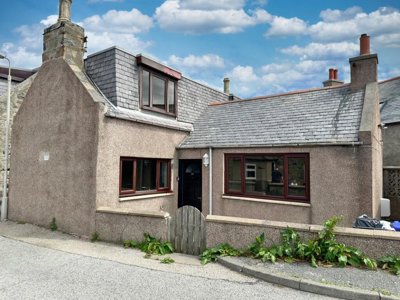
Browse 94 rental homes to rent in Aberdeenshire, Scotland from local letting agents.
£875/m
12
0
60
Source: home.co.uk
Source: home.co.uk
Flat
5 listings
Avg £590
Detached
3 listings
Avg £1,517
Bungalow
1 listings
Avg £900
End of Terrace
1 listings
Avg £850
House
1 listings
Avg £1,400
Semi-Detached
1 listings
Avg £900
Source: home.co.uk
Source: home.co.uk
The Aberdeenshire rental market has shown remarkable stability despite broader UK property fluctuations. Our data indicates that house prices in the region have remained relatively flat over the past year, with just a 0.3% change between December 2024 and December 2025. This stability creates an attractive environment for renters, as landlords can offer competitive rates without the pressure of rapidly appreciating property values. The median household income of £40,007 annually means that renting remains accessible for many working professionals and families throughout the area.
Property types available for rent across Aberdeenshire span a wide spectrum to meet varying needs. Detached family homes command the highest rental values, often exceeding £1,900 per month for four or five-bedroom properties in sought-after areas like Banchory, Alford, and the villages surrounding Aberdeen. Semi-detached homes typically range from £1,200 to £1,800 per month, offering excellent value for families needing additional space. Flats and apartments, particularly those in Stonehaven, Ellon, and Peterhead town centres, provide affordable options starting from around £565 per month.
New build developments are increasingly entering the rental market across Aberdeenshire, offering modern specifications that appeal to tenants seeking contemporary living. Kirkwood Homes operates at several locations including Bonnyton Brae in Pitmedden with homes from £314,995, Inchmarlo in Banchory from £499,995, and Kirkton Heights in Fraserburgh coming soon. Claymore Homes offers phases at Greenacres in Peterhead with plots from £272,250 and Meldrum Grange in Oldmeldrum with options ranging from £270,950 to £509,000. Scotia Homes presents contemporary three and four-bedroom homes at Willowburn in Tarves featuring rooftop solar panels, with a four-bedroom detached Cusp House priced at £324,950. These new build properties typically offer modern insulation standards, contemporary heating systems, and improved energy efficiency compared to older granite-built properties.
Several factors drive rental demand in specific Aberdeenshire locations. Oil and gas professionals often seek properties near Aberdeen for convenient commuting. Families are drawn to areas with good school catchments such as Banchory, Ellon, and the Mearns region near Laurencekirk. Remote workers increasingly seek rental properties in rural settings like Deeside or the Formartine district where they can enjoy countryside living while maintaining connectivity. Retirees often gravitate towards coastal towns like Stonehaven and Peterhead, appreciating the maritime character and scenic beauty while remaining close to amenities. The rental market also includes converted farm buildings in rural locations, town centre flats in historic buildings, and modern apartments in new developments.

Aberdeenshire is characterised by its remarkable diversity of landscapes and communities, from the dramatic North Sea coastline to the fertile farmland of the Gordon district. The region is traditionally known for agriculture, forestry, and fishing, though the past five decades have been shaped significantly by the offshore oil and gas industry centred in nearby Aberdeen. Today, Aberdeenshire is transitioning towards energy transition, with the Peterhead Carbon Capture project representing a £2.2 billion investment that will contribute an estimated £25 million annually to the local economy during its operational lifetime. This economic evolution ensures continued job opportunities and population growth that supports the rental market.
The population of 265,000 residents in Aberdeenshire benefits from a strong sense of local identity rooted in market towns that serve as commercial and social hubs. Inverurie acts as the largest town, offering extensive shopping facilities and excellent rail connections to Aberdeen. Peterhead remains an important fishing port, while Stonehaven provides coastal living with easy commuting access. The area's granite heritage is evident throughout, with older buildings featuring the distinctive light-grey stone that gives nearby Aberdeen its famous nickname. Conservation areas in towns like Huntly and Peterhead preserve the architectural character that makes Aberdeenshire's settlements so visually appealing.
Aberdeenshire's 165-mile coastline shapes much of the region's character and lifestyle options. From the dramatic cliffs near Stonehaven to the long sandy beaches of the Aberdeenshire coast, coastal communities offer distinct living experiences. Peterhead remains Scotland's largest white fish landing port, maintaining maritime traditions that date back centuries. Inverurie, situated at the confluence of the Rivers Don and Ury, serves as the commercial heart of the Garioch area and offers excellent rail connections to Aberdeen in under 30 minutes. The town's population has grown steadily as commuters discover the benefits of Aberdeenshire living while maintaining city employment.
Economic indicators suggest continued strength in the Aberdeenshire rental market. Aberdeen city region supports approximately 45,000 jobs in the oil and gas sector alone, with the wider UK industry employing 215,000 people. The ratio of jobs to working-age population in Aberdeen exceeds 1.0, indicating more vacancies than available workers, which attracts new residents to the area. The Peterhead Carbon Capture project will create around 240 permanent jobs during its operational phase, with development and construction supporting an estimated 980 years of employment. These economic fundamentals ensure sustainable rental demand across Aberdeenshire's communities.

Education provision across Aberdeenshire is comprehensive, with the council maintaining a network of primary and secondary schools that serve communities throughout the region. Families renting in Aberdeenshire will find excellent options at every level, from small rural primary schools with intimate class sizes to larger secondary schools in towns like Banchory, Ellon, and Fraserburgh that offer broad curricula and strong extracurricular programmes. The region has historically maintained high educational standards, making it an attractive location for families prioritising academic achievement.
Several secondary schools in Aberdeenshire have earned strong reputations for examination performance and pupil development. Banchory Academy serves the Deeside area and benefits from its picturesque setting near the River Dee, with easy access to mountain environments for outdoor education. Students in the Inverurie area typically attend either Inverurie Academy or Gordonstoun School, the latter being a renowned independent boarding school that attracts students from across the UK and internationally. For families considering rental properties in specific catchment areas, it is essential to verify school placements before committing to a tenancy, as catchment boundaries can significantly impact access to preferred schools.
The Mearns Academy in Laurencekirk serves the southern Aberdeenshire area and provides education for families renting in communities along the A90 corridor. This region has seen significant new housing development, with the Chapelton development near Newtonhill creating additional demand for rental properties from families seeking access to good schools. Primary education across Aberdeenshire maintains strong standards, with most towns and larger villages offering well-regarded primary schools that achieve favourable inspection outcomes. Parents should note that school catchments can change, and properties should be verified directly with Aberdeenshire Council's education department before finalising any tenancy agreement.

Aberdeenshire benefits from excellent transport connections that make commuting to Aberdeen straightforward for residents who work in the city but prefer to live in a more rural setting. The Aberdeen to Inverness railway line serves multiple stations within Aberdeenshire, including Inverurie, Dyce, and Portlethen, with journey times to Aberdeen typically ranging from 20 to 40 minutes depending on departure point. This rail connectivity makes renting in towns like Inverurie particularly attractive for professionals working in Aberdeen who want to avoid city centre living costs while maintaining easy access to employment.
The A90 trunk road runs through central Aberdeenshire, providing efficient road connections between coastal communities and Aberdeen city. The A92 continues south along the coast through Stonehaven, Montrose, and Arbroath, serving communities like Mearns and Laurencekirk. The A93 passes through Deeside, offering scenic routes toward the Cairngorms for residents renting in Banchory or Ballater. Bus services operated by Stagecoach and local providers connect smaller villages to market towns, though frequency reduces significantly in rural areas. For those considering renting properties along the coast, these road connections provide essential access to amenities and employment centres.
Residents should note that car ownership remains beneficial for accessing many rural rental properties and amenities throughout Aberdeenshire. Rural bus services can be infrequent, making personal transport essential for those renting in more remote locations. Aberdeen International Airport at Dyce provides domestic flights and connections to European destinations, with regular services to London and other major UK cities. The airport also handles freight traffic, supporting the regional economy. For renters considering properties in coastal communities like Cruden Bay or St Combs, understanding local transport options becomes particularly important for daily commuting and accessing services.

Before beginning your property search in Aberdeenshire, obtain a rental budget agreement in principle from a lender. This document demonstrates your financial capacity to landlords and estate agents, significantly strengthening your application in competitive rental markets like Inverurie and Stonehaven. Having pre-approved financing gives you confidence when bidding on properties and shows serious intent to landlords managing multiple applications.
Take time to visit different parts of Aberdeenshire before committing to a tenancy. Consider commute times to potential workplaces, local amenities in each town, school catchment boundaries if relevant, and the general community atmosphere. Renting allows you to experience areas like Deeside, the Formartine district, and coastal communities before deciding where to put down longer-term roots. Our agents can arrange viewings across multiple locations in a single visit, helping you compare different parts of the region efficiently.
Contact local estate agents to arrange viewings of rental properties that match your criteria. In Aberdeenshire's competitive market, viewing properties promptly and being prepared with required documentation helps secure desirable homes quickly. Our agents maintain up-to-date listings across the region and can alert you to new properties matching your requirements before they appear on public listings.
Before signing a tenancy, consider property-specific factors relevant to Aberdeenshire. These include flood risk in areas like Inverurie and Port Elphinstone, the condition of older granite properties, and any conservation area restrictions that may affect alterations to historic buildings. Our team can provide guidance on local factors affecting specific properties and neighbourhoods.
We will require tenant referencing checks, including credit history, employment verification, and landlord references from previous tenancies. Prepare these documents in advance to expedite the process. Most referencing checks complete within five to ten working days, though having documentation ready can speed up the process considerably.
Once references are approved and your tenancy agreement is signed, coordinate your move to Aberdeenshire. Consider arranging a professional inventory check at this stage to document the property condition and protect your deposit. Our recommended inventory services across Aberdeenshire ensure comprehensive documentation of property conditions at the start of your tenancy.
Several local factors merit careful attention when evaluating rental properties in Aberdeenshire. Flood risk affects specific areas within the region, with SEPA flood hazard maps identifying elevated risk in parts of Inverurie, Port Elphinstone, and coastal communities. Prospective renters should review these maps and consider the property's position relative to flood risk zones, particularly if considering lower-ground floor accommodation or properties near watercourses. The River Dee, particularly a stretch west of Braemar, is identified as being within a functional floodplain with high risk during significant rainfall events.
The geological characteristics of Aberdeenshire influence property conditions throughout the region. Properties constructed with granite, which predominates in older buildings, may require additional maintenance attention to mortar joints and weathering characteristics. Traditional clay and bool construction methods used in some older North East Aberdeenshire properties require specialist knowledge for proper upkeep. Properties within conservation areas, of which there are approximately 40 in Aberdeenshire, may have restrictions on alterations and improvements that tenants should understand before committing to a tenancy. The 3,500 listed buildings in the region often have additional planning constraints that affect what modifications tenants can make.
The Scottish House Conditions Survey reported that 60% of housing stock in Aberdeenshire was in disrepair, highlighting the importance of thorough property inspection before committing to a tenancy. Common defects in older properties include damp issues caused by inadequate waterproofing or poor ventilation, roof deterioration from weather exposure, structural movement in foundations, and outdated electrical systems. Our recommended survey services can identify these issues before you commit to a tenancy, potentially saving significant expense on remedials during your tenancy.

Understanding the full cost of renting in Aberdeenshire helps prospective tenants budget accurately for their move. Beyond monthly rent, renters should account for council tax, which varies by property band, plus utility costs including gas, electricity, and internet. Contents insurance is essential for tenants, typically costing between £150-300 annually depending on coverage levels. Moving costs for hiring vans or removal companies should also be factored into initial moving expenses. In Aberdeenshire's competitive rental market, having funds readily available for first month's rent plus deposit demonstrates financial preparedness to landlords.
Scotland's private rental sector is governed by specific regulations that provide important protections for tenants in Aberdeenshire. Tenancy deposits must be protected in an approved scheme within 30 days of receiving them, and landlords must provide the tenant with information about where the deposit is held. The Private Housing (Tenancies) Scotland Act 2016 introduced the model of private residential tenancies, removing no-fault evictions and giving tenants greater security. Rent increases are capped and must follow specific procedures, meaning you cannot be asked to pay significantly higher rent without appropriate notice. These protections make renting in Aberdeenshire a secure option for both short-term and long-term accommodation needs.
Standard rental practice in Aberdeenshire requires a deposit equivalent to one month's rent, held in a government-approved tenancy deposit scheme. Some landlords may request additional deposits for pets or specific property conditions. Tenant referencing fees are typically covered by landlords or charged at £100-200 for credit checks and employment verification. Unlike England, Scotland has specific regulations around tenancy deposits and eviction processes that provide additional tenant protections under the Private Housing (Tenancies) Scotland Act 2016. These include prescribed requirements for rent increase notices and restrictions on certain eviction grounds.

While specific rental figures vary by property type and location, the average house price in Aberdeenshire sits at approximately £202,000, indicating a stable property market. Flats typically rent from £550-700 per month, terraced properties from £550-850 per month, semi-detached homes from £1,200-1,800 per month, and detached family homes from £1,500-2,200 per month depending on size and location. Coastal towns like Stonehaven and Peterhead, along with commuter-friendly areas near Aberdeen such as Portlethen and Dyce, command premium rents compared to more rural locations further from employment centres.
Council tax in Aberdeenshire is set by Aberdeenshire Council and follows the Scottish council tax banding system from Band A to Band H. The actual band depends on the property's assessed value as of 1991, with Band A properties paying the lowest rates and Band H properties paying the highest. Prospective renters should verify the council tax band before committing to a tenancy, as this affects monthly outgoings significantly. Energy performance certificate ratings are also required for rental properties, with minimum standards applying to private tenancies under Scottish regulations.
Aberdeenshire offers excellent educational provision across primary and secondary levels. Notable secondary schools include Banchory Academy in the Deeside area serving students from across the region, Inverurie Academy serving the largest town, and Mearns Academy in Laurencekirk serving the southern Mearns region. The independent Gordonstoun School near Elgin attracts students internationally as a renowned boarding school. For primary education, most towns and larger villages have well-regarded primary schools with strong pupil to teacher ratios. Parents should verify specific catchment areas directly with Aberdeenshire Council, as these determine school placement eligibility and can change over time.
Aberdeenshire has reasonable public transport connectivity through the Aberdeen to Inverness railway line, which serves key towns including Inverurie, Dyce, and Portlethen with regular services to Aberdeen. Bus services operated by Stagecoach connect smaller communities to market towns, though rural services have limited frequency outside peak hours. The A90 and A93 trunk roads provide essential road connections, making car ownership advantageous for residents in rural areas. Aberdeen International Airport at Dyce offers domestic flights and connections to European destinations, while rail services connect to Edinburgh, Glasgow, and London.
Aberdeenshire presents excellent conditions for renters seeking quality of life in Scotland. The region combines economic stability driven by the energy sector with outstanding natural beauty, from coastline to mountain landscapes. The stable property market means competitive rental prices, while strong communities and good schools make it ideal for families. The median household income of £40,007 reflects a prosperous area where renting provides flexibility without sacrificing lifestyle quality. Energy transition investments like the Peterhead Carbon Capture project ensure long-term economic prospects and sustained employment opportunities that support the rental market.
Standard rental practice in Aberdeenshire requires a deposit equivalent to one month's rent, held in a government-approved tenancy deposit scheme such as MyDeposits Scotland, SafeDeposits Scotland, or the Tenancy Deposit Scheme. Some landlords may request additional deposits for pets or specific property conditions. Tenant referencing fees are typically covered by landlords or charged at £100-200 for credit checks and employment verification. Scotland's Private Housing (Tenancies) Scotland Act 2016 provides stronger tenant protections than English legislation, including restrictions on eviction grounds and requirements for proper notice periods before rent increases take effect.
Properties to Rent In London

Properties to Rent In Plymouth

Properties to Rent In Liverpool

Properties to Rent In Glasgow

Properties to Rent In Sheffield

Properties to Rent In Edinburgh

Properties to Rent In Coventry

Properties to Rent In Bradford

Properties to Rent In Manchester

Properties to Rent In Birmingham

Properties to Rent In Bristol

Properties to Rent In Oxford

Properties to Rent In Leicester

Properties to Rent In Newcastle

Properties to Rent In Leeds

Properties to Rent In Southampton

Properties to Rent In Cardiff

Properties to Rent In Nottingham

Properties to Rent In Norwich

Properties to Rent In Brighton

Properties to Rent In Derby

Properties to Rent In Portsmouth

Properties to Rent In Northampton

Properties to Rent In Milton Keynes

Properties to Rent In Bournemouth

Properties to Rent In Bolton

Properties to Rent In Swansea

Properties to Rent In Swindon

Properties to Rent In Peterborough

Properties to Rent In Wolverhampton

Enter your details to see if this property is within your budget.
Loans, cards, car finance
Estimated property budget
Borrowing + deposit
You could borrow between
Typical borrowing
Monthly repayment
Est. at 4.5%
Loan-to-value
This is an estimate only. Your actual budget may vary depending on interest rates, credit history, and personal circumstances. For an accurate affordability assessment, speak to one of our free mortgage advisors.
This calculator provides estimates for illustrative purposes only and does not constitute financial advice. Your home may be repossessed if you do not keep up repayments on your mortgage. Estimates based on 4.5% interest rate, repayment mortgage. Actual rates depend on your circumstances.
Homemove is a trading name of HM Haus Group Ltd (Company No. 13873779, registered in England & Wales). Homemove Mortgages Ltd (Company No. 15947693) is an Appointed Representative of TMG Direct Limited, trading as TMG Mortgage Network, which is authorised and regulated by the Financial Conduct Authority (FRN 786245). Homemove Mortgages Ltd is entered on the FCA Register as an Appointed Representative (FRN 1022429). You can check registrations at NewRegister or by calling 0800 111 6768.