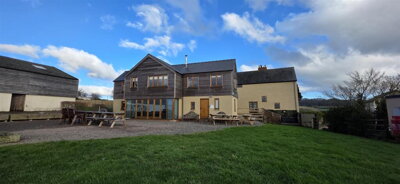
Browse 1 rental home to rent in Much Dewchurch from local letting agents.
The rental market in Much Dewchurch reflects the village's character as an exclusive rural enclave within Herefordshire. With average property prices hovering around £473,750, the area attracts tenants seeking substantial homes with generous plot sizes rather than high-density urban accommodation. The HR2 8DQ postcode area, encompassing the Church View neighbourhood, contains approximately 44 properties including 25 houses and 8 flats, demonstrating the mix of residential options available to renters. Detached properties command the highest values in this market, representing 100% of recorded transactions in the HR2 8DJ postcode area.
Herefordshire as a whole features 42% detached dwellings, significantly exceeding the England and Wales average of 23%, and Much Dewchurch follows this pattern with its collection of substantial period properties. The village has seen price fluctuations with a notable 13% increase over the last year, though values remain approximately 9% below the 2020 peak of £519,375. New build activity in the immediate vicinity remains limited, though planning applications indicate potential small-scale developments including six dwellings at Birch View Road pending appeal. For renters, this means access to character-rich period properties rather than newly constructed homes.
A new development at Athelstan Meadow in neighbouring Little Dewchurch, approximately 2-3 miles away, is launching in late Spring 2026 with 15 two, three and four-bedroom homes. This nearby development reflects the broader pattern of small-scale housing growth in the HR2 area. Properties in Much Dewchurch itself tend to be older constructions, with many dating from the 17th to 19th centuries, including notable buildings like Bryngwyn Manor, a Victorian Gothic manor house constructed in 1868, and the Old Vicarage, a 17th-century property. The limited supply of rental properties in the village means competition can be strong, particularly for family homes with access to the Steiner Academy.

Life in Much Dewchurch revolves around community spirit and appreciation for the natural landscape. The parish sits within a designated area of architectural significance, with the village centre featuring numerous listed buildings constructed from the distinctive local sandstone that characterises much of Herefordshire. Buildings such as Stone House, a Grade II listed property built from sandstone rubble and brick, showcase the traditional construction methods that have shaped the area over centuries. The timber-framed construction common to many historic properties reflects the agricultural heritage of this prosperous rural community.
The population of approximately 758 residents enjoys access to countryside walks, local pubs, and community events throughout the year. Much Dewchurch sits close to the River Wye, though the river's status as a Special Area of Conservation means careful management of local land use is essential. The village community includes families, retired couples, and professionals who appreciate the balance between rural tranquility and reasonable connectivity to Hereford. Local facilities include the Steiner Academy Hereford, which provides an alternative educational approach for children in the area and draws families from across the wider region.
The rural economy of Much Dewchurch follows patterns seen across Herefordshire, with higher than average rates of self-employment and businesses in agriculture and manufacturing sectors. Broadband connectivity has historically presented challenges in the area, though improvements continue to be made. Residents should verify current broadband speeds at any potential rental property, as this can significantly impact working arrangements for those who commute or work from home. The village benefits from an active community spirit, with events throughout the year bringing residents together and fostering the strong social connections that define village life in rural Herefordshire.

Education provision in Much Dewchurch stands out for its distinctive approach to learning. The Steiner Academy Hereford is located within the village, offering a Waldorf education philosophy that emphasises creative play, imagination, and holistic development during the early years before transitioning to a more academic curriculum. This alternative provision attracts families from across Herefordshire and surrounding counties, making Much Dewchurch particularly popular among parents seeking a different educational pathway for their children. The academy represents a significant factor in the village's appeal to families considering relocation.
For secondary education, pupils typically travel to Hereford where several mainstream secondary schools serve the city and surrounding villages. These include schools with strong academic records and specialist facilities, though parents should research specific admission arrangements and catchment area policies. The broader HR2 postcode area includes primary schools in neighbouring villages, with school transport arrangements connecting rural communities to educational facilities. Routes and availability can vary, so families should confirm transport arrangements when considering rental properties further from school locations.
Parents should research specific catchment areas and admission policies when considering rental properties, as school places in popular rural settings can be competitive. The presence of Steiner Academy provides a unique selling point for the village, contributing to the character of the local community and attracting families aligned with its educational philosophy. Early application is advisable given the popularity of alternative educational approaches and the limited availability of school transport routes connecting to Hereford secondary schools.

Transport connectivity in Much Dewchurch reflects its rural character, with private vehicle ownership essential for most daily activities. The village sits approximately 8 miles north of Hereford city centre, with the journey taking around 20 minutes by car along the A49 corridor. Hereford railway station provides connections to major destinations including Birmingham New Street, Cardiff Central, and London Paddington via Gloucester. The train service offers practical commuting options for those working in larger cities while residing in this peaceful village setting.
Bus services connect Much Dewchurch with Hereford and surrounding villages, though frequencies are limited compared to urban routes. Residents travelling to work or amenities typically plan journeys in advance, combining shopping trips and social activities to maximise efficiency. The nearest bus stops serve routes connecting to Hereford, with services running several times daily but not at frequencies suitable for regular commuters without private transport. Cycling is popular for local journeys, though the winding country lanes require careful navigation and consideration of weather conditions.
For international travel, Birmingham Airport and Bristol Airport provide accessible gateway options, each around 90 minutes away by car. Bristol Airport offers a wider range of European destinations, while Birmingham provides more extensive international connections. The rural transport situation means renters should carefully assess their mobility requirements before committing to a tenancy in Much Dewchurch. Those working in Hereford will find commuting straightforward by car, with the A49 providing a direct route, though parking costs in the city should be factored into commuting budgets.

The historic housing stock in Much Dewchurch means that properties here often exhibit defects common to older buildings across Herefordshire. Our inspectors frequently encounter damp and moisture issues in period properties, including rising damp caused by the absence of modern damp-proof courses and penetrating damp resulting from defective gutters, roofs, or windows. The sandstone and timber-framed construction typical of village properties requires careful assessment, as traditional building materials respond differently to weather exposure compared to modern construction.
Timber decay represents another significant concern in Much Dewchurch properties, with dry rot and wet rot affecting structural and non-structural timber elements. These conditions typically arise from moisture penetration, leading to soft, spongy, or cracked timber that compromises structural integrity. Our team checks all accessible timber for signs of woodworm infestation and fungal decay, as older properties with oak framing and wattle and daub infill are particularly susceptible to these issues. The humid conditions sometimes experienced near the River Wye Special Area of Conservation can exacerbate timber decay in properties with poor ventilation.
Structural movement and subsidence require careful evaluation in Much Dewchurch, where clay-rich soils present shrink-swell risks. During periods of drought or heavy rainfall, clay soils expand and contract, causing ground movement that can lead to cracking, uneven floors, and sticking doors or windows. Trees located near properties, particularly in the generous plots common to the area, can exacerbate subsidence risks as their root systems draw moisture from the soil. Our surveyors assess all signs of structural movement and provide detailed recommendations for any necessary remedial works before you commit to a tenancy.

Before viewing properties, obtain a rental budget agreement in principle to understand how much you can afford. Factor in not just rent but also council tax (Much Dewchurch falls under Herefordshire Council), utilities, and travel costs to Hereford or other employment centres. Budget agreements help filter your search to properties within realistic financial reach.
Visit multiple properties to compare location, condition, and character. Much Dewchurch features many period properties, so pay attention to the state of repair, heating systems, and any signs of damp or structural movement common to older buildings. Viewing properties in different weather conditions can reveal issues not apparent during dry weather, such as damp penetration or drainage problems.
Commission a RICS Level 2 Survey before signing your tenancy, particularly for older properties. Survey costs in Herefordshire typically range from £400 to £550 depending on property size and value, with larger period homes commanding higher fees. This investment identifies defects that may not be visible during viewings, including hidden timber decay, structural movement, and outdated electrical systems common to historic Much Dewchurch properties.
Review the tenancy terms carefully, including the deposit amount (capped at five weeks rent for properties with annual rent below £50,000), notice periods, and responsibilities for maintenance and repairs. Given the age of many properties in Much Dewchurch, clarify with your landlord which maintenance responsibilities you will assume and which remain with the property owner.
Arrange buildings insurance, transfer utilities to your name, and notify relevant parties of your change of address. The Herefordshire setting means rural connectivity considerations should be addressed, including broadband availability and mobile phone signal strength at the specific property location.
Renting in Much Dewchurch requires particular attention to property condition given the prevalence of historic buildings. The village's concentration of listed buildings means many properties will be constructed using traditional materials and techniques that require specialist knowledge to assess. Timber-framed properties with wattle and daub infill, sandstone construction, and thatched or slate roofs all present unique considerations for tenants. Understanding the age and construction of your potential home helps anticipate maintenance issues before they become problems.
Flood risk requires careful consideration in Much Dewchurch, as the Parish Council has documented concerns about severe local flooding, particularly near the Welsh Water Pumping Station. Properties in low-lying areas may face surface water and fluvial flooding during periods of heavy rainfall. The River Wye's proximity and status as a Special Area of Conservation also means some properties may be subject to environmental restrictions. We recommend checking the GOV.UK flood risk service for any specific property address before committing to a tenancy.
Subsidence risk exists due to the clay-rich soils common to Herefordshire, and tenants should look for signs of structural movement such as cracking or uneven floors. Our inspectors assess properties for evidence of shrink-swell damage, checking for diagonal cracks extending from corners of windows and doors, rippling wallpaper unrelated to damp, and doors that stick or fail to latch properly. A thorough RICS Level 2 Survey will identify these concerns and any necessary investigations before you commit to a tenancy, potentially saving significant expense and disruption later.
Understanding the construction methods used in Much Dewchurch properties helps tenants appreciate the characteristics and potential maintenance requirements of their rental home. Historically, Herefordshire builders used local sandstone extensively, creating the distinctive warm tones visible throughout the village. Properties like Stone House demonstrate this tradition, built from sandstone rubble with brick additions that reflect the evolution of building practices over centuries.
Oak and elm timber framing represents another defining feature of Much Dewchurch architecture, with oak-framed structures dating back several centuries still standing today. The Mynde, a Grade I listed house dating from the 15th and 16th centuries with remodelling in the early 18th and 19th centuries, exemplifies the craftsmanship of medieval builders. Infill panels between timber frames were traditionally constructed using wattle and daub, a mixture of twigs, reeds, and clay that provides good insulation but requires careful maintenance to prevent moisture ingress.
Brick construction became more prevalent from the 15th century onwards, initially used for chimneys and decorative features before becoming a primary building material. The local clays in Herefordshire provided suitable materials for brickmaking, with many historic properties featuring handmade bricks that exhibit the characteristic variations of traditional production methods. Modern construction in the area typically uses concrete blockwork and render, though the village's planning policies often encourage materials that complement the historic character. Tenants renting older properties should understand that traditional construction methods may require more maintenance than modern equivalents but also offer excellent thermal mass and character.
While specific rental price data for Much Dewchurch is limited, the overall average property price of £473,750 indicates a premium market for this rural Herefordshire village. Properties in Much Dewchurch tend to be larger detached homes with substantial plots, which influences rental values. Tenants should expect to pay above the Herefordshire average for the character and space that village living offers. Contact local letting agents for current market rates on specific property types, as rental prices can vary significantly based on property size, condition, and proximity to the Steiner Academy.
Much Dewchurch falls under Herefordshire Council administration, with council tax bands varying by property throughout the village. Larger period homes with higher valuations often occupy higher council tax bands, while smaller cottages and flats may fall into lower categories. The village features properties across all nine council tax bands depending on their individual valuation. Prospective tenants should confirm the specific band for any property they are considering, as this forms a significant part of monthly outgoings alongside rent. Herefordshire Council provides current banding information through their online portal or by contacting their revenues team directly.
The standout educational option in Much Dewchurch is the Steiner Academy Hereford, which offers a distinctive approach to learning aligned with Waldorf principles and attracts families from across the wider region. For primary education, children from Much Dewchurch typically attend schools in neighbouring villages, with transport arrangements managed through Herefordshire Council's school transport policy. Secondary pupils usually travel to schools in Hereford city, with several options available including specialist academies and grammar schools. Families should verify current admission arrangements, catchment area boundaries, and school transport availability when considering rental properties, as popular rural settings can mean competitive entry to local schools.
Public transport connectivity in Much Dewchurch is limited, reflecting its rural character and the village's location within the HR2 postcode area. Bus services operate between the village and Hereford, though frequencies are modest and do not support regular commuting without a private vehicle. Hereford railway station provides national rail connections including services to Birmingham, Cardiff Central, and London Paddington via Gloucester, with journey times to London typically around three hours. Most residents rely on private vehicles for daily travel to work, shopping, and social activities. Those considering renting in Much Dewchurch should ensure they have access to a car or can accommodate the practical limitations of rural public transport.
Much Dewchurch offers an exceptional quality of life for those seeking genuine countryside living within reasonable reach of Hereford city. The village combines historic character with strong community bonds and the unique appeal of the acclaimed Steiner Academy, making it particularly attractive to families and those valuing rural tranquility. The rental market is relatively small due to the village's size, but properties are generally substantial period homes with generous gardens. Tenants should be prepared for the practical considerations of rural living, including transport requirements, potential property maintenance issues common to historic buildings, and the importance of checking broadband connectivity before committing to a tenancy.
Deposit requirements in Much Dewchurch follow standard English regulations under the Tenant Fees Act 2019, with security deposits capped at five weeks rent for properties with annual rent below £50,000. Most letting agents charge administration fees for referencing and credit checks, though these are capped and should be clearly itemised in any tenant fee breakdown. First-time renters need to budget for upfront rent in advance plus deposit, which for a typical family home in the village could total several thousand pounds. Additional costs to consider include potential RICS Level 2 Survey fees for older properties (typically £400-£550), ongoing council tax, utilities, and rural insurance premiums that may be higher than urban equivalents.
From 4.5%
We assess your financial position to help you understand what rent you can afford in the Much Dewchurch market.
From £99
We verify your identity, credit history, and employment status to satisfy landlord requirements.
From £400
Our inspectors assess property condition, identifying defects common to historic Much Dewchurch homes including timber decay and structural movement.
From £85
Energy performance certificates are required for rental properties and help you understand potential utility costs.
Budgeting for a rental property in Much Dewchurch requires careful consideration of upfront costs beyond simply the first month's rent. The security deposit, capped at five weeks rent under the Tenant Fees Act 2019, protects landlords against damage or unpaid rent and is held in a government-approved scheme throughout your tenancy. For a typical family home in the village, this deposit could amount to several thousand pounds depending on the property size and rental level. First-time renters should also budget for the upfront rent payment required before taking occupation, typically one month in advance.
Additional costs include referencing fees charged by letting agents, which cover credit checks and employment verification. RICS Level 2 Survey costs for properties in Herefordshire typically range from £400 to £550 depending on the property's size and value, with larger period homes commanding higher fees due to their complexity and inspection time requirements. For a four-bedroom period property, survey costs may reach £495 or higher. This investment is particularly valuable in Much Dewchurch given the prevalence of historic properties where defects may not be immediately apparent to prospective tenants.
Tenant insurance, council tax (payable to Herefordshire Council), and rural connectivity costs such as broadband installation should also be factored into your moving budget. Properties in more isolated locations may require connection charges for utilities or telecommunications services. Energy costs can be higher in older properties with solid walls and less effective insulation, though the substantial construction of period homes also provides excellent thermal mass once heated. We recommend requesting copies of recent utility bills from landlords or agents to accurately estimate ongoing costs before committing to a tenancy in Much Dewchurch.
Properties to Rent In London

Properties to Rent In Plymouth

Properties to Rent In Liverpool

Properties to Rent In Glasgow

Properties to Rent In Sheffield

Properties to Rent In Edinburgh

Properties to Rent In Coventry

Properties to Rent In Bradford

Properties to Rent In Manchester

Properties to Rent In Birmingham

Properties to Rent In Bristol

Properties to Rent In Oxford

Properties to Rent In Leicester

Properties to Rent In Newcastle

Properties to Rent In Leeds

Properties to Rent In Southampton

Properties to Rent In Cardiff

Properties to Rent In Nottingham

Properties to Rent In Norwich

Properties to Rent In Brighton

Properties to Rent In Derby

Properties to Rent In Portsmouth

Properties to Rent In Northampton

Properties to Rent In Milton Keynes

Properties to Rent In Bournemouth

Properties to Rent In Bolton

Properties to Rent In Swansea

Properties to Rent In Swindon

Properties to Rent In Peterborough

Properties to Rent In Wolverhampton

Enter your details to see if this property is within your budget.
Loans, cards, car finance
Estimated property budget
Borrowing + deposit
You could borrow between
Typical borrowing
Monthly repayment
Est. at 4.5%
Loan-to-value
This is an estimate only. Your actual budget may vary depending on interest rates, credit history, and personal circumstances. For an accurate affordability assessment, speak to one of our free mortgage advisors.
This calculator provides estimates for illustrative purposes only and does not constitute financial advice. Your home may be repossessed if you do not keep up repayments on your mortgage. Estimates based on 4.5% interest rate, repayment mortgage. Actual rates depend on your circumstances.
Homemove is a trading name of HM Haus Group Ltd (Company No. 13873779, registered in England & Wales). Homemove Mortgages Ltd (Company No. 15947693) is an Appointed Representative of TMG Direct Limited, trading as TMG Mortgage Network, which is authorised and regulated by the Financial Conduct Authority (FRN 786245). Homemove Mortgages Ltd is entered on the FCA Register as an Appointed Representative (FRN 1022429). You can check registrations at NewRegister or by calling 0800 111 6768.

We use cookies to show you personalised content and improve your experience of our website. Find out more in our Privacy policy and Cookie policy.