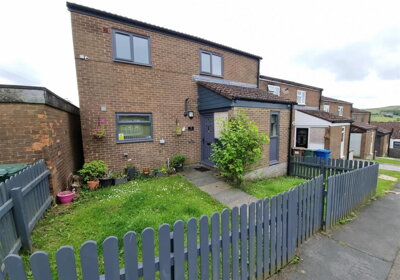
Browse 1 rental home to rent in Dunnockshaw, Burnley from local letting agents.
£0/m
0
0
0
Source: home.co.uk
The rental market in Dunnockshaw, though modest in scale due to the village's small population, offers a curated selection of properties that appeal to renters seeking quality accommodation in a rural setting. Recent market activity shows that semi-detached properties typically command monthly rents between £700 and £950, while terraced cottages suitable for individuals or couples can be found from approximately £550 to £750 per month. Detached family homes, less common in the village, may reach £1,000 to £1,300 depending on their size and condition. The 12-month house price trend in the area shows a slight adjustment of -1.7%, suggesting a stable market where rental values remain competitive relative to nearby urban centres. With an average house price of £277,500 for those eventually looking to buy, the area represents solid value for renters seeking to establish themselves in this desirable location before making a purchase commitment.
Most rental properties available in Dunnockshaw are traditional constructions built with local stone and red brick, reflecting the Lancashire vernacular architecture that characterises the village. These older properties often feature generous room proportions, original fireplaces, and solid-wall construction that provides excellent thermal mass during the colder months. Properties in the village frequently date from the 19th century and inter-war period, with some farmsteads and cottages dating back even earlier. New build developments within the immediate Dunnockshaw area remain limited, with the housing stock consisting primarily of period properties. For renters, this means properties often come with character features but may require careful assessment for issues common to older construction, such as damp proofing, roof condition, and electrical systems that may not meet current standards.
The housing stock in Dunnockshaw comprises a mix of property types, with detached properties averaging around £350,000 in value, semi-detached homes at approximately £220,000, and terraced properties at around £165,000. This mix creates a diverse rental market where properties range from compact period cottages ideal for singles or couples to spacious family homes. Only 4 property sales have completed in the village over the past 12 months, reflecting the tight supply of homes available for purchase and reinforcing the importance of the private rental sector for those not yet ready to buy. Rental demand in the village is driven by its proximity to employment opportunities in Accrington, Burnley, and Blackburn, where major employers in manufacturing, retail, and public services provide stable income for local residents.

Dunnockshaw sits nestled in the Lancashire countryside near the River Hyndburn valley, offering residents a tranquil lifestyle surrounded by rolling hills, farmland, and traditional stone-built properties. The village maintains its rural character through a mix of historic cottages, farmsteads, and mid-century homes that line the country lanes leading through the settlement. As a small hamlet within the Burnley district, Dunnockshaw provides an intimate community atmosphere where neighbours often know one another and local events bring the village together throughout the year. The proximity to the Pennines means residents enjoy scenic walks directly from their doorstep, with footpaths crossing farmland and leading to nearby villages including Hesaten and Knuzden.
Daily amenities in Dunnockshaw itself are limited due to its small scale, but the nearby towns of Accrington and Burnley provide comprehensive shopping, healthcare, and leisure facilities within a short drive. The village location near the River Hyndburn and smaller watercourses offers pleasant riverside walks and access to green spaces, while local pubs and farm shops in surrounding villages supply fresh local produce. The community spirit in Dunnockshaw is strengthened by its church, village hall, and proximity to community events in neighbouring settlements. For renters, the village provides an authentic Lancashire countryside experience while remaining connected to urban employment centres and amenities. The area falls under Burnley Borough Council for local authority services, meaning residents benefit from council tax bands among the lowest in the country.
The geology of the wider Lancashire area, including Carboniferous rocks with overlying glacial tills and boulder clay, shapes the landscape that Dunnockshaw residents enjoy. Clay soils prevalent in the region provide the fertile farmland surrounding the village but can present moderate to high shrink-swell characteristics during periods of drought or heavy rainfall. While significant structural issues are not widespread in the village, properties may exhibit the effects of ground movement over time, and prospective renters should be aware of this characteristic of the local geology. The area's natural beauty, combined with its practical connectivity to larger towns, makes Dunnockshaw an attractive option for those seeking to balance rural lifestyle preferences with employment and service accessibility.

Families considering renting in Dunnockshaw will find a range of educational options available within commuting distance of the village. Primary education is served by schools in the surrounding villages and nearby towns, with several primary schools rated Good or Outstanding by Ofsted within the wider Burnley and Hyndburn areas. The nearest primary schools typically serve the immediate catchment areas, and parents should verify current catchment boundaries with the local education authority when considering a rental property in Dunnockshaw. Many families in the village choose schools in Accrington, which offers several well-regarded primary options along with strong community facilities including libraries and leisure centres.
Secondary education options in the area include schools in Accrington, Burnley, and surrounding towns, with several academies and comprehensives serving the local catchment. The nearby towns provide a variety of secondary schools catering to different academic strengths and extracurricular interests, with some specialising in STEM subjects, arts, or sports education. Older students may consider sixth form provision at colleges in nearby towns, where a wider range of A-level subjects and vocational courses are available. The proximity to larger towns means that families renting in Dunnockshaw have access to educational choices across multiple boroughs, though transport arrangements should be considered when selecting a school.
Planning for school transport and understanding local admission policies is advisable before committing to a rental property, particularly for families with children approaching secondary school age. Several schools in the Accrington area serve as popular choices for families from Dunnockshaw, including those within the Church Academy Trust and other established educational providers. School performance data changes annually, and parents should review current Ofsted ratings and examination results when selecting a school for their children. Many families find that the journey time from Dunnockshaw to schools in Accrington, typically 15-20 minutes by car, is manageable when balanced against the benefits of the village lifestyle and the quality of education available in nearby towns.

Commuting from Dunnockshaw is practical thanks to its strategic position near major road networks connecting Lancashire's principal towns. The village sits within easy reach of the A679 and A56 trunk roads, providing direct routes to Accrington, Burnley, and Blackburn. The M65 motorway, linking Preston to Colne, is accessible within approximately 15 minutes by car, opening connections to Manchester and Leeds via the broader motorway network. For workers commuting to major employment centres in these cities, the village location offers the advantage of countryside living without sacrificing access to regional business districts.
Public transport options serving Dunnockshaw include local bus routes connecting the village to surrounding towns and villages, though frequencies are limited given the rural location. Bus services typically operate hourly or less on weekdays with reduced weekend services, connecting residents to Accrington and Burnley for shopping, appointments, and leisure activities. Rail connections are available from nearby Accrington and Burnley Central stations, with Northern Rail services providing direct links to Manchester Victoria, Leeds, and Preston. For commuters to major cities, the combination of driving to the nearest station plus rail services provides a viable alternative to city-centre living at a significantly lower cost.
Residents typically find that a car provides the most practical means of daily transport, though cycling is popular on the quieter country lanes for shorter journeys to surrounding villages. Parking provision at rental properties in the village is generally good, with most homes offering off-street parking or driveway space. The local road network, while comprising some narrow country lanes, is well-maintained and connects efficiently to the major trunk roads. For commuters working in Manchester, the journey involves approximately 15 minutes driving to the nearest station followed by around an hour on the train, making this a workable daily commute for those employed in the city. Understanding your typical commute pattern is essential when choosing a rental property in this rural village location.

Contact a mortgage broker or financial advisor to obtain an Agreement in Principle for your rental budget before viewing properties. Understanding your monthly affordability helps you focus on suitable homes and prevents wasted time viewing properties outside your budget range.
Spend time exploring Dunnockshaw and the surrounding villages to understand local amenities, commuting options, and community atmosphere. Visit at different times of day and week to get a genuine feel for village life and verify that the rural lifestyle meets your expectations.
Browse available rentals on Homemove and contact local letting agents to arrange viewings. Take notes on property condition, room sizes, heating systems, and any concerns you wish to address before committing to a tenancy.
Once you find a suitable property, complete the tenant application forms and provide required documentation including proof of identity, income verification, and references from previous landlords or employers. Being prepared with documentation speeds up the process considerably.
Expect background checks including credit searches, employment verification, and landlord references. Some agents may also require a guarantor for additional security, particularly for tenants without extensive rental history or stable employment.
Review the tenancy terms carefully, including rent amount, deposit amount, minimum term, and notice periods. Ensure you understand your obligations as a tenant before signing and clarify any points of uncertainty with the agent or landlord.
Arrange contents insurance, set up utility accounts, and conduct a thorough check-in inspection with your landlord or agent to document the property condition at the start of your tenancy. This protects both parties and helps avoid disputes at the end of the tenancy.
Renting a property in Dunnockshaw requires careful consideration of factors specific to this rural village location and the age of its housing stock. Properties built using traditional Lancashire construction methods, including solid stone and brick walls, may exhibit different characteristics to modern homes, including breathability of walls, response to moisture, and thermal performance. Before signing a tenancy, arrange a thorough inspection that checks for signs of damp, which is a common concern in older properties with solid walls or where damp proof courses may be aging. Understanding the property's heating system is particularly important given the potentially higher energy costs associated with older construction lacking modern insulation standards.
The geology of the wider Lancashire area, including clay soils with potential shrink-swell characteristics, means that properties in Dunnockshaw and surrounding villages may be susceptible to ground movement in periods of drought or heavy rainfall. While significant structural issues are not widespread, watching for signs of subsidence such as cracking in walls, doors sticking, or uneven floors provides sensible precautions when viewing a property. The wider Lancashire region has a history of coal mining, and while specific mining risks for Dunnockshaw would require a specialist mining report, this is a general consideration for renters of older properties in the area.
Surface water flooding risk exists in some areas near the River Hyndburn and smaller watercourses, so checking the property's flood risk assessment and understanding insurance implications makes good sense before committing to a tenancy. Properties in the village fall within the Burnley Borough Council area for council tax purposes, and verification of the applicable council tax band should be confirmed with the agent before tenancy commencement. The electrical and plumbing systems in older properties may not meet current standards, so requesting information about recent upgrades or planned maintenance helps avoid unexpected costs during your tenancy. Properties with original features often require more maintenance attention, and understanding the landlord's approach to repairs and improvements forms an important part of the tenancy discussions.

Specific rental price data for this small Lancashire village is limited due to the modest number of rental transactions, but monthly rents in the Dunnockshaw area typically range from approximately £550-£750 for terraced properties and cottages, £700-£950 for semi-detached family homes, and £1,000-£1,300 for larger detached properties. Rental prices vary considerably based on property condition, number of bedrooms, and whether the property has been recently modernised. Properties in good condition with modern kitchens and bathrooms command premiums, while older properties requiring updating may be available at lower rents. Comparing current listings across multiple letting agent platforms provides the most accurate picture of rental values at any given time.
Properties in Dunnockshaw fall under Burnley Borough Council's jurisdiction for council tax purposes. Most residential properties in the village fall within Bands A through C, with Band A being common for smaller terraced properties and modest semi-detached homes. Council tax charges for Band A properties in Burnley Borough are among the lowest in the country, making the village an affordable location beyond just rental costs. Prospective tenants should confirm the specific council tax band with the landlord or letting agent before signing a tenancy, as this forms part of the ongoing costs of renting a property alongside rent, utilities, and other outgoings.
The best schools for families renting in Dunnockshaw are found in nearby towns, with several Good and Outstanding primary schools located in Accrington and the surrounding Hyndburn area. Schools such as those serving the Church Academy catchment and Accrington Academy secondary school are popular choices among families from the village. Secondary school options include academies and comprehensives in Accrington and Burnley, with older students able to access sixth form and college provision offering A-levels and vocational courses. School performance data changes annually, and parents should review current Ofsted ratings when selecting a school for their children. Transport arrangements from Dunnockshaw to schools in surrounding towns should be considered when budgeting for family life in this rural village.
Public transport connectivity in Dunnockshaw reflects its status as a small rural village, with bus services providing the primary public transport link to surrounding towns and villages. Bus routes connect the village to Accrington and Burnley, though service frequencies are limited compared to urban areas, typically operating hourly or less on weekdays with reduced weekend services. The nearest railway stations are in Accrington and Burnley Central, offering Northern Rail services to Manchester Victoria, Leeds, and Preston. For commuters to major cities, the combination of driving to the nearest station or using available bus connections with rail services provides a workable if not always convenient solution. Residents without cars should factor transport constraints into their decision to rent in Dunnockshaw.
Dunnockshaw offers an excellent quality of life for renters seeking a peaceful village environment with good access to larger employment centres. The village combines the benefits of countryside living, including scenic walks in the Lancashire hills, fresh air, and strong community bonds, with reasonable commuting connections to Accrington, Burnley, and Blackburn. Rental properties in the village tend to be characterful period homes in attractive surroundings, appealing to renters tired of urban living or seeking more space for their money. The limited local amenities require travel to nearby towns for shops and services, which is a trade-off for the rural lifestyle. For those who value village character, community spirit, and access to beautiful Lancashire countryside, renting in Dunnockshaw represents an attractive option.
Standard deposits for rental properties in Dunnockshaw are equivalent to five weeks rent, as permitted under the Tenant Fees Act 2019 for properties with annual rents below £50,000. This means a property renting at £700 per month would require a deposit of approximately £807. In addition to the deposit, tenants should budget for holding deposit (typically one week's rent) to secure the property, plus referencing and credit check fees which are now limited to £20 under the Tenant Fees Act. Utility deposits, council tax arrangements, and contents insurance represent additional upfront costs to factor into your moving budget. First-time renters should also budget for removal costs and potential furniture purchases if moving from furnished accommodation.
When viewing rental properties in Dunnockshaw, pay particular attention to the condition of older construction features including solid walls, original windows, and period fireplaces that characterise many homes in the village. Check for signs of damp around ground floor walls and in corners where ventilation may be poor. Examine the heating system and ask about recent upgrades to insulation, as older properties can be expensive to heat. Look for any cracking in walls or doors that stick, which may indicate past ground movement from the clay soils common in the area. Request information about the landlord's maintenance history and response times for repairs. Understanding the property's flood risk status, particularly for homes near watercourses, is also advisable before committing to a tenancy.
Dunnockshaw is located near the River Hyndburn and smaller watercourses that flow through the valley, which means some areas may have a risk of surface water flooding, especially during periods of heavy rainfall. Properties near the river or in low-lying areas of the village may be more susceptible to flooding, and prospective tenants should request information about flood risk from the letting agent or landlord. Flood risk can affect buildings insurance premiums, so understanding the potential implications for ongoing costs makes good financial sense. While significant flood events are not frequent in the area, checking the Environment Agency flood maps for the specific property location provides valuable information before signing a tenancy agreement.
From 4.5% APR
Help calculate your monthly rental budget based on income and outgoings
From £20
Comprehensive referencing checks required by most letting agents
From £80
Energy performance certificate for your rental property
From £100
Professional check-in inventory to protect your deposit
Understanding the full financial commitment when renting in Dunnockshaw extends beyond the monthly rent to include various upfront costs that every prospective tenant should budget for carefully. The security deposit, capped at five weeks rent under the Tenant Fees Act 2019 for properties with annual rents below £50,000, is typically required at the start of the tenancy and is held in a government-approved deposit protection scheme throughout your tenancy. This deposit is returned at the end of your tenancy minus any deductions for damage beyond fair wear and tear or unpaid rent. For a property at £800 per month, this means setting aside approximately £923 for the security deposit alone, plus the first month's rent in advance.
Additional upfront costs include the holding deposit, usually equivalent to one week's rent, which secures the property while references are checked and tenancy paperwork is prepared. This amount is credited toward your first month's rent or deposit upon completion of the tenancy agreement. Tenant referencing fees are capped at £20 per applicant under the Act, though some agents include this within their admin fees. You may also need to budget for changing utility accounts into your name, council tax registration, and setting up contents insurance for your belongings. For renters moving from furnished accommodation, additional costs for furnishing a let property can be substantial, so understanding what is included with the property before signing is essential.
A thorough check-in inventory conducted with the landlord or agent protects both parties and should be treated as a priority when moving into any rental property in the village. This documented record of the property condition at the start of your tenancy forms the basis for any deposit deductions at the end, helping to ensure you receive your full deposit back if the property is left in the same condition as when you moved in. Budgeting for these upfront costs alongside your first month's rent and deposit ensures a smooth move into your new Dunnockshaw home without unexpected financial surprises.
Properties to Rent In London

Properties to Rent In Plymouth

Properties to Rent In Liverpool

Properties to Rent In Glasgow

Properties to Rent In Sheffield

Properties to Rent In Edinburgh

Properties to Rent In Coventry

Properties to Rent In Bradford

Properties to Rent In Manchester

Properties to Rent In Birmingham

Properties to Rent In Bristol

Properties to Rent In Oxford

Properties to Rent In Leicester

Properties to Rent In Newcastle

Properties to Rent In Leeds

Properties to Rent In Southampton

Properties to Rent In Cardiff

Properties to Rent In Nottingham

Properties to Rent In Norwich

Properties to Rent In Brighton

Properties to Rent In Derby

Properties to Rent In Portsmouth

Properties to Rent In Northampton

Properties to Rent In Milton Keynes

Properties to Rent In Bournemouth

Properties to Rent In Bolton

Properties to Rent In Swansea

Properties to Rent In Swindon

Properties to Rent In Peterborough

Properties to Rent In Wolverhampton

Enter your details to see if this property is within your budget.
Loans, cards, car finance
Estimated property budget
Borrowing + deposit
You could borrow between
Typical borrowing
Monthly repayment
Est. at 4.5%
Loan-to-value
This is an estimate only. Your actual budget may vary depending on interest rates, credit history, and personal circumstances. For an accurate affordability assessment, speak to one of our free mortgage advisors.
This calculator provides estimates for illustrative purposes only and does not constitute financial advice. Your home may be repossessed if you do not keep up repayments on your mortgage. Estimates based on 4.5% interest rate, repayment mortgage. Actual rates depend on your circumstances.
Homemove is a trading name of HM Haus Group Ltd (Company No. 13873779, registered in England & Wales). Homemove Mortgages Ltd (Company No. 15947693) is an Appointed Representative of TMG Direct Limited, trading as TMG Mortgage Network, which is authorised and regulated by the Financial Conduct Authority (FRN 786245). Homemove Mortgages Ltd is entered on the FCA Register as an Appointed Representative (FRN 1022429). You can check registrations at NewRegister or by calling 0800 111 6768.

We use cookies to show you personalised content and improve your experience of our website. Find out more in our Privacy policy and Cookie policy.