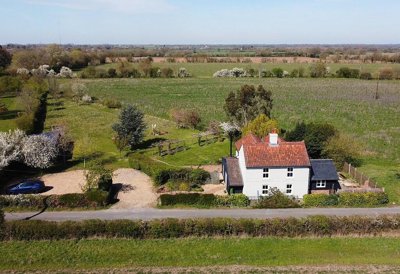
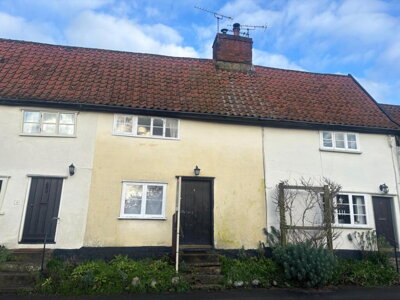
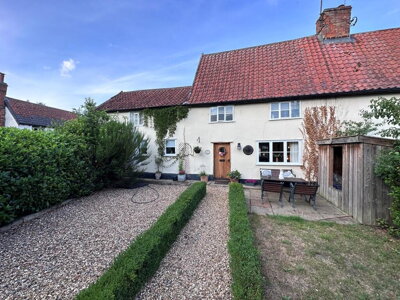
Browse 3 rental homes to rent in Debenham, Mid Suffolk from local letting agents.
£1,175/m
2
0
50
Source: home.co.uk
Source: home.co.uk
Semi-Detached
1 listings
Avg £1,600
Terraced
1 listings
Avg £750
Source: home.co.uk
Source: home.co.uk
The rental market in Debenham reflects the character of this traditional Suffolk village, where property types range from charming period cottages within the historic Conservation Area to more contemporary semi-detached homes on the village outskirts. Our current listings encompass the full spectrum of rental options available in the village, from compact one and two-bedroom properties suitable for first-time renters or couples to generous four and five-bedroom family homes that take advantage of Debenham's spacious plot sizes.
Understanding local sale prices helps contextualise the rental market, with overall average prices around £388,500, rising to £495,000 for detached properties and approximately £315,000 for semi-detached homes. Terraced properties average around £280,000, though these represent a smaller portion of the available housing stock. The village has seen modest price growth of 0.9% over the past twelve months, suggesting a stable local market that attracts both long-term tenants and those seeking a stepping stone before committing to purchase in this desirable rural location.
The village's housing stock is characterised by its age and traditional construction methods, with a significant proportion of properties dating from before 1919. Many homes along the High Street and surrounding lanes feature Suffolk red brick, timber framing, and traditional weatherboarding that reflect centuries of local building practice. These period properties often retain original features such as exposed beams, inglenook fireplaces, and original floorboards that add character but may require ongoing maintenance. We include detailed property descriptions to help you understand the construction type and character of each listing.
Approximately 20 properties have changed hands in Debenham over the past twelve months, indicating a relatively active sales market that influences rental availability and pricing. Rental demand in the village tends to be driven by families seeking the excellent local schooling, remote workers requiring a countryside base with good connectivity, and those transitioning from urban areas who appreciate the village's strong community spirit and practical amenities.

Life in Debenham revolves around its strong sense of community and the practical amenities that serve both residents and visitors from the surrounding countryside. The village supports a good range of everyday services including a convenience store, post office, pharmacy, and several independent retailers along the historic High Street. For dining and socialising, locals benefit from traditional pubs including establishments housed within characterful timber-framed buildings that have served the community for generations. The village hall hosts regular community events, while local clubs and societies cater to diverse interests from gardening to performing arts, creating numerous opportunities for new residents to integrate into village life.
The natural environment defines much of Debenham's character, with the village positioned on the London Clay Formation and Crag Group deposits that create the gently undulating Suffolk countryside. The River Deben flows through the village, providing attractive riverside walks and contributing to the verdant appearance of the area, though properties adjacent to the river should be aware of potential flood risk during periods of heavy rainfall. The surrounding landscape comprises a mix of arable farmland, meadows, and scattered woodlands, offering excellent opportunities for walking, cycling, and enjoying the Suffolk countryside.
The village's extensive Conservation Area preserves much of its historic core, ensuring that the architectural character that makes Debenham distinctive remains protected for future generations. Properties within the Conservation Area include numerous listed buildings ranging from the Grade I listed St Mary Magdalene Church to many Grade II listed cottages and farmhouses that line the High Street. This heritage designation means that the villagescape has changed little over generations, creating an enviable setting for those seeking period properties in an authentic Suffolk village environment.
Beyond the village itself, residents benefit from proximity to the market towns of Framlingham, Woodbridge, and Eye, all within reasonable driving distance for additional shopping, dining, and leisure facilities. The surrounding area offers excellent opportunities for outdoor pursuits, with numerous public footpaths crossing farmland and through woodland, and the Suffolk coast accessible for day trips to destinations such as Aldeburgh and Southwold.

Education provision in Debenham represents a significant draw for families considering relocation to the village, with Debenham High School serving as a major employer and community institution. The secondary school maintains a strong reputation within the region and provides comprehensive education for students from the village and surrounding rural communities, making it a key factor in family housing decisions. For younger children, Debenham Primary School serves the local community with education typically spanning ages 5 to 11, providing a convenient educational option within walking distance of most residential areas in the village.
The village's educational heritage is reflected in its historical architecture, with school buildings and associated residences contributing to the educational character of the community. Parents renting in Debenham should note the catchment area arrangements for secondary education and research specific Ofsted ratings and admission policies for both primary and secondary schools. For families requiring additional educational support or extracurricular activities, the surrounding market towns of Framlingham, Woodbridge, and Eye offer further schooling options and specialist facilities within reasonable driving distance of the village.
When renting a property near schools in Debenham, families should consider the seasonal demand patterns that can affect both availability and rental prices. Properties within easy walking distance of both schools often command a premium during the summer months when families secure tenancies ahead of the new academic year. We recommend beginning your property search well in advance if school catchment proximity is a priority, as desirable homes near educational facilities tend to let quickly in this village market.
For families with older children pursuing further education, the proximity of Debenham to sixth form colleges and further education providers in the wider Suffolk area provides good options. The village's position relative to Ipswich and Norwich means that access to universities and specialist training providers is achievable for older students willing to commute or relocate for their studies.

Transport connectivity from Debenham balances the village's rural character with practical access to larger employment centres and service towns. The village sits at the intersection of roads connecting to the A140 and A1120, providing routes to Ipswich to the south, Stowmarket to the east, and Diss to the north. These road connections make Debenham particularly attractive to commuters who work in the professional and service sectors concentrated in these larger towns. The journey to Ipswich, where significant employment opportunities exist across retail, healthcare, education, and professional services, takes approximately 30-40 minutes by car under normal traffic conditions.
For those relying on public transport, the village is served by local bus routes connecting Debenham to surrounding towns and villages, though service frequencies may be limited compared to urban areas. The nearest railway stations are located in Diss and Stowmarket, both offering regular services to London Liverpool Street via Norwich, with journey times to the capital typically ranging from 90 minutes to two hours. This rail access makes Debenham viable for commuters willing to combine a short drive with train travel, while the village's position away from major trunk routes means that traffic congestion is rarely an issue for residents.
Parking provision in the village accommodates those with cars, and the road network generally handles local traffic well throughout the day. Properties with dedicated parking, whether garages or off-street spaces, are particularly valued in the village rental market and can influence both rental prices and tenant demand. For renters considering a move to Debenham, we recommend assessing your transport requirements carefully, as the rural nature of the village means that car ownership is practically essential for most residents.
The village's position within Mid Suffolk also provides good access to the A14 trunk road, which runs to the south of Stowmarket and connects the region to Felixstowe port and the wider motorway network beyond Cambridge. This connection makes Debenham viable for those working in logistics, manufacturing, or requiring regular travel to major commercial centres across East Anglia and beyond.

Before viewing properties in Debenham, obtain a rental budget agreement in principle from a lender to understand how much rent you can comfortably afford. Consider the additional costs of village living, including potential car ownership for transport, when calculating your rental budget. We recommend viewing the government money advice service for guidance on rental affordability calculations.
Browse available rental properties in Debenham through Homemove to see current listings, rental prices, and property types. Note that rental availability in rural villages like Debenham can be more limited than in urban areas, so registering for alerts ensures you do not miss new properties coming to market. Set up instant notifications so you can arrange viewings quickly when suitable homes become available.
Contact local estate agents to arrange viewings of properties that match your requirements. When visiting Debenham, take time to explore the village, walk the High Street, and get a feel for the local community and amenities before making your decision. We suggest visiting at different times of day to experience the full rhythm of village life and assess factors such as traffic noise and parking availability.
Once you have found a property you wish to rent, complete the tenant application process, which typically includes providing references, proof of income, and identification. Your landlord or agent will conduct background checks including credit checks and landlord references. Be prepared to provide employment details, previous landlord references, and permission for agents to verify your identity.
For rental properties in Debenham, particularly older properties within the Conservation Area or listed buildings, consider booking a professional survey to identify any maintenance issues or defects before committing to your tenancy. A RICS Level 2 Survey for a typical three-bedroom property ranges from £450 to £700, while larger or more complex properties may cost £600 to £900 or more. Given that over half of the village's housing stock predates 1919, a professional inspection is particularly valuable in identifying issues before you commit.
Once your application is approved, review your tenancy agreement carefully, paying particular attention to deposit amounts, notice periods, and responsibilities for maintenance and repairs. Your deposit will be protected in a government-approved scheme within 30 days of receiving it, and you should receive written confirmation of which scheme protects your money.
Given the age of much of the housing stock in Debenham, prospective renters should be aware of the types of defects that commonly affect properties in this village. Many homes along the High Street and within the Conservation Area date from before 1919, constructed using traditional methods that include timber-framed structures with wattle and daub or brick nogging infill panels. These period construction techniques, while offering excellent character and thermal mass, can present challenges that differ from modern buildings.
Damp represents one of the most frequently encountered issues in older Debenham properties, manifesting as rising damp where original damp-proof courses have failed, penetrating damp through solid walls lacking cavity insulation, or condensation resulting from inadequate ventilation in draft-proofed properties. The Suffolk climate, with its mix of wet winters and relatively high humidity, can exacerbate these conditions, particularly in properties that have been poorly maintained or recently fitted with new windows without considering ventilation requirements.
Timber defects are another common concern in traditional properties, where woodworm may affect structural timbers including floor joists, roof rafters, and structural posts. Wet and dry rot can develop where moisture has been allowed to accumulate, often around windows, in bathrooms, or in roof voids with inadequate ventilation. We recommend that tenants request evidence of recent timber treatments or factor the cost of professional inspections into their decision-making process when considering older properties.
The underlying geology of Debenham, characterised by London Clay Formation and Crag Group deposits, presents a notable risk of subsidence and heave that can affect properties with shallow foundations. Signs of structural movement include cracking around door frames, windows, or across walls, particularly if these cracks have appeared recently or are widening over time. Properties with large trees nearby are particularly susceptible to clay shrinkage as tree roots extract moisture from the soil during dry periods, causing the foundations to settle unevenly.
Roofing issues are common in period properties throughout Debenham, where original clay tile or slate roofs may be approaching or beyond their expected lifespan. Signs of roof deterioration include slipped or missing tiles, sagging rooflines, and water staining on ceiling surfaces. Leadwork around chimneys, valleys, and junctions is particularly vulnerable to deterioration and can allow water penetration that damages underlying timbers and ceiling plaster.
Renting in Debenham requires particular attention to certain local factors that reflect the village's distinctive character and geography. The presence of the River Deben means that some properties, particularly those in low-lying areas near the river, may be subject to flood risk during periods of heavy rainfall or prolonged wet weather. Before committing to a rental property, prospective tenants should check government flood risk maps and discuss any flood history with the landlord or agent. Appropriate contents insurance that covers flood damage is strongly recommended for properties in identified flood risk areas.
Given Debenham's extensive Conservation Area designation and concentration of listed buildings, renters should understand that certain restrictions may apply to alterations and modifications. Properties within the Conservation Area may be subject to planning controls that restrict external changes, while listed buildings require consent for more substantial alterations. Tenants should clarify with their landlord what modifications, if any, are permitted during the tenancy, as even minor works such as hanging pictures or installing shelves may require consent for listed properties.
The age of many properties in the village, with a significant proportion dating from before 1919, means that issues such as damp, timber defects, and outdated services are more common than in newer housing, making a thorough property inspection before signing essential. We strongly recommend booking a RICS Level 2 Survey for any rental property in Debenham, particularly for period cottages, farmhouses, or any property showing signs of age or wear. The survey cost represents a modest investment against the potential expense of discovering serious defects after you have committed to a tenancy.
The underlying geology of Debenham, characterised by London Clay Formation and Crag Group deposits, presents a moderate to high shrink-swell potential that can affect properties with shallow foundations, particularly those with large trees nearby. Signs of subsidence or structural movement, such as cracking around door frames or windows, should be investigated before committing to a tenancy. Properties with gardens should be assessed for the presence of large trees whose root systems might affect building foundations over time.
When viewing rental properties in Debenham, we recommend checking the condition of services including the electrical system, plumbing, and heating. Older properties may have wiring and pipework that does not meet current standards, and tenants should understand their responsibilities for reporting maintenance issues and the landlord's obligations to address safety concerns. An inventory check at the start of your tenancy protects both parties by documenting the property condition, and we recommend attending this in person if possible.

While specific rental price data for Debenham is limited due to the smaller scale of the rental market in this village, rental prices typically reflect the property values in the area. With overall average sale prices around £388,500 and detached properties averaging £495,000, monthly rents for a three-bedroom family home in Debenham typically range from £1,000 to £1,500 depending on property condition, size, and exact location within the village. Properties within the Conservation Area or with particularly attractive period features may command premiums, while more modest properties offer more affordable rental options. One and two-bedroom properties generally range from £650 to £950 per month.
Properties in Debenham fall under Mid Suffolk District Council for council tax purposes. Specific bandings depend on property value and characteristics, with most traditional village properties likely falling within bands B through E. Prospective renters should check the specific council tax banding for any property they are considering, as this forms part of the regular monthly rental outgoings alongside rent and utility bills. Council tax bands can be verified through the Valuation Office Agency website using the property address.
Debenham Primary School serves the village's younger children with primary education, while Debenham High School provides secondary education and maintains a strong local reputation. The village's schools are significant factors in family decisions to rent in the area, and both institutions benefit from their position within the village's community facilities. Parents should research current Ofsted ratings and admission arrangements, as catchment area boundaries can influence placement decisions. For specialist educational needs, the market towns of Framlingham, Woodbridge, and Eye offer additional options within reasonable driving distance.
Debenham is connected to surrounding areas by local bus services, though frequencies are typical of rural Suffolk village provision, meaning service levels are more limited than in urban areas. The nearest railway stations are in Diss and Stowmarket, both providing regular services to London Liverpool Street and connections to Norwich and Cambridge. Most residents of Debenham rely on private car ownership for daily transport needs, and the village's position relative to the A140 and A1120 provides reasonable road access to larger towns for work and services. We recommend assessing your transport requirements carefully before committing to a tenancy in Debenham.
Debenham offers an excellent quality of life for renters seeking a genuine Suffolk village experience with good community spirit and practical amenities. The village's Conservation Area, historic character, and attractive countryside setting make it a desirable location for families, couples, and individuals who appreciate rural living. The presence of a well-regarded high school, local shops, and pubs creates a self-sufficient community that reduces the need for frequent travel to larger towns. However, renters should be prepared for the realities of village living, including limited public transport, the importance of car ownership, and the need to travel for specialist services and entertainment options.
Rental deposits in Debenham are typically equivalent to five weeks' rent, capped at five weeks' rent where the annual rent is less than £50,000. Tenants should budget for this deposit plus the first month's rent in advance when moving into a property. Additional costs may include referencing fees ranging from £50 to £200, administration charges, and inventory check fees typically between £100 and £300. First-time renters should also factor in moving costs, contents insurance, and potential costs for setting up utility services in the property.
We strongly recommend booking a RICS Level 2 Survey for any rental property in Debenham, particularly given the age of much of the housing stock and the prevalence of period properties in this village. With over half of the properties estimated to predate 1919, issues such as damp, timber defects, structural movement related to clay soils, and outdated services are commonly encountered. A professional survey typically costs between £450 and £700 for a three-bedroom property and £600 to £900 for larger homes, representing a worthwhile investment against discovering serious defects after committing to your tenancy. For listed buildings, a more comprehensive RICS Level 3 Building Survey may be appropriate given the specialist requirements of heritage properties.
Properties adjacent to the River Deben face a degree of river flooding risk during periods of heavy rainfall or prolonged wet weather. Surface water flooding can also affect parts of the village due to local topography and drainage capacity. Prospective tenants should check government flood risk maps for the specific property address and discuss any flood history with the landlord or agent. Properties in identified flood risk areas should have appropriate insurance cover, and tenants should understand their responsibilities regarding flood prevention measures during their tenancy.
Understanding the full cost of renting in Debenham helps prospective tenants budget accurately and avoid unexpected expenses during the application process and tenancy. The most significant upfront cost is usually the deposit, which is typically set at five weeks' rent and capped accordingly for properties with annual rents below £50,000. This deposit must be protected in a government-approved tenancy deposit scheme within 30 days of receipt, and tenants should ensure they receive the prescribed information about which scheme holds their deposit. The deposit serves as security for the landlord against unpaid rent or damage beyond normal wear and tear.
Additional fees in the renting process may include referencing fees charged by letting agents to verify your identity, income, and rental history. These typically range from £50 to £200 depending on the agent and the depth of checks performed. Some landlords also charge an administration fee for setting up the tenancy, though regulations limit the fees landlords can charge. An inventory check at the start and end of your tenancy, usually costing between £100 and £300, protects both parties by documenting the property condition.
Tenants in older properties in Debenham should also budget for potential survey costs if they wish to understand the condition of the building before committing, with RICS Level 2 Surveys for three-bedroom properties ranging from £450 to £700. While surveys are not mandatory for renters, they provide valuable protection against discovering significant defects after you have moved in and committed to a tenancy agreement. The investment is particularly worthwhile for period properties, where age-related issues are more commonly encountered.
When calculating your total moving costs, remember to budget for the first month's rent and deposit upfront, plus any fees charged by agents or landlords. Utility setup costs, including gas, electricity, water, and broadband installation, can add several hundred pounds to your initial outlay. Contents insurance is essential for all renters and typically costs between £150 and £300 per year depending on the value of your belongings and the property's flood risk profile.
Properties to Rent In London

Properties to Rent In Plymouth

Properties to Rent In Liverpool

Properties to Rent In Glasgow

Properties to Rent In Sheffield

Properties to Rent In Edinburgh

Properties to Rent In Coventry

Properties to Rent In Bradford

Properties to Rent In Manchester

Properties to Rent In Birmingham

Properties to Rent In Bristol

Properties to Rent In Oxford

Properties to Rent In Leicester

Properties to Rent In Newcastle

Properties to Rent In Leeds

Properties to Rent In Southampton

Properties to Rent In Cardiff

Properties to Rent In Nottingham

Properties to Rent In Norwich

Properties to Rent In Brighton

Properties to Rent In Derby

Properties to Rent In Portsmouth

Properties to Rent In Northampton

Properties to Rent In Milton Keynes

Properties to Rent In Bournemouth

Properties to Rent In Bolton

Properties to Rent In Swansea

Properties to Rent In Swindon

Properties to Rent In Peterborough

Properties to Rent In Wolverhampton

Enter your details to see if this property is within your budget.
Loans, cards, car finance
Estimated property budget
Borrowing + deposit
You could borrow between
Typical borrowing
Monthly repayment
Est. at 4.5%
Loan-to-value
This is an estimate only. Your actual budget may vary depending on interest rates, credit history, and personal circumstances. For an accurate affordability assessment, speak to one of our free mortgage advisors.
This calculator provides estimates for illustrative purposes only and does not constitute financial advice. Your home may be repossessed if you do not keep up repayments on your mortgage. Estimates based on 4.5% interest rate, repayment mortgage. Actual rates depend on your circumstances.
Homemove is a trading name of HM Haus Group Ltd (Company No. 13873779, registered in England & Wales). Homemove Mortgages Ltd (Company No. 15947693) is an Appointed Representative of TMG Direct Limited, trading as TMG Mortgage Network, which is authorised and regulated by the Financial Conduct Authority (FRN 786245). Homemove Mortgages Ltd is entered on the FCA Register as an Appointed Representative (FRN 1022429). You can check registrations at NewRegister or by calling 0800 111 6768.

We use cookies to show you personalised content and improve your experience of our website. Find out more in our Privacy policy and Cookie policy.