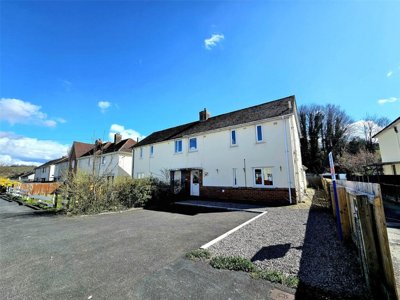
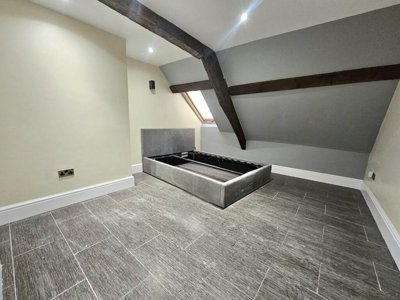
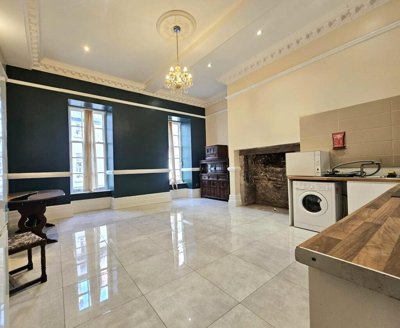
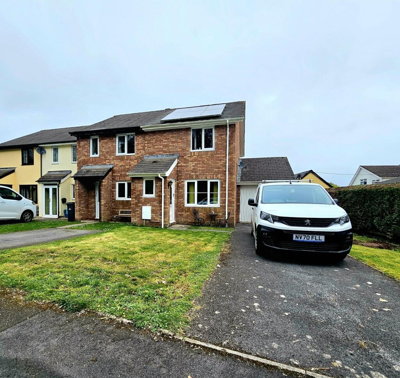
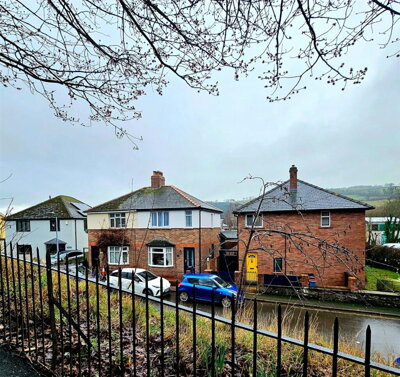
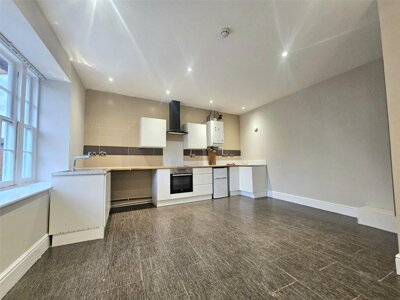
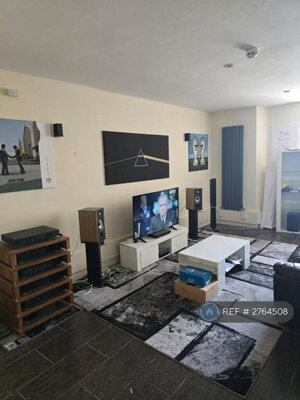
Browse 7 rental homes to rent in Brecon, Powys from local letting agents.
£795/m
5
0
35
Source: home.co.uk
Source: home.co.uk
Semi-Detached
3 listings
Avg £872
Apartment
2 listings
Avg £613
Source: home.co.uk
Source: home.co.uk
The rental market in Brecon serves tenants across all stages of life, from first-time renters to those seeking spacious family homes. Our current listings include a variety of property types: traditional stone-built terraces along historic streets such as High Street and Ship Street, semi-detached homes in established residential areas, and modern apartments in converted buildings within the town centre. Flats in Brecon typically range from £120,000 to £140,000 in value, while terraced properties command £180,000 to £200,000. For those seeking more substantial accommodation, semi-detached homes average £220,000 to £240,000, with detached properties reaching £350,000 to £370,000. Rental prices reflect these values, with one and two-bedroom flats offering affordable entry points from around £550 per month, while larger family homes with three or four bedrooms typically range from £900 to £1,400 per month depending on location and condition.
Property prices in Brecon have shown relative stability over the past year, with some sources indicating modest adjustments of around 1-2% reflecting broader market conditions across Powys. This stability makes renting an attractive option for those who may be new to the area or uncertain about committing to a purchase. The market benefits from a consistent flow of new listings, ensuring that prospective tenants can find suitable options throughout the year. Two new affordable housing developments, Ffordd Y Glowyr on Ffordd Y Glowyr (LD3 9BH) delivered by Pobl Group, and Parc Cradoc on Cradoc Road (LD3 9LP) developed by Melin Homes, offer two, three, and four-bedroom homes that contribute to housing diversity in the area.

Brecon has served as a market town and cultural centre for the surrounding region for over 1,000 years, with its origins dating to the establishment of a monastic community that became Brecon Cathedral. The town today has a population of approximately 8,000 to 9,000 residents across roughly 3,500 to 4,000 households, creating a community that retains its intimate character while offering comprehensive amenities. The local economy draws strength from multiple sectors including the public sector (with Powys County Council and Brecon War Memorial Hospital as major employers), tourism centred on the Brecon Beacons National Park, agriculture across the surrounding countryside, and the presence of The Infantry Battle School at Dering Lines which contributes to both employment and the distinctive military character of certain neighbourhoods.
The architecture of Brecon reflects its layered history, with Georgian townhouses lining the main streets, Victorian terraces in established residential areas, and post-war developments expanding the town in the mid-twentieth century. Approximately 30-35% of the housing stock consists of terraced properties, with a similar proportion being semi-detached homes, while detached properties comprise around 25-30% of the total. Flats and apartments make up approximately 5-10% of available accommodation. Around 30-40% of properties predate 1919, built in the Georgian, Victorian, and Edwardian periods when local sandstone was the predominant construction material. A significant proportion of the housing stock remains over 50 years old, with solid wall construction, traditional lime mortar, and original timber features common in older properties throughout the town.
The underlying geology of the Brecon area significantly influences local construction and property conditions. Properties are built on a foundation of Old Red Sandstone bedrock, with areas of glacial till and alluvial deposits along river valleys contributing to varied ground conditions. Pockets of clay-rich soils can be present, particularly in areas with glacial deposits, which may pose a moderate shrink-swell risk to foundations during prolonged dry or wet periods. This clay-related movement is typically most pronounced in areas with large trees near foundations or where drainage has been compromised over time, and can lead to minor structural movement in older properties.

Families considering renting in Brecon will find a comprehensive range of educational options spanning primary, secondary, and further education. At primary level, Brecon offers several well-established schools including Brecon CP School, which serves the town centre and surrounding areas, along with other local primary schools in nearby villages that serve specific catchment areas. Secondary education is centred on Brecon County School, which provides comprehensive secondary education with a strong reputation for academic achievement and extracurricular activities. The school offers A-level courses and vocational qualifications, enabling students to progress to higher education or employment within the local area. Parents should verify specific catchment areas and admission arrangements with Powys County Council, as these can affect which schools serve particular addresses.
For families seeking religious education, St Mary's RC Primary School provides Catholic primary education within the town, while other faith-based options may be available through nearby communities. Further education opportunities include Coleg Powys, which has a campus in Brecon offering a range of vocational courses, A-level equivalents, and adult education programmes. The presence of these educational facilities makes Brecon particularly suitable for families with children of all ages, while the town's proximity to the Brecon Beacons provides excellent opportunities for outdoor education and environmental learning. When renting in Brecon, families should research school performance data, admission policies, and transport arrangements to ensure their chosen property aligns with their educational requirements.

Brecon is well-connected for a town of its size, offering multiple transport options for residents who need to commute or travel regularly. The town is served by regular bus services operated by Stagecoach and other local providers, with routes connecting Brecon to surrounding towns including Crickhowell, Hay-on-Wye, and Builth Wells. For longer journeys, Brecon sits at the intersection of the A40 and A470 trunk roads, providing direct road access to Abergavenny to the east (approximately 30 miles) and Llandovery to the west (approximately 25 miles). The A40 continues to Oxford and London via the M40 motorway, while the A470 provides access to Cardiff and the South Wales Valleys.
Rail connections are available via nearby stations, with the nearest mainline station at Abergavenny offering direct services to Cardiff, Birmingham, and London Paddington. Alternatively, the Heart of Wales Line serves stations including Llandovery and Craven Arms, providing connections to Swansea and Shrewsbury for travel to broader destinations. For those who drive, parking in Brecon town centre includes both public car parks and on-street options, though availability can be limited during market days and peak tourist periods. Cyclists benefit from the traffic-free Monmouthshire and Brecon Canal towpath and various scenic routes through the National Park, while the town centre is compact enough for walking to most amenities.

When searching for properties to rent in Brecon, prospective tenants should understand the flood risk profile of the area. Brecon is located at the confluence of the River Usk and the River Honddu, which creates susceptibility to fluvial (river) flooding during periods of heavy rainfall. Properties immediately adjacent to these rivers carry elevated flood risk, particularly in low-lying areas where water can accumulate rapidly. The Brecon Beacons National Park experiences significant rainfall, and the surrounding hills can cause water to flow quickly into the river system, raising water levels suddenly during storm events.
Surface water flooding can affect various parts of the town, especially in areas where drainage systems become overwhelmed during heavy downpours. Properties in the town centre Conservation Area face flood risk despite their historic character, and renters should not assume that older, established properties are immune to flooding. Before committing to a rental property in Brecon, check Environment Agency flood maps for the specific address and ask the landlord or letting agent about any flood history affecting the property. Properties at higher elevations or further from watercourses generally offer lower flood risk, though no area can be considered completely risk-free given the local topography and weather patterns.

Before beginning your property search, establish a clear budget that accounts for monthly rent, deposit (typically five weeks' rent), and upfront costs including referencing fees and any moving expenses. Obtaining a rental budget agreement in principle can strengthen your position when making offers on properties in competitive areas like Brecon. Consider all associated costs including council tax (bands A-H under Powys County Council), utility bills, and contents insurance to get a complete picture of monthly outgoings before committing to a tenancy.
Browse available rental listings in Brecon through Homemove and other property portals. Schedule viewings to assess properties in person, paying particular attention to the property's condition, flood risk location, and proximity to amenities, schools, and transport links that matter to your household. In Brecon, where over 70-80% of housing stock exceeds 50 years old, viewing properties at different times of day can reveal issues with lighting, noise, and parking that may not be apparent in photographs or initial viewings.
For rented properties that are older or have potential issues, consider arranging a RICS Level 2 Survey (formerly a HomeBuyer Report) before committing. In Brecon, where the majority of housing stock dates from Georgian, Victorian, or post-war periods, a professional survey can identify defects such as damp, roof issues, timber defects, or structural concerns that may require attention or negotiation with the landlord. Survey costs for a typical three-bedroom property range from £450 to £650, with larger detached homes costing £600 to £800 or more.
Once you have agreed to rent a property, your letting agent or landlord will require referencing checks including credit history, employment verification, and previous landlord references. Prepare necessary documentation in advance to expedite this process and ensure a smooth tenancy commencement. In Wales, tenants have specific rights under the Renting Homes (Wales) Act 2016, which reformed how residential properties are rented and introduced the concept of "occupation contracts" to replace traditional tenancy agreements.
Review your tenancy agreement carefully, ensuring all terms including rent amount, deposit protection arrangements, maintenance responsibilities, and notice periods are clearly documented. In England and Wales, your deposit must be protected in a government-approved scheme (DPS, MyDeposits, or TDS) within 30 days of receiving it. The tenancy agreement must be written in Welsh or bilingually under Welsh language requirements, and you should receive a copy in your preferred language.
Before taking keys, complete a detailed inventory check documenting the condition of all rooms, fixtures, and fittings. Photograph any existing damage or wear to ensure you have evidence when your tenancy ends and your deposit is returned. In older Brecon properties with stone walls or traditional construction, note any existing cracks, damp patches, or wear that may already be present to avoid disputes at the end of your tenancy.
Renting a property in Brecon involves several upfront costs beyond the first month's rent that prospective tenants should budget for carefully. The deposit is typically set at five weeks' rent and must be protected in a government-approved deposit scheme (DPS, MyDeposits, or TDS) within 30 days of the tenancy start date. For a typical one-bedroom flat renting at £600 per month, this deposit would amount to £690. Two-bedroom properties at around £850 per month would require a deposit of approximately £981, while three-bedroom family homes at £1,100 per month would need a deposit of £1,269. This deposit is returnable at the end of the tenancy, subject to any deductions for damage beyond fair wear and tear or unpaid rent.
Additional fees when renting in Brecon include referencing fees, which typically range from £100 to £250 per applicant depending on the agency and depth of checks performed. Inventory check fees, which cover the professional inspection of the property at move-in and move-out, usually cost between £100 and £200. Some letting agents charge administration fees, though these have been largely eliminated following government legislation restricting tenant fees. Tenants are also responsible for council tax (see FAQ for Powys council tax bands), utility bills, and contents insurance. For those considering both renting and buying in the Brecon area, a RICS Level 2 Survey typically costs between £450 and £650 for a standard three-bedroom property, rising to £600-£800 or more for larger detached homes.
Under the Tenant Fees Act 2019, landlords and letting agents in England are restricted from charging certain fees, with similar provisions applying in Wales under the Renting Homes (Wales) Act 2016. Permitted payments include rent, a refundable tenancy deposit capped at five weeks' rent, a refundable holding deposit capped at one week's rent, and payments associated with early termination of a tenancy. Prohibited fees include administration charges, credit check fees, and check-out fees. Tenants should request a full breakdown of all costs and fees before committing to ensure transparency and compliance with current regulations.
Understanding local construction methods helps renters appreciate the characteristics and potential maintenance needs of properties to rent in Brecon. The town's historic core features properties built with solid stone walls, typically using locally sourced grey sandstone quarried from the surrounding hills. These Georgian, Victorian, and Edwardian properties often feature traditional lime mortar rather than modern cement, which allows the walls to breathe but may require specialist repair techniques. Timber floors, original sash windows, and ornate fireplaces are common features that add character but may need ongoing maintenance to preserve their condition.
Properties built during the post-war period from 1945 to 1980 typically feature cavity wall construction using brick or block with render finishes. Welsh slate remains the predominant roofing material throughout Brecon, and roof condition is a common consideration when renting older properties. Slipped or broken slates, deteriorating lead flashing, and worn gutters are frequent issues that tenants should note during viewings or report to landlords promptly to prevent water ingress and associated damp problems. Properties with cavity wall construction generally offer better thermal efficiency than solid-walled properties, though insulation levels may still fall below modern standards.
More recent developments from the 1980s onwards include standard cavity wall construction with brick or rendered exteriors, and some timber frame construction appears in newer builds. Properties in affordable housing developments such as Ffordd Y Glowyr and Parc Cradoc offer more modern construction standards with improved energy efficiency ratings compared to older properties. When viewing properties across different periods of construction, renters should consider how thermal efficiency, sound insulation, and maintenance requirements may vary between property types. Older stone properties may have higher heating costs but often feature thicker walls providing good thermal mass, while newer properties typically offer lower ongoing energy expenditure.
Properties to rent in Brecon often exhibit characteristics common to older Welsh towns, and prospective tenants should be aware of typical issues that may affect their tenancy. Damp problems represent one of the most frequently encountered issues, including rising damp in properties without modern damp-proof courses, penetrating damp caused by deteriorating stonework or roof defects, and condensation resulting from modern lifestyle factors combined with older properties that lack contemporary ventilation systems. Properties with solid stone walls are particularly susceptible to penetrating damp if mortar pointing has deteriorated or if vegetation is allowed to grow close to the walls.
Timber defects also affect many older properties in the area. Woodworm (common furniture beetle) can affect structural and cosmetic timber elements, while wet rot and dry rot may develop where moisture has been allowed to accumulate. These issues are particularly common in properties with damp problems or inadequate ventilation, and professional treatment may be required. Structural movement is another consideration, with minor settlement being typical in older buildings, though more significant movement may indicate foundation issues particularly in areas with clay soils or near large trees. In areas where clay soils are prevalent, foundation movement due to seasonal moisture changes can cause cracking in walls and floors.
Electrical and plumbing systems in properties pre-dating the 1980s frequently require updating to meet current safety standards. Rewiring a property to current regulations involves installing new circuits, consumer units, and safety devices, which can be disruptive and expensive. Similarly, older plumbing using lead or galvanised steel pipes may need replacement to ensure adequate water pressure and quality. Properties with listed building status or those in the Brecon Conservation Area may face restrictions on alterations, requiring specialist advice from conservation-approved contractors for any works. Before renting, ask the landlord or agent about the condition of electrical wiring, plumbing, and any recent maintenance or upgrades completed on the property.
While specific rental data for Brecon is limited, rental prices reflect local property values with one and two-bedroom flats typically ranging from £550 to £800 per month depending on location and condition. Three-bedroom semi-detached homes generally rent for around £900 to £1,100 per month, while larger detached properties with gardens can command £1,200 to £1,500 per month. Town centre apartments often fall at the lower end of the range, while properties with outdoor space in desirable residential areas command premium rents. Properties near the Brecon Beacons National Park or with views over the surrounding hills may also attract higher rents from tenants prioritising location and scenery.
Properties in Brecon fall under Powys County Council jurisdiction, and council tax bands are assigned by the Valuation Office Agency based on property value. Band A properties (the lowest value) currently pay around £1,200 annually, while Band H properties (highest value) pay approximately £2,400 per year. You can check the specific band for any property through the Gov.uk council tax band checker using the property address. Council tax bills typically include charges for Powys County Council services, Breconshire Radnorshire Community Council (where applicable), and the Dyfed-Powys Police and Crime Commissioner, with payments usually made in monthly instalments.
Brecon offers strong educational provision at all levels, with Brecon County School providing comprehensive secondary education with sixth form facilities and a strong track record of academic achievement. Primary options include Brecon CP School serving the town centre and surrounding areas, and St Mary's RC Primary School for families seeking Catholic education. Families should verify catchment areas with Powys County Council as school places are allocated based on proximity and capacity, and some properties may fall within catchment for schools in nearby villages.
Brecon is served by regular bus services connecting to surrounding towns including Crickhowell, Hay-on-Wye, and Builth Wells, with Stagecoach operating principal routes throughout the day. The nearest mainline railway station is at Abergavenny, approximately 30 miles away, offering direct services to Cardiff, Birmingham, and London. For drivers, the A40 and A470 provide road access to major cities, with Cardiff approximately 60 miles and Birmingham around 80 miles distant. The Heart of Wales Line provides an alternative rail option via Llandovery, connecting Swansea and Shrewsbury through the surrounding countryside for those who prefer train travel.
Brecon offers an exceptional quality of life for renters, combining historic character with comprehensive amenities in a stunning natural setting. The town centre provides good shopping, dining, and cultural attractions, while the Brecon Beacons National Park offers world-class outdoor activities on the doorstep. The local economy benefits from diverse employers including the NHS, education, tourism, and the military, providing employment stability for residents. Properties offer good value compared to larger cities while retaining excellent connectivity to urban centres when needed. The community atmosphere and range of local events throughout the year, including the Brecon Jazz Festival and regular farmers markets, create a strong sense of belonging for residents.
Standard deposits in Brecon are set at five weeks' rent and must be protected in a government-approved scheme within 30 days of the tenancy start date. Additional costs include referencing fees (typically £100-£250), inventory check fees (£100-£200), and first month's rent in advance. You will also need to budget for council tax, utilities, and contents insurance. Always request a full breakdown of fees from your letting agent before committing to avoid unexpected charges. Holding deposits are capped at one week's rent and are refundable or credited towards your tenancy deposit upon commencement of the tenancy.
Properties adjacent to the River Usk and River Honddu carry elevated flood risk, particularly during periods of heavy rainfall when river levels rise rapidly. Surface water flooding can also affect low-lying areas throughout the town, especially where drainage systems are overwhelmed during heavy downpours. Before renting, check Environment Agency flood maps and ask the landlord or agent about any flood history affecting the property. Properties in the town centre Conservation Area are not exempt from flooding risks despite their historic character, and all prospective tenants should make their own enquiries about flood risk for any specific property address they are considering.
In Wales, the Renting Homes (Wales) Act 2016 introduced the concept of "occupation contracts" which replaced traditional tenancies and licences. The two main types are secure contracts (similar to the old assured tenancies) and standard contracts (similar to assured shorthold tenancies). Most private rental agreements in Brecon will be standard contracts, which provide fewer security of tenure protections than secure contracts. Understanding your occupation contract rights is important, including provisions around rent increases, repairs and maintenance responsibilities, and the process for ending the tenancy. Your landlord must provide a written copy of your occupation contract before or at the start of your tenancy.
Get pre-approved for your rental budget to strengthen your application
From 4.5%
Essential referencing checks to support your rental application
From £100
Professional survey to assess property condition before committing
From £450
Energy performance certificate for your rental property
From £85
Properties to Rent In London

Properties to Rent In Plymouth

Properties to Rent In Liverpool

Properties to Rent In Glasgow

Properties to Rent In Sheffield

Properties to Rent In Edinburgh

Properties to Rent In Coventry

Properties to Rent In Bradford

Properties to Rent In Manchester

Properties to Rent In Birmingham

Properties to Rent In Bristol

Properties to Rent In Oxford

Properties to Rent In Leicester

Properties to Rent In Newcastle

Properties to Rent In Leeds

Properties to Rent In Southampton

Properties to Rent In Cardiff

Properties to Rent In Nottingham

Properties to Rent In Norwich

Properties to Rent In Brighton

Properties to Rent In Derby

Properties to Rent In Portsmouth

Properties to Rent In Northampton

Properties to Rent In Milton Keynes

Properties to Rent In Bournemouth

Properties to Rent In Bolton

Properties to Rent In Swansea

Properties to Rent In Swindon

Properties to Rent In Peterborough

Properties to Rent In Wolverhampton

Enter your details to see if this property is within your budget.
Loans, cards, car finance
Estimated property budget
Borrowing + deposit
You could borrow between
Typical borrowing
Monthly repayment
Est. at 4.5%
Loan-to-value
This is an estimate only. Your actual budget may vary depending on interest rates, credit history, and personal circumstances. For an accurate affordability assessment, speak to one of our free mortgage advisors.
This calculator provides estimates for illustrative purposes only and does not constitute financial advice. Your home may be repossessed if you do not keep up repayments on your mortgage. Estimates based on 4.5% interest rate, repayment mortgage. Actual rates depend on your circumstances.
Homemove is a trading name of HM Haus Group Ltd (Company No. 13873779, registered in England & Wales). Homemove Mortgages Ltd (Company No. 15947693) is an Appointed Representative of TMG Direct Limited, trading as TMG Mortgage Network, which is authorised and regulated by the Financial Conduct Authority (FRN 786245). Homemove Mortgages Ltd is entered on the FCA Register as an Appointed Representative (FRN 1022429). You can check registrations at NewRegister or by calling 0800 111 6768.

We use cookies to show you personalised content and improve your experience of our website. Find out more in our Privacy policy and Cookie policy.