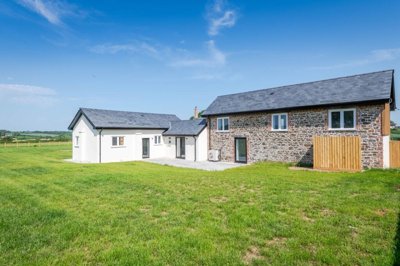
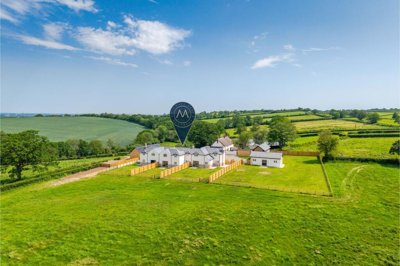
Browse 21 homes new builds in West Devon from local developer agents.
Three bedroom properties represent a significant portion of the West Devon housing market, offering space for families with multiple reception rooms and gardens in many cases. Browse detached, semi-detached, and terraced options ranging across new residential developments.
The West Devon property market has demonstrated impressive resilience and growth, with the average house price rising to £309,000 in December 2025. This 5.4% annual increase places West Devon ahead of many neighbouring regions, reflecting strong demand for properties in this picturesque corner of Devon. Our platform aggregates listings from local estate agents, giving you access to the complete picture of available properties across the district. The housing market here benefits from a diverse range of property types, from traditional stone cottages to modern family homes, catering to various buyer requirements and budgets.
The West Devon property market has demonstrated impressive resilience and growth, with the average house price rising to £429,038 in December 2025. This 5.4% annual increase places West Devon ahead of many neighbouring regions, reflecting strong demand for properties in this picturesque corner of Devon. Our platform aggregates listings from local estate agents, giving you access to the complete picture of available properties across the district. The housing market here benefits from a diverse range of property types, from traditional stone cottages to modern family homes, catering to various buyer requirements and budgets.
New build activity in West Devon tends to be modest and focused on smaller developments or conversions, rather than large-scale housing estates. The Okehampton area (EX20 1 postcode) has seen the most significant new build sales in the district. Recent planning applications include conversions of agricultural buildings to residential use, demonstrating the character of development in this area. For buyers seeking brand new homes, we recommend checking the West Devon Borough Council planning portal for the latest developments and contacting local estate agents who often have early access to upcoming projects.

West Devon offers a quality of life that is increasingly rare in modern Britain, combining stunning natural beauty with practical amenities and strong communities. The district is dominated by the eastern edge of Dartmoor National Park, providing residents with immediate access to over 368 square miles of heather-clad moorland, ancient woodlands, and dramatic tors. The towns and villages of West Devon are built from local materials that reflect their heritage: granite from the Dartmoor fringes, traditional cob construction, and local slate. Walking, riding, and cycling are part of daily life here, with the Two Moors Way and numerous other trails offering exploration opportunities right on the doorstep.
The market towns of West Devon each have distinct characters. Tavistock, situated on the River Tavy and designated as part of a UNESCO World Heritage Site for its historic mining landscape, offers a traditional pannier market, independent shops, and regular farmers markets. Okehampton provides excellent transport links and amenities including supermarkets, schools, and leisure facilities. Chagford, with its distinctive town square and reputation for the arts, embodies the picture-postcard Devon village. The local economy thrives on agriculture, with many farms diversifying into tourism, and the public sector providing employment in healthcare and education. The proximity to Plymouth, approximately 30 miles away, allows residents to access major employment centres while enjoying rural living.
Community life in West Devon is active and welcoming, with numerous events throughout the year including agricultural shows, food festivals, and parish fairs. The area attracts a mix of families, retirees, and remote workers seeking to escape larger cities without sacrificing connectivity. Local pubs, village shops, and community centres form the social hub of many smaller settlements. The population of 55,400 maintains a strong sense of identity rooted in the landscape and agricultural traditions that have shaped the area for centuries.

Education provision in West Devon serves a dispersed rural population, with primary schools located in most towns and larger villages, while secondary education is concentrated in the main towns. Families moving to West Devon will find a range of educational options, from small village primary schools with strong community ties to larger secondary schools offering comprehensive curricula. The area benefits from several schools that have achieved good or outstanding Ofsted ratings, reflecting the commitment to education in this rural community. Parents should research specific catchment areas, as school admissions in West Devon are determined by proximity, and properties within the same postcode can fall into different admission zones.
Primary education in West Devon includes schools such as Whitchurch Community Primary School in Tavistock, which serves the southern part of that town, and various other village schools across the district. For secondary education, schools including Tavistock Community Primary and other local secondaries provide education up to age 16, with sixth form options available at larger schools or nearby colleges. Parents seeking specialist education should enquire with Devon County Council about provision for children with additional needs, which is coordinated through the local authority's SEND services.
For families considering private education, the wider Devon area offers several independent schools, though these require travel from West Devon. Further education opportunities include colleges in Plymouth and Exeter, accessible by car or public transport for older students. The presence of the University of Plymouth and University of Exeter in the broader region means that students from West Devon have clear progression pathways to higher education without necessarily needing to move to major urban centres. When buying property in West Devon, verifying school catchments and admission arrangements with Devon County Council is essential, as these can significantly impact family decisions.

Transport connectivity in West Devon balances its rural character with practical links to major employment centres. The A30 dual carriageway passes through the northern part of the district near Okehampton, providing a direct route to Exeter and Cornwall. The A386 runs through Tavistock, connecting the town to Plymouth to the south. For those working in Plymouth, the journey from Tavistock takes approximately 40 minutes by car, making West Devon a viable option for commuters who wish to enjoy rural life while maintaining city employment.
Public transport options are more limited, as is typical for rural areas, but bus services connect the main towns of West Devon with each other and with Plymouth and Exeter. The Tamar Valley Line railway runs through the southern part of the district, connecting Gunnislake with Plymouth via Stoke Cannon and other stations. For longer journeys, Okehampton railway station provides access to Exeter and beyond on the Tarka Line, though services are less frequent than on major routes. Residents planning to commute by rail should check current timetables, as service frequency on rural lines can be subject to change.
Cycling infrastructure in West Devon has improved in recent years, with National Cycle Route 27 passing through parts of the area. However, the hilly terrain means that cycling for commuting purposes is challenging for many residents. Parking availability varies by town, with larger car parks in market towns but limited provision in smaller villages. For those considering West Devon as a base for remote working, superfast broadband coverage has expanded significantly, though some of the more remote properties may still face connectivity challenges. Property buyers should verify broadband speeds at specific addresses, as this can affect the viability of working from home in certain locations.

Before viewing properties, obtain a mortgage agreement in principle from a lender. This demonstrates your buying capacity to estate agents and sellers, strengthening your position in competitive situations. West Devon properties, particularly detached homes in desirable villages, can attract multiple interest, so having your finances confirmed upfront is essential.
When considering property types in West Devon, detached homes command an average price of £635,455, reflecting the preference for space and privacy that characterises rural living. Semi-detached properties average £324,824, making them an attractive option for families seeking generous accommodation without the premium associated with detached homes. Terraced properties, averaging £239,885, offer an accessible entry point into the West Devon market, while flats and maisonettes at £188,011 remain the most affordable option. Recent data shows 1,107 property sales completed in West Devon over the past twelve months, indicating a healthy level of market activity despite broader national trends.
Arrange viewings of homes that match your criteria, exploring not just the property but the surrounding area. Consider factors such as school catchment areas, local amenities, road connections to your workplace, and the specific characteristics of each village or town in West Devon. Take time to understand flood risk areas near rivers such as the River Tamar, River Tavy, and River Lew.
Once your offer is accepted, instruct a RICS Level 2 Survey to assess the property condition. Given that a significant proportion of West Devon properties pre-date 1919 and may feature traditional construction methods like cob, solid stone walls, or slate roofing, a professional survey is crucial. The surveyor will check for common issues including damp, roof condition, timber defects, and potential subsidence from clay soils.
Appoint a solicitor experienced in Devon property transactions to handle the legal aspects of your purchase. They will conduct searches including local authority, environmental, and water searches, and investigate any mining history relevant to areas like Tavistock. Given the number of listed buildings and conservation areas in West Devon, your solicitor should also check for any planning restrictions that may affect the property.
Explore the West Devon property market thoroughly using Homemove. Understand the price differences between property types: detached homes averaging £635,455, semi-detached at £324,824, terraced at £239,885, and flats at £188,011. Consider how the 5.4% annual price growth and the character of different towns like Tavistock, Okehampton, and Chagford align with your requirements.
Property buyers in West Devon should pay particular attention to the construction and condition of buildings, given the age and variety of the local housing stock. Many properties in this area were built using traditional methods that differ significantly from modern construction. Stone walls, whether granite, slate, or local rubble stone, require different maintenance approaches than brick. Cob walls, made from a mixture of subsoil, straw, and water, are traditional in Devon but require understanding of their breathability and maintenance needs. If you are considering a property with these older construction methods, ensure your survey covers these specific aspects thoroughly.
The geology of West Devon means that shrink-swell clay soils are prevalent in many areas, particularly in river valleys and lower-lying agricultural land. These soils expand when wet and contract during dry periods, potentially causing foundation movement. Properties in areas with large trees nearby or those with inadequate foundations are particularly susceptible. A thorough survey should investigate any signs of subsidence, cracking, or previous movement. Areas closer to the Dartmoor granite massif generally have more stable ground conditions, making them potentially lower risk for foundation issues.
Flood risk is an important consideration when buying in West Devon, despite the area being inland. The rivers flowing through the district, including the River Tamar, River Tavy, River Walkham, and River Lew, create floodplains that can experience fluvial flooding during periods of heavy rainfall. Surface water flooding can also occur in various locations. Request information about flood risk from the Environment Agency and check whether the property has any history of flooding. Properties in floodplains may face difficulties obtaining insurance or may incur significantly higher premiums.
West Devon has numerous conservation areas and listed buildings, particularly concentrated in towns like Tavistock, Okehampton, and Chagford. If you are considering a listed building, be aware that permitted development rights are limited, and any alterations require consent from the local planning authority. This can affect your ability to make changes to the property in future. Similarly, properties in conservation areas face restrictions on external alterations. These designations can be a positive, protecting the character and value of the property, but buyers should understand the implications before committing to a purchase.

Once all searches are satisfactory and your mortgage is finalised, you will exchange contracts and pay your deposit. Completion typically follows within a few weeks, after which you will receive the keys to your new West Devon home. The standard Stamp Duty threshold is 0% for properties up to £250,000, with rates rising to 5% for the portion between £250,001 and £925,000.
Properties in West Devon fall under West Devon Borough Council's council tax bands, which range from Band A for the lowest-value properties to Band H for the highest. Most properties in the area, given the prevalence of older homes and traditional construction, tend to fall within Bands A through D. Exact council tax charges vary annually, but buyers can check specific properties on the Valuation Office Agency website or contact West Devon Borough Council directly for current rates.
West Devon offers good educational provision for a rural area, with several primary and secondary schools serving local communities. Primary schools are distributed across towns and villages, while secondary education is concentrated in larger towns such as Tavistock and Okehampton. Parents should research specific school catchments, as admissions are based on proximity. The area includes schools that have achieved good or outstanding Ofsted ratings. For the most current school performance data and admission arrangements, consult Devon County Council's education website.
Public transport in West Devon is limited compared to urban areas, reflecting its rural character. Bus services connect the main towns and villages, though frequencies may be low on some routes. The Tamar Valley Line railway serves southern parts of the district with connections to Plymouth. For commuting to major employment centres, the car remains essential for many residents, with the A30 providing access to Exeter and the A386 connecting Tavistock to Plymouth. Residents should verify local bus timetables and consider the implications for daily travel before purchasing.
West Devon offers several factors that make it attractive for property investment. The area has experienced consistent price growth, with a 5.4% increase in the twelve months to December 2025, outpacing many other parts of the South West. The tourism draw of Dartmoor National Park supports holiday let opportunities. Strong demand from buyers seeking rural lifestyles has supported the market historically. However, as with any property investment, potential buyers should consider factors such as rental demand, void periods, and maintenance costs for older properties. The modest scale of new development in the area means that supply of new housing remains limited, which can support prices.
The average house price in West Devon was £429,038 in December 2025, representing a 5.4% increase from the previous year. This growth surpassed the South West regional average, which saw minimal change over the same period. Property prices vary significantly by type, with detached homes averaging £635,455, semi-detached properties at £324,824, terraced homes at £239,885, and flats at £188,011. These figures reflect the strong demand for properties in this attractive rural district of Devon.
From 3.5%
Compare mortgage rates from leading lenders to find the best deal for your West Devon home
From £499
Expert solicitors to handle your West Devon property purchase
From £400
Homebuyer report for your West Devon property
From £80
Energy performance certificate for your new home
Stamp Duty Land Tax (SDLT) applies to all property purchases in England. The standard rates are 0% on the first £250,000 of the purchase price, 5% on the portion between £250,001 and £925,000, 10% between £925,001 and £1.5 million, and 12% above £1.5 million. First-time buyers benefit from relief on the first £425,000, paying 5% between £425,001 and £625,000. Given that the average West Devon property at £429,038 falls within the first two bands, most buyers would expect to pay SDLT on amounts above £250,000.
Understanding the full costs of buying property in West Devon, including Stamp Duty Land Tax (SDLT), is essential for budgeting effectively. With the average property price at £429,038, most buyers in West Devon will pay SDLT only on the portion of their purchase above £250,000. For a property at the current average price, this means SDLT would apply to £179,038 at the 5% rate, resulting in a tax liability of £8,952. First-time buyers purchasing properties up to £425,000 can benefit from relief, potentially reducing their SDLT liability significantly or eliminating it entirely for lower-value purchases.
Beyond SDLT, buyers should budget for various other costs associated with purchasing property. Mortgage arrangement fees typically range from £0 to £2,000 depending on the lender and product chosen. Survey costs for a RICS Level 2 Survey range from approximately £400 to £1,000 or more, depending on the property size and complexity. Given that many West Devon properties are older with traditional construction methods, investing in a thorough survey is particularly important. Conveyancing fees for a standard property purchase typically start from around £499, though more complex transactions involving listed buildings or properties in conservation areas may incur higher costs.

Properties New Builds In London

Properties New Builds In Plymouth

Properties New Builds In Liverpool

Properties New Builds In Glasgow

Properties New Builds In Sheffield

Properties New Builds In Edinburgh

Properties New Builds In Coventry

Properties New Builds In Bradford

Properties New Builds In Manchester

Properties New Builds In Birmingham

Properties New Builds In Bristol

Properties New Builds In Oxford

Properties New Builds In Leicester

Properties New Builds In Newcastle

Properties New Builds In Leeds

Properties New Builds In Southampton

Properties New Builds In Cardiff

Properties New Builds In Nottingham

Properties New Builds In Norwich

Properties New Builds In Brighton

Properties New Builds In Derby

Properties New Builds In Portsmouth

Properties New Builds In Northampton

Properties New Builds In Milton Keynes

Properties New Builds In Bournemouth

Properties New Builds In Bolton

Properties New Builds In Swansea

Properties New Builds In Swindon

Properties New Builds In Peterborough

Properties New Builds In Wolverhampton

Enter your details to see if this property is within your budget.
Loans, cards, car finance
Estimated property budget
Borrowing + deposit
You could borrow between
Typical borrowing
Monthly repayment
Est. at 4.5%
Loan-to-value
This is an estimate only. Your actual budget may vary depending on interest rates, credit history, and personal circumstances. For an accurate affordability assessment, speak to one of our free mortgage advisors.
This calculator provides estimates for illustrative purposes only and does not constitute financial advice. Your home may be repossessed if you do not keep up repayments on your mortgage. Estimates based on 4.5% interest rate, repayment mortgage. Actual rates depend on your circumstances.
Homemove is a trading name of HM Haus Group Ltd (Company No. 13873779, registered in England & Wales). Homemove Mortgages Ltd (Company No. 15947693) is an Appointed Representative of TMG Direct Limited, trading as TMG Mortgage Network, which is authorised and regulated by the Financial Conduct Authority (FRN 786245). Homemove Mortgages Ltd is entered on the FCA Register as an Appointed Representative (FRN 1022429). You can check registrations at NewRegister or by calling 0800 111 6768.