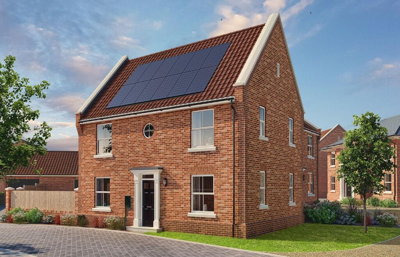
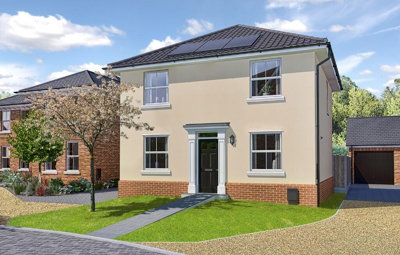
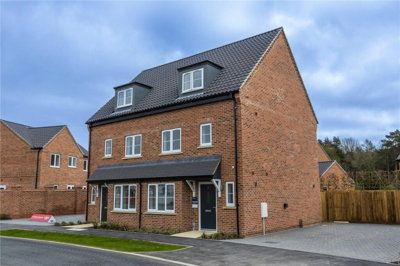
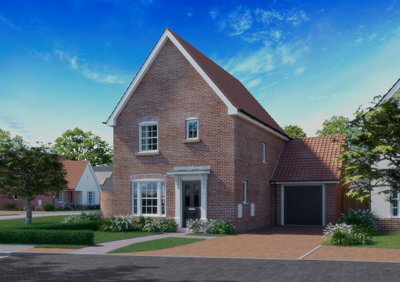
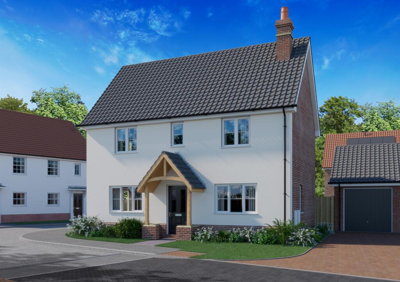
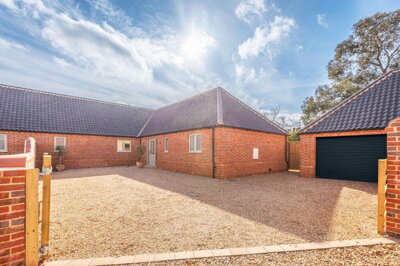
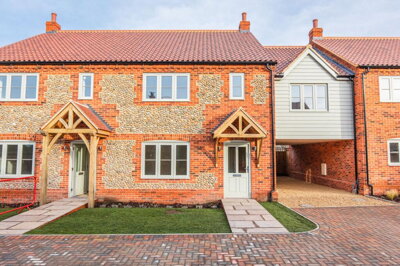
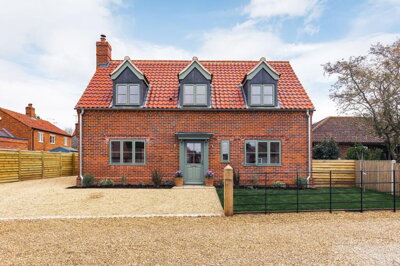
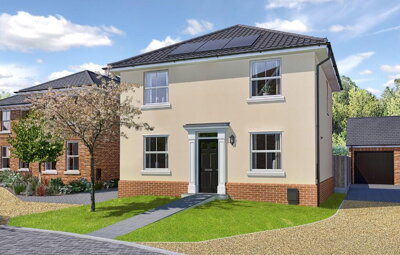
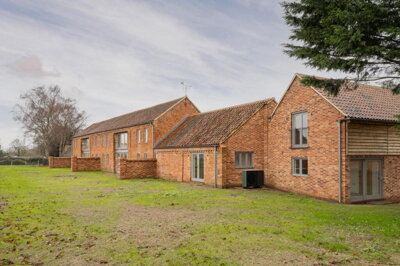
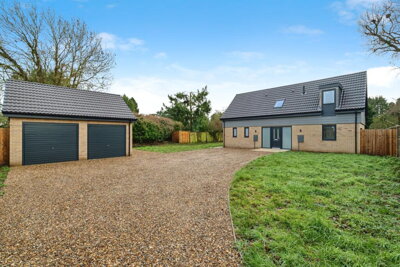
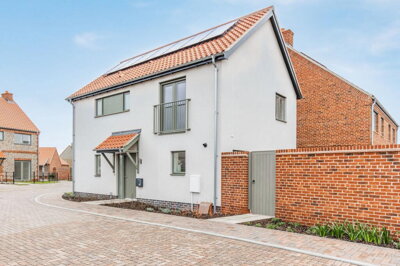
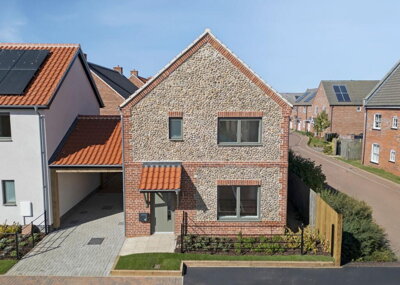
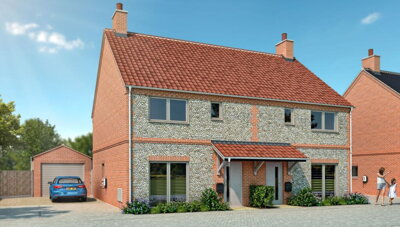
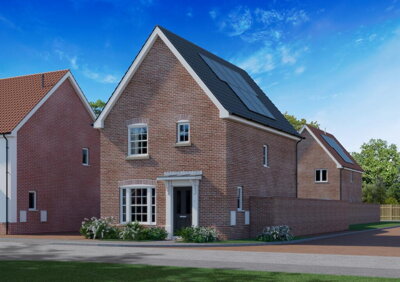
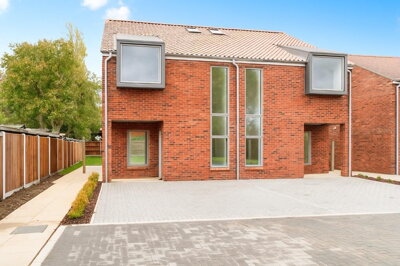
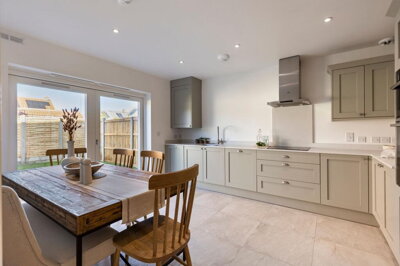
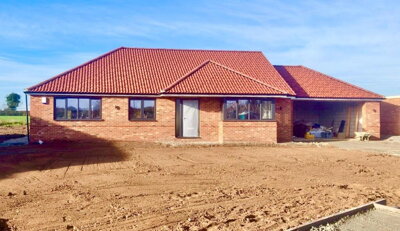
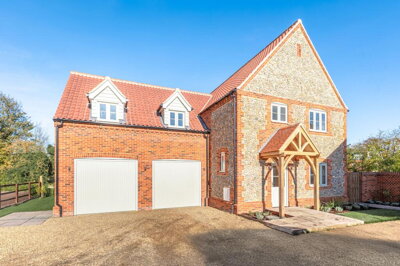
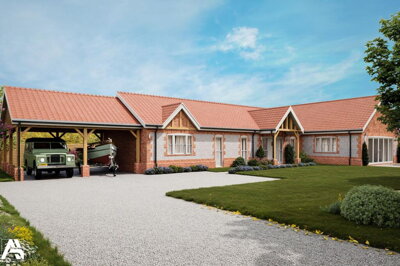
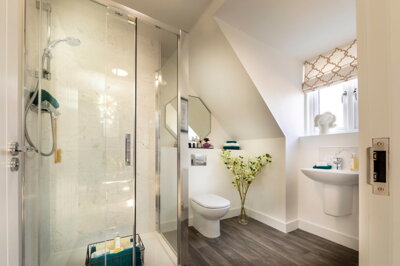
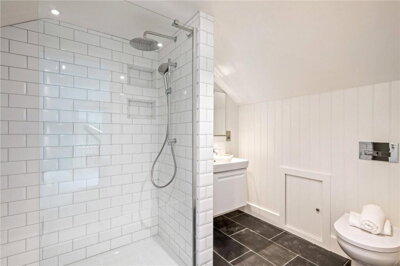
Browse 34 homes new builds in North Norfolk from local developer agents.
Three bedroom properties represent a significant portion of the North Norfolk housing market, offering space for families with multiple reception rooms and gardens in many cases. Browse detached, semi-detached, and terraced options ranging across new residential developments.
The North Norfolk property market has experienced a notable correction over the past year, creating opportunities for buyers entering the market at a more accessible price point. The overall average house price stood at £289,000 in December 2025, representing a 3.6% decrease from the previous year. For buyers purchasing with a mortgage, the average price was £281,000, while first-time buyers paid around £236,000 on average. These figures indicate a cooling market following the post-pandemic surge, with Rightmove reporting an area average of £356,942 over the past twelve months, down 5% on the previous year and 7% below the 2022 peak of £385,845.
Property types available across North Norfolk reflect the area's diverse character and historical heritage. Detached properties average £402,000, making them the premium segment of the market, while semi-detached homes at £268,000 offer excellent value for families seeking generous living space without the highest price tags. Terraced properties at £225,000 present an accessible entry point to the local market, and flats averaging £153,000 remain the most affordable option, particularly attractive for first-time buyers or those seeking holiday lets in coastal locations like Cromer or Wells-next-the-Sea. Norfolk county saw 11,600 property sales in the year to December 2025, though transaction volumes dropped by 14.1%, reflecting broader national trends in buyer activity.
The sales mix across North Norfolk reveals strong demand for detached family homes, which accounted for 39.9% of all transactions in Norfolk county during 2025. Semi-detached properties represented 26% of sales, while terraced homes made up a quarter of market activity. Flats comprised just 9% of sales, a reflection of the area's predominantly suburban and rural character where apartment living is less common than in urban centres. Understanding this distribution helps buyers gauge competition for different property types, with detached homes attracting the most interest from families seeking generous gardens and sea views.
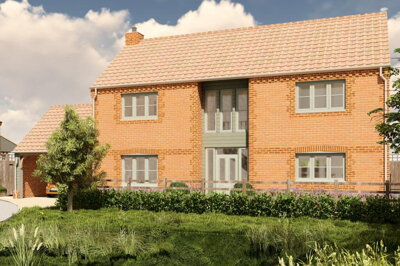
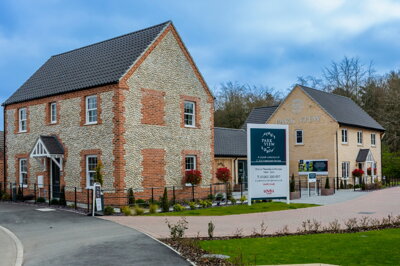
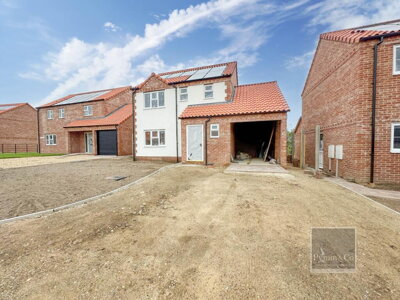
New build activity in Norfolk county shows properties selling at an average of £349,000, with most new homes in the £300,000-£400,000 range. While specific large-scale developments within North Norfolk are limited, scattered new construction appears in areas like Fakenham's Brick Kiln Road where modern detached houses have been completed recently. Buyers seeking brand new properties may need to broaden their search to surrounding Norfolk districts or consider custom build opportunities on available plots.

North Norfolk offers a lifestyle that combines maritime heritage with rural English charm, making it one of the most sought-after locations in East Anglia. The district encompasses stunning seaside towns including Cromer, famous for its Victorian pier, crab fishing heritage, and annual arts festival, alongside quieter coastal villages like Blakeney and Morston where visitors can watch seals at Blakeney Point Nature Reserve. Inland, picturesque market towns such as Holt and Aylsham provide excellent independent shopping, restaurants, and cultural attractions, while the Norfolk Broads extend into the southern parts of the district offering waterways, sailing, and waterside living opportunities.
The demographics of North Norfolk set it apart from many other UK regions, with the district recording the country's oldest population alongside its highest outright home ownership rates. Nearly half of all homes are owned outright rather than mortgaged, indicating a settled, established community with significant generational continuity. The presence of the Sandringham Estate underscores the area's prestigious status, while the strong tourism and leisure industry supports local businesses and creates seasonal vibrancy. The affordability ratio of median property price to median earnings stands at 10, compared to 7.54 for England and Wales overall, suggesting that external wealth and second-home ownership influence the market significantly. For those seeking a peaceful coastal or village lifestyle with excellent community spirit, North Norfolk delivers in abundance.
The area's distinctive geology shapes both its landscape and property character. Hunstanton's dramatic striped cliffs of red chalk and white limestone rise above the beach, showcasing the geological formations that influence building materials throughout the district. Properties across North Norfolk commonly feature flint, a hard stone readily available from the chalk geology and used extensively in traditional walls and boundary walls. The underlying chalk aquifer provides natural drainage, though properties built on clay pockets may experience different ground conditions requiring attention during survey.
The North Norfolk coastline faces ongoing coastal erosion challenges, particularly affecting properties near cliff edges in areas like Overstrand and Mundesley. Buyers considering coastal properties should research the Coastal Management Group plans and check erosion rate data from the Environment Agency. Properties in low-lying areas such as those near the River Bure or close to the Broads require careful flood risk assessment, with the area's tidal nature and storm surge potential making this evaluation essential for informed purchasing decisions.

Each community across North Norfolk offers its own distinct character and property profile. Cromer, the most well-known seaside town, features a Victorian townscape with terraced houses along the clifftop, a historic pier with traditional amusements, and an active fishing fleet bringing fresh crab and fish to the promenade. Properties in Cromer range from period terraces ideal for holiday lets to substantial Edwardian villas with sea views, with average prices reflecting the premium for coastal positioning.
Holt serves as the principal inland market town, known for its elegant Georgian architecture and thriving independent shopping district along Church Street and the Lanes. The town attracts visitors to its weekly market and cultural events at the North Norfolk Music Festival, with property prices in Holt commanding premiums for the village atmosphere and excellent amenities. Fakenham provides the main commercial centre for the northern district, offering supermarkets, the Fakenham Racecourse, and more affordable property options compared to coastal towns.
The north Norfolk coast villages offer exceptional charm and correspondingly higher property values. Blakeney, Morston, and Stiffkey form a cluster where the creeks of the Norfolk Coast Path meet working harbours and nature reserves. Wells-next-the-Sea combines a proper harbour with the distinctive pinewoods of Holkham Bay, while Sheringham maintains its fishing port character alongside the preserved North Norfolk Railway. These villages feature a mix of historic cottages, many listed or within conservation areas, alongside 20th-century detached houses. Buyers should note that conservation area restrictions apply widely, limiting permitted development and affecting renovation projects.
Families considering a move to North Norfolk will find a range of educational options across primary and secondary levels, though the rural nature of the district means some travel may be necessary for specialist provision. Primary schools in the area include Snettisham Primary School serving the village south of King's Lynn, St Mary's Community Primary School in Felmingham serving the northeast, and St Peter and St Paul Church of England Primary Academy in King's Lynn serving communities across the district with varying capacities and Ofsted ratings. Smaller primary schools in villages such as those in Holt and Cromer provide local education for younger children, though parents should verify current school capacity and admission policies.
Secondary education is concentrated in larger towns, with Fakenham Academy providing secondary education for the inland areas of the district. St Peter's School in Huntingdon and schools in Norwich are accessible to southern parts of the district, though families should consider daily transport requirements when choosing properties. For families requiring grammar school provision, the nearby King's Lynn area offers options such as King Edward VII Academy and St Thomas More Catholic Primary School feeder patterns, though parents should verify current catchment areas and admission policies as these can change annually.
Sixth form provision exists at several secondary schools and colleges in Norwich and King's Lynn, with transport links from North Norfolk towns making these accessible for older students. The presence of the University of East Anglia in Norwich provides higher education opportunities within reasonable commuting distance, supporting families planning long-term educational journeys from primary through university level within the region. For families prioritising education, the availability of private schooling options in Norwich and King's Lynn provides additional choice beyond state provision, with several independent schools accepting students from North Norfolk postcodes.
Transport connectivity from North Norfolk has improved significantly with the completion of the Norwich to Cambridge railway upgrades, providing residents with reliable rail connections to major employment centres. The Bittern Line runs through North Norfolk connecting Norwich to Sheringham and Cromer, with journey times of approximately 30-40 minutes to Norwich. The service typically operates hourly, with some peak services providing more frequent connections. From Norwich, direct trains reach London Liverpool Street in around 90 minutes, making day commuting to the capital feasible for those working remotely part of the week or maintaining flexible working arrangements. The A11 provides road access to Cambridge and London via the M11, while the A47 connects the district to King's Lynn and Norwich.
For those relying on road transport, the North Norfolk coastline and Areas of Outstanding Natural Beauty create some seasonal congestion during summer months when tourist traffic increases substantially. The A148 runs through the heart of the district connecting King's Lynn to Cromer, passing through Fakenham as the main inland route. The B1157 coastal road provides access to the village beaches and clifftop communities but can become congested on summer weekends. Bus services operate throughout the district via Coastliner and other local operators, with the Coasthopper service proving particularly popular for tourists, though frequencies reduce in more rural areas, making car ownership practically essential for most residents.
Norwich International Airport serves the region with flights to Amsterdam and other European destinations, plus connections to UK hubs including London City and Manchester. The airport provides air travel access without the need to travel to London Stansted or Norwich, supporting residents who travel regularly for business or holidays. For commuters working in Cambridge, the A1065 provides a direct route via Brandon, though journey times of around 90 minutes make daily commuting demanding.
Explore property prices, average costs by type, and neighbourhood characteristics. With detached homes averaging £402,000 and terraced properties at £225,000, understanding your budget against current market conditions will help narrow your search effectively. Consider which towns or villages match your lifestyle preferences, whether coastal access in areas like Wells or Sheringham or the village atmosphere of Holt or Aylsham.
Contact lenders or use our mortgage comparison tool to secure an agreement in principle before viewing properties. This demonstrates your buying capacity to sellers and estate agents, strengthening your position in competitive situations where multiple offers may be involved. Given the older demographic of the area and prevalence of cash buyers, mortgage borrowers may find fewer competing offers in certain price ranges, though pre-approval remains essential.
Visit a range of properties across different price points and locations. Consider factors such as distance from coastal areas, access to schools and transport, and the age and condition of properties. Older character homes may require more maintenance but offer unique charm and solid construction. When viewing properties in conservation areas, note any visible maintenance issues that may require Listed Building Consent to address.
Once your offer is accepted, arrange a homebuyers survey, particularly important for older properties with potential issues such as thatch roofing, listed building status, or coastal weathering. Our survey partners offer competitive rates for properties across North Norfolk. Given the high proportion of older properties in the area, a thorough survey is especially valuable for identifying hidden defects in traditional construction.
Appoint a conveyancing solicitor to handle the legal transfer of ownership. They will conduct local searches including flood risk and planning history, raise enquiries with the seller's solicitor, and guide you through the transaction to completion. For coastal and Broads properties, additional searches regarding erosion risk and flood defences may be warranted to fully understand the property's exposure.
Upon satisfactory survey results and mortgage offer, your solicitor will arrange the exchange of contracts and agree a completion date. On completion day, the remaining funds are transferred and you receive the keys to your new North Norfolk home.
Properties in North Norfolk present unique considerations that buyers should evaluate carefully before committing to a purchase. The coastal location means flood risk assessment is essential, particularly for properties near the Norfolk Broads, along river valleys, or in low-lying coastal areas. Request Environment Agency flood risk data and check whether the property has ever flooded. Properties in areas like Stalham or Wroxham require particular attention given their proximity to the Broads and associated tidal flood risk.
The historic nature of many homes means checking for conservation area restrictions or listed building status is crucial, as these can significantly affect permitted alterations and renovation costs. The presence of thatched roofs, while contributing to traditional character, requires specialist maintenance knowledge, appropriate insurance coverage, and regular inspection by specialists familiar with Norfolk thatch traditions. Many traditional cottages feature wattle and daub infill or cob construction that requires specialist understanding during renovation.
Building materials across North Norfolk reflect the local geology, with flint, brick, and chalk influencing construction throughout the district. Properties may feature solid walls without modern cavity insulation, requiring consideration of energy efficiency and heating costs. Flint walls, while attractive and durable, require skilled repair when damaged, and buyers should note any areas where flintknapping has deteriorated. The age of the housing stock means timber-framed construction and older plumbing and electrical systems are common, warranting thorough surveys.
For flat purchases, scrutinise service charges, ground rent terms, and the maintenance history of communal areas. The holiday let market in coastal areas means some flat developments have high seasonal occupancy rates, affecting common areas and parking availability. With the area attracting significant second-home ownership, leasehold properties may have additional considerations around occupancy patterns and management company responsibilities. Freehold flats, where the property is owned outright rather than leasehold, are less common in the area but do exist and eliminate ground rent concerns entirely.
The average house price in North Norfolk was £289,000 as of December 2025, representing a 3.6% decrease from the previous year. Detached properties average £402,000, semi-detached homes £268,000, terraced properties £225,000, and flats £153,000. Rightmove reports a twelve-month average of £356,942, down 5% on the prior year, indicating a buyer-friendly market correction following the post-pandemic peak when prices reached £385,845 in 2022.
Council tax bands in North Norfolk vary by property, with bands typically ranging from A through to H. Most terraced properties and smaller flats fall into bands A to C, while larger detached homes and period properties often occupy bands D through F. You can verify the specific band for any property through the North Norfolk District Council website or the government valuation office listing. Properties in conservation areas may face higher band valuations reflecting their desirable location.
North Norfolk offers primary schools including Snettisham Primary and St Mary's Community Primary in Felmingham, with secondary options such as Fakenham Academy serving the district. Families should check current Ofsted ratings and admission catchment areas, as these can influence school placements significantly. The nearest grammar school options require travel to King's Lynn where schools like King Edward VII Academy serve selective admission catchment areas.
North Norfolk is served by the Bittern Line rail services connecting coastal towns Sheringham and Cromer to Norwich, with trains to London Liverpool Street taking around 90 minutes via Norwich. Bus services operated by Coastliner and others link villages and towns throughout the district, including the popular Coasthopper service running along the coast between Cromer and Wells-next-the-Sea. However, car ownership remains practically essential given rural transport patterns, particularly for families with school-age children or those working irregular hours.
North Norfolk attracts consistent demand from buyers seeking coastal and rural lifestyles, with the area's natural beauty, Areas of Outstanding Natural Beauty designation, and proximity to Sandringham ensuring enduring appeal. The high proportion of second homes and holiday lets supports rental income potential in tourist areas, with coastal properties commanding premium holiday rates during summer months. However, the median price-to-earnings ratio of 10 indicates lower local affordability, suggesting returns may be driven by capital appreciation rather than rental yields relative to purchase prices.
Standard Stamp Duty Land Tax rates apply: 0% on purchases up to £250,000, 5% between £250,000 and £925,000, 10% up to £1.5 million, and 12% above that threshold. First-time buyers benefit from relief on purchases up to £425,000, paying 5% on the portion between £425,000 and £625,000. On a typical £289,000 North Norfolk property, standard buyers pay £1,950 in stamp duty, while first-time buyers under £425,000 pay no SDLT.
Properties near the Norfolk Broads, including areas close to Wroxham and Stalham, carry elevated flood risk from river and tidal sources given the low-lying nature of the waterways. Coastal properties face risks from storm surges and tidal flooding, particularly during winter storms that coincide with high tides. The Environment Agency provides detailed flood risk mapping showing specific flood zones, and buyers should request this data and review the property's flood history before committing to purchase.
Many of the most desirable villages and town centres in North Norfolk fall within conservation areas, including parts of Holt, Cromer, and the coastal villages of Blakeney and Stiffkey. Listed building status, confirmed by checking Historic England's records, imposes significant restrictions on alterations, repairs, and extensions that require consent. Properties in conservation areas face limitations on permitted development rights, affecting options for extensions, dormer windows, or outbuildings.
From 4.5%
Find competitive mortgage deals for North Norfolk properties
From £499
Expert solicitors for your North Norfolk purchase
From £350
Professional homebuyers survey for North Norfolk properties
From £60
Energy performance certificate for your new home
Understanding the full costs of purchasing property in North Norfolk helps buyers budget accurately and avoid surprises during the transaction process. Stamp Duty Land Tax represents the most significant upfront cost beyond the property price itself. On a typical North Norfolk property priced at the current average of £289,000, a standard buyer without first-time buyer status would pay £1,950 in SDLT, calculated as 5% on the amount above £250,000. First-time buyers purchasing properties up to £425,000 would pay no stamp duty, making the market particularly accessible for those entering the property ladder for the first time.
Beyond stamp duty, buyers should budget for solicitor conveyancing fees typically ranging from £500 to £1,500 depending on complexity, plus local searches including drainage and water searches, environmental searches, and planning history checks which collectively cost around £300 to £500. For properties in flood risk areas, additional environmental reports and flood risk assessments may be advisable, adding to search costs. Leasehold properties may incur additional costs for managing agent enquiries and notices.
Mortgage arrangement fees average £1,000 to £2,000 depending on lender and product, though many brokers offer fee-free mortgages. Survey costs vary by property type, with older homes and listed buildings often requiring more detailed assessment. A RICS Level 2 homebuyers survey costs from £350 depending on property value and size, with older or non-standard properties potentially requiring the more comprehensive Level 3 Building Survey. Buildings insurance must be in place from completion day, and removals costs vary significantly based on distance and volume of belongings.
Properties New Builds In London

Properties New Builds In Plymouth

Properties New Builds In Liverpool

Properties New Builds In Glasgow

Properties New Builds In Sheffield

Properties New Builds In Edinburgh

Properties New Builds In Coventry

Properties New Builds In Bradford

Properties New Builds In Manchester

Properties New Builds In Birmingham

Properties New Builds In Bristol

Properties New Builds In Oxford

Properties New Builds In Leicester

Properties New Builds In Newcastle

Properties New Builds In Leeds

Properties New Builds In Southampton

Properties New Builds In Cardiff

Properties New Builds In Nottingham

Properties New Builds In Norwich

Properties New Builds In Brighton

Properties New Builds In Derby

Properties New Builds In Portsmouth

Properties New Builds In Northampton

Properties New Builds In Milton Keynes

Properties New Builds In Bournemouth

Properties New Builds In Bolton

Properties New Builds In Swansea

Properties New Builds In Swindon

Properties New Builds In Peterborough

Properties New Builds In Wolverhampton

Enter your details to see if this property is within your budget.
Loans, cards, car finance
Estimated property budget
Borrowing + deposit
You could borrow between
Typical borrowing
Monthly repayment
Est. at 4.5%
Loan-to-value
This is an estimate only. Your actual budget may vary depending on interest rates, credit history, and personal circumstances. For an accurate affordability assessment, speak to one of our free mortgage advisors.
This calculator provides estimates for illustrative purposes only and does not constitute financial advice. Your home may be repossessed if you do not keep up repayments on your mortgage. Estimates based on 4.5% interest rate, repayment mortgage. Actual rates depend on your circumstances.
Homemove is a trading name of HM Haus Group Ltd (Company No. 13873779, registered in England & Wales). Homemove Mortgages Ltd (Company No. 15947693) is an Appointed Representative of TMG Direct Limited, trading as TMG Mortgage Network, which is authorised and regulated by the Financial Conduct Authority (FRN 786245). Homemove Mortgages Ltd is entered on the FCA Register as an Appointed Representative (FRN 1022429). You can check registrations at NewRegister or by calling 0800 111 6768.

We use cookies to show you personalised content and improve your experience of our website. Find out more in our Privacy policy and Cookie policy.