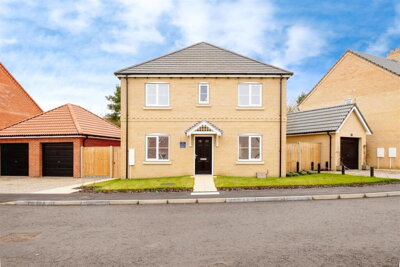
Browse 1 home new builds in Mettingham, East Suffolk from local developer agents.
The larger property sector typically features multiple bathrooms, substantial reception space, and private gardens or off-street parking. Four bedroom houses in Mettingham span detached, semi-detached, and occasionally terraced configurations, with styles ranging from period properties to modern executive homes.
£0k
0
0
0
Source: home.co.uk
Showing 0 results for 4 Bedroom Houses new builds in Mettingham, East Suffolk.
The Mettingham property market has demonstrated steady resilience, with Rightmove recording 40 property sales within the past year at an average price of £697,500. Our data shows prices in the village are currently 11% above the 2023 peak of £629,500, indicating sustained buyer demand despite broader national market fluctuations. This price appreciation reflects the continued appeal of rural Suffolk villages that offer character properties within easy reach of major employment centres. The village's relatively small transaction volume means that each sale can have a noticeable impact on recorded averages, so buyers should carefully assess individual properties rather than relying solely on headline statistics.
Property types in Mettingham skew heavily toward detached family homes, consistent with the broader Suffolk market where detached properties account for 35.8% of all sales. The village's housing stock includes a remarkable collection of historic farmhouses, period cottages, and traditional brick-built residences, many dating from the medieval and Georgian periods. Specific heritage properties in the village include Benstead Farmhouse, Bridge Farmhouse, Carlton House Farmhouse, The Red House, The Valley House, Top Farmhouse, Vicarage Farmhouse, and White House Farmhouse, all carrying Grade II listed status. Semi-detached properties comprise approximately 28.9% of regional sales, while terraced homes make up 27.5% of transactions, with flats representing a smaller 7.8% segment of the market.
No active new-build developments were identified within the NR35 postcode area specifically serving Mettingham, meaning buyers seeking modern construction may need to consider properties in nearby Bungay or Beccles. The absence of new-build stock has intensified demand for quality period properties, with buyers recognising the inherent value of character homes that cannot be replicated through new development. First-time buyers and investors alike should note that older properties in conservation-conscious villages like Mettingham often present opportunities for renovation projects, subject to planning approval. The limited supply of available properties means that competitive situations can arise quickly when quality homes come to market.

Life in Mettingham offers an authentic taste of rural East Anglian living, centred around community spirit and beautiful natural surroundings. The village takes its name from the Old English "Medtingaham," reflecting its Anglo-Saxon origins and centuries of continuous habitation. With a population of approximately 211 residents according to the 2011 census, Mettingham maintains the intimate scale that has characterised Suffolk villages for generations, where neighbours know one another and community events bring residents together throughout the year.
The northern boundary of Mettingham parish is defined by the beautiful River Waveney, which flows toward the Broads and provides opportunities for boating, fishing, and riverside walks. The northern section of the parish actually falls within The Broads National Park, granting residents immediate access to one of Britain's most cherished protected landscapes. This proximity to the Broads significantly enhances the recreational appeal of the area, offering walking trails, nature reserves, and waterways that attract visitors from across the region.
Mettingham's architectural heritage is exceptional for a village of its size. The Grade I listed All Saints' Church represents a remarkable example of a round-tower church, a distinctive Norfolk and Suffolk tradition dating from the medieval period. Mettingham Hall, a striking red brick residence with plastered facades, holds Grade II* listed status, while the village also contains the Grade II listed remains of Mettingham Castle and its associated college. This concentration of heritage properties underscores the village's historical importance and contributes to its unmistakable character, where traditional Suffolk building materials including red brick, lime mortar, and locally sourced flint define the streetscape.
The local community supports several village facilities including the village hall, which hosts events and gatherings throughout the year. Community activities bring residents together regularly, fostering the kind of neighbourly connections that are increasingly rare in urban environments. The nearby market town of Bungay provides additional amenities including shops, cafes, and pubs, while the wider Waveney Valley offers walking routes, cycling paths, and access to the Norfolk/Suffolk coastline within reasonable driving distance.

Families considering relocation to Mettingham will find a network of educational options available within the surrounding Waveney Valley area. Primary education is available at several village schools in nearby communities, with schools in Bungay and Beccles serving as important local options for Mettingham families. These establishments typically serve catchment areas encompassing multiple villages, meaning Mettingham residents generally access schools within a short journey of their homes. Parents should verify current catchment boundaries and admission arrangements directly with Suffolk County Council, as these can affect school allocation for specific addresses.
Secondary education in the region centres on Bungay High School, which serves students from across the surrounding villages including Mettingham. The school offers a range of GCSE and A-level courses and has developed strong community links within the Waveney Valley. For families prioritising academic excellence, the grammar school system in Suffolk and Norfolk provides selective education options, with students from the Mettingham area potentially eligible for places at schools in Beccles, Norwich, or other centres following the 11-plus examination process. The closest grammar schools to Mettingham are typically found in the Beccles area and in Norwich, requiring families to consider transport arrangements carefully.
Sixth form and further education opportunities expand significantly with proximity to Norwich, where the University of East Anglia, Norwich University of the Arts, and the City College Norwich provide higher education pathways. The University of East Anglia, situated on the western edge of Norwich, offers a broad range of undergraduate and postgraduate courses and maintains strong graduate employment rates. For families seeking faith-based education, Church of England primary schools serve communities across East Suffolk, while independent schools in Norwich and surrounding market towns offer alternative educational approaches. Prospective buyers with school-age children should conduct thorough research into current admission arrangements and consider the practical implications of school transport when evaluating properties in Mettingham.
Transport connectivity from Mettingham balances rural tranquility with practical access to major urban centres. The village sits strategically between the A146 Norwich to Lowestoft road and the A143 Bury St Edmunds to Great Yarmouth route, providing direct road access to employment hubs, shopping destinations, and leisure facilities. Norwich city centre lies approximately 20 miles to the north, while the coastal town of Great Yarmouth is accessible within 30 minutes by car via the A146 and A47 trunk roads. The A146 passes through nearby Bungay, connecting the village to the regional road network.
Public transport options serving Mettingham include bus services connecting surrounding villages to market towns including Bungay, Beccles, and Halesworth. These rural bus services typically operate on limited timetables, making car ownership practically essential for most residents. The bus services are particularly useful for school transport and for residents who prefer not to drive for shorter journeys to nearby villages. However, for those working from home or seeking a genuinely countryside lifestyle, the reduced connectivity represents an acceptable trade-off for the peace and beauty of rural East Suffolk living.
Rail connections are available from nearby stations in Norwich, Diss, and Beccles, with Norwich station providing direct services to London Liverpool Street with journey times of approximately two hours. Norwich station also offers connections to Cambridge, Birmingham, and the wider UK rail network. Diss station, situated on the mainline between Norwich and London, provides an alternative option for residents seeking rail services. For commuters to Norwich, the journey by car typically takes 35-45 minutes outside peak hours, though buyers should factor in typical rural road journey times when evaluating daily commute feasibility. Cycling infrastructure in the area has improved in recent years, with National Cycle Network routes and quieter country lanes providing options for the more adventurous.
Explore current property listings in Mettingham and surrounding East Suffolk villages. Understand price trends, noting the average property price of approximately £633,750 and recent appreciation of 11% above the 2023 peak. Consider engaging a local estate agent with knowledge of the Waveney Valley market. Register with property portals to receive alerts when new properties matching your criteria come to market, as the limited supply in this village means desirable homes can sell quickly.
Schedule viewings for properties matching your criteria, ensuring you understand the property's history, condition, and any specific considerations such as listed building status or flood risk. Always obtain a mortgage agreement in principle before attending viewings to demonstrate serious intent to sellers. Take comprehensive notes and photographs during viewings to help compare properties later, and consider visiting properties at different times of day to assess aspects like natural light and noise levels.
Commission a RICS Level 2 survey for any property under consideration, particularly given the prevalence of older properties in Mettingham with potential issues including damp, structural movement, or timber decay. Our inspectors check properties thoroughly, examining accessible areas for defects common to period properties such as rising damp, penetrating damp, dry rot, woodworm, and subsidence. Survey costs for properties above £500,000 typically range from £586 upwards, reflecting the detailed inspection required for character homes. We strongly recommend a full RICS Level 3 survey for listed buildings or properties showing signs of structural movement.
Appoint a conveyancing solicitor to handle the legal aspects of your purchase, including local searches, title verification, and contract exchange. Choose a solicitor experienced in rural Suffolk property transactions who can advise on any village-specific issues such as rights of way, agricultural obligations, or listed building consent requirements. Our team can recommend conveyancing providers familiar with East Suffolk transactions. Budget for local search fees, land registry fees, and bankruptcy searches as part of the legal costs.
Once all surveys, searches, and legal checks are satisfactory, proceed to exchange contracts and set a completion date. Remember that completion in England typically occurs on a working day, and factor in moving logistics for what is a relatively remote rural location. Arrange building insurance to take effect from exchange of contracts, as properties become legally binding at that point. Consider hiring removal firms with experience of rural properties, as access roads may be narrower than in urban areas.
Purchasing property in Mettingham requires careful consideration of factors specific to rural East Suffolk villages. The presence of clay-rich soils across the area creates potential shrink-swell risks that can lead to subsidence or heave, particularly during periods of prolonged dry weather or where large trees are present near property foundations. The geology of East Suffolk comprises Neogene clays, sands, and gravels, with London Clay formation present in some areas, meaning foundations in this region can be susceptible to movement where clay content is high. A thorough survey by a qualified RICS professional can identify any existing structural movement or potential risk factors, and buyers should pay particular attention to properties built before modern building regulations.
Flood risk merits serious attention in Mettingham due to the village's proximity to the River Waveney and documented incidents including flooding on the B1062 road and at Mettingham Village Hall during Christmas 2020. Properties in the northern parish area closest to the river and within The Broads National Park carry elevated flood risk that should be assessed via government flood mapping tools and discussed with current owners or occupiers. Insurance implications and potential future flood resilience measures should factor into purchasing decisions. Buyers should specifically ask about any flood history when viewing properties and review the EA flood maps for the specific location.
The high concentration of listed buildings in Mettingham brings both benefits and considerations. Grade I, II*, and II listed properties benefit from protection ensuring their historical character is preserved, but owners must obtain Listed Building Consent for many alterations or improvements. Prospective buyers should understand the implications of listing status, including restrictions on modifications to original features, windows, and external appearance. Similarly, any properties within The Broads National Park boundary face additional planning controls designed to protect the distinctive landscape character of the area. Our inspectors pay particular attention to listed building status during surveys and will flag any areas where listing consent may be required.
Common defects in Mettingham's older properties include damp and moisture issues given the age of much of the housing stock. Rising damp is frequently found in properties built before damp-proof courses were standard, while penetrating damp can result from weathered pointing or damaged brickwork. Timber decay, including dry rot and woodworm, commonly affects roof voids, floor structures, and areas with damp penetration. Our team checks all accessible timber during surveys and will recommend specialist investigation where timber defects are suspected. Outdated electrical installations and plumbing are also common in period properties, requiring potential upgrading to meet current safety standards.
The average sold house price in Mettingham over the past year is £633,750 according to Zoopla data, while Rightmove reports an overall average of £697,500. Property prices have shown strength over the past 12 months, sitting approximately 11% above the 2023 peak of £629,500. The market benefits from consistent buyer demand for rural Suffolk properties with character and heritage credentials, though the small number of annual transactions means individual prices can vary significantly based on property type, condition, and specific location within the parish. Properties along the River Waveney or within The Broads National Park boundary may command premium prices due to their scenic positioning and recreational access.
Properties in Mettingham fall under East Suffolk Council administration, which sets council tax bands based on property valuation. Exact bands vary by individual property and would be confirmed during the conveyancing process through official local authority records. As a guide, period properties and smaller cottages often fall into bands A through D, while larger detached houses and converted historic properties may occupy higher bands. The village's concentration of historic farmhouses and period cottages means many properties carry mid-range banding. Prospective buyers should request current council tax bands for specific properties during the viewing process.
Mettingham itself is a small village without its own school, so families typically access primary education at nearby village schools serving the wider catchment area. Primary schools in surrounding villages provide education for children up to Year 6, with catchment boundaries determining which school serves specific addresses. Secondary education options include Bungay High School and other schools in the Waveney district, with schools in Beccles also serving the local area. For grammar school places, students may be eligible for selection following the 11-plus examination, with schools in Beccles and surrounding towns serving as options. Parents should verify current catchment arrangements and admission policies with Suffolk County Council, as these determine school allocations for Mettingham addresses.
Public transport connectivity in Mettingham reflects its rural location, with bus services providing connections to nearby market towns including Bungay, Beccles, and Halesworth. Services operate on limited timetables typical of rural East Suffolk, making car ownership practically necessary for most residents. However, the village's position between the A146 and A143 provides reasonable road access for those who drive. Rail connections are available from Norwich, Diss, and Beccles stations, with Norwich offering direct services to London Liverpool Street in approximately two hours. Diss station on the East Anglian main line provides an alternative for London commuters, with journey times of around 90 minutes to Liverpool Street.
Mettingham offers several characteristics attractive to property investors, including the rarity of available properties in this heritage-rich village and the consistent demand for rural homes with character. The proximity to The Broads National Park and the River Waveney enhances long-term appeal, while limited new-build supply in the immediate area helps protect the value of existing stock. However, investors should note the small market size with approximately 40 annual transactions, which can limit liquidity and the speed of any resale. Properties requiring renovation may offer rental income potential or future capital growth, subject to planning consent for works. The village's listed building concentration means that renovation projects can be complex and may require Listed Building Consent, so investors should factor these considerations into their plans.
Stamp Duty Land Tax for 2024-25 applies at 0% on the first £250,000 of residential property purchases, 5% between £250,001 and £925,000, 10% between £925,001 and £1.5 million, and 12% above £1.5 million. First-time buyers receive relief on the first £425,000 at 0% and 5% between £425,001 and £625,000, with no relief above that threshold. For a typical Mettingham property at the average price of £633,750, a standard buyer would pay approximately £19,187 in stamp duty, while a first-time buyer would pay £10,437 assuming all relief thresholds are met. Properties priced above £625,000 do not qualify for first-time buyer relief regardless of buyer status.
We strongly recommend commissioning a RICS Level 2 survey for any property in Mettingham, given the high proportion of period properties potentially affected by defects common to older construction. Our inspectors check for issues including damp, structural movement, timber decay, and roof defects that are frequently found in historic properties. For listed buildings or properties showing signs of structural concern, a more detailed RICS Level 3 survey may be appropriate. Survey costs for properties above £500,000 typically start from around £586. The investment in a professional survey typically represents a small fraction of the property purchase price but can reveal issues that affect value or require expensive remediation.
Budgeting for your Mettingham property purchase requires careful consideration of all associated costs beyond the purchase price itself. The Stamp Duty Land Tax rates for residential property purchases in England from 2024-25 start at zero for the first £250,000, rise to 5% on the portion between £250,001 and £925,000, then 10% up to £1.5 million, and 12% on any amount exceeding £1.5 million. For a property at the Mettingham average price of £633,750, this translates to approximately £19,187 in stamp duty for buyers who do not qualify for first-time buyer relief. First-time buyers purchasing at the average price would pay approximately £10,437 in stamp duty, representing a significant saving.
Beyond stamp duty, buyers should budget for survey costs, with RICS Level 2 surveys typically ranging from £455 to £639 nationally, or approximately £586 for properties valued above £500,000. Our team provides detailed quotes based on individual property characteristics, ensuring you understand exactly what is included in the survey fee. Conveyancing fees for East Suffolk property transactions generally start from £499 for standard purchases, though complex transactions involving listed buildings or agricultural land may incur higher costs. Local searches, land registry fees, and mortgage arrangement fees should also be factored into your overall budget, with total additional costs typically ranging from £3,000 to £5,000 depending on property value and transaction complexity.
Additional costs to factor into your budget include mortgage arrangement fees, which can range from zero to around £2,000 depending on the lender and product selected. Surveyors' fees for RICS Level 2 inspections typically start from £455 for standard properties, rising for larger or more complex homes. Local search fees vary by local authority but typically range from £200 to £400 for the full package including drainage and environmental searches. registry fees for registering your ownership are modest but should be included. Factor in removal costs, potential storage fees, and any immediate post-purchase work required when setting your overall budget for the move.
Properties New Builds In London

Properties New Builds In Plymouth

Properties New Builds In Liverpool

Properties New Builds In Glasgow

Properties New Builds In Sheffield

Properties New Builds In Edinburgh

Properties New Builds In Coventry

Properties New Builds In Bradford

Properties New Builds In Manchester

Properties New Builds In Birmingham

Properties New Builds In Bristol

Properties New Builds In Oxford

Properties New Builds In Leicester

Properties New Builds In Newcastle

Properties New Builds In Leeds

Properties New Builds In Southampton

Properties New Builds In Cardiff

Properties New Builds In Nottingham

Properties New Builds In Norwich

Properties New Builds In Brighton

Properties New Builds In Derby

Properties New Builds In Portsmouth

Properties New Builds In Northampton

Properties New Builds In Milton Keynes

Properties New Builds In Bournemouth

Properties New Builds In Bolton

Properties New Builds In Swansea

Properties New Builds In Swindon

Properties New Builds In Peterborough

Properties New Builds In Wolverhampton

Enter your details to see if this property is within your budget.
Loans, cards, car finance
Estimated property budget
Borrowing + deposit
You could borrow between
Typical borrowing
Monthly repayment
Est. at 4.5%
Loan-to-value
This is an estimate only. Your actual budget may vary depending on interest rates, credit history, and personal circumstances. For an accurate affordability assessment, speak to one of our free mortgage advisors.
This calculator provides estimates for illustrative purposes only and does not constitute financial advice. Your home may be repossessed if you do not keep up repayments on your mortgage. Estimates based on 4.5% interest rate, repayment mortgage. Actual rates depend on your circumstances.
Homemove is a trading name of HM Haus Group Ltd (Company No. 13873779, registered in England & Wales). Homemove Mortgages Ltd (Company No. 15947693) is an Appointed Representative of TMG Direct Limited, trading as TMG Mortgage Network, which is authorised and regulated by the Financial Conduct Authority (FRN 786245). Homemove Mortgages Ltd is entered on the FCA Register as an Appointed Representative (FRN 1022429). You can check registrations at NewRegister or by calling 0800 111 6768.

We use cookies to show you personalised content and improve your experience of our website. Find out more in our Privacy policy and Cookie policy.