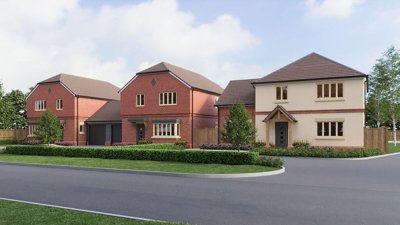
Browse 12 homes new builds in Didcot, South Oxfordshire from local developer agents.
£325k
153
10
99
Source: home.co.uk
Source: home.co.uk
Semi-Detached
35 listings
Avg £394,714
Detached
28 listings
Avg £532,284
Flat
22 listings
Avg £172,636
Terraced
21 listings
Avg £295,833
Apartment
17 listings
Avg £215,220
End of Terrace
12 listings
Avg £285,000
House
5 listings
Avg £271,000
Town House
4 listings
Avg £493,750
Maisonette
3 listings
Avg £213,333
Semi-Detached Bungalow
3 listings
Avg £311,667
Source: home.co.uk
Source: home.co.uk
Didcot's property market offers a diverse range of options across all price brackets, making it accessible to buyers with varying budgets. Detached properties command an average price of £499,457, reflecting the premium placed on space and privacy in this sought-after location. Semi-detached homes, which form a significant portion of the town's housing stock at approximately 30-35% of all properties, average around £376,146 and represent excellent value for families needing generous room sizes without the higher costs associated with detached properties. ---NEXT---
For buyers working with tighter budgets, terraced properties in Didcot average £299,553, while flats offer the most affordable entry point at approximately £173,421. The market has shown consistent growth, with house prices increasing by 1.4% over the last twelve months, indicating healthy demand and confidence in the area's long-term prospects. Recent transaction data shows 390 property sales completed in the past year, demonstrating active market activity and good liquidity for sellers and buyers alike. ---NEXT---
The housing stock in Didcot reflects its varied development history, with approximately 25-30% detached properties, a similar proportion of semi-detached homes, around 20-25% terraced properties, and 10-15% flats. This mix ensures options for different household types and budgets, from young couples seeking their first property to families upgrading to larger homes. The newer developments like Great Western Park and Kingsgrove have added significant modern housing to the market, offering contemporary construction standards and energy efficiency that appeals to buyers prioritising lower running costs.

Didcot's character reflects its fascinating history as a railway town while embracing modern suburban living. The population of approximately 30,000 residents across roughly 12,000 households creates a vibrant community atmosphere that retains a friendly, village-like feel despite continued growth. The town's older core features properties from various eras, including charming pre-1919 buildings and interwar homes from the 1919-1945 period, set alongside substantial post-war housing developed as the town expanded with its railway and power station industries.
The local geology presents some unique considerations for residents and property buyers. Didcot sits primarily on Gault Clay and Upper Greensand, with chalk bedrock to the north and west, meaning clay shrink-swell behaviour can affect foundations, particularly during periods of extreme weather. This geological context makes it advisable to commission a thorough survey before purchasing, especially for older properties where foundations may be shallower. The town's housing stock ranges from traditional solid brick construction with lime mortar in heritage properties to modern cavity wall systems with contemporary insulation standards in newer homes.
Didcot town centre offers practical amenities including supermarkets, independent shops, and a regular market, while the surrounding Oxfordshire countryside provides excellent walking and cycling opportunities. The town has several parks and green spaces including Ladygrove Park and the Almonds, and its proximity to the River Thames and Chiltern Hills opens up additional recreational possibilities. The local economy benefits from proximity to the Harwell Science and Innovation Campus and Culham Science Centre, attracting highly skilled workers and supporting demand in the housing market.
Key employment hubs within easy reach of Didcot include the Harwell Science and Innovation Campus, which hosts organisations in space, life sciences, and clean energy research. The Culham Science Centre, home to the UK Atomic Energy Authority and theJET fusion experiment, adds to the high-skilled employment base. Logistics companies have also established significant operations in the area due to the excellent road and rail connections, providing diverse employment opportunities across different sectors.

Understanding the construction methods used in Didcot properties helps buyers appreciate the characteristics and potential maintenance needs of different homes. The older properties in Didcot, particularly those built before 1919, typically feature solid brick walls constructed with traditional lime mortar, which allows the building to breathe but may require repointing over time. These heritage properties often have timber floor joists, original sash windows, and pitched roofs covered with clay tiles or natural slate, all of which may need ongoing maintenance or updating.
Properties built between 1919 and 1945 in Didcot continued the solid brick tradition but often incorporated improved damp-proof courses and more standardised construction techniques. Many interwar homes in areas like Mereland Road and the Broadway area feature bay windows, integral garages that were innovative for their time, and more generous room sizes reflecting changing lifestyle expectations. Our inspectors frequently note that these properties may have original wiring and plumbing that requires updating to meet modern standards.
The post-war expansion of Didcot, driven by its railway and power station employment, brought significant development between 1945 and 1980. These mid-century properties typically use cavity wall brick construction with concrete tiled roofs, representing a move toward more energy-efficient building standards. Properties from this era, common in areas like the Orchard Avenue estate and other 1960s and 1970s developments, often have timber or concrete ground floors and may show their age through worn kitchen and bathroom fittings.
Newer construction in Didcot, particularly on the Great Western Park and Kingsgrove developments, follows modern building regulations with cavity wall insulation, high-efficiency heating systems, and contemporary fixtures throughout. These homes typically have uPVC windows, composite doors, and modern kitchen and bathroom installations as standard. While newer properties generally require less immediate maintenance, our surveyors still recommend a Level 2 Survey to identify any snagging issues or defects in the building envelope that may not be apparent during a casual viewing.
Didcot offers a comprehensive range of educational options for families considering a move to the area. The town hosts several primary schools serving different catchment areas, with Abbey Woods Academy and Manor Primary School among the established options for younger children. Didcot's secondary schools provide good general and specialist education, with the town avoiding some of the intense competition for school places that affects other parts of Oxfordshire. Willowbrook School serves the newer Great Western Park area, reflecting the town's ongoing expansion and provision for growing communities.
For families with academic ambitions, Didcot is well-positioned for access to grammar school provision in nearby areas, and the acclaimed schools in Oxford city are reachable for those willing to factor in commute times. The town's sixth form provision allows students to continue their education locally, while Oxford's world-renowned universities and further education colleges are accessible for older students. Several primary schools in the area have received positive Ofsted ratings, providing reassurance for parents prioritising educational quality.
The presence of the Harwell Science and Innovation Campus influences the local educational landscape, with connections to science and technology career pathways that may appeal to families with children interested in STEM subjects. Didcot's growth has brought continued investment in school capacity, helping to ensure that educational provision keeps pace with the expanding population. The Science and Technology Facilities Council operates facilities nearby, and local schools often establish partnerships with these organisations to provide enrichment opportunities for students.

Didcot's transport connections rank among its most attractive features for commuters and those who value connectivity. Didcot Parkway railway station provides regular services to Oxford, Reading, and London Paddington, with journey times to the capital taking approximately 45-55 minutes depending on the service. This direct rail access positions Didcot as an excellent choice for professionals working in London who seek more affordable housing than the capital offers while maintaining practical commuting options.
The town's road connections are equally strong, with easy access to the A4130 and proximity to the M4 motorway via the A419, providing routes to Swindon, Bristol, and the wider motorway network. The A40 offers a direct route to Oxford and beyond, while the nearby A34 connects Didcot to the Thames Valley and links toward Birmingham. Bus services operate within Didcot and connect to surrounding villages and towns, providing options for those who prefer not to drive. Stagecoach and other operators provide regular bus services to Oxford, Abingdon, and Wantage.
For cyclists, Didcot has been developing its infrastructure with several dedicated routes and connections to the wider Oxfordshire cycling network. The town's relatively flat terrain makes cycling a practical option for local journeys, while dedicated routes can connect commuters to the railway station. Parking provision at Didcot Parkway station serves those combining rail travel with car journeys, though spaces can be competitive during peak times. There are over 800 parking spaces at the station, but season ticket holders often fill these early, so commuters should consider this when planning their journey.

Start by exploring current listings on Homemove to understand what is available within your budget. Didcot's market ranges from flats around £173,421 to detached homes exceeding £499,457, so defining your parameters early helps focus your search. Consider whether you want the character of an older property in the town centre or the modern conveniences of a new build on Great Western Park or Kingsgrove. ---NEXT---
Before scheduling viewings, obtain a mortgage agreement in principle from a lender to confirm your borrowing capacity. This strengthens your position when making offers and demonstrates you are a serious buyer to estate agents. Didcot's active market means competitive situations are common, so having your financing arranged gives you an advantage over buyers who have not yet begun this process.
View multiple properties across different neighbourhoods to understand what Didcot offers at various price points. Consider factors such as proximity to schools, transport links, and the condition of the property, noting any potential issues that may require survey investigation. Take time to visit at different times of day and check local amenities and noise levels before deciding which properties to pursue further.
For most properties, commission a RICS Level 2 Survey (HomeBuyer Report) priced between £400 and £700 in the Didcot area. Given the local geology with its Gault Clay shrink-swell risks and the mix of property ages, this survey identifies defects including potential subsidence from clay soils, damp issues in older properties, and any structural concerns. Our recommended surveyors understand Didcot's housing stock and know what to look for in properties ranging from Victorian terraces to modern new builds. ---NEXT---
Once your offer is accepted, instruct a conveyancing solicitor to handle the legal work. Your solicitor will conduct searches with South Oxfordshire District Council, investigate title deeds, and manage the transfer of ownership through to completion. The local authority search will reveal planning history, any conservation area designations, and other factors relevant to the specific Didcot property you are purchasing.
After all searches are satisfactory and financing is confirmed, you will exchange contracts and pay your deposit. On the agreed completion date, you will receive your keys and can begin moving into your new Didcot home. Remember to arrange buildings insurance from exchange of contracts and notify utility companies of your moving date.
Property buyers in Didcot should pay particular attention to foundation conditions given the local Gault Clay geology and its moderate to high shrink-swell risk. Properties with large trees nearby or those built with shallow foundations may show signs of movement, particularly during drought or extended wet periods. A thorough survey will assess whether any cracking or subsidence is historical, stable, or requires ongoing monitoring or remedial work. Our inspectors often find that properties on the edge of the built-up area, where older clay soils are more prevalent, require careful evaluation of foundation depths.
The mix of property ages in Didcot means buyers should investigate the condition of older homes with particular care. Pre-1980 properties may have outdated electrical systems that require rewiring, original plumbing that needs replacement, or missing damp-proof courses. Properties on Hagbourne Road and similar streets in the older town centre often feature solid brick walls with lime mortar that requires different maintenance approaches to modern cavity wall construction. Our surveyors check these details thoroughly and advise on appropriate remediation strategies.
Mid-century homes built during the town's expansion phases may show their age in various ways, with original kitchens and bathrooms, single-glazed windows, and solid ground floors that are less energy efficient than modern standards. While these properties can offer spacious accommodation at reasonable prices, buyers should budget for potential upgrading works. Newer properties on developments like Great Western Park and Kingsgrove typically offer modern construction standards but may have minor snagging issues that our surveyors identify during inspections.
Flood risk in Didcot is generally low from river sources, but some areas adjacent to small watercourses and low-lying zones can experience surface water flooding during heavy rainfall. The Environment Agency provides detailed flood risk maps that buyers should check, particularly for properties in these marginal areas. Conservation areas exist around the historic town centre, and any listed properties will have specific regulations affecting alterations and renovations that buyers should understand before purchasing. Our surveyors can advise on conservation requirements and listed building considerations during the inspection process.

The average house price in Didcot is £342,736 as of February 2026, based on current market data. Over the past twelve months, prices have increased by 1.4%, showing steady growth in this South Oxfordshire town. Property types range significantly in price, with detached homes averaging £499,457, semi-detached properties around £376,146, terraced houses at approximately £299,553, and flats starting from £173,421. This price range means Didcot remains competitive compared to Oxford and other nearby locations, attracting buyers who need more space for their budget. ---NEXT---
Properties in Didcot fall under South Oxfordshire District Council's jurisdiction for council tax purposes. Bands range from A through to H, with most typical family homes falling in bands B through E. The exact band depends on your property's assessed value, and you can verify the specific band through the Valuation Office Agency website or your solicitor during conveyancing. Council tax bills vary depending on the band, so this is worth checking alongside other ongoing costs when budgeting for your move to Didcot.
Didcot offers good primary and secondary educational options, with several schools in the area receiving positive Ofsted ratings. Abbey Woods Academy serves primary-aged children in the western part of town, while Manor Primary School and Willowbrook School serve other catchment areas. The town's proximity to Oxford means access to grammar schools and highly selective options is available for families willing to factor in travel arrangements. Didcot Girls' School and St Birinus School provide secondary education with various specialist subjects and good academic records.
Didcot is exceptionally well-connected for a town of its size, primarily through Didcot Parkway railway station. Direct trains run to Oxford in approximately 15 minutes, to Reading in around 25 minutes, and to London Paddington in 45-55 minutes. Bus services operate locally and to surrounding towns including Oxford, Abingdon, and Wantage, while the M4 and A34 provide excellent road connections for drivers. This connectivity makes Didcot particularly attractive to commuters working in Oxford, Reading, or London who want more affordable housing than these cities offer.
Didcot offers several factors that make it attractive for property investment, including proximity to major employers like the Harwell Science and Innovation Campus, excellent transport links to London and Oxford, and continued new development activity. The 1.4% annual price increase demonstrates consistent demand, while the diverse housing stock appeals to various buyer segments including commuters, families, and professionals working in science and technology sectors. Rental demand remains strong due to the employed population working at nearby science and research facilities, making buy-to-let a viable consideration for investors.
Stamp Duty Land Tax (SDLT) rates for standard buyers start at 0% on the first £250,000 of property value, then 5% on the portion from £250,001 to £925,000. For properties above £925,000, the rate increases to 10% up to £1.5 million, and 12% on anything above that threshold. First-time buyers benefit from relief on the first £425,000, paying 5% between £425,001 and £625,000, with no relief above that. For a typical Didcot property at £342,736, a standard buyer would pay approximately £4,637 in SDLT. ---NEXT---
A RICS Level 2 Survey (HomeBuyer Report) is recommended for most properties in Didcot, costing approximately £400-£700 depending on property size and value. Given the local clay soil conditions and mix of property ages, this survey will check for subsidence risk from shrink-swell clay, damp issues, structural movement, and common defects in properties ranging from Victorian terraces to modern new builds. For listed buildings or those with significant structural concerns, an RICS Level 3 Building Survey provides more detailed analysis and is better suited to complex properties with unique construction features. ---NEXT---
Didcot has two significant new build developments available. Great Western Park features homes by Taylor Wimpey, David Wilson Homes, and Barratt Homes, offering 2 to 5-bedroom properties priced from approximately £290,000 to over £600,000. Kingsgrove by St. Modwen Homes and Cala Homes provides similar property types with prices ranging from £300,000 to over £650,000. Both developments offer new build warranties and modern energy-efficient construction, though our surveyors still recommend a Level 2 Survey to identify any snagging issues or defects not apparent during the developer's own quality checks. ---NEXT---
Didcot generally has a low risk of river flooding due to its position away from major watercourses. However, some areas adjacent to small watercourses and low-lying parts of town can experience surface water flooding during periods of heavy rainfall. The Environment Agency provides detailed flood risk maps showing these potential problem areas, and we recommend checking these before making an offer on any property in a marginal location. Your solicitor will also include an environmental search in the conveyancing process that investigates flood risk and other ground conditions relevant to Didcot's clay geology.
Understanding the full costs of buying property in Didcot extends beyond the purchase price to include stamp duty, solicitor fees, survey costs, and moving expenses. For a typical family home priced at the current average of £342,736, a standard buyer would pay zero stamp duty on the first £250,000, then 5% on the remaining £92,736, totalling approximately £4,637 in SDLT. First-time buyers may benefit from relief on the first £425,000, potentially eliminating stamp duty for properties at or below this threshold. ---NEXT---
Solicitor conveyancing costs for a Didcot property typically range from £499 to £1,500 depending on the complexity of the transaction and whether the property is freehold or leasehold. Your solicitor will conduct essential searches including a local authority search with South Oxfordshire District Council, a water and drainage search, and environmental searches that investigate ground conditions relevant to Didcot's clay geology. These searches typically cost between £250 and £400 in total and provide important information about the property and local area. ---NEXT---
Additional costs to budget for include mortgage arrangement fees (often 0-1% of the loan amount), valuation fees, the RICS Level 2 Survey (£400-£700 for Didcot properties), and removal costs. Buildings insurance must be in place from exchange of contracts, and you will need to budget for Land Registry fees if registering the title. Ongoing costs after purchase include council tax, utility bills, and service charges if buying a flat. Getting a mortgage agreement in principle before searching properties streamlines your budget planning and strengthens your buying position in Didcot's active property market.

Properties New Builds In London

Properties New Builds In Plymouth

Properties New Builds In Liverpool

Properties New Builds In Glasgow

Properties New Builds In Sheffield

Properties New Builds In Edinburgh

Properties New Builds In Coventry

Properties New Builds In Bradford

Properties New Builds In Manchester

Properties New Builds In Birmingham

Properties New Builds In Bristol

Properties New Builds In Oxford

Properties New Builds In Leicester

Properties New Builds In Newcastle

Properties New Builds In Leeds

Properties New Builds In Southampton

Properties New Builds In Cardiff

Properties New Builds In Nottingham

Properties New Builds In Norwich

Properties New Builds In Brighton

Properties New Builds In Derby

Properties New Builds In Portsmouth

Properties New Builds In Northampton

Properties New Builds In Milton Keynes

Properties New Builds In Bournemouth

Properties New Builds In Bolton

Properties New Builds In Swansea

Properties New Builds In Swindon

Properties New Builds In Peterborough

Properties New Builds In Wolverhampton

Enter your details to see if this property is within your budget.
Loans, cards, car finance
Estimated property budget
Borrowing + deposit
You could borrow between
Typical borrowing
Monthly repayment
Est. at 4.5%
Loan-to-value
This is an estimate only. Your actual budget may vary depending on interest rates, credit history, and personal circumstances. For an accurate affordability assessment, speak to one of our free mortgage advisors.
This calculator provides estimates for illustrative purposes only and does not constitute financial advice. Your home may be repossessed if you do not keep up repayments on your mortgage. Estimates based on 4.5% interest rate, repayment mortgage. Actual rates depend on your circumstances.
Homemove is a trading name of HM Haus Group Ltd (Company No. 13873779, registered in England & Wales). Homemove Mortgages Ltd (Company No. 15947693) is an Appointed Representative of TMG Direct Limited, trading as TMG Mortgage Network, which is authorised and regulated by the Financial Conduct Authority (FRN 786245). Homemove Mortgages Ltd is entered on the FCA Register as an Appointed Representative (FRN 1022429). You can check registrations at NewRegister or by calling 0800 111 6768.