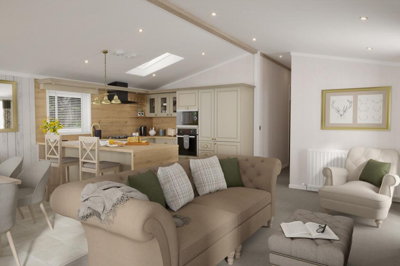
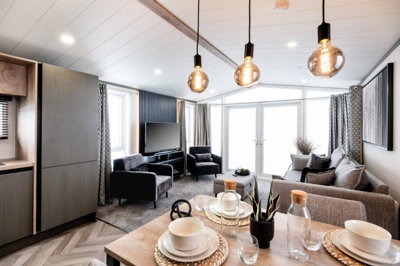
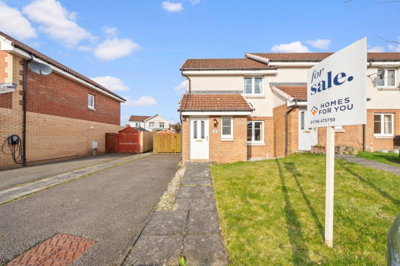
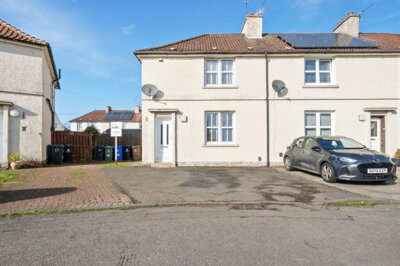
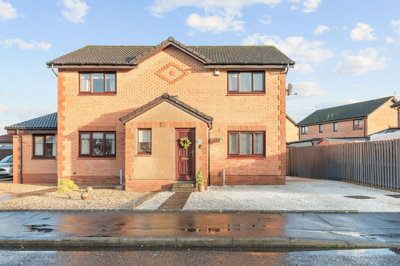
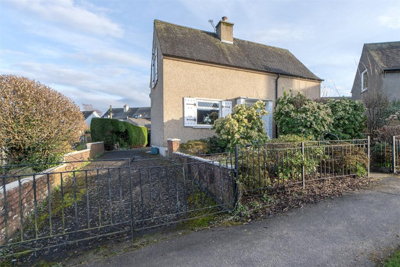
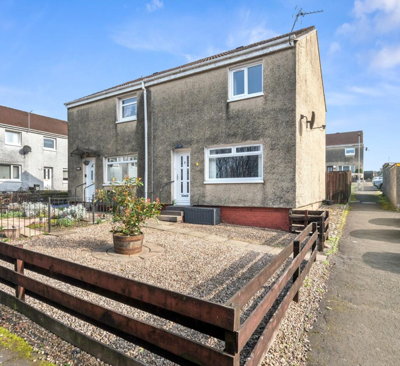
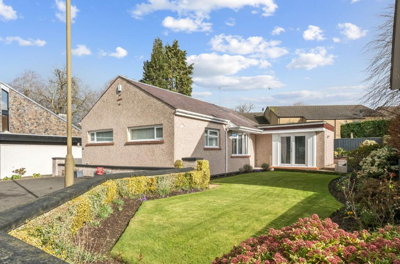
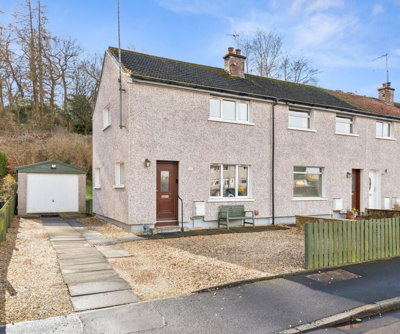
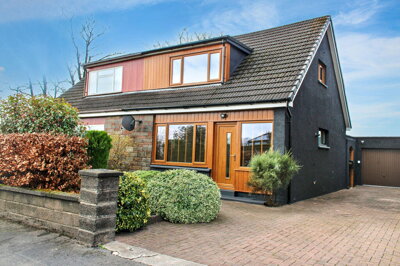
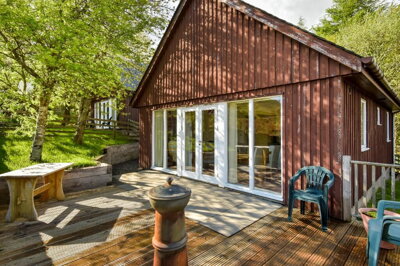
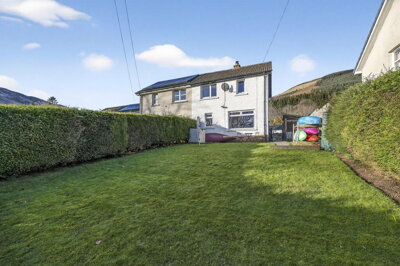
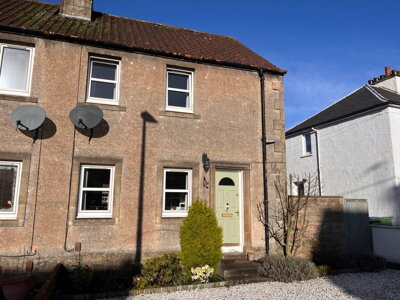
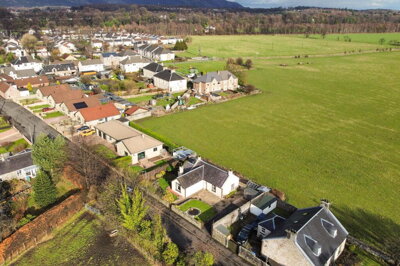
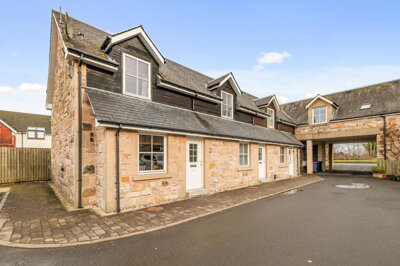
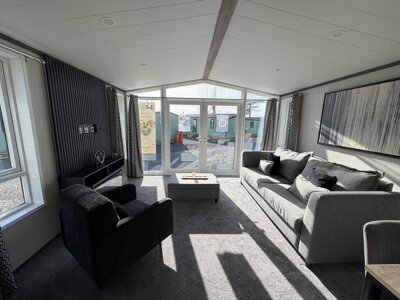
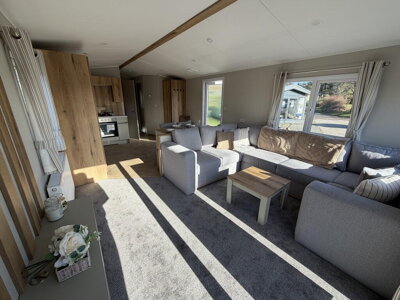
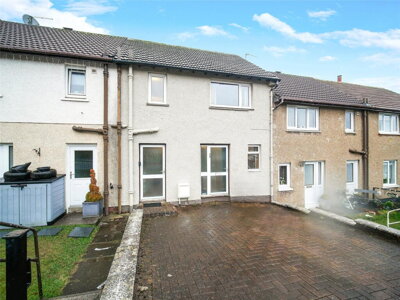
Browse 83 homes for sale in Stirling, Scotland from local estate agents.
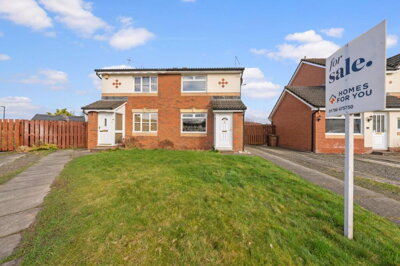
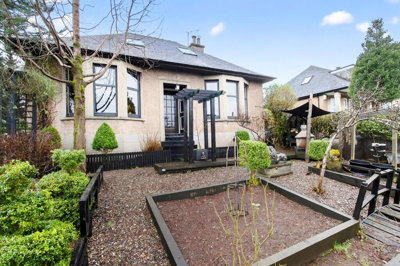
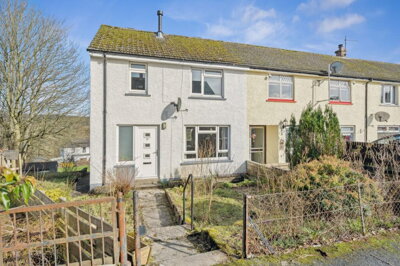
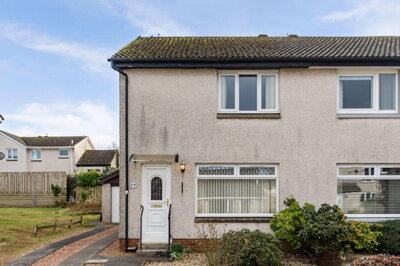
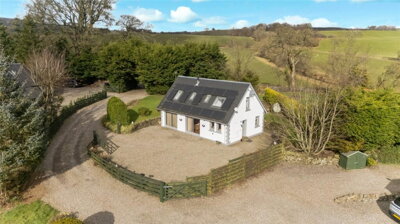
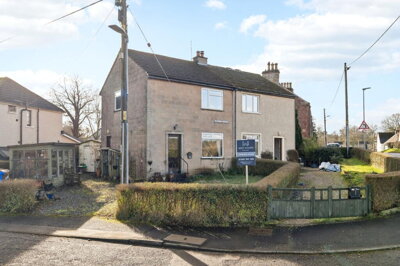
The 2 bed house market features detached, semi-detached, and terraced properties with two separate bedrooms plus living spaces. Properties in Stirling range from Victorian and Edwardian period homes to modern new builds, with pricing varying across different neighbourhoods.
£195k
9
3
26
Source: home.co.uk
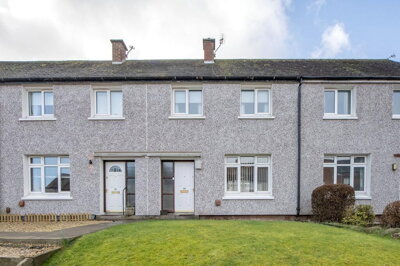
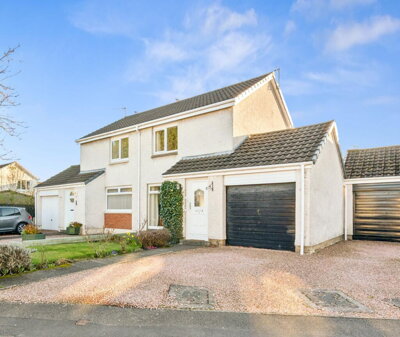
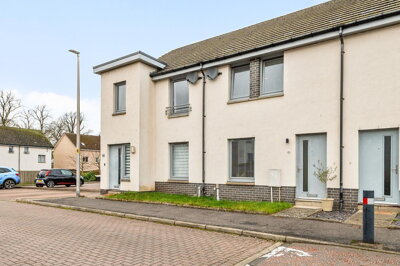
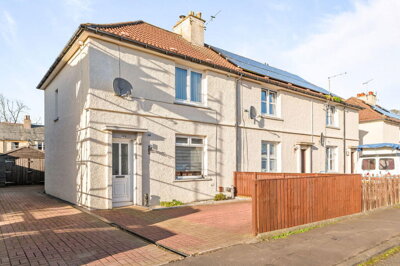
Showing 9 results for 2 Bedroom Houses for sale in Stirling, Scotland. 3 new listings added this week. The median asking price is £194,995.
Source: home.co.uk
Semi-Detached
4 listings
Avg £172,500
Terraced
4 listings
Avg £184,996
Detached
1 listings
Avg £170,000
Source: home.co.uk
Source: home.co.uk
The Stirling property market offers remarkable diversity, with average prices sitting at £215,627 as of February 2026. Detached properties command the highest prices at around £350,919, reflecting the generous space and often superior locations these homes occupy. Semi-detached homes average £206,197, representing excellent value for families seeking more than a flat but at a more accessible price point than detached alternatives. The market has shown resilience over the past five years, with prices increasing by 11% overall, though the past 12 months have seen a modest 2.0% softening as buyer conditions adjust across the UK.
Terraced properties in Stirling average £166,134, making them an attractive entry point for first-time buyers looking to get onto the property ladder in a historically significant city. Flats remain the most affordable option at around £128,409, and Stirling's city centre benefits from a strong supply of purpose-built and converted apartments. Several new build developments are currently active in the area, including The Meadow by Allanwater Homes starting from £264,995, Wallace View by Miller Homes from £269,995, and Highfield by Robertson Homes from £310,000, offering modern specifications and energy efficiency for buyers seeking brand new homes.
The housing stock breakdown reveals strong demand across all property types. ONS Census data shows flats comprise 34.2% of homes, semi-detached properties account for 25.4%, detached houses represent 20.3%, and terraced homes make up 19.3% of the Stirling housing market. This variety ensures buyers have genuine choice whether seeking a city centre apartment, a family home with garden, or a substantial detached property. The Ogilvie Homes development on High Street in Stirling city centre offers additional new build options with 2, 3, and 4-bedroom homes in Phase 2 of the development.

Stirling's housing stock reflects its layered history, with properties spanning several centuries of architectural development. Census data reveals that around 20% of homes were built before 1919, constructed primarily in traditional sandstone that gives many neighbourhoods their distinctive warm red and grey tones. The city's historic core contains a particularly high concentration of listed buildings, including elegant Georgian townhouses and Victorian terraces that have been carefully preserved over generations. Living in Stirling means becoming part of a community that values its architectural heritage while embracing contemporary life.
The population of Stirling stands at approximately 37,910 within the city settlement, with over 43,000 households across the wider council area. The University of Stirling campus contributes significantly to the city's demographic mix, bringing students, academics, and research professionals into the community. Tourism plays a vital role in local life too, with Stirling Castle, the National Wallace Monument, and numerous historic sites attracting visitors year-round and supporting local businesses in the city centre and beyond. The Thistles Shopping Centre provides modern retail therapy, while the Riverside area offers pleasant walks along the River Forth.
Key neighbourhoods each offer distinct advantages for different buyer profiles. Bridge of Allan, just minutes from the city centre, features attractive Victorian villas and a vibrant high street with independent shops and cafes. Causewayhead is popular with families for its proximity to good schools and open spaces including the historic Stirling Castle golf course. The Bannockburn area offers more affordable options while maintaining excellent links to the city centre and motorway network. For those prioritising period features and heritage, the streets around St. Ninian's Church and the King Street area showcase some of Stirling's finest traditional architecture.

Education stands as one of Stirling's greatest strengths, with the University of Stirling consistently ranked among Scotland's top institutions. The campus sits on a beautiful 330-acre estate, drawing students and staff from across the UK and internationally. This academic presence benefits the local community through employment opportunities, research partnerships, and a vibrant cultural calendar of events open to residents. Families moving to Stirling will find a comprehensive network of primary and secondary schools serving communities across the city and surrounding areas.
Stirling's primary schools include well-regarded options such as Stirling Primary School serving the city centre, Bannockburn Primary School for families in that area, and St. Mary's Primary School which offers faith-based education. The local authority maintains numerous additional primaries throughout residential areas, each feeding into specific secondary catchment zones. Secondary education is served by several schools including Stirling High School, which has a strong academic record and extensive facilities, and Wallace High School in the Causewayhead area. Other notable secondaries include Bannockburn High School and Dollar Academy, though the latter is a fee-paying independent school.
School catchment boundaries significantly influence property values in certain streets and neighbourhoods, making it essential for families to research schooling options before committing to a purchase. Properties on one side of a road may fall into a different catchment area than those on the opposite side, directly affecting which school your children would attend. Education Scotland publishes inspection reports for all schools, and the Scottish Government's School Performance data allows comparison of attainment levels across different institutions. Stirling also offers good provision for further education through colleges and training providers, ensuring young people have clear pathways into higher education or vocational careers.
Stirling's central location makes it exceptionally well-connected for commuters and those who travel regularly for business. The railway station offers regular services to Glasgow Queen Street in approximately 45-50 minutes, with direct trains running throughout the day. Edinburgh can be reached in around 75 minutes by rail, while Perth is accessible in approximately 30 minutes. This connectivity has made Stirling increasingly popular with professionals who work in either of Scotland's major cities but prefer the quality of life and more affordable housing available in the historic city. Road connections are equally strong, with the M9 providing direct motorway access to Falkirk and the wider motorway network.
For those who drive, Stirling sits at the junction of several major routes including the A9 heading north towards Inverness and the A84 leading to the Trossachs and Highlands beyond. Edinburgh Airport is accessible within approximately 45 minutes by car, while Glasgow Airport can be reached in around the same time. A Park and Ride facility at the railway station encourages commuters to use public transport for onward journeys. Within the city itself, bus services operated by First Scotland provide connections across Stirling and to surrounding towns, though many residents find that car ownership remains convenient for accessing out-of-town amenities and exploring the beautiful surrounding countryside.
The city also benefits from direct rail connections to London via Edinburgh or Glasgow, making Stirling viable for those working in the capital or regularly travelling for business. The A907 provides a direct route to Dunblane and the north, while the A84 connects to the Loch Lomond and Trossachs National Park for those seeking weekend escapes to Scotland's stunning landscapes. Cycling infrastructure has improved in recent years, with designated routes connecting residential areas to the city centre and university campus.
Understanding how properties in Stirling were constructed helps you appreciate their characteristics and identify potential issues. Stirling's geology is complex, featuring Carboniferous sedimentary rocks including sandstones, shales, and limestones, with widespread glacial till deposits that can present shrink-swell risks where clay content is high. These geological conditions influenced the building materials available locally and the construction techniques employed across different eras.
Traditional pre-1919 properties typically feature solid stone or brick walls constructed with lime mortar, offering excellent breathability but requiring different maintenance approaches than modern cavity wall construction. Timber suspended floors were standard in this period, as were pitched roofs covered with natural slate or clay tiles. Many of these older properties have been modernised over the decades, though original features such as working fireplaces, cornicing, and deep skirting boards often remain intact in well-maintained homes. Alluvial deposits along the River Forth floodplain have shaped development patterns, with lower-lying areas more likely to experience ground moisture issues.
Properties built between 1919 and 1982 introduced cavity wall construction using brick or block with render finishes, which provided improved insulation compared to solid walls. Concrete tiles became common during this period, offering a more affordable alternative to natural slate. Timber frame construction emerged in the latter part of this era and became increasingly prevalent in newer properties. Modern construction post-1982 predominantly uses timber frame or blockwork with various external finishes, meeting current insulation standards and typically requiring less maintenance than traditional stone buildings.
Given that approximately 67% of properties in Stirling were built before 1983, several defect types are commonly encountered during surveys. Our inspectors regularly identify dampness issues in traditional sandstone properties, including rising damp where original damp-proof courses have failed or were never installed, penetrating damp from weathered masonry or defective rainwater goods, and condensation problems resulting from modern living patterns in properties designed with different ventilation standards. These damp issues are particularly common in ground-floor rooms and properties with north-facing walls exposed to prevailing winds.
Roof defects feature prominently in Stirling surveys due to the age of much of the housing stock. Our inspectors frequently report issues with slate or tile coverings that have become cracked, slipped, or broken over time. Lead flashing around chimneys, dormers, and roof intersections often shows signs of deterioration, while gutters and downpipes may be blocked, damaged, or incorrectly aligned, causing water to discharge onto walls rather than into drainage systems. The combination of age, weathering, and freeze-thaw cycles during Scottish winters accelerates roof deterioration.
Timber defects including wet rot, dry rot, and woodworm activity are encountered throughout Stirling's older properties. Wet rot typically affects timber in persistently damp conditions, such as poorly ventilated roof spaces or damp solid floors, while dry rot can spread through masonry to affect structurally sound timber at some distance from the original moisture source. Electrical wiring and plumbing systems in older homes frequently require upgrading to meet current standards, with our surveyors commonly noting re-wiring or re-plumbing needed in properties built before the 1970s.
Begin by exploring Stirling's different neighbourhoods to find areas that match your lifestyle preferences. Use our property search to understand current listing prices and get a clear picture of what your budget can achieve in the current market. Consider factors such as school catchments if you have children, commuting requirements if you work in Glasgow or Edinburgh, and proximity to amenities that matter to your daily life.
Contact lenders or use our mortgage comparison tools to obtain an Agreement in Principle before starting viewings. Having this in place strengthens your position when making offers and demonstrates to sellers that you are a serious buyer. Given Stirling's average price of £215,627, most buyers will require a mortgage, and securing your Agreement in Principle early helps you move quickly when you find the right property.
Use our platform to schedule viewings on properties that interest you. Take time to visit homes at different times of day and consider factors like noise levels, natural light, and the condition of surrounding properties. In Stirling's city centre, weekend noise from the pub trade may affect some properties, while homes near the university may experience higher foot traffic during term time.
Once your offer is accepted, arrange a RICS Level 2 Survey to assess the property's condition thoroughly. Given Stirling's high proportion of older properties, surveys typically cost between £400-£800 and can reveal issues requiring attention before purchase. Our inspectors are experienced with Stirling's common construction types and will identify any structural concerns, damp issues, or repair priorities that affect your decision.
Your solicitor will handle legal searches, title checks, and the transfer of ownership. They will coordinate with your mortgage lender and the seller's solicitors to ensure a smooth transaction through to completion. Scottish conveyancing differs from the rest of the UK, with a simpler and faster process overall, though your solicitor will guide you through the specific requirements including the exchange of notes and the settlement process.
Stirling's geological landscape brings specific considerations for property buyers, particularly regarding ground conditions. The area sits on Carboniferous sedimentary rocks with widespread glacial till deposits that can present shrink-swell risks in locations with high clay content. Properties built on or near such ground may require particular attention to foundations and drainage, especially during periods of extreme wet or dry weather that cause clay soils to contract or expand. Anyone purchasing a property in Stirling should review the survey findings carefully and consider whether specialist structural engineering advice is needed, especially for older properties or those showing signs of movement or cracking.
Flood risk represents another important consideration, with the River Forth and its tributaries posing potential fluvial flooding concerns in low-lying areas adjacent to watercourses. Areas around the Forth, Allan Water, and Teith are susceptible to flooding, and surface water flooding can also occur across the urban area during periods of heavy rainfall due to local topography and drainage capacity. Properties near the river or in known flood zones require thorough investigation of flood history and potential insurance implications. Your solicitor should conduct appropriate drainage and flooding searches as part of the conveyancing process to ensure you have full information before completing your purchase.
The city centre of Stirling is a designated Conservation Area, and many properties within it are listed buildings requiring special consideration. Properties in these categories may be subject to stricter planning controls regarding alterations, extensions, or even replacement of windows and doors. If you are considering a listed building, your survey may recommend consulting with Stirling Council's planning department and potentially engaging a specialist to assess the implications of any proposed works. These factors can significantly affect future renovation plans and costs.
Purchasing property in Scotland involves different tax considerations compared to England and Wales, as Land and Buildings Transaction Tax (LBTT) replaces Stamp Duty Land Tax. For residential purchases, the LBTT starting rates apply to the first £145,000 at 0%, with subsequent bands at 2% (£145,001-£250,000), 5% (£250,001-£325,000), 10% (£325,001-£750,000), and 12% on any amount exceeding £750,000. First-time buyers in Scotland benefit from increased thresholds under the First-Time Buyer Relief, which can provide meaningful savings on properties valued up to £625,000. A typical first-time buyer purchasing a flat in Stirling at £128,409 would pay no LBTT under current thresholds.
Beyond LBTT, buyers should budget for additional costs including solicitor fees for conveyancing which typically start from around £499-£1,500 depending on property value and complexity. RICS Level 2 Survey costs in Stirling range from £400 for smaller properties to £800 or more for larger detached homes, providing essential condition reports before commitment. Mortgage arrangement fees, valuation fees, and broker costs may also apply, typically ranging from £500-£2,000 depending on the lender and product chosen. Land registration fees in Scotland are generally modest. Building insurance must be arranged before completion, and moving costs should be factored into your overall budget.
Additional searches your solicitor will conduct include a local authority search through Stirling Council, a mining search given the historic mining activity in some areas, and water and drainage searches. These typically total a few hundred pounds but provide essential information about the property and land. Home report costs are covered by the seller in Scotland, unlike the survey costs in England, though as a buyer you should budget for your own independent survey to protect your interests.
The average property price in Stirling stands at £215,627 as of February 2026. Detached properties average £350,919, semi-detached homes £206,197, terraced properties £166,134, and flats around £128,409. Over the past five years, prices have increased by 11%, though the last 12 months have seen a modest 2.0% decrease reflecting broader UK market conditions. Stirling generally offers more affordable options compared to Edinburgh and Glasgow while maintaining excellent connectivity to both cities.
Council tax bands in Stirling are set by Stirling Council and follow the Scottish banding system from A through H. Specific bands depend on the property's assessed value, and you can find the relevant band for any listed property through the Scottish Assessors Association website. Properties are typically banded based on their value as of April 1991, adjusted for any significant changes. New build properties may take time to be formally banded after completion, and buyers should note that bands affect both annual council tax payments and the calculation of any LBTT applicable to purchases.
Stirling offers strong educational provision at all levels, with the University of Stirling consistently ranking among Scotland's top universities. Primary education is well-served by numerous schools across the city, including Stirling Primary School for city centre families and Bannockburn Primary School serving that residential area. Secondary schools include Stirling High School and Wallace High School, with specific catchments determined by address. Parents should research catchments and admission policies, as boundaries directly affect school placement and can significantly influence property values in desirable catchment areas.
Stirling railway station provides excellent rail connections with regular services to Glasgow Queen Street taking approximately 45-50 minutes and Edinburgh Waverley around 75 minutes. The city is well-served by bus operators including First Scotland, providing local routes across Stirling and connections to surrounding towns including Dunblane, Bridge of Allan, and Falkirk. The M9 motorway provides road access to Falkirk and connects to the wider motorway network, while the A9 heads north towards Inverness. Edinburgh Airport is accessible within approximately 45 minutes by car, making international travel convenient for Stirling residents.
Stirling offers several factors that appeal to property investors. The city's central location and excellent transport links make it attractive to commuters, supporting consistent rental demand from professionals working in Glasgow or Edinburgh. The University of Stirling creates ongoing demand for student accommodation and buy-to-let properties, while the tourism sector and public sector employers contribute to economic stability. Property values have shown positive long-term growth, with an 11% increase over five years, though investors should research specific postcodes and property types for rental yield information relevant to their purchase.
Stamp Duty Land Tax in Scotland differs from the rest of the UK as Land and Buildings Transaction Tax (LBTT) applies instead. The LBTT rates start at 0% on the first £145,000 of residential property purchases, then 2% on the portion from £145,001 to £250,000, 5% on £250,001 to £325,000, 10% on £325,001 to £750,000, and 12% on any amount above £750,000. First-time buyers in Scotland may qualify for relief on the starting rates, with the threshold increased to £175,000. Using a property purchase calculator can help you estimate your specific LBTT liability based on the purchase price.
Given that approximately 67% of properties in Stirling were built before 1983, several defect types are commonly encountered during surveys. Traditional sandstone properties may suffer from dampness issues including rising damp, penetrating damp, or condensation due to age and original construction methods. Roof defects affecting slate or tile coverings and lead flashing are frequent in older properties. Timber defects including wet rot, dry rot, and woodworm can affect structural elements and finishes. Electrical wiring and plumbing systems in older homes often require upgrading to meet current standards. Our inspectors are experienced with Stirling's housing stock and will identify any such issues before you commit to your purchase.
Properties in Stirling should be assessed for flood risk, particularly those in low-lying areas near the River Forth and its tributaries including Allan Water and the River Teith. Our surveyors recommend checking Floodline for historical flood information and reviewing the Scottish Environment Protection Agency maps for current flood risk designations. Surface water flooding can also occur during heavy rainfall, especially in areas with poor drainage or where ground is saturated. Properties in flood risk areas may face higher insurance premiums, and your solicitor should conduct appropriate searches to identify any relevant flood history or risk designations.
From 3.84%
Compare mortgage rates from leading lenders
From £499
Expert Scottish conveyancing solicitors
From £400
Detailed condition report by RICS qualified surveyor
From £85
Energy performance certificate for your property
Properties for Sale In London

Properties for Sale In Plymouth

Properties for Sale In Liverpool

Properties for Sale In Glasgow

Properties for Sale In Sheffield

Properties for Sale In Edinburgh

Properties for Sale In Coventry

Properties for Sale In Bradford

Properties for Sale In Manchester

Properties for Sale In Birmingham

Properties for Sale In Bristol

Properties for Sale In Oxford

Properties for Sale In Leicester

Properties for Sale In Newcastle

Properties for Sale In Leeds

Properties for Sale In Southampton

Properties for Sale In Cardiff

Properties for Sale In Nottingham

Properties for Sale In Norwich

Properties for Sale In Brighton

Properties for Sale In Derby

Properties for Sale In Portsmouth

Properties for Sale In Northampton

Properties for Sale In Milton Keynes

Properties for Sale In Bournemouth

Properties for Sale In Bolton

Properties for Sale In Swansea

Properties for Sale In Swindon

Properties for Sale In Peterborough

Properties for Sale In Wolverhampton

Enter your details to see if this property is within your budget.
Loans, cards, car finance
Estimated property budget
Borrowing + deposit
You could borrow between
Typical borrowing
Monthly repayment
Est. at 4.5%
Loan-to-value
This is an estimate only. Your actual budget may vary depending on interest rates, credit history, and personal circumstances. For an accurate affordability assessment, speak to one of our free mortgage advisors.
This calculator provides estimates for illustrative purposes only and does not constitute financial advice. Your home may be repossessed if you do not keep up repayments on your mortgage. Estimates based on 4.5% interest rate, repayment mortgage. Actual rates depend on your circumstances.
Homemove is a trading name of HM Haus Group Ltd (Company No. 13873779, registered in England & Wales). Homemove Mortgages Ltd (Company No. 15947693) is an Appointed Representative of TMG Direct Limited, trading as TMG Mortgage Network, which is authorised and regulated by the Financial Conduct Authority (FRN 786245). Homemove Mortgages Ltd is entered on the FCA Register as an Appointed Representative (FRN 1022429). You can check registrations at NewRegister or by calling 0800 111 6768.

We use cookies to show you personalised content and improve your experience of our website. Find out more in our Privacy policy and Cookie policy.