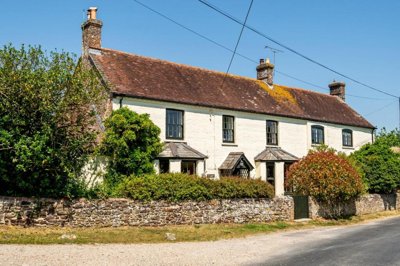
Browse 14 homes for sale in East Lulworth from local estate agents.
The East Lulworth property market reflects the unique character of this historic Dorset village, offering buyers a selection of period properties that embody the charm of one of Britain's most beloved coastal regions. Recent market data for the broader Lulworth area shows an overall average property price of £527,664 over the past twelve months, though prices have experienced an 8% reduction compared to the previous year and sit approximately 19% below the 2022 peak of £647,784. This price adjustment presents opportunities for buyers seeking to enter this prestigious coastal market at more accessible entry points than previously seen.
Property type significantly influences values in East Lulworth, with detached homes commanding the highest prices at around £696,924 to £698,000, reflecting the desirability of standalone period properties with gardens and views across the Purbeck countryside. Semi-detached properties average approximately £406,714 to £418,720, offering a more accessible route to homeownership in this sought-after location while retaining the traditional construction and character of the broader area. Terraced properties, including charming cottages along the village's historic lanes, average between £381,000 and £427,500, providing opportunities for first-time buyers or those seeking a smaller footprint in this extraordinary setting.
The availability of flats specifically within East Lulworth itself is limited, with most apartment-style properties found in neighbouring towns such as Wool and Wareham. No active new-build developments have been identified within the East Lulworth postcode area, meaning that buyers seeking modern conveniences may need to consider nearby settlements or accept the maintenance requirements that accompany historic properties. The village's housing stock is dominated by properties over a century old, particularly the distinctive 17th-century thatched cottages that line the village centre and surrounding lanes, constructed from traditional materials including Purbeck limestone and local stone.

Life in East Lulworth revolves around the extraordinary natural landscape that surrounds this compact village on the Jurassic Coast. The area is dominated by the presence of Lulworth Castle, an early 17th-century stately home with Grade II listed landscaped gardens that now operates as a popular museum and events venue including the well-known Camp Bestival. The castle grounds include the historic parish church of St Andrew and a Roman Catholic chapel of St Mary, built in 1786, creating a focal point for both residents and visitors that connects the community to centuries of local history and tradition.
Tourism forms the backbone of the local economy, with Lulworth Cove and Durdle Door drawing hundreds of thousands of visitors annually to witness the stunning limestone formations and sheltered beach that exemplify the Jurassic Coast's geological heritage. This steady flow of visitors supports employment in hospitality, retail, and tourism services, while also sustaining the village's pub, tea rooms, and local shops that serve both residents and tourists throughout the year. The summer months bring considerable activity to the area, though residents also enjoy the quieter winter months when the landscape reveals its more contemplative beauty across the Purbeck hills.
The village community remains small and tightly knit, with East Lulworth described as the smaller of the two Lulworth villages, the other being West Lulworth which centres on the cove itself. Agricultural activity continues in the surrounding countryside, with local farms contributing to the rural character that defines the approach to the village. A significant local employer is Lulworth Camp, the British Army training base located to the western end of the village that has been in continuous use since 1918, providing employment for service personnel and civilian staff who often choose to live locally. The combination of military, agricultural, and tourism employment creates a diverse economic base that supports the residential community throughout the year.
The local geology plays a defining role in the character of East Lulworth and its surroundings. The village sits within the Purbeck mineral belt, where Purbeck limestone has been quarried for centuries and used extensively in local building construction. This distinctive cream-coloured stone, visible in the walls of cottages, farm buildings, and boundary walls throughout the village, gives East Lulworth its cohesive historic appearance. The underlying chalk geology of the Purbeck hills contributes to the free-draining nature of the local soil, though clay deposits in some areas can present shrink-swell considerations for property foundations.

Families considering a move to East Lulworth will find educational provision centred primarily in the surrounding Purbeck area, with primary schools located in nearby villages and towns serving the local population. The village's small size means that children typically travel a short distance to reach their nearest primary school, with broader options available in towns such as Wool, which offers facilities for younger age groups within reasonable travelling distance. Parents should research specific catchment areas and admission policies for schools in the Purbeck School Network, as these can influence which schools children are allocated based on residential location.
Secondary education in the area is provided through comprehensive schools in nearby towns, with Purbeck schools serving students from East Lulworth and surrounding villages. Wool itself has secondary school facilities, while for families seeking grammar school education, the nearest options are located in Dorset centres such as Poole and Bournemouth, though these require consideration of transportation arrangements and competitive entry requirements. Several independent schools are also available in Dorset, offering alternative educational paths for families with specific preferences for independent schooling.
Further education opportunities are readily accessible in the wider Dorset area, with sixth form colleges and further education colleges located in towns such as Poole, Weymouth, and Dorchester, providing comprehensive options for students continuing their education post-16. The proximity of major education centres including Bournemouth and Southampton, both accessible by rail from nearby stations, extends options further for older students pursuing university education or vocational qualifications. Families relocating to East Lulworth should arrange school visits and consultations with local education authorities to confirm placement availability and catchment arrangements before completing a property purchase.

East Lulworth occupies a semi-rural location that balances countryside tranquility with reasonable connectivity to the wider transport network. The nearest railway stations are located in Wool and Wareham, both offering regular services that connect the area to major regional centres. From Wool station, services operate to destinations including Bournemouth, Southampton, and Poole, providing commuters with options for working in larger urban centres while maintaining a rural residence. Wareham station offers additional routing flexibility, connecting to the main line between London and Weymouth.
Road transport relies primarily on the A352 and A351 roads that serve the Purbeck area, connecting East Lulworth to towns including Wareham, Poole, and the ferry terminals at Poole Harbour. The journey to Poole town centre takes approximately 25-30 minutes by car, while access to the A35 provides connections to Bournemouth, Southampton, and the wider motorway network beyond. For residents working in major cities, the drive to Southampton takes approximately one hour, while London can be reached in around two and a half hours via the M3 corridor or approximately three hours by train from nearby stations.
Public bus services operate in the area, though frequencies are limited reflecting the rural nature of East Lulworth and the surrounding villages. Residents without private vehicles should factor bus timetables carefully into their daily planning, particularly for weekday commuting and essential shopping trips. Cycling infrastructure in Purbeck has improved in recent years, with the relatively flat terrain around the village and the coast making cycling viable for local journeys, though the winding country lanes require careful navigation. For international travel, Bournemouth Airport offers seasonal and year-round flights to European destinations, while Southampton Airport and major London airports provide broader connectivity for international travel requirements.

Before viewing properties in East Lulworth, spend time exploring the village at different times of day and on various days of the week. Visit local amenities, speak with residents about their experience living in the area, and assess the community atmosphere. Consider seasonal variations, as the tourist influx during summer months significantly affects traffic and parking availability around Lulworth Cove and Durdle Door.
Obtain a mortgage agreement in principle before beginning property viewings, as this demonstrates your purchasing readiness to estate agents and sellers. East Lulworth properties, with average prices around £527,000 for the wider area, typically require substantial mortgage facilities, and specialist rural or period property lenders may offer appropriate products. Factor in additional costs including stamp duty, solicitor fees, surveys, and potential renovation costs for historic properties.
Work with local estate agents who understand the East Lulworth market and can provide context on property history, previous sales, and seller motivations. View properties at different times of day to assess light, noise, and neighbour activity levels. Given the limited stock available, be prepared to act quickly on properties that meet your requirements while maintaining thorough due diligence.
Given that many East Lulworth properties are 17th-century thatched cottages or other historic buildings, a RICS Level 2 Survey or Level 3 Building Survey is essential before purchasing. These surveys identify defects common in period properties, including thatch condition, stonework issues, damp penetration, timber defects, and outdated electrical and plumbing systems. Specialist heritage surveyors may be appropriate for listed buildings.
Appoint a conveyancing solicitor with experience in Dorset rural properties to handle the legal aspects of your purchase. They will conduct searches including local authority checks, environmental searches (particularly important given the coastal location and potential flood risk), and verify title details for historic properties. Expect the process to take 8-12 weeks for straightforward transactions.
Once surveys are satisfactory and legal searches are complete, your solicitor will arrange the exchange of contracts and set a completion date. On completion day, funds are transferred and keys are released, marking your official move into your new East Lulworth home. Register with local services including doctors, dentists, and schools immediately after moving.
Purchasing property in East Lulworth requires careful consideration of factors specific to this historic Dorset village and its unique housing stock. Conservation area restrictions apply to properties in the village, particularly around Lulworth Castle and its grounds, meaning that exterior alterations, extensions, and certain renovations require planning permission from Dorset Council. Buyers should verify the conservation area status of any property and understand the implications for future home improvements before committing to a purchase, as these restrictions protect the village's historic character but limit renovation options.
The prevalence of 17th-century thatched cottages and period stone properties demands thorough investigation of building condition and maintenance history. Thatch roofs, while charming, require specialist maintenance and may need re-thatching every 30-40 years at significant cost, making documentation of recent work valuable. Properties constructed from Purbeck limestone and local stone may show signs of weathering, erosion, or structural movement that should be assessed by a qualified surveyor. Electrical and plumbing systems in historic properties frequently fall below modern standards and may require updating to meet current regulations and ensure safety.
Flood risk warrants careful consideration given East Lulworth's coastal proximity, though the village sits slightly inland from Lulworth Cove itself. Surface water flooding can occur during periods of heavy rainfall, and buyers should investigate the flood history of specific properties and their surroundings. Properties near watercourses or in low-lying areas deserve particular scrutiny, and buildings insurance costs may reflect the assessed flood risk. The long-term implications of coastal erosion, as experienced along other parts of the Jurassic Coast, should also be considered when assessing the investment value of properties in this area.
Properties in East Lulworth frequently feature traditional solid wall construction using lime mortar rather than modern cement, which requires different maintenance approaches and allows the building to breathe more effectively. Timber framing may be present in some older structures, requiring inspection for woodworm, wet rot, and dry rot that can compromise structural integrity. Our recommended survey process for period properties includes thorough assessment of these traditional construction elements by surveyors familiar with historic building techniques.

Specific average house price data for East Lulworth village itself is limited, but recent market data for the broader Lulworth area shows an overall average of £527,664 over the past twelve months. Detached properties command around £696,924 to £698,000, while semi-detached homes average approximately £406,714 to £418,720. Terraced properties, including historic cottages along the village lanes, range between £381,000 and £427,500. The market has experienced an 8% price reduction compared to the previous year and sits 19% below the 2022 peak of £647,784, presenting potential opportunities for buyers in this sought-after Jurassic Coast location.
Properties in East Lulworth fall under Dorset Council's council tax scheme, with bands allocated based on property value as assessed in 1991. The village's historic housing stock, including 17th-century thatched cottages and period stone properties, means council tax bands vary considerably across the housing stock. Band C through to Band F are commonly seen for period properties in rural Dorset, though specific bands depend on individual property characteristics and size. Prospective buyers should verify the council tax band for any specific property through the Dorset Council website or their solicitor during conveyancing.
East Lulworth itself does not have schools within the village, with primary education provided by schools in surrounding villages and towns including Wool, which offers facilities within reasonable travelling distance. Families should research specific catchment areas for Purbeck schools, as admission policies allocate places based on residential proximity to school locations. Secondary education is available through comprehensive schools in nearby towns, with grammar school options requiring travel to Poole or Bournemouth and competitive entrance testing. Independent schools in Dorset offer additional educational choices for families pursuing non-state education routes.
East Lulworth has limited public transport options reflecting its rural village location, with the nearest railway stations at Wool and Wareham providing connections to Bournemouth, Poole, Southampton, and London Waterloo. Bus services operate in the area but with frequencies suited to occasional rather than daily commuting use. Private vehicle ownership is effectively essential for most residents, and the village is well-positioned for road connections via the A352 and A351 roads that serve Purbeck. Bournemouth Airport, approximately 30 minutes away by car, provides access to a growing range of domestic and European destinations.
East Lulworth offers strong appeal as a lifestyle investment, with the combination of historic properties, Jurassic Coast access, and the ongoing popularity of Purbeck as a tourist and retirement destination supporting property values. The limited supply of properties within the village, absence of new-build development, and presence of listed buildings and conservation area restrictions help maintain values by constraining supply. The 8% price reduction seen over the past year may present an entry opportunity ahead of potential market recovery, though buyers should take a long-term view given the niche nature of this rural coastal market and the specialized maintenance requirements of historic properties.
Stamp duty rates for 2024-25 apply as follows: 0% on the first £250,000 of property value, 5% on the portion between £250,001 and £925,000, 10% on the portion between £925,001 and £1.5 million, and 12% on any value exceeding £1.5 million. First-time buyers relief raises the nil-rate threshold to £425,000, with 5% applying between £425,001 and £625,000. For an average-priced property in East Lulworth at approximately £527,000, a standard buyer would pay around £13,850 in stamp duty, while first-time buyers would pay approximately £5,100 after applying first-time buyer relief.
The primary risks associated with period properties in East Lulworth include structural issues common to historic buildings such as damp penetration, timber decay, and movement in stonework or thatch. Thatch roofs require specialist maintenance and re-thatching every 30-40 years, while traditional lime mortar construction demands different repair approaches than modern cement-based methods. Specialist surveys are essential to identify defects that may not be visible during viewings, and buyers should budget for potential renovation costs, which can be significant for older properties. Conservation area status restricts alterations and improvements, listed building status imposes additional obligations, and buildings insurance for historic properties may be more expensive than for modern homes. Flood risk assessment is also advisable given the coastal location.
Understanding the full cost of purchasing property in East Lulworth requires careful budgeting beyond the advertised purchase price. The stamp duty land tax liability for properties in this price range forms a significant element of overall costs, and buyers should factor this into their financial planning from the outset. For a typical property priced at the area average of around £527,000, a standard buyer not claiming first-time buyer relief would calculate SDLT as 5% on the amount above £250,000, resulting in a charge of approximately £13,850. This represents a meaningful sum that should be accounted for in addition to deposit and mortgage arrangements.
First-time buyers benefit from the enhanced SDLT thresholds that raise the nil-rate portion to £425,000 and apply 5% to the next £200,000, reducing the stamp duty liability on a £527,000 property to approximately £5,100. This relief is available to buyers who have not previously owned property anywhere in the world and who intend to use the East Lulworth property as their primary residence. Investors, second home buyers, and those who have previously owned property are not eligible for first-time buyer relief and must apply the standard SDLT rates.
Additional purchasing costs include solicitor or conveyancer fees typically ranging from £500 to £2,000 depending on complexity, mortgage arrangement fees of 0-1.5% of the loan amount, and valuation fees typically between £200 and £500. Survey costs, which are particularly important for East Lulworth's historic properties, range from around £350 for a standard RICS Level 2 Survey on a modest property to £500 or more for a comprehensive RICS Level 3 Building Survey on larger period homes. Land registry fees, local search fees, and mortgage broker charges add further costs, with total ancillary costs typically ranging from £3,000 to £8,000 depending on property value and circumstances. Buyers of historic properties should also maintain a contingency fund for potential renovation costs that surveys may reveal are necessary.

From 4.5%
Expert mortgage advice for East Lulworth properties
From £499
Specialist solicitors for Dorset property transactions
From £350
RICS Level 2 Survey ideal for East Lulworth period properties
From £500
Comprehensive building survey for historic homes
Properties for Sale In London

Properties for Sale In Plymouth

Properties for Sale In Liverpool

Properties for Sale In Glasgow

Properties for Sale In Sheffield

Properties for Sale In Edinburgh

Properties for Sale In Coventry

Properties for Sale In Bradford

Properties for Sale In Manchester

Properties for Sale In Birmingham

Properties for Sale In Bristol

Properties for Sale In Oxford

Properties for Sale In Leicester

Properties for Sale In Newcastle

Properties for Sale In Leeds

Properties for Sale In Southampton

Properties for Sale In Cardiff

Properties for Sale In Nottingham

Properties for Sale In Norwich

Properties for Sale In Brighton

Properties for Sale In Derby

Properties for Sale In Portsmouth

Properties for Sale In Northampton

Properties for Sale In Milton Keynes

Properties for Sale In Bournemouth

Properties for Sale In Bolton

Properties for Sale In Swansea

Properties for Sale In Swindon

Properties for Sale In Peterborough

Properties for Sale In Wolverhampton

Enter your details to see if this property is within your budget.
Loans, cards, car finance
Estimated property budget
Borrowing + deposit
You could borrow between
Typical borrowing
Monthly repayment
Est. at 4.5%
Loan-to-value
This is an estimate only. Your actual budget may vary depending on interest rates, credit history, and personal circumstances. For an accurate affordability assessment, speak to one of our free mortgage advisors.
This calculator provides estimates for illustrative purposes only and does not constitute financial advice. Your home may be repossessed if you do not keep up repayments on your mortgage. Estimates based on 4.5% interest rate, repayment mortgage. Actual rates depend on your circumstances.
Homemove is a trading name of HM Haus Group Ltd (Company No. 13873779, registered in England & Wales). Homemove Mortgages Ltd (Company No. 15947693) is an Appointed Representative of TMG Direct Limited, trading as TMG Mortgage Network, which is authorised and regulated by the Financial Conduct Authority (FRN 786245). Homemove Mortgages Ltd is entered on the FCA Register as an Appointed Representative (FRN 1022429). You can check registrations at NewRegister or by calling 0800 111 6768.