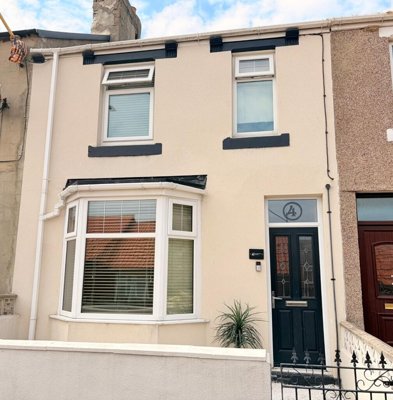
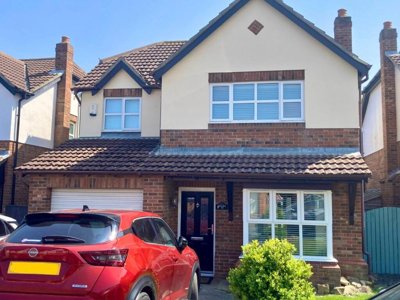
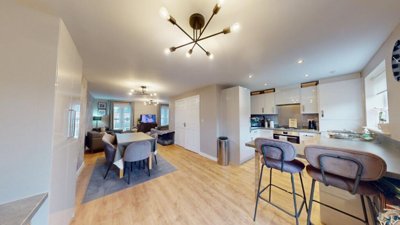
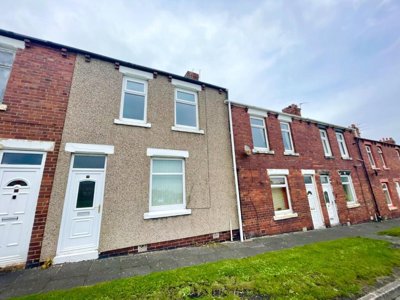
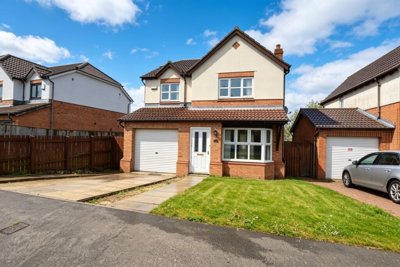
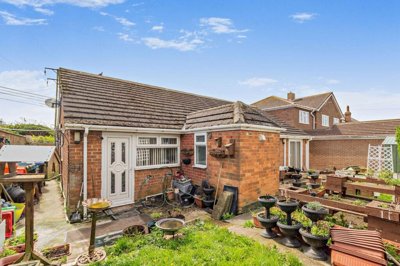
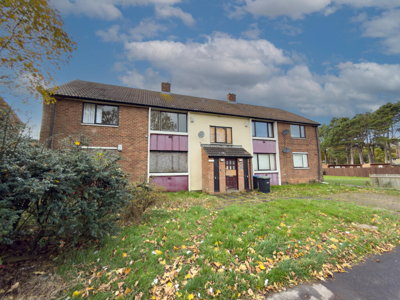
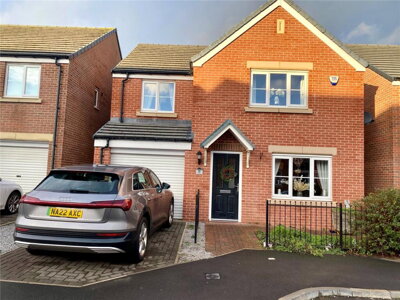
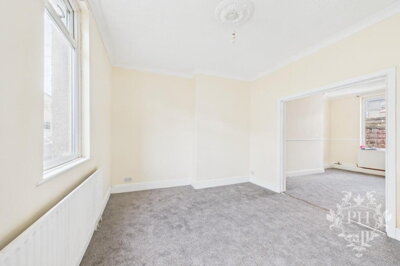
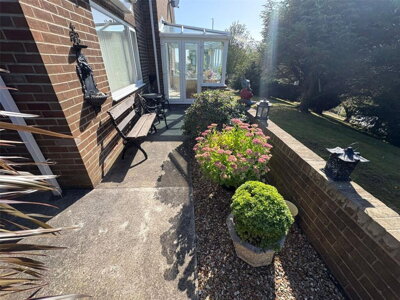
Browse 122 homes for sale in Easington Colliery from local estate agents.
The Easington Colliery property market offers exceptional affordability compared to national averages, making it an attractive option for buyers seeking value without compromising on coastal living. Current data shows detached properties averaging around £193,125, while semi-detached homes command approximately £115,000. Terraced properties, which form the backbone of the village's historic housing stock, typically sell for £68,000 to £73,500. Flats remain rare in the local market, with limited availability reflecting the predominantly house-based nature of the settlement. These prices position Easington Colliery well below the national median, offering significant purchasing power for buyers who might otherwise struggle to access coastal property ownership.
Recent market activity has been encouraging, with around 22 property sales recorded in the locality during 2025 and price growth of 5% to 8.1% over the past twelve months. County Durham's property market more broadly demonstrates resilience and steady growth, with rising property values indicating consistent demand and relative affordability compared to other UK regions. The local economy is supported by regeneration initiatives under the County Durham Inclusive Economic Strategy, which aims to create 10,000 new jobs and increase professional employment opportunities. This economic foundation should support continued housing demand in the area as more families discover the value proposition offered by Easington Colliery's property market.
New build activity in the vicinity includes Durham County Council's Housing Delivery Team developing 25 affordable homes on the former Easington School site on Seaside Lane. This development, featuring a mix of 2, 3, and 4-bedroom houses alongside bungalows and Tyneside flats, will provide much-needed affordable housing options. Planning application DM/25/03426/FPA has been approved, with construction underway by T Manners & Sons. For buyers seeking newly constructed properties, nearby developments such as Moorfield by Charles Church offer modern homes in the broader SR8 postcode area, providing options for those preferring newer build homes while still benefiting from the area's attractive pricing.

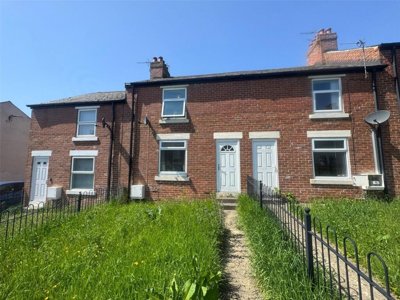
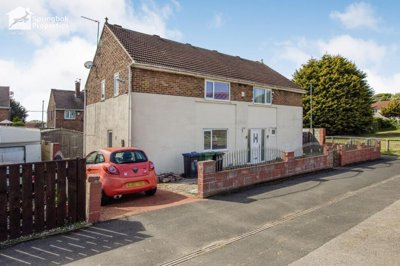
Easington Colliery was established in 1899 with the sinking of the coal mine, creating a planned village with distinctive numbered streets arranged in geometric patterns. The original housing consisted of traditional two-up-two-down terraced dwellings built to house mine workers, many of which still stand today as testament to the village's industrial heritage. Later phases of development added semi-detached and detached properties to the northern areas, creating a more varied streetscape. The village population stands at approximately 5,022 according to the 2011 Census, with more recent estimates placing the Easington Colliery North area at around 5,762 residents in 2021, maintaining a stable and sustainable community size that offers the benefits of a close-knit neighbourhood without the anonymity of larger towns.
The village sits on the Durham Heritage Coast, which is internationally recognised for its unique geology. Easington is the only place on earth where you will find dolomitic limestone cliffs along a coastline, creating dramatic scenery and important habitats for wildlife. The former colliery site has been reclaimed as a nature reserve, offering residents direct access to coastal walks and wildlife observation opportunities. The industrial estate on the land around the old station provides local employment, while the community maintains strong traditions and local events that reflect its mining heritage and coastal identity. Nearby Easington Village was designated a conservation area in 1974, containing Grade I listed buildings including St Mary's Parish Church and Seaton Holme, offering historical interest for residents and visitors alike.
The local economy reflects the post-industrial transition that has shaped many North East communities. Employment deprivation remains a challenge in the Easington Colliery North area, with significant portions of the population living in areas ranked among the top 10% most deprived nationally for employment. Child poverty rates show 27.6% of children under 16 living in relative poverty and 22.2% in absolute poverty according to recent figures, while an estimated 16% of households were in fuel poverty in 2020. However, the area also offers opportunities, with rock-bottom property prices enabling high rental yield potential for renovation projects. The County Durham Inclusive Economic Strategy aims to address these challenges through targeted investment and job creation programmes, with the Colliery site transformation demonstrating the community's capacity for renewal and regeneration.
Families considering a move to Easington Colliery will find a selection of educational establishments serving the local community. Primary education is available within the village and surrounding areas, with schools typically serving their immediate neighbourhoods. The local authority, Durham County Council, maintains several primary schools within reasonable distance of Easington Colliery, catering to children from reception through to Year 6. Parents should research individual school performance data and Ofsted ratings when considering specific properties, as catchment areas can influence school placement decisions. The village's stable population means schools generally have good knowledge of local demand and community needs, supporting consistent educational provision for families.
Secondary education options in the area include schools in nearby towns such as Peterlee and Hartlepool, which serve as major centres for post-primary education. Students in Easington Colliery typically travel to these larger settlements for secondary schooling, with school transport arrangements supporting this pattern. Several secondary schools in the wider East Durham area have developed strong reputations for academic achievement and extracurricular programmes, with schools in Hartlepool particularly accessible given the coastal route. Sixth form provision is available at secondary schools with sixth forms, while further education colleges in the region offer a broader range of vocational and academic courses for students completing their secondary education.
For families prioritising academic selection, the surrounding region includes grammar school options accessible through the local examination process. Durham and surrounding towns offer grammar school provision for students who meet the academic selection criteria, with exam centres available in nearby towns. Early planning is essential given the competitive nature of grammar school admissions, and parents should consider property locations within appropriate catchment areas when seeking to maximise their children's educational opportunities. Additional educational support services, including special educational needs provision, are coordinated through Durham County Council's education department, ensuring appropriate support is available for children with varying learning requirements.
Easington Colliery is well-connected to the wider North East region through a network of road and public transport links. The village sits close to the A19 trunk road, which provides direct access to major cities including Newcastle upon Tyne to the north and Teesside to the south. The A1086 road runs through nearby Easington Village, connecting residents to the coast and inland areas. For commuters working in larger regional centres, these road connections make Easington Colliery a viable base while maintaining access to broader employment markets. Driving times to Newcastle city centre are typically around 45 minutes, while Teesside is approximately 30 minutes away, making regular commuting feasible for those employed in these larger economic centres.
Public transport options include bus services connecting Easington Colliery to surrounding towns and villages, with routes linking to Peterlee where connections can be made to broader regional networks. The railway station at Easington Colliery closed with the decline of the mining industry, so rail travel requires travelling to nearby towns such as Hartlepool or Sunderland. These stations offer direct services to major destinations including Newcastle, Durham, and Middlesbrough, with Hartlepool providing particularly good connections along the east coast route. The lack of a direct rail link means that bus services or private vehicles remain important for daily commuting, though the coastal location does provide an appealing alternative to urban living for those who can work remotely or travel occasionally.
For those working from home or seeking flexible commuting options, superfast broadband availability has improved across the area, supporting remote working arrangements that reduce the need for daily travel. The village's position on the Heritage Coast means that travel to employment centres does involve some distance, but the lower property prices compared to major cities can offset these commuting costs. Many residents have found successful combinations of remote working and occasional office attendance, taking advantage of the quality of life offered by coastal living while maintaining career connections in regional cities. Parking availability in the village is generally good, reflecting its residential character and planned layout, and Crawlaw Road provides access to local amenities including the cemetery where the Grade II listed Disaster Memorial and War Memorial stand as poignant reminders of the village's heritage.
Before property viewings, research the local market thoroughly using resources like Homemove to understand price ranges for different property types in Easington Colliery. Obtain a mortgage agreement in principle from a lender to confirm your budget and demonstrate your seriousness to sellers when making offers. Consider the specific costs associated with mining heritage properties, including potential mining searches and insurance considerations. With median prices around £72,975, most properties fall well below the SDLT threshold, making budgeting straightforward for most buyers in this area.
Contact local estate agents to arrange viewings of properties matching your criteria in Easington Colliery. Take time to explore different neighbourhoods within the village, considering factors like proximity to amenities, school catchments, and transport links. View properties at different times of day to assess noise levels and neighbourhood character, particularly important given the coastal location where weather and seasonal factors can affect living conditions. The numbered street layout makes navigation straightforward, while newer northern developments offer different character to the historic colliery housing to the south.
Given Easington Colliery's predominantly older housing stock built from the late 19th century onwards, a RICS Level 2 Survey is highly recommended before purchase. This homebuyer report will identify any structural issues, damp problems, roof condition, or outdated electrics common in properties built from the colliery era through to the 1980s. Survey costs typically range from £380 to £629 depending on property value and size, with the investment particularly valuable given the age of much local housing stock. Our surveyors understand the specific construction methods used in North East colliery housing and can identify issues typical to properties built over historical mine workings.
Once your offer is accepted, instruct a conveyancing solicitor to handle the legal aspects of your purchase in Easington Colliery. They will conduct searches regarding mining records, flood risk, and local authority matters, and manage the transfer of ownership. Local knowledge is valuable given the area's mining heritage and any potential subsidence considerations, with the Coal Authority maintaining extensive records of historical workings. Your solicitor should obtain a Coal Mining Risk Assessment where appropriate and ensure buildings insurance can be arranged before completion.
Your solicitor will work with the seller's representatives to exchange contracts, at which point the sale becomes legally binding. A typical timeline from offer acceptance to completion is 8-12 weeks, though this can vary depending on searches and mortgage arrangements. On completion day, you will receive the keys to your new home in Easington Colliery and can begin enjoying everything this distinctive coastal village has to offer.
Properties in Easington Colliery require careful consideration of several local factors before purchase. The village's mining heritage means that properties are built over coal seams, and while there are no recent recorded incidents of subsidence from mine workings, buyers should be aware that Coal Mining Risk Assessments may be required for certain properties. The Coal Authority maintains records of historical mining activity, and your solicitor should conduct appropriate searches to identify any potential issues affecting the specific property you are considering. Understanding the property's position relative to former mine entries and sealed seams provides important context for maintaining the building and obtaining appropriate insurance cover.
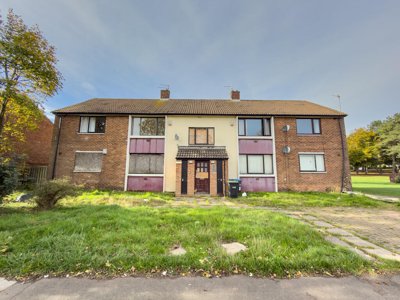
The age of the local housing stock means that many properties will have original features requiring attention or updating. Terraced colliery houses from the late 19th and early 20th centuries commonly feature local red brick construction with slate roofing, often including decorative brick banding details. Properties from the 1950s to 1980s are largely built of brick in muted tones such as buff and brown, sometimes with render finishes. These properties may have outdated electrical systems, aging plumbing, and original damp-proof courses that could require remediation. Roof condition should be assessed carefully given the age of many properties, with slate tiles particularly susceptible to degradation over time, and our surveyors will provide detailed assessments of these common issues.
Flood risk considerations for Easington Colliery include the coastal location and potential for surface water and groundwater flooding. While properties are generally located in Flood Zone 1 indicating low probability of river and sea flooding, local drainage patterns and groundwater conditions should be understood. Properties very close to the cliff edge may have long-term coastal erosion considerations, though this affects only a limited number of locations along the Heritage Coast. Your survey report should address any specific flood risk factors affecting the property, and buildings insurance costs may be influenced by these local risk factors, so obtaining quotes before completion is advisable for budgeting purposes.
Easington Colliery has two Grade II listed structures within the village cemetery on Crawlaw Road that reflect its significant historical importance. The Easington Colliery Disaster Memorial, erected in 1953-54 following the tragedy that claimed 83 lives, stands as a poignant reminder of the community's history and the risks faced by mining families. The Easington Colliery War Memorial, dating from 1926, commemorates local residents who lost their lives in military service. These listed structures contribute to the village's heritage character and demonstrate the community's commitment to preserving its history for future generations.
Nearby Easington Village, accessible via the A1086, was designated a Conservation Area in 1974 and contains buildings ranging from the 13th century to the present day. St Mary's Parish Church and Seaton Holme hold Grade I listed status, representing exceptional historical and architectural significance. Properties within or adjacent to conservation areas may be subject to additional planning controls and considerations. Any buyers interested in period properties or heritage considerations should consult with Durham County Council planning department regarding specific requirements that may affect renovation or alteration works.
Stamp Duty Land Tax (SDLT) rates in England for 2024-25 apply to all property purchases in Easington Colliery. For standard purchases, there is no SDLT on properties up to £250,000, with a 5% charge on the portion between £250,001 and £925,000. Properties priced between £925,001 and £1.5 million attract 10% on the portion above £925,000, while any portion above £1.5 million is charged at 12%. These thresholds apply to all residential property purchases in County Durham and throughout England, making Easington Colliery an attractive option for buyers seeking to minimise upfront purchase costs on properties priced within the zero-rate threshold.
First-time buyers benefit from increased thresholds under current SDLT relief. Qualifying first-time buyers pay no SDLT on properties up to £425,000, with a 5% charge on the portion between £425,001 and £625,000. Properties priced above £625,000 do not qualify for first-time buyer relief. Given that the median property price in Easington Colliery is around £72,975, the vast majority of properties fall well within the zero-rate threshold for both standard and first-time buyer purchasers, making this one of the most cost-effective places in England for property purchase from a tax perspective.
Additional buying costs include solicitor fees for conveyancing, which typically start from around £499 for standard transactions. Your solicitor will conduct essential searches including local authority checks, environmental searches, and mining records searches specific to the Easington Colliery area, with Coal Authority searches being particularly important given the local mining heritage. Survey costs range from £380 to £629 for a RICS Level 2 Survey on typical properties, rising for higher-value homes such as detached properties averaging around £193,125. Land Registry fees, mortgage arrangement fees, and moving costs should also be budgeted for, and factor in buildings insurance from completion date as properties in coastal and former mining areas may have specific insurance considerations that affect premium costs.
Average house prices in Easington Colliery range from approximately £62,000 to £93,000 depending on the data source, with a median price around £72,975 according to PropertyResearch.uk. Terraced properties typically sell for £68,000 to £73,500, semi-detached homes for approximately £115,000, and detached properties for around £193,000. Property prices have increased by approximately 5% to 8% over the past year, indicating a growing market with consistent demand. These prices are significantly below the national average, making Easington Colliery one of the most affordable coastal locations in England for property buyers seeking value for money.
Properties in Easington Colliery fall under Durham County Council's jurisdiction for council tax purposes. Council tax bands in County Durham follow the standard England valuation bands from A through H, with most terraced colliery housing typically falling into bands A to C due to lower property values in the village. Exact bands depend on the property's assessed value, and buyers can verify the specific band through the Valuation Office Agency website or listing details. Durham County Council sets annual rates based on these bands, with band A properties currently paying less than half of band H charges, making the local housing particularly affordable on an ongoing basis.
Easington Colliery and the surrounding East Durham area offer several primary schools serving the local community, with parents advised to research individual school performance data and recent Ofsted inspection results on the Ofsted website. Secondary education options include schools in nearby Peterlee and Hartlepool, with school transport arrangements supporting travel from Easington Colliery to these larger centres. The wider region includes grammar school options in Durham accessible through the 11-plus examination for academically selective education, with early registration recommended given competitive admissions processes. Parents should check current school Ofsted ratings and consider catchment area boundaries when selecting properties, as school places are allocated based on proximity in most cases.
Easington Colliery is connected to surrounding towns through local bus services linking to Peterlee, Hartlepool, and other nearby centres in County Durham. The nearest railway stations are in Hartlepool and Sunderland, offering direct services to Newcastle, Durham, and Middlesbrough for longer distance travel. The A19 trunk road provides road connections to major cities, with Newcastle approximately 45 minutes drive away and Teesside around 30 minutes. The village does not have its own railway station following closure of the original colliery railway, making private vehicles or buses the primary options for daily commuting to employment centres.
Easington Colliery offers compelling investment potential given its rock-bottom property prices combined with relatively stable sale volumes of around 22 properties per year. The area has shown consistent price growth of 5% to 8% annually, and rental yields can be strong for properties suitable for renovation or letting given the affordability that enables competitive rental pricing. The Durham County Council development of 25 affordable homes on the former school site indicates ongoing investment in the local area that may support property values. However, buyers should be aware of employment deprivation challenges in the area and should carefully assess tenant demand before investing, as local economic conditions affect rental market dynamics.
Most properties in Easington Colliery fall below the £250,000 SDLT threshold, meaning standard buyers pay zero stamp duty on purchases in this price range. First-time buyers benefit from relief up to £425,000, meaning virtually all properties in the area qualify for first-time buyer exemption from SDLT. Given that the median property price is approximately £72,975, the vast majority of transactions in Easington Colliery attract no SDLT whatsoever, making this an exceptionally cost-effective location for property purchase from a taxation perspective compared to higher-priced areas elsewhere in England. Your solicitor will calculate the exact SDLT liability based on your purchase price and circumstances.
Easington Colliery's mining history means properties are built over historical coal seams, and buyers should understand this context when purchasing in the village. The Coal Authority holds records of historical mine workings, and your solicitor will conduct appropriate searches including a Coal Mining Risk Assessment where appropriate to identify any potential risks. There are no recorded subsidence incidents within 50 metres of properties caused by coal mine workings since 1994, suggesting the historical risks are well-documented and managed through reserved areas underneath the village. Buildings insurance is available for properties in former mining areas, though premiums may vary compared to non-mining locations, and your solicitor should obtain quotes before completion to factor these costs into your budget.
From 4.5% APR
Compare competitive mortgage rates from trusted lenders
From £499
Expert legal services for your property purchase
From £380
Essential survey for older properties in the village
From £60
Energy performance certificate for your new home
Properties for Sale In London

Properties for Sale In Plymouth

Properties for Sale In Liverpool

Properties for Sale In Glasgow

Properties for Sale In Sheffield

Properties for Sale In Edinburgh

Properties for Sale In Coventry

Properties for Sale In Bradford

Properties for Sale In Manchester

Properties for Sale In Birmingham

Properties for Sale In Bristol

Properties for Sale In Oxford

Properties for Sale In Leicester

Properties for Sale In Newcastle

Properties for Sale In Leeds

Properties for Sale In Southampton

Properties for Sale In Cardiff

Properties for Sale In Nottingham

Properties for Sale In Norwich

Properties for Sale In Brighton

Properties for Sale In Derby

Properties for Sale In Portsmouth

Properties for Sale In Northampton

Properties for Sale In Milton Keynes

Properties for Sale In Bournemouth

Properties for Sale In Bolton

Properties for Sale In Swansea

Properties for Sale In Swindon

Properties for Sale In Peterborough

Properties for Sale In Wolverhampton

Enter your details to see if this property is within your budget.
Loans, cards, car finance
Estimated property budget
Borrowing + deposit
You could borrow between
Typical borrowing
Monthly repayment
Est. at 4.5%
Loan-to-value
This is an estimate only. Your actual budget may vary depending on interest rates, credit history, and personal circumstances. For an accurate affordability assessment, speak to one of our free mortgage advisors.
This calculator provides estimates for illustrative purposes only and does not constitute financial advice. Your home may be repossessed if you do not keep up repayments on your mortgage. Estimates based on 4.5% interest rate, repayment mortgage. Actual rates depend on your circumstances.
Homemove is a trading name of HM Haus Group Ltd (Company No. 13873779, registered in England & Wales). Homemove Mortgages Ltd (Company No. 15947693) is an Appointed Representative of TMG Direct Limited, trading as TMG Mortgage Network, which is authorised and regulated by the Financial Conduct Authority (FRN 786245). Homemove Mortgages Ltd is entered on the FCA Register as an Appointed Representative (FRN 1022429). You can check registrations at NewRegister or by calling 0800 111 6768.