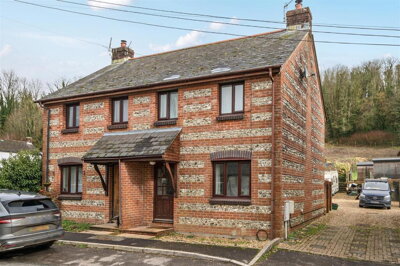
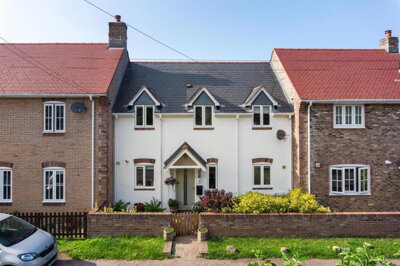
Browse 19 homes for sale in Alton Pancras from local estate agents.
The Alton Pancras property market presents a compelling opportunity for buyers seeking rural Dorset without the premium prices found in more sought-after locations. Our current data shows the average house price in Alton Pancras at £600,000 over the last year, though this figure reflects significant market variation. Historical data reveals that sold prices have decreased 61% compared to the previous year and sit 77% below the 2020 peak of £941,800, suggesting the market offers good value for those entering at this time. Properties on Main Road, the village's main thoroughfare, saw a particularly steep 66% decrease in average prices compared to the previous year, creating opportunities for buyers who act decisively when quality properties become available.
Property types available in Alton Pancras span the full spectrum of rural housing. Terraced properties like the one at 4 Boldacre on Main Road, which sold for £600,000 in November 2025, provide an affordable entry point into village life. Semi-detached homes, such as the property at 5 Holcombe Mead which achieved £600,000 in April 2024, offer more space for growing families. Detached properties command higher prices, with The Glebe House selling for £600,000 in February 2024 and Keepers Cottage reaching £600,000 in October 2023, reflecting the desirability of larger homes with gardens in this peaceful setting.
Notably, no new build developments exist within the Alton Pancras postcode area, meaning buyers purchasing here are acquiring properties with genuine character and history. The village housing stock predominantly consists of traditional Dorset construction, with period properties featuring local stone, flint, and brickwork that define the area's distinctive character. This lack of new build supply means demand consistently outstrips availability when quality properties come to market, making early registration with estate agents advisable for serious buyers. The village's location within the Dorset Area of Outstanding Natural Beauty further enhances its appeal, ensuring the surrounding landscape remains protected and unspoiled for generations to come.

Alton Pancras is a small but vibrant village community in the heart of rural Dorset, offering residents a peaceful lifestyle whilst remaining connected to larger towns and cities. The village character is quintessentially English, with a church at its centre, a traditional pub serving the community, and winding lanes lined with stone cottages and farmhouse properties. The village hall hosts regular events throughout the year, fostering the strong community spirit that defines life in this close-knit settlement. The area attracts those seeking an escape from urban life, including remote workers, retirees, and families looking for a safe, nurturing environment in which to raise children.
As a small rural community, Alton Pancras benefits from the economic influences of the wider Dorset region. The local economy is shaped by agriculture, with many farms in the surrounding area still operational, whilst tourism plays a supporting role given Dorset's popularity as a holiday destination. Local businesses and farm shops serve the village and neighbouring communities, creating a network of employment within a short distance. Residents often commute to Dorchester, approximately 10 miles away, for greater employment opportunities, larger shopping facilities, and access to healthcare services. The journey to Dorchester takes approximately 25 minutes by car via the A37, making regular commuting feasible for those working in the town whilst living in the peaceful village setting.
The surrounding landscape of Alton Pancras exemplifies the beauty of the Dorset Area of Outstanding Natural Beauty. Rolling chalk uplands, patchwork fields, and ancient hedgerows characterise the local environment, offering residents exceptional opportunities for walking, cycling, and outdoor recreation. The village sits at an elevation that provides pleasant views across the countryside whilst remaining accessible throughout the year. Scenarios footpaths and bridleways radiate from the village, connecting residents to neighbouring settlements including Cattistock, Sydling St Nicholas, and beyond. Community spirit remains strong in Alton Pancras, with village events, fetes, and social gatherings providing regular opportunities for neighbours to connect and forge lasting friendships.

Families considering a move to Alton Pancras will find educational options within reasonable driving distance, though the village itself does not have its own school. Primary education in the wider area is served by schools in nearby Cattistock and Sydling St Nicholas, both approximately 3-4 miles from Alton Pancras and accessible via country lanes. These village schools provide education for children from reception through to Year 6, with smaller class sizes often cited as a benefit of rural primary schooling. Parents should verify specific catchment areas and admission policies with Dorset Council, as school admissions can be competitive for popular village schools.
Secondary education options for Alton Pancras residents include schools in the Dorchester area, which is approximately 10 miles away and accessible via school transport routes operating along the A37. The journey from Alton Pancras to Dorchester's secondary schools takes approximately 25-30 minutes by school bus, with dedicated routes serving the outlying villages. Parents should research specific school catchments and admissions criteria when considering properties in Alton Pancras, as catchment areas can significantly impact school placement. Many families in the wider Dorset area choose to send children to schools in Dorchester or Yeovil, with independent schooling options also available for those seeking alternative educational approaches.
For families with older children requiring further education, the Weymouth and Dorchester area offers sixth form colleges and further education establishments. These institutions provide a range of academic and vocational courses, ensuring young people in the Alton Pancras area have access to continued education without necessarily travelling to larger cities. The nearest further education college is located in Dorchester, offering A-levels, vocational qualifications, and apprenticeship opportunities. Parents are encouraged to visit potential schools, speak with headteachers, and understand admission arrangements well in advance of any house purchase to ensure continuity of education for their children.

Transport connectivity from Alton Pancras reflects its rural village character, with residents typically relying on private vehicles for daily commuting whilst having access to bus services connecting to larger towns. The village sits approximately 10 miles north of Dorchester, Dorset's county town, via the A37 which passes through the nearby village of Buckland Newton. The journey to Dorchester by car takes approximately 25 minutes via the A37, making regular commuting feasible for those working in the town whilst living in the peaceful village setting. The A354 also provides an alternative route to Dorchester and on to Weymouth on the south coast.
For commuters travelling to major employment centres, the transport links from Dorchester offer regular train services to London Waterloo with journey times of approximately 2.5 hours. This makes Alton Pancras a viable base for workers who can travel to the capital occasionally or weekly, whilst enjoying the lifestyle benefits of rural Dorset the rest of the time. The nearest major motorway access is the A303, approximately 15 miles north, providing connections to the M3 and London via the A34, whilst also offering routes to Exeter and the South West. Bristol can be reached in approximately 1.5 hours by car, opening up additional employment and travel opportunities.
Local bus services operated by First Dorset and smaller local operators connect Alton Pancras with surrounding villages and Dorchester, providing essential access for those without private vehicles. These services typically operate at reduced frequencies compared to urban routes, so residents should check timetables carefully when planning journeys without a car. The X10 service connects the village to Dorchester and onwards to Yeovil, whilst other local routes serve the surrounding villages of Cattistock, Sydling St Nicholas, and Cerne Abbas. The nearest international airport is Bournemouth Airport, approximately 40 miles away, offering flights to European destinations and some UK routes, whilst Bristol Airport provides additional international travel options.

Before committing to a purchase in Alton Pancras, spend time exploring the village and surrounding area at different times of day and week. Our platform provides detailed sold price data, showing properties like terraced homes at £600,000 and detached properties reaching £600,000, helping you understand current market values. Visit local amenities, speak with residents about village life, and drive the route to Dorchester to assess your daily commute. The village sits within the DT2 7 postcode area, and understanding the relationship between Alton Pancras and nearby towns like Dorchester is essential for making an informed decision.
Speak with a mortgage broker or bank to obtain an Agreement in Principle before viewing properties. Having your financing confirmed strengthens your position when making offers and demonstrates to sellers that you are a serious buyer. Current interest rates vary, so comparison shopping is essential. SDLT (Stamp Duty Land Tax) thresholds also affect your budget calculation, with most properties in Alton Pancras falling below the £250,000 threshold where no SDLT applies for standard buyers.
Given the limited supply of properties in rural villages like Alton Pancras, register your interest with multiple estate agents operating in the DT2 7 area. Agents will notify you of new listings before they appear on major portals, giving you a competitive advantage. Properties in Alton Pancras sell quickly when correctly priced, so early notification is crucial. The village's location within the Dorset Area of Outstanding Natural Beauty maintains steady demand from buyers seeking rural properties.
View shortlisted properties with your agent, taking time to assess the property condition, garden space, and any renovation requirements. Properties in Alton Pancras often feature traditional construction methods and may require ongoing maintenance, so factor this into your assessment. Take photographs and notes to compare properties afterwards. Pay particular attention to the condition of traditional stone walls, flint work, and thatched roofs where applicable.
Once your offer is accepted, arrange a professional survey to assess the property condition thoroughly. Given the age of many properties in Alton Pancras, with much of the housing stock predating 1919, a thorough inspection is essential for identifying any structural issues, damp, or roof problems common in period properties. A RICS Level 2 Survey typically costs from £350 for standard properties, though larger or older properties may incur higher fees. The survey report provides valuable negotiating information if issues are identified.
Appoint a conveyancing solicitor to handle the legal aspects of your purchase, including local authority searches, contract review, and registration at the Land Registry. Your solicitor will liaise with the seller's representatives, and coordinate with your mortgage lender if applicable, to ensure a smooth transaction through to completion and key handover. Budget approximately £499 for conveyancing on a standard purchase, plus additional costs for searches and Land Registry fees.
Purchasing a property in Alton Pancras requires understanding the traditional construction methods that define the village's housing stock. Properties in this part of Dorset typically feature local building materials including Portland stone, Purbeck stone, flint, and traditional brick, with many homes dating from the 18th and 19th centuries. These materials require different maintenance approaches compared to modern construction, and buyers should understand the potential for issues such as damp penetration in solid wall constructions, timber deterioration in structural frames, and roof condition in properties that may not have been re-roofed for decades.
The geology of the surrounding Dorset countryside can affect properties in Alton Pancras, with clay soils present in some areas presenting potential shrink-swell risks that may impact foundations over time. Properties built on or near chalk uplands may have different foundation requirements, whilst those in valley locations may require investigation of drainage and any historical flooding. A thorough property survey by a qualified surveyor will identify any signs of movement or subsidence, which is particularly important given the age of much of the village housing stock. Buyers should request a copy of any previous survey reports from sellers where available.
Drainage and septic systems warrant particular attention in rural properties, as properties not connected to mains drainage will require regular maintenance of private systems. Service charges and maintenance arrangements for shared facilities should be clarified before purchase. Additionally, whilst specific flood risk data for Alton Pancras was not detailed in available research, buyers should obtain an environmental search to identify any flood risk, ground instability, or other environmental factors affecting the property. Properties located near watercourses or in lower-lying areas of the village may require particular attention to drainage and flood resilience measures.
Conservation considerations and planning restrictions may apply to properties in Alton Pancras, particularly those of historical significance or located within any designated conservation area. Properties in the village may include listed buildings requiring special permissions for alterations, and general planning permissions in this rural location may be subject to stricter controls than in urban areas. A local authority search will reveal any planning conditions, Tree Preservation Orders, or other restrictions affecting the property. Properties like The Rectory, The Glebe House, and traditional farmhouses along Main Road may have listed building status, requiring specialist advice before any renovation works.
The average property price in Alton Pancras over the last year was £600,000 according to home.co.uk listings data, with approximately 41 properties sold within this period. This figure represents a market correction, as historical sold prices show a 61% decrease compared to the previous year and sit 77% below the 2020 peak of £941,800. Property prices vary significantly by type, with terraced properties available from around £600,000, semi-detached homes reaching £600,000, and larger detached properties selling between £600,000 and £600,000 depending on size and condition. The current market conditions present opportunities for buyers entering the Alton Pancras property market at a favourable price point.
Properties in Alton Pancras fall under Dorset Council administration following the 2019 local government reorganisation. Council tax bands in Dorset range from A to H based on property value, with most traditional cottages and smaller homes in rural villages typically falling within Bands A to D, whilst larger detached properties and period homes may be assessed in higher bands. A typical semidetached property in Alton Pancras like 5 Holcombe Mead would likely fall into Band D or E, whilst larger detached homes such as The Glebe House at £600,000 may be assessed in higher bands. Prospective buyers should check the specific band for any property through the Dorset Council website or the listing details.
Alton Pancras itself is a small village without its own school, so children typically attend schools in surrounding villages and towns. Primary schools in the nearby area include those in Cattistock and Sydling St Nicholas, both small village schools serving the local community with typical intakes of 50-100 pupils. Secondary education is provided by schools in the Dorchester area, approximately 10 miles away, including The Gryphon School and Dorchester School, both accessible via school transport routes along the A37. Parents should verify specific catchment areas and admission policies with Dorset Council, as school admissions can be competitive. Independent schooling options are also available in the wider Dorset region for families seeking alternative educational provision.
Public transport connectivity from Alton Pancras is limited, reflecting its rural village status. The X10 bus service operated by First Dorset connects the village to Dorchester and onwards to Yeovil, though frequencies are typically limited to 2-3 services per day on weekdays with reduced weekend provision. The nearest railway station is in Dorchester, approximately 10 miles away, offering direct services to London Waterloo (2.5 hours), Bristol (1.5 hours), and Southampton (1 hour 20 minutes). Most residents rely on private vehicles for daily commuting and errands, with the village being accessible via the A37 and A354 roads connecting to the main road network.
Alton Pancras offers potential for property investment, particularly given the current average price of £600,000 which represents good value compared to the 2020 peak of £941,800. The village benefits from its location within the Dorset Area of Outstanding Natural Beauty and proximity to Dorchester, whilst the limited supply of properties for sale suggests demand will remain steady. Rental demand may be more limited given the village's small size, though families seeking village life and good primary schools may generate tenant interest. Investors should note the lack of new build supply, potential maintenance requirements for older properties, and the importance of understanding specific tenant requirements before purchasing for rental purposes.
Stamp Duty Land Tax (SDLT) rates for 2024-25 apply as follows: 0% on the first £250,000 of property value, 5% on £250,001 to £925,000, 10% on £925,001 to £1.5 million, and 12% on amounts exceeding £1.5 million. First-time buyers benefit from increased thresholds, paying 0% on the first £425,000 and 5% between £425,001 and £625,000. Given that most properties in Alton Pancras fall within the lower price brackets, with average prices at £600,000 and terraced properties available from £600,000, many buyers will benefit from reduced SDLT liabilities compared to purchasing in more expensive regions. A £600,000 purchase would incur zero SDLT for standard buyers and first-time buyers alike.
The housing stock in Alton Pancras predominantly consists of detached and semi-detached family homes, with a mix of period cottages and traditional farmhouses constructed from local stone and flint. Terraced properties are less common but do exist, typically in the form of workers' cottages or converted agricultural buildings. Recent sales data shows detached properties dominating the upper price brackets, with properties like The Glebe House (£600,000), Keepers Cottage (£600,000), and Rectory Cottage (£600,000) demonstrating the premium commanded by substantial period homes with land and gardens. Flats are extremely rare in the village, as the housing stock reflects its rural agricultural origins rather than any commercial or terraced development pattern.
Understanding the full costs of purchasing property in Alton Pancras is essential for budgeting effectively. Beyond the property purchase price, buyers should account for Stamp Duty Land Tax, legal fees, survey costs, and moving expenses. The good news for Alton Pancras buyers is that the current average property price of £600,000 places many properties within lower SDLT brackets, potentially reducing the tax burden compared to purchasing in more expensive regions of the UK. First-time buyers purchasing at this price point would pay no SDLT whatsoever, whilst standard buyers would also benefit from zero SDLT on purchases up to £250,000.
For standard buyers purchasing a property at the current average price of £600,000, Stamp Duty would be calculated at 0% on the first £250,000, resulting in no SDLT liability. This represents significant savings compared to purchasing property in London or the South East, where SDLT can add tens of thousands of pounds to the purchase cost. Properties at the upper end of the Alton Pancras market, such as The Glebe House at £600,000, would incur SDLT of approximately £17,500, whilst Keepers Cottage at £600,000 would attract SDLT of approximately £17,500. These figures remain modest compared to properties in more expensive locations.
Additional buying costs include mortgage arrangement fees, typically ranging from £0 to £2,000 depending on the lender and deal selected, whilst some lenders offer fee-free mortgages in exchange for slightly higher interest rates. Survey costs for a RICS Level 2 Survey typically start from around £350 for standard properties, though larger or older properties in Alton Pancras may incur higher fees due to increased inspection requirements. Conveyancing fees generally start from £499 for standard purchases, with additional costs for local searches, Land Registry fees, and disbursements typically adding £200-400. Removal costs vary based on distance and volume of belongings, whilst buildings insurance must be in place from the day of completion.

From 4.5% APR
From 4.5% APR get the best rates for your Alton Pancras purchase
From £499
Expert conveyancing solicitors for your Alton Pancras property purchase
From £350
Professional RICS Level 2 Survey for Alton Pancras properties
From £60
Energy Performance Certificate for your Alton Pancras home
Properties for Sale In London

Properties for Sale In Plymouth

Properties for Sale In Liverpool

Properties for Sale In Glasgow

Properties for Sale In Sheffield

Properties for Sale In Edinburgh

Properties for Sale In Coventry

Properties for Sale In Bradford

Properties for Sale In Manchester

Properties for Sale In Birmingham

Properties for Sale In Bristol

Properties for Sale In Oxford

Properties for Sale In Leicester

Properties for Sale In Newcastle

Properties for Sale In Leeds

Properties for Sale In Southampton

Properties for Sale In Cardiff

Properties for Sale In Nottingham

Properties for Sale In Norwich

Properties for Sale In Brighton

Properties for Sale In Derby

Properties for Sale In Portsmouth

Properties for Sale In Northampton

Properties for Sale In Milton Keynes

Properties for Sale In Bournemouth

Properties for Sale In Bolton

Properties for Sale In Swansea

Properties for Sale In Swindon

Properties for Sale In Peterborough

Properties for Sale In Wolverhampton

Enter your details to see if this property is within your budget.
Loans, cards, car finance
Estimated property budget
Borrowing + deposit
You could borrow between
Typical borrowing
Monthly repayment
Est. at 4.5%
Loan-to-value
This is an estimate only. Your actual budget may vary depending on interest rates, credit history, and personal circumstances. For an accurate affordability assessment, speak to one of our free mortgage advisors.
This calculator provides estimates for illustrative purposes only and does not constitute financial advice. Your home may be repossessed if you do not keep up repayments on your mortgage. Estimates based on 4.5% interest rate, repayment mortgage. Actual rates depend on your circumstances.
Homemove is a trading name of HM Haus Group Ltd (Company No. 13873779, registered in England & Wales). Homemove Mortgages Ltd (Company No. 15947693) is an Appointed Representative of TMG Direct Limited, trading as TMG Mortgage Network, which is authorised and regulated by the Financial Conduct Authority (FRN 786245). Homemove Mortgages Ltd is entered on the FCA Register as an Appointed Representative (FRN 1022429). You can check registrations at NewRegister or by calling 0800 111 6768.