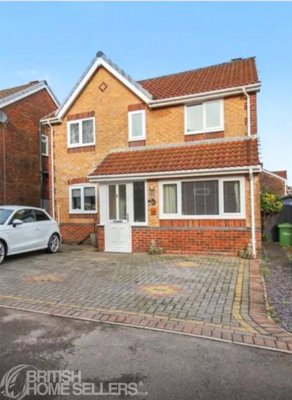
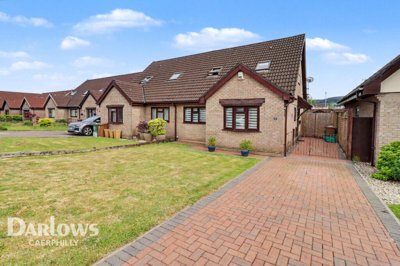
Caerphilly’s recent sales pattern is concentrated in the middle of the market. The £196,000-£242,000 price band has recorded 90 sales, while £242,000-£288,000 has recorded 71 sales. That is a useful signal for anyone selling a family house near Caerphilly town, Llanbradach or the routes towards Cardiff. Buyers have a clear frame of reference, so your agent’s valuation needs to sit within a believable local price story.
New homes are an active part of the Caerphilly market. Pen Y Castell by Persimmon Homes includes 3, 4 and 5-bedroom homes, with solar panels, EV charging and waste water heat recovery among the energy features. De Clare Gardens by Redrow offers 2, 3 and 4-bedroom homes on the slopes of Mynydd Meio. Those schemes affect resale pricing because buyers may compare older homes with new layouts, warranties and running-cost claims.
More development is also shaping buyer expectations across the county borough. The Virginia Park redevelopment includes 174 homes in Phase 1, with work set to begin early 2026 and first homes expected by the end of 2026. Phase 2 has planning permission for 163 homes in Caerphilly town, including housing for families, starter homes and downsizers. Nearly 45% of Phase 1 is designated as affordable housing, which adds another layer to local supply.
Smaller schemes matter too. Oakdale Place is planned as an ecovillage of 2, 3 and 4-bedroom homes with views across the Sirhowy Valley, while Bargoed Park Estate includes 50 affordable properties near Heol Coedcae, Heol Pencarreg and Western Drive. Aberbargoed has plans for 40 homes south of Bedwellty Road, with the scheme paused while affordable housing details are finalised. A good agent should understand how these nearby schemes change competition for older homes.











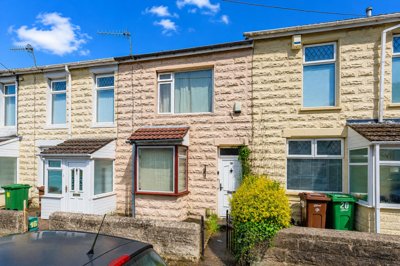
 Brinsons
-5d ago
Brinsons
-5d ago