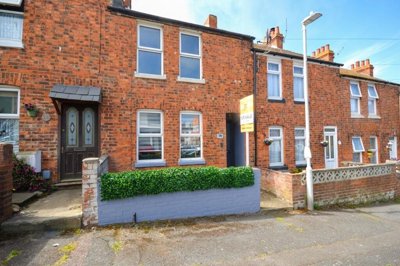
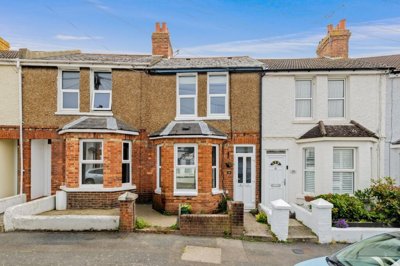
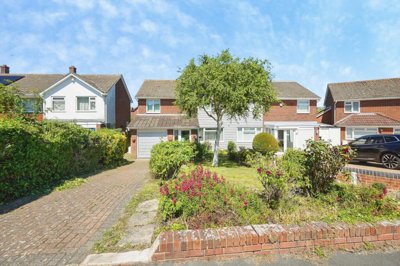
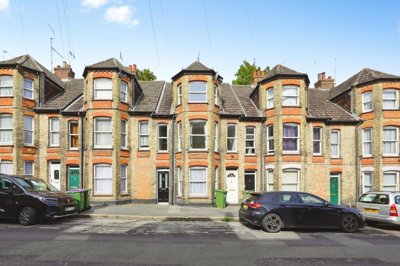
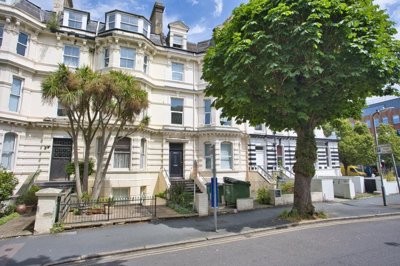
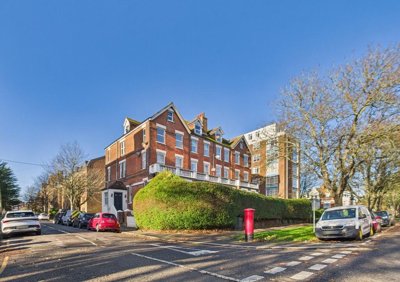
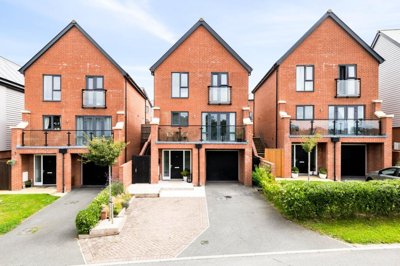
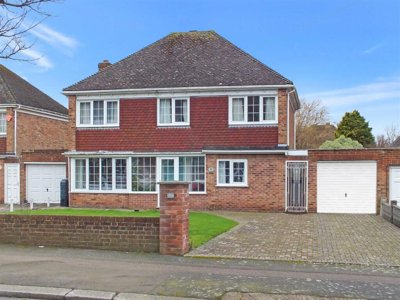
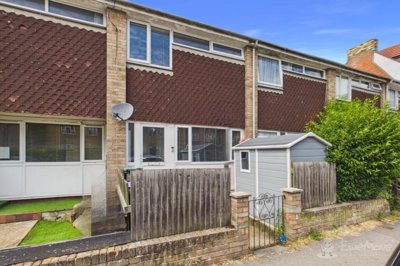
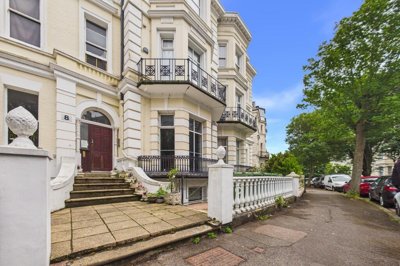
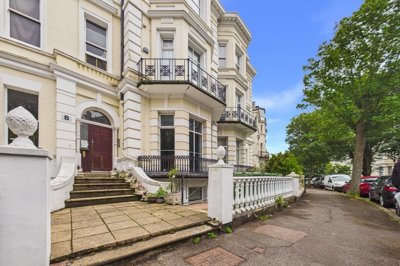
Folkestone has enough transaction volume to give sellers a practical benchmark, with 809 homes sold in the last 12 months. That activity is spread across terraced houses, semi-detached homes, detached properties, and a sizeable flat market. The local housing mix matters because a flat priced against a house, or a house priced against the wrong part of CT20, can sit on the market. Recent comparable evidence should guide the starting price.
New-build supply is also shaping buyer expectations around Shorncliffe Road and Radnor Park. Shorncliffe Place at Shorncliffe Road, CT20 2SS, by Pentland Homes, includes 2, 3 and 4 bedroom homes from £325,000. Napier Park at Shorncliffe Road, CT20 3GG, by Barratt Homes, lists 2, 3 and 4 bedroom homes from £314,995. Radnor Park, Folkestone, CT19 5NG, by Orbit Homes, also brings 2, 3 and 4 bedroom homes from £320,000.
Resale homes in Folkestone compete with those new-build schemes in different ways. A Victorian terrace may offer more internal character and a central position, while a new-build buyer may focus on energy efficiency and lower early maintenance. Around the harbour, apartment development changes the comparison set again. Your agent should show how they will position your property against both resale and new-build competition.











 Thomas & Partners
-3d ago
Thomas & Partners
-3d ago