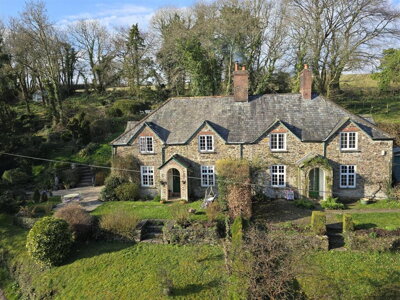
Kelly is a small village with a rich heritage, centred around the parish church of St Mary the Virgin, a significant Perpendicular Gothic structure dating largely to the 15th century with potential 14th-century origins in the chancel. The village name derives from the Old English word for a clearing in a wood, reflecting its ancient woodland setting. Kelly House, the historic manor, incorporates medieval, Tudor, and Georgian elements, with the present Georgian front added in 1742, showcasing the architectural evolution that characterises much of the village's housing stock.
The local economy shows distinctive working patterns, with 46.6% of the Kelly Parish population working mainly from home, well above national averages. This reflects the rural character and the ability of residents to commute electronically, while 58.7% are economically active and employed. The housing tenure split shows 45.3% of households owning their homes outright, 34% owning with a mortgage or shared ownership, and 18.9% in private rental accommodation, indicating a community with significant owner-occupier character.
The population of Kelly Parish stands at 158 residents according to 2024 estimates, with household composition showing 41.8% two-person households, 23.6% three-person, and 21.8% four or more persons. Only 12.7% of households are single-person, confirming the family-focused nature of the community. These demographics directly influence the type of properties in demand, with larger homes commanding premium prices in this tight-knit village.
Geologically, Devon presents varied conditions, and while specific geological data for Kelly village was not found, the county is generally susceptible to various flood risks due to its steeply sided valleys and rapid runoff after heavy rainfall. Properties in Kelly may be affected by surface water flooding, and prospective buyers should consider drainage and flood risk assessments. The presence of the River Tamar nearby adds to the environmental considerations for the area, though Kelly itself is inland enough to avoid direct coastal erosion concerns. Devon County Council manages flood risk from ordinary watercourses, groundwater, and surface water runoff as the Lead Local Flood Authority.











 Fine & Country
-12d ago
Fine & Country
-12d ago