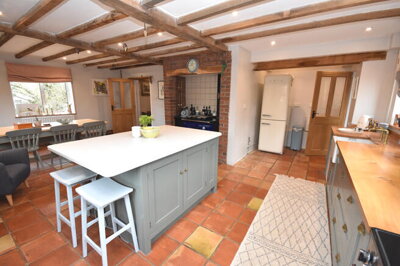
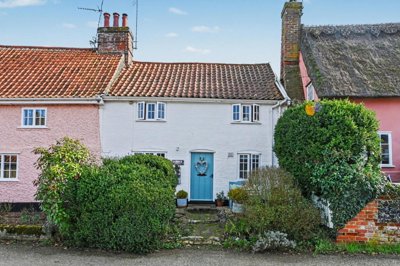
Cretingham embodies the quintessential English village, retaining what the conservation area appraisal describes as an "essentially unspoilt and tranquil quality." The parish, covering 668 hectares with a population density of just 62 people per square kilometre, offers genuine rural isolation while maintaining community cohesion through institutions like The Cretingham Bell public house and the local golf club. The population grew from 196 in 2011 to 207 in the 2021 census, indicating modest but steady interest in village living.
The village name derives from the Old English "grēot," meaning gravel, reflecting the underlying geology that historically supported extractive industries including gravel pits and sand pits. This gravelly composition, combined with the valley setting of the River Deben to the south, creates distinctive flood risk considerations for certain properties. The conservation area, designated in 1990 by Suffolk Coastal District Council, protects the historic core around The Street and the church, though recent development has "eroded this quality" according to the appraisal, creating "a more suburban environment" in some sections.
Local amenities include agricultural operations, holiday accommodation provision, and the pub which serves as a social hub. The proximity to Framlingham provides access to shops, schools, and services, while Woodbridge offers additional retail and transport connections. The area attracts professionals seeking remote working opportunities combined with countryside access, commuting to Ipswich or Norwich via the A12 and A14 corridors. Properties in Cretingham appeal to those prioritising privacy, character, and community over urban convenience.
The village's commercial character includes agricultural operations, The Cretingham Bell public house, and a golf club, along with local holiday accommodation provision. Historical employment centred on extractive industries including gravel, sand, and brick works, along with a traditional smithy. Today, the village supports remote workers and those employed in the wider East Suffolk area, with the A12 providing direct access to Ipswich and the A14 connecting to Cambridge and the Midlands.











 Clarke and Simpson
-16d ago
Clarke and Simpson
-16d ago