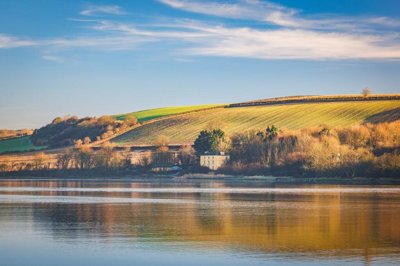
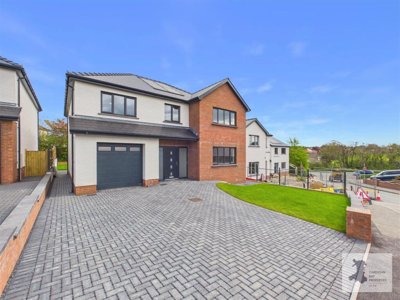
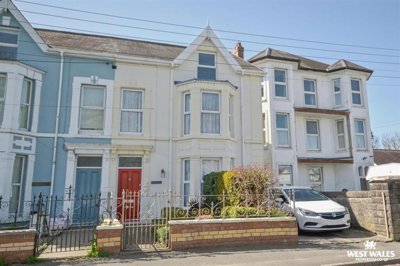
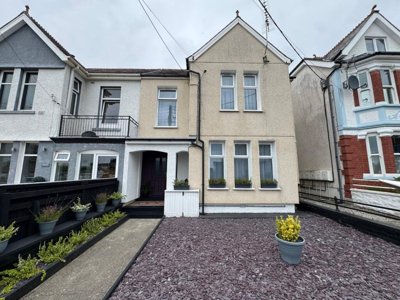
Cardigan, a historic town of approximately 4,216 residents according to the 2021 census, sits at the mouth of the River Teifi where it meets Cardigan Bay. The town's heritage is centred around the Norman castle, parts of which are incorporated into Castle Green House, a Grade II* listed building, and the Georgian architecture that dominates the town centre along High Street, Pendre, and St Mary's Street. The designated Conservation Area, established in 1989, encompasses 103 listed buildings, preserving the architectural character that makes Cardigan distinctive among west Welsh towns.
The local geology presents important considerations for property buyers. The bedrock consists of Ordovician and Silurian marine sedimentary rocks, primarily mudstone with sandstone beds, overlaid by glacial till and alluvial deposits. Properties in certain areas face potential shrink-swell risks associated with clay-rich superficial deposits, while landslips are mapped in coastal cliff areas with unconsolidated sediments. These geological factors are particularly relevant for properties built on or near the steep slopes surrounding the Teifi estuary, and we always recommend a thorough structural survey for properties in these locations.
Flood risk is a significant environmental consideration in Cardigan. The town has experienced several notable tidal flood events, particularly in 2007, 2008, 2012, and 2014, with areas including The Strand, St Mary Street, Mwldan, and the Cattle Market identified as vulnerable. Natural Resources Wales is developing a scheme to reduce tidal flood risk affecting approximately 90 homes and businesses in The Strand area. Prospective buyers should factor this into their property decisions and consider appropriate surveys that specifically address flood risk and ground stability.
The local economy centres on tourism, agriculture, and independent retail, with the Welsh language playing a significant cultural role as 45.3% of Ceredigion residents speak Welsh. Average salaries in Ceredigion stand at £27,500, while average house prices reach £288,292, creating affordability challenges for local buyers. Transport links include the A487 coast road connecting Cardigan to Aberystwyth and Carmarthen, with the nearest railway stations at Carmarthen and Aberystwyth. The town's position as a gateway to the Teifi Valley and Cardigan Bay beaches makes it attractive for both permanent residents and holiday let investors.
---NEXT---










 John Francis
-1d ago
John Francis
-1d ago