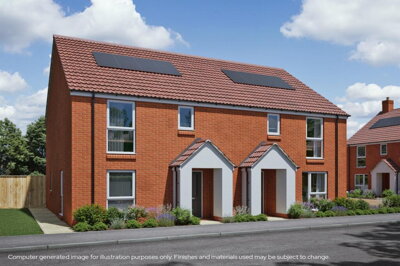
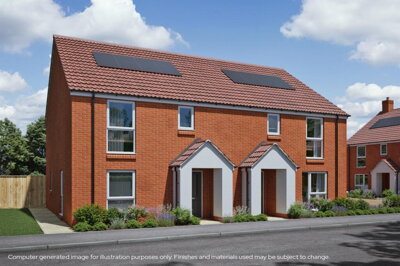
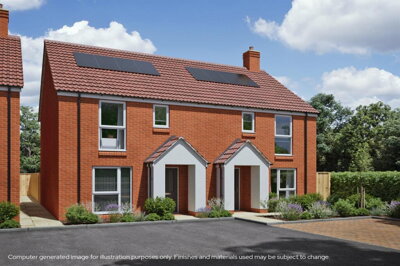
Browse 3 homes new builds in Winterborne Clenston from local developer agents.
The Winterborne Clenston property market offers detached, semi-detached, and terraced houses spanning various price ranges and neighbourhoods. Each listing includes detailed property information, photographs, and direct contact with the marketing agent.
The Fairford property market has demonstrated remarkable resilience and growth, with 43 residential property sales completing in the past twelve months according to Property Solvers data. The GL7 4 postcode sector, which covers Fairford and surrounding areas, recorded 116 property transactions over the same period, indicating robust market activity. Property values in the area have increased by 5.2% year-on-year, or 1.2% after adjusting for inflation, according to Housemetric research. This steady appreciation makes Fairford an attractive location for both homeowners seeking long-term value and investors looking for solid returns on Cotswold property.
Looking at the housing stock breakdown from the 2011 Census, Fairford's property composition reflects its traditional Cotswold character: 33.1% detached homes, 34.3% semi-detached, 25.4% terraced properties, and just 6.8% flats. This predominance of houses rather than apartments gives Fairford a distinctive family-focused character. The village had 1,462 households according to that census, with housing stock growing to 1,586 by September 2015, showing gradual expansion through planning permissions and natural turnover.
Terraced properties in Fairford typically command prices between £406,143 and £430,688, offering an accessible entry point to the Cotswold property market. Semi-detached homes provide excellent value at approximately £367,589 to £405,500, making them popular among families looking for more space without venturing into premium detached pricing. Detached homes remain the most sought-after property type, with average prices reaching £604,692 to £625,795, reflecting the generous plots and village character these properties offer. Flats in Fairford are relatively scarce, with limited availability pushing average prices to around £164,167 for the few apartments that come to market.

Fairford is a thriving market town with a population of approximately 3,236 residents according to the 2011 Census, a figure that has grown to an estimated 4,339 by 2024 according to recent demographic studies. The broader Fairford and Lechlade on Thames electoral division encompasses 11,024 residents, demonstrating the area's significance within the Cotswold District. The town centre features a traditional market place surrounded by independent shops, cafes, and pubs that reflect the strong sense of community character that makes village living so appealing.
Residents enjoy access to essential amenities including a dentist, GP practice, Fairford Community Hospital, and opticians, ensuring healthcare needs are well catered for locally. The town has lower levels of deprivation compared to both England and Gloucestershire averages, indicating a prosperous and well-served community. A lower proportion of working-age residents receive unemployment benefits in the electoral division compared to national rates, suggesting economic stability. RAF Fairford serves as a significant local employer, contributing to the area's economic diversity alongside tourism generated by the village's heritage and natural beauty.
The architecture throughout Fairford is characterised by its distinctive sand-coloured Cotswold stone, with over 100 listed buildings creating a beautifully preserved streetscape. Properties on Croft Terrace, Milton Street, Coronation Street, the High Street, London Street, Market Place, and Park Street feature prominently in the listed building inventory. The town has a designated Conservation Area, established in January 1970 and reviewed in May 1990, ensuring the historic character is protected for future generations. The River Coln flows through the town, providing scenic walks and contributing to the rural charm that makes Fairford so appealing to buyers.

Education provision in Fairford is a significant draw for families considering a move to the area, with highly-rated schools serving students at every level. Fairford Church of England Primary School provides excellent early education within the village itself, giving young children the advantage of quality schooling close to home. The school maintains strong relationships with the community, reflecting the town's heritage through its Christian values-based approach to education. Parents consistently praise the school's nurturing environment and academic standards.
For secondary education, Farmor's School serves Fairford and the surrounding villages, offering a comprehensive curriculum and strong academic results. The school provides education from ages 11 through to sixth form, meaning students can complete their secondary education locally without the need for daily travel to larger towns. The Church of England affiliation of both institutions reflects the town's heritage and commitment to values-based education within a caring community environment. Farmor's has earned recognition for its exam results and student development programmes.
The Cotswold District, which includes Fairford, maintains high standards across its schools, with Ofsted ratings consistently showing the majority of institutions performing at good or outstanding levels. For families with older children considering further education, nearby Cirencester offers additional secondary options and sixth form provision, while Cheltenham and Gloucester provide further education colleges and specialist training. The strong school network in Fairford contributes significantly to property values in the area, with homes within good catchment zones commanding a premium from buyers prioritising educational access for their children.
Fairford benefits from its position within the Cotswolds while maintaining reasonable transport connections to larger urban centres. The town lies approximately 12 miles east of Cirencester, the nearest larger town, and provides access to the broader road network via the A417 and A419. These arterial routes connect Fairford to Gloucester and Swindon, offering commuting options for those working in regional centres. The village maintains regular bus services connecting residents to surrounding towns, though private transport remains the primary method for most daily commuting needs.
For those travelling to London or other major destinations, the nearest railway stations are located in Swindon and Kemble, offering connections to the capital and beyond. The journey time from Swindon to London Paddington is approximately one hour, making regular commuting feasible for those whose employers offer flexible working arrangements. Kemble station, while smaller, provides a quieter alternative with parking facilities. The A417 provides direct access to the M4 motorway, connecting Fairford to Bristol and Reading, while the A419 links to the M5 for travel towards Birmingham and the North.
Cycling infrastructure in the area continues to improve, with scenic country lanes popular among recreational cyclists and commuters alike during suitable weather conditions. The village has adequate parking for residents, an important practical consideration for those who drive to work. Parking at Fairford's local amenities and train stations requires planning, with Kemble offering free parking and Swindon providing both street and car park options. For commuters working from home several days per week, Fairford's transport connections make the village a practical base.
Start by exploring our platform for properties listed in Fairford, comparing prices across different estate agents and developments. Consider the range from period Cotswold stone cottages to new builds like Fairford Green and Old Yells Yard, noting which property types suit your budget and lifestyle needs. The housing stock spans centuries of construction, from 17th-century buildings in the Conservation Area to contemporary homes with A-rated energy efficiency.
Before viewing properties, obtain a mortgage agreement in principle from a lender to understand your borrowing capacity. For a typical Fairford property at £494,690, most buyers require a substantial mortgage, and lenders will assess your income, debts, and credit history. Current SDLT thresholds mean first-time buyers pay nothing on properties up to £425,000, while additional SDLT of 3% applies to second homes. Speaking to a mortgage broker can help you secure the best rate for your circumstances.
Visit properties that match your criteria, paying attention to the specific characteristics of Fairford properties including construction materials, flood risk considerations, and proximity to the River Coln. New developments like Old Yells Yard offer modern energy efficiency with features such as solar panels and enhanced insulation, while period properties provide traditional charm but may require more maintenance. Take notes on the condition of stonework, roof coverings, and any signs of damp or structural movement.
Given Fairford's significant number of historic and listed properties, a thorough survey is essential. These typically cost £400-900 depending on property size and value, with older properties potentially incurring additional charges due to their construction complexity. The survey will check for common issues in older Cotswold properties including damp, subsidence risk from clay soils, and structural concerns. Properties over 50 years old benefit particularly from professional inspection.
Appoint a conveyancing solicitor to handle the legal aspects of your purchase, including local searches checking flood risk, planning restrictions in the Conservation Area, and any local authority obligations. Your solicitor will investigate the title deeds, check for any restrictions affecting the property, and ensure all documentation is in order. Exchange contracts once all checks are satisfactory, with completion typically following within 28 days.
Fairford's distinctive character stems largely from its traditional Cotswold stone construction, with buildings featuring the characteristic sand-coloured limestone that defines the area's visual identity. Traditional properties in the village were constructed using ashlar blocks, precisely cut stones laid in regular courses with lime mortar pointing. This construction method, typical of the Cotswolds region, creates buildings of remarkable durability, with many structures dating back to the 17th, 18th, and 19th centuries still standing in excellent condition. The quality of the original craftsmanship means these buildings have weathered centuries of seasonal changes.
The geology underlying Fairford is complex, featuring superficial deposits of sands and gravels overlying bedrock of mudstone and limestone. The floodplain around the village contains soils with clay elements, which are impermeable and contribute to drainage challenges. Properties built on these clay soils face shrink-swell risk, where the clay contracts during dry periods and expands when wet, potentially affecting foundations. This geological factor is particularly relevant for older properties that may have shallower foundations than modern standards require.
Lime mortar, used in traditional construction before the widespread adoption of Portland cement in the 20th century, allows buildings to breathe, absorbing and releasing moisture naturally. This flexibility helps prevent moisture buildup that can lead to structural problems. When renovating period properties in Fairford, using lime mortar rather than cement is essential for maintaining compatibility with the original construction. Properties within the Conservation Area require particular care with renovation work, as inappropriate materials or methods can cause damage to historic fabric.
Given Fairford's wealth of older properties, buyers should be aware of common defects encountered during property surveys in the village. Rising damp is frequently found in period properties without modern damp-proof courses, where moisture travels up through porous stone or brickwork. Penetrating damp can occur through ageing Cotswold stone, particularly where pointing has deteriorated or where driving rain affects exposed elevations. Our inspectors regularly identify these issues in traditional buildings, along with problems caused by previous owners using inappropriate modern materials that trap moisture.
Roof defects represent another common finding in Fairford properties, with broken or missing stone tiles, sagging rooflines, and deteriorated ridge mortar all occurring with some regularity. Hidden valley gutters, common in Victorian and Edwardian construction, can develop leaks that cause timber decay in concealed areas. Chimney stacks on older properties may show signs of movement or deterioration, with tilted chimneys indicating potential structural issues requiring professional assessment. The condition of the roof covering and hidden timbers should be thoroughly examined before purchase.
Timber defects including rot and woodworm occur in properties where moisture has affected structural or finish timbers. Ground floor joists in older buildings may show signs of dry rot or wet rot, particularly in areas with poor ventilation or where plumbing leaks have gone unnoticed. Our team checks for deflecting timbers, damaged air bricks, and other signs of timber deterioration that could require significant remediation. Electrical systems in period properties often require upgrading to meet modern safety standards, with original wiring posing fire risks in older homes.
Buyers considering property in Fairford should be aware of the area's flood risk profile, which is an important factor in the due diligence process. Fairford has a history of flooding from the River Coln, which runs through the village centre, with records of multiple flooding incidents over the years. The town is located in an Area Susceptible to Groundwater Flooding according to Cotswold District Council assessments, and the River Coln at Fairford is a designated flood warning area. The narrow Coln valley leads to fast runoff, with the floodplain widening at Fairford to pose significant flood risk to properties in low-lying areas.
The presence of clay soils in Fairford creates a shrink-swell risk that can affect property foundations, particularly during periods of extreme weather as climate change increases temperature variations. Large trees near properties can exacerbate this risk by drawing moisture from the soil, so a professional survey should assess foundation conditions and any signs of movement. Cracked walls, uneven floors, and doors that do not close properly can indicate foundation problems requiring investigation. Properties within the Fairford Conservation Area, which includes many of the most desirable homes, are subject to additional planning controls that affect permitted development rights.
The mix of housing types in Fairford includes both freehold houses and leasehold properties, particularly in modern apartment developments. Understanding the terms of any lease, including ground rent provisions and service charges, is crucial before committing to a purchase. Service charges in Cotswold villages can be higher than urban equivalents due to the cost of maintaining historic structures and communal areas. New developments like Fairford Green feature contemporary construction with solar panels, EV charging points, and enhanced insulation achieving EPC ratings of A, offering lower running costs for energy-conscious buyers. Older properties may have EPC ratings of D or E, requiring consideration of upgrade costs when budgeting.
Understanding flood risk is essential for anyone buying property in Fairford, given the village's location on the River Coln floodplain. The urbanised floodplain around Fairford means that rainfall on roofs, pavements, and roads is collected by the Coln with almost no absorption into the groundwater, increasing surface water runoff during heavy rainfall. The narrow Coln valley leads to fast runoff, and where the floodplain widens at Fairford, water spreads across a larger area, affecting properties that might seem distant from the river channel. Groundwater levels are frequently high in low-lying areas associated with the Coln alluvial corridor.
Thames Water undertook drainage improvements in the East End area in 2017, clearing drains and Court Brook to reduce localised surface water flooding risk. However, sewage system capacity remains a consideration for some properties, and the planning application for 98 homes by Cala Homes west of Hatherop Road raised concerns from Fairford Town Council specifically about sewage capacity. Infiltration Sustainable Drainage Systems are generally unsuitable in Fairford because additional infiltration could raise groundwater levels and increase the potential for groundwater flooding, given the high water table in wet seasons.
Fairford sits within the Upper Thames Valley area, which has a low to moderate flood risk from rivers, the sea, surface water, and groundwater. However, long-term flood risk is possible, and climate change projections suggest more frequent extreme weather events could increase flood frequency and severity. Before purchasing, buyers should check the Environment Agency flood maps, review any property-specific flood history, and consider the flood risk assessment from Cotswold District Council's Strategic Flood Risk Assessment. Properties in high-risk areas may face difficulties obtaining insurance or mortgage finance.
The average house price in Fairford is currently around £494,690 according to Zoopla data, with Rightmove reporting similar figures of approximately £486,207. Detached properties command the highest prices at around £604,692 to £625,795, while semi-detached homes typically sell for £367,589 to £405,500. Terraced properties average between £406,143 and £430,688, and the limited flat supply in the village averages around £164,167. Property prices in Fairford have risen by approximately 9% over the past twelve months, indicating strong demand for homes in this sought-after Cotswold location.
Properties in Fairford fall under Cotswold District Council's jurisdiction for council tax purposes, with the district's council tax bands ranging from A to H depending on property value. Most Fairford properties fall into bands B through F, with larger detached houses and period properties often in higher bands due to their market value. Council tax bills include charges for Gloucestershire County Council, Cotswold District Council, and the local police authority. Prospective buyers should check the specific council tax band for any property they are considering, as this forms part of the ongoing costs of homeownership in the village.
Fairford offers excellent educational provision with Fairford Church of England Primary School serving younger children with a strong local reputation and convenient village location. For secondary education, Farmor's School is the main provider for Fairford families, offering comprehensive education from ages 11 to 18 with strong academic outcomes. Both schools maintain their Church of England affiliations, providing values-based education within a community setting. Parents should check current catchment areas and admissions policies, as these can affect placement eligibility for specific properties.
Fairford is primarily a car-dependent village, though bus services connect residents to nearby towns including Cirencester and Swindon for essential journeys. The nearest railway stations are in Swindon and Kemble, providing direct services to London Paddington with journey times of approximately one hour from Swindon. The A417 and A419 roads connect Fairford to the motorway network, giving access to the M4 for travel to Reading, Bristol, and London, and the M5 for journeys towards Birmingham. For commuters, the transport connections make Fairford practical for those who drive to work or work from home for several days each week.
Fairford has shown consistent property value growth, with prices rising approximately 9% year-on-year, making it an attractive option for property investment in the Cotswolds. The limited supply of homes for sale, combined with strong demand from buyers seeking village living, supports continued price appreciation. New developments like the Cala Homes site west of Hatherop Road with 98 homes, and the Rainier Developments outline application for up to 80 homes east of London Road, will add to supply. Rental yields in the Cotswolds tend to be moderate, with the primary investment appeal coming from capital growth rather than rental income.
Stamp Duty Land Tax applies to all property purchases in England, with current thresholds of 0% for purchases up to £250,000, 5% between £250,001 and £925,000, 10% between £925,001 and £1.5 million, and 12% for any amount above £1.5 million. For a typical Fairford property priced at £494,690, a standard buyer would pay approximately £12,234 in SDLT. First-time buyers benefit from relief on purchases up to £425,000, paying 0% on the first £425,000 and 5% between £425,001 and £625,000. An additional 3% SDLT surcharge applies to second homes and buy-to-let properties.
Fairford has seen exciting new development activity in recent years, with several projects adding modern homes to the village while respecting its historic character. The Fairford Green development by Acorn Property Group on Horcott Road offers thirty-four 1-5 bedroom homes, with the first phase called The Meadows comprising seventeen properties. These new homes feature contemporary specifications including solar PV panels, EV charging points, underfloor heating, and enhanced insulation achieving EPC ratings of A. A three-bedroom semi-detached home on this development is priced at £570,000, offering excellent energy efficiency credentials for environmentally conscious buyers.
Old Yells Yard by Hills Homes on Cirencester Road provides eight or nine new properties ranging from 2-5 bedrooms, situated in the heart of Fairford within walking distance of the high street. The development is designed to complement the adjacent 18th-century listed buildings within the Fairford Conservation Area, incorporating sustainable features alongside traditional aesthetics. Prices range from £535,000 for a three-bedroom end-terrace to £735,000 for a four-bedroom detached home. This development demonstrates how new construction can work alongside heritage rather than replacing it.
Looking ahead, Cala Homes has received planning permission for 98 homes on land west of Hatherop Road, including an increased number of affordable dwellings to meet local housing needs. Rainier Developments has submitted an outline application for up to 80 homes east of the town south of London Road, with 40% affordable housing and space for a community shop. The older properties at Fairford Green include the restoration of Grade II listed Coln House, Applestone Court, and The Cottages, blending historic architecture with modern living requirements. Buyers choosing new build properties benefit from manufacturer warranties, energy-efficient designs that reduce utility bills, and the certainty of modern construction methods free from the defects common in older properties.
Understanding the full costs of buying property in Fairford is essential for budgeting effectively, with Stamp Duty Land Tax forming a significant element of the total expense. For a typical Fairford property priced at the current average of £494,690, a standard buyer would pay SDLT of 0% on the first £250,000 plus 5% on the remaining £244,690, totaling approximately £12,234. First-time buyers would benefit from full relief on the first £425,000, meaning no SDLT would be payable on properties at or below this threshold. This relief represents substantial savings for buyers entering the market for the first time in this price range.
Beyond SDLT, buyers should budget for survey costs, with a RICS Level 2 Survey for a typical Fairford home priced between £400,000-600,000 costing approximately £600-900. Given that Fairford has a high proportion of older properties, including many listed buildings and those constructed with traditional methods, a thorough survey is particularly valuable. Older properties, those with non-standard construction, or listed buildings may incur additional survey fees. Solicitor fees for conveyancing typically range from £500-1,500 depending on complexity, with additional costs for local searches, land registry fees, and electronic money transfer charges.
Ongoing costs after purchase include council tax, with most Fairford properties falling into bands B through F depending on value and type. Buildings insurance is essential for all properties, with period homes potentially requiring higher coverage due to rebuild costs for traditional construction. Service charges and ground rent apply to any leasehold properties, while freehold houses require budgeting for maintenance and repairs to roofs, drainage, and structural elements. Energy costs should be considered alongside EPC ratings, as older Cotswold stone properties may have higher heating requirements than modern equivalents, while new builds with A-rated specifications offer significantly lower ongoing utility expenses.
Properties New Builds In London

Properties New Builds In Plymouth

Properties New Builds In Liverpool

Properties New Builds In Glasgow

Properties New Builds In Sheffield

Properties New Builds In Edinburgh

Properties New Builds In Coventry

Properties New Builds In Bradford

Properties New Builds In Manchester

Properties New Builds In Birmingham

Properties New Builds In Bristol

Properties New Builds In Oxford

Properties New Builds In Leicester

Properties New Builds In Newcastle

Properties New Builds In Leeds

Properties New Builds In Southampton

Properties New Builds In Cardiff

Properties New Builds In Nottingham

Properties New Builds In Norwich

Properties New Builds In Brighton

Properties New Builds In Derby

Properties New Builds In Portsmouth

Properties New Builds In Northampton

Properties New Builds In Milton Keynes

Properties New Builds In Bournemouth

Properties New Builds In Bolton

Properties New Builds In Swansea

Properties New Builds In Swindon

Properties New Builds In Peterborough

Properties New Builds In Wolverhampton

Enter your details to see if this property is within your budget.
Loans, cards, car finance
Estimated property budget
Borrowing + deposit
You could borrow between
Typical borrowing
Monthly repayment
Est. at 4.5%
Loan-to-value
This is an estimate only. Your actual budget may vary depending on interest rates, credit history, and personal circumstances. For an accurate affordability assessment, speak to one of our free mortgage advisors.
This calculator provides estimates for illustrative purposes only and does not constitute financial advice. Your home may be repossessed if you do not keep up repayments on your mortgage. Estimates based on 4.5% interest rate, repayment mortgage. Actual rates depend on your circumstances.
Homemove is a trading name of HM Haus Group Ltd (Company No. 13873779, registered in England & Wales). Homemove Mortgages Ltd (Company No. 15947693) is an Appointed Representative of TMG Direct Limited, trading as TMG Mortgage Network, which is authorised and regulated by the Financial Conduct Authority (FRN 786245). Homemove Mortgages Ltd is entered on the FCA Register as an Appointed Representative (FRN 1022429). You can check registrations at NewRegister or by calling 0800 111 6768.

We use cookies to show you personalised content and improve your experience of our website. Find out more in our Privacy policy and Cookie policy.