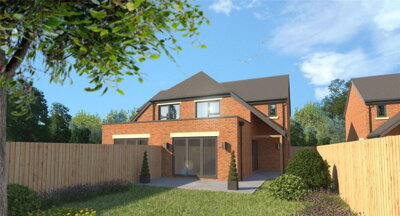
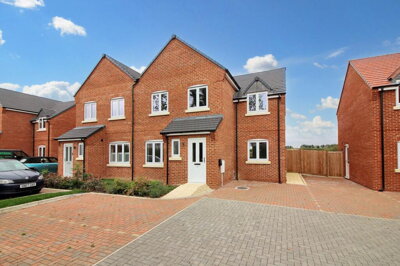
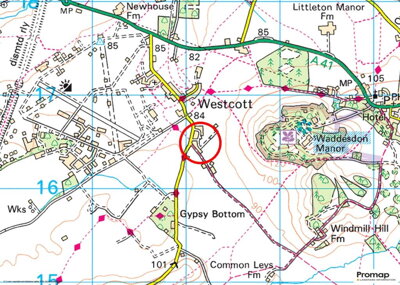
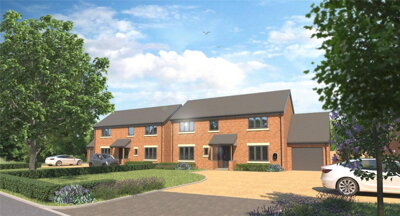
Browse 4 homes new builds in Westcott, Buckinghamshire from local developer agents.
The Westcott property market offers detached, semi-detached, and terraced houses spanning various price ranges and neighbourhoods. Each listing includes detailed property information, photographs, and direct contact with the marketing agent.
£530k
5
0
111
Source: home.co.uk
Showing 5 results for Houses new builds in Westcott, Buckinghamshire. The median asking price is £530,000.
Source: home.co.uk
Semi-Detached
3 listings
Avg £461,667
Detached
2 listings
Avg £637,500
Source: home.co.uk
Source: home.co.uk
The Staunton Coleford property market is characterised by a predominance of detached homes, which command an average price of £456,750. Semi-detached properties are also readily available, with an average price of £381,500, making them an attractive option for families seeking more space without the premium associated with detached homes. Terraced properties in the village offer a more accessible entry point to the local market, averaging around £244,250, providing an excellent opportunity for first-time buyers or those seeking a smaller footprint. Flats remain rare in the immediate Staunton Coleford area, with most flat listings in the wider Coleford vicinity appearing in the rental sector rather than for sale.
Recent sales data indicates 12 properties have changed hands in Staunton Coleford over the past 12 months, with 60 sales recorded in the broader Coleford area. The market has shown resilience despite broader economic headwinds, with the 6% year-on-year price increase demonstrating sustained demand for properties in this desirable Forest of Dean location. Property types available include traditional cottages dating back to 1902, indicating a healthy supply of period homes with character features that appeal to buyers seeking authentic period architecture.
The GL16 8PD postcode area specifically has seen property prices rise by 5.3% over the past year, while the neighbouring GL16 8EA postcode shows prices remain 6% below the 2023 peak of £445,000. This variation across different postcode sectors demonstrates why buyers should research specific areas within the broader Staunton Coleford locality when evaluating property values. Our platform provides up-to-date listings and recent sales data to help you make informed decisions based on current market conditions rather than historical averages.
One notable characteristic of the Staunton Coleford property market is the limited supply of new-build properties. No active new-build developments specifically within the Staunton Coleford postcode area could be verified, meaning most available stock consists of existing properties with established histories. This scarcity of new supply helps support property values over time and makes the village particularly appealing to buyers who appreciate traditional architecture and established neighbourhoods over modern developments.

Staunton Coleford embodies the essence of Forest of Dean living, offering residents a tranquil village atmosphere with a strong sense of community. The village is designated as a conservation area, which means the architecture reflects traditional building styles using local stone and brick materials that have characterised the region for generations. This preservation commitment ensures the village maintains its historic charm while providing residents with homes that possess genuine character and architectural merit. The area attracts families, professionals, and retirees alike, drawn by the quality of life that rural Gloucestershire provides.
The local economy benefits from tourism generated by the Forest of Dean and Wye Valley, with many residents also commuting to nearby towns for work. The Wye Valley, designated as an Area of Outstanding Natural Beauty, draws visitors throughout the year to explore ancient woodlands, riverside walks, and historic sites. This tourism support helps sustain local businesses, pubs, and services that might otherwise struggle in such a small rural community. Residents enjoy access to these amenities while maintaining the peaceful residential environment that defines village life here.
The Forest of Dean is renowned for its complex geology, which includes coal measures, sandstones, and limestones that have shaped both the landscape and local building traditions. This geological diversity contributes to the distinctive character of the area, with properties often featuring locally sourced materials that reflect the natural environment. Outdoor enthusiasts particularly value the proximity to extensive forest walks, cycling trails, and natural attractions that define the Forest of Dean character. The area offers some of the finest mountain biking trails in the country, while fishing, kayaking, and wildlife watching provide year-round recreational opportunities.
Residents benefit from good road connections to the Welsh border and the surrounding network of towns, making it practical for daily commuting while still providing the peaceful residential environment that village living offers. The proximity to Monmouth, just 4 miles away, provides access to a wider range of shops, restaurants, and cultural amenities without requiring a longer journey to larger centres. Many residents find that Staunton Coleford offers the ideal balance between rural tranquility and practical access to employment, education, and services.
Families considering a move to Staunton Coleford will find several educational options within easy reach of the village. Primary education is available through schools in the surrounding Forest of Dean area, with many small rural schools providing excellent teacher-to-pupil ratios and a nurturing environment for younger children. The nearby town of Coleford hosts primary schools serving the local community, while secondary education options include schools in both Gloucestershire and Monmouthshire, providing families with choices across both English and Welsh education systems.
The village's status as a conservation area means many families are attracted to the traditional community values and outdoor lifestyle that Staunton Coleford supports. Parents frequently cite the quality of local primary schools and the safe, traffic-free environments that allow children to explore their surroundings independently. The Forest of Dean provides an exceptional outdoor classroom, with schools often incorporating forest school activities, nature walks, and environmental education into their curricula. This connection between education and the natural environment is particularly valued by families seeking a balanced upbringing for their children.
For families prioritising educational outcomes, the proximity to both Coleford and Monmouth secondary schools provides flexibility in school selection, with both locations offering established academic programmes and extracurricular activities. Monmouth schools operate under the Welsh education framework, which some families prefer for its different curriculum emphasis and assessment methods. Sixth form and further education opportunities are available in the larger towns of the region, including Gloucester and Cheltenham for those seeking more specialist provision, with regular bus services making these options accessible for older students.
When purchasing property in Staunton Coleford, families should verify current school catchment areas and admission policies with the local education authority, as these can change and may affect which schools your child can access. Many buyers specifically target postcodes close to good and outstanding-rated schools, which can also influence property values and future resale potential. Our listings include information about nearby schools to help you identify properties that meet your family's educational requirements.
Staunton Coleford benefits from excellent road connections that make commuting practical for residents who work in surrounding towns and cities. The village sits within the GL16 postcode area, with the A48 providing a direct route towards Gloucester and the M5 motorway beyond. Journey times to Gloucester typically take around 40 minutes by car, while Bristol is accessible within approximately one hour via the M5. The proximity to the Welsh border means that Monmouth is just 4 miles away, offering additional employment and shopping opportunities across the border.
Public transport options include bus services connecting Staunton Coleford with Coleford and surrounding villages, though those commuting daily may find a car essential for flexibility. Bus routes in rural areas often operate on limited timetables, making them more suitable for occasional trips to market towns rather than daily commuting. The nearest railway stations are located in Lydney and Gloucester, providing connections to the national rail network for longer commutes or leisure travel. Lydney station offers direct services to Cheltenham Spa and Gloucester, while Gloucester provides broader connections including to London Paddington.
Cyclists appreciate the forest trails and quieter country lanes that make cycling a viable option for local journeys. The Forestry Commission maintains an extensive network of cycle paths suitable for all abilities, from family-friendly trails to challenging mountain biking routes. For longer distances, the flat terrain along the Severn estuary provides opportunities for cycling towards Bristol or across to Wales. Parking availability in the village is generally good, with most properties offering off-street parking, addressing a common concern for rural areas.
The village's position near the A48 also provides convenient access to the M48 Severn Bridge, opening up travel options to South Wales including Cardiff and Newport. This connectivity makes Staunton Coleford particularly attractive to buyers who work in either England or Wales, effectively doubling their employment options. For those who travel further afield for work, Bristol Airport provides international flight connections within approximately 90 minutes' drive, making overseas travel practical from this rural location.
The Forest of Dean has a rich history of coal mining that stretches back centuries, and this mining heritage has direct implications for property buyers in Staunton Coleford. While specific mining subsidence records for the Staunton Coleford postcode were not available in current databases, the broader Forest of Dean region has documented historic coal mining activity that prospective buyers should investigate. Understanding the potential for mining-related issues is essential when purchasing period properties in this area, as old mine workings can affect ground stability and foundation conditions.
Properties in Staunton Coleford are typically constructed using traditional building methods, with local stone and brick materials that were common when many homes were built during the Victorian and Edwardian periods. The age of housing stock, including properties dating from 1902 and earlier, means that foundations may have been constructed before modern building regulations and engineering standards were established. A RICS Level 2 survey can help identify signs of ground movement, subsidence, or other structural concerns that might relate to historical mining activity or natural geological conditions.
The complex geology of the Forest of Dean, including coal measures, sandstones, and limestones, can create varied ground conditions across even small areas. Clay soils, which are present in parts of Gloucestershire, can cause shrink-swell movement affecting foundations, particularly during periods of drought or when trees are present near properties. Prospective buyers should discuss these geological considerations with their surveyor, who can assess whether specific site investigations might be advisable for particular properties.
Our recommended surveyors are experienced with Forest of Dean properties and understand the local mining history and geological conditions that affect properties in this area. They can advise whether a standard Level 2 survey is sufficient or whether a more detailed structural inspection might be warranted based on the property's construction, age, and location. This local expertise ensures you receive accurate information about any ground-related concerns before committing to your purchase.
Explore our listings to understand property types, prices, and availability in Staunton Coleford. With an average price of £399,200 and detached properties averaging £456,750, knowing your budget helps narrow your search effectively. Take time to compare similar properties across different postcode sectors within the GL16 area, as price variations can be significant between neighbouring streets.
Before arranging viewings, secure a mortgage agreement in principle from a lender. This strengthens your position when making offers and demonstrates you are a serious buyer with financing in place. Given the older property stock in Staunton Coleford, some lenders may require properties to meet specific valuation criteria, so discussing this with your broker early can prevent delays later.
Visit properties that match your requirements, taking time to assess the condition of older homes, check for signs of damp, and evaluate the conservation area restrictions that may affect any future modifications. Pay particular attention to roof conditions, as period properties often have aging roofs that require significant maintenance or replacement.
Given the age of many properties in Staunton Coleford, with homes dating back to 1902, a comprehensive Level 2 survey is essential to identify any structural issues, roof concerns, or outdated electrics and plumbing before you commit. For properties in this Forest of Dean location, the survey should specifically address potential mining heritage concerns and traditional construction methods used locally.
Appoint a solicitor experienced with conservation area properties and Forest of Dean titles to handle the legal work, including local searches and any heritage considerations that may apply. Your solicitor should obtain mining records searches and advise on any local authority planning constraints that might affect the property.
Once surveys are satisfactory and legal work is complete, exchange contracts with the seller and arrange your completion date. Your solicitor will handle the final funds transfer and registration, including notifying the local council of your change of ownership for council tax purposes.
Purchasing a property in Staunton Coleford requires awareness of several area-specific factors that differ from standard urban property searches. The village falls within a conservation area, which means any external alterations, extensions, or significant renovations will require planning permission from the local authority. Prospective buyers should factor in these restrictions when evaluating properties, particularly those wishing to modernise or expand period homes. Listed buildings, if present, carry additional requirements and may necessitate consent from heritage authorities before any works can proceed.
The traditional construction methods used in Staunton Coleford properties bring specific considerations that differ from modern buildings. Properties built from local stone and brick typically feature solid walls rather than cavity construction, which affects insulation performance and moisture management. These solid wall properties often require different approaches to retrofitting insulation and managing condensation compared to post-war cavity wall construction. Buyers should factor in potentially higher heating costs compared to modern equivalents, particularly for uninsulated solid wall properties.
Given the Forest of Dean mining heritage, buyers should investigate potential mining-related issues that could affect property foundations or structural integrity. While specific mining subsidence data for Staunton Coleford was not available in current records, the broader Forest of Dean region has historic coal mining activity, and local surveys should address ground stability concerns. The age of the housing stock, including properties from 1902 and older traditional construction using local stone and brick, means maintenance issues such as damp, roof condition, and outdated electrical systems are realistic considerations. A thorough RICS Level 2 survey becomes particularly valuable for these period properties.
Electrical and plumbing systems in older Staunton Coleford properties often require updating to meet current standards. Rewiring may be necessary for properties that have not been updated since the original construction, as outdated electrical systems present safety risks and may not meet insurance requirements. Similarly, plumbing in period properties may use galvanised steel or lead pipes that require replacement. Buyers should obtain quotes for any necessary updates as part of their budget planning, setting aside funds for essential modernisation work that may be needed shortly after purchase.
The average house price in Staunton Coleford currently stands at £399,200 based on sales over the past 12 months. Detached properties average £456,750, semi-detached homes average £381,500, and terraced properties average £244,250. House prices have increased by 6% year-on-year, though they remain 16% below the 2023 peak of £473,462, presenting potential opportunities for buyers who missed the previous market high. The GL16 8PD postcode specifically shows a 5.3% annual increase, indicating sustained demand across different parts of the village.
Properties in Staunton Coleford fall under Forest of Dean District Council jurisdiction, with council tax bands assigned based on property valuation. Exact bands vary by property, with traditional stone cottages and smaller terraced homes typically falling in bands A through C, while larger detached family homes often occupy bands D through F. Buyers should check the specific band with the estate agent or solicitor during the conveyancing process, as bands affect annual running costs and can range from approximately £1,400 to £3,000 per year depending on the property value and band.
Staunton Coleford is served by primary schools in the surrounding Forest of Dean area, with several good and outstanding ratings available within a short drive including schools in Coleford and the nearby villages. The nearby town of Coleford provides additional primary options, while secondary education is available through schools in both Gloucestershire and Monmouthshire, with the cross-border proximity giving families the advantage of choosing between English and Welsh education systems. Families should verify current catchment areas and admission policies with the local education authority before purchasing, as school places can be competitive in popular areas.
Bus services connect Staunton Coleford with Coleford and surrounding villages, though frequency may be limited on less popular routes, with some services running only two or three times daily on certain days. The nearest railway stations are in Lydney and Gloucester, providing connections to the national rail network for travel to Bristol, Cheltenham, and London. Most residents rely on private vehicles for daily commuting, with the A48 providing good access to Gloucester and the M5 motorway beyond, though the village's position near the Welsh border also offers alternative routes through Monmouthshire.
Staunton Coleford offers solid investment potential given its conservation area status, limited new build supply, and desirable Forest of Dean location. The 6% annual price increase demonstrates sustained demand, while the shortage of flats and smaller properties means rental demand is likely strong given the area's popularity with professionals and families. The proximity to both Coleford and Monmouth, combined with tourism in the Wye Valley, supports long-term property values, though buyers should factor in conservation restrictions that limit development potential and any potential mining heritage issues when evaluating returns.
For properties priced at the average of £399,200, standard stamp duty rates apply, with the threshold currently set at 0% on the first £250,000 and 5% on the portion between £250,001 and £925,000. First-time buyers benefit from an increased threshold of 0% on the first £425,000, meaning most first-time buyers purchasing at the average Staunton Coleford price would pay no SDLT at all on properties within this range. Properties above £925,000 incur higher rates, with additional bands of 10% and 12% applying to portions above £925,000 and £1.5 million respectively.
The Forest of Dean has a documented history of coal mining, which means prospective buyers should investigate potential mining-related issues when purchasing properties in Staunton Coleford. While specific subsidence records for the village were not available, the broader region's mining heritage means that ground stability should be considered during survey work. A RICS Level 2 survey can assess visible signs of movement or subsidence, and your solicitor should obtain mining records searches as part of the conveyancing process. For properties showing any signs of structural concern, a more detailed structural engineer's report may be advisable before proceeding with purchase.
Properties in Staunton Coleford predominantly feature traditional construction methods that reflect the local building materials and skills available when most of the village was constructed. The use of local Forest of Dean stone and handmade bricks creates buildings with distinctive character that differ significantly from modern construction. These traditional materials have proved durable over more than a century of use, though they require different maintenance approaches compared to modern cavity wall construction.
The solid wall construction common in Staunton Coleford properties means that walls are typically 200-300mm thick, providing good thermal mass but requiring careful consideration of insulation options. Modern double glazing can be fitted to period properties, though care must be taken to ensure compatibility with traditional window styles expected in a conservation area. Many properties retain original features such as sash windows, exposed beams, and stone fireplaces that contribute to their character but may require ongoing maintenance.
Roof construction in older Staunton Coleford properties typically uses traditional cut timber rafters rather than modern truss systems. These traditional roofs were designed to be accessed for maintenance and often incorporate original clay tile or slate coverings that may have been partially replaced over the years. The condition of the roof structure and covering should be a key focus during any property survey, as roof replacement can represent a significant cost for period properties.
Foundations in traditional properties were typically constructed using local stone or brick footings, with depths determined by traditional practice rather than modern engineering calculations. While many such foundations perform well, the interaction between traditional foundations and local soil conditions can sometimes cause movement over time. Properties showing any signs of cracking or distortion should be investigated by a structural engineer before purchase, particularly given the potential for mining-related ground movement in this part of the Forest of Dean.
From £350
A comprehensive survey ideal for properties in Staunton Coleford's older housing stock. Identifies structural issues, damp, and defects common in period properties.
From £85
Energy performance certificate required for all property sales. Provides ratings for traditional properties which may have higher heating costs.
From 4.5%
Compare mortgage rates and find the right product for your Staunton Coleford purchase.
From £499
Expert solicitors handling conservation area properties and local searches in the Forest of Dean area.
Understanding the full cost of purchasing property in Staunton Coleford extends beyond the advertised asking price. Stamp Duty Land Tax (SDLT) is a significant consideration, with rates currently set at 0% on the first £250,000 of residential purchases, 5% on the portion from £250,001 to £925,000, 10% on the next £575,000, and 12% on any amount exceeding £1.5 million. For the average Staunton Coleford property of £399,200, standard buyers would pay SDLT of £7,460, calculated as £0 on the first £250,000 plus 5% on £149,200.
First-time buyers benefit from increased thresholds, paying 0% on the first £425,000 and 5% on the portion between £425,000 and £625,000, meaning most first-time buyers purchasing at the average Staunton Coleford price would pay no SDLT at all. This first-time buyer relief can represent a significant saving compared to standard rates, making the local property market more accessible for those entering the housing market. Properties priced above £625,000 would incur SDLT even for first-time buyers, with the amount depending on the final purchase price.
Beyond stamp duty, buyers should budget for solicitor conveyancing fees typically ranging from £499 to £1,500 depending on complexity, plus disbursements for local searches, land registry fees, and bankruptcy checks. Local searches in the Forest of Dean area include drainage and water searches, environmental searches that can reveal mining records, and local authority searches that identify planning constraints affecting the property. Given the conservation area status of Staunton Coleford, additional enquiries may be required to address heritage considerations.
Survey costs for a RICS Level 2 homebuyer report generally start from around £350, though older properties like those in Staunton Coleford may require more detailed inspections. For period properties with complex construction or potential structural concerns, a full RICS Level 3 building survey might be more appropriate despite the higher cost. Additional costs include mortgage arrangement fees, which can range from £0 to £2,000 depending on the lender and product selected. Removal costs, estate agent fees if you are selling simultaneously, and potential renovation costs should also be factored into your budget. Given that Staunton Coleford properties often require maintenance or modernisation, setting aside a contingency fund equivalent to 10-15% of the purchase price is prudent for unexpected works discovered after purchase. Our recommended mortgage and conveyancing partners can provide transparent quotes to help you plan your total budget accurately.

Properties New Builds In London

Properties New Builds In Plymouth

Properties New Builds In Liverpool

Properties New Builds In Glasgow

Properties New Builds In Sheffield

Properties New Builds In Edinburgh

Properties New Builds In Coventry

Properties New Builds In Bradford

Properties New Builds In Manchester

Properties New Builds In Birmingham

Properties New Builds In Bristol

Properties New Builds In Oxford

Properties New Builds In Leicester

Properties New Builds In Newcastle

Properties New Builds In Leeds

Properties New Builds In Southampton

Properties New Builds In Cardiff

Properties New Builds In Nottingham

Properties New Builds In Norwich

Properties New Builds In Brighton

Properties New Builds In Derby

Properties New Builds In Portsmouth

Properties New Builds In Northampton

Properties New Builds In Milton Keynes

Properties New Builds In Bournemouth

Properties New Builds In Bolton

Properties New Builds In Swansea

Properties New Builds In Swindon

Properties New Builds In Peterborough

Properties New Builds In Wolverhampton

Enter your details to see if this property is within your budget.
Loans, cards, car finance
Estimated property budget
Borrowing + deposit
You could borrow between
Typical borrowing
Monthly repayment
Est. at 4.5%
Loan-to-value
This is an estimate only. Your actual budget may vary depending on interest rates, credit history, and personal circumstances. For an accurate affordability assessment, speak to one of our free mortgage advisors.
This calculator provides estimates for illustrative purposes only and does not constitute financial advice. Your home may be repossessed if you do not keep up repayments on your mortgage. Estimates based on 4.5% interest rate, repayment mortgage. Actual rates depend on your circumstances.
Homemove is a trading name of HM Haus Group Ltd (Company No. 13873779, registered in England & Wales). Homemove Mortgages Ltd (Company No. 15947693) is an Appointed Representative of TMG Direct Limited, trading as TMG Mortgage Network, which is authorised and regulated by the Financial Conduct Authority (FRN 786245). Homemove Mortgages Ltd is entered on the FCA Register as an Appointed Representative (FRN 1022429). You can check registrations at NewRegister or by calling 0800 111 6768.

We use cookies to show you personalised content and improve your experience of our website. Find out more in our Privacy policy and Cookie policy.