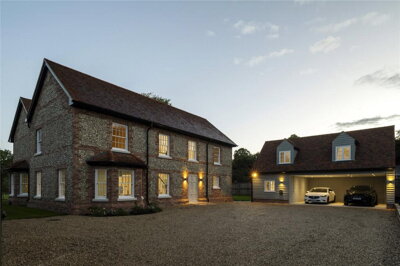
Browse 1 home new builds in West Hagbourne from local developer agents.
The West Hagbourne property market offers detached, semi-detached, and terraced houses spanning various price ranges and neighbourhoods. Each listing includes detailed property information, photographs, and direct contact with the marketing agent.
Claygate's property market offers a compelling mix of architectural styles and property types, with detached homes commanding the highest prices at an average of £1,273,019. The village's housing stock reflects its evolution from a traditional Surrey hamlet into a prosperous commuter settlement, with 45.4% of properties being detached houses, 26.5% semi-detached, 13.9% terraced, and 14.2% apartments. This distribution makes Claygate particularly attractive to families seeking larger homes with gardens, while the apartment options provide accessible entry points into this desirable postcode. The high proportion of detached properties sets Claygate apart from many similar-sized villages in the surrounding area.
Over the past 12 months, Claygate has seen approximately 100 property transactions, with prices showing a modest adjustment of -2.48%. This stability reflects the resilient nature of the local market, driven by consistent demand from London commuters and local families upgrading or downsizing within the area. Semi-detached properties average £707,810, while terraced homes offer more accessible pricing at around £579,000. Flats in Claygate average £358,667, making them an attractive option for first-time buyers or investors seeking rental income in this well-connected location. The market has proven resilient despite broader economic pressures, largely due to the limited supply of properties and the enduring appeal of the village lifestyle.
Property age distribution in Claygate reveals that 15.3% of homes were built pre-1919, 23.8% between 1919-1945, 38.1% between 1945-1980, and 22.8% post-1980. This means the majority of properties fall into the older categories, which often display traditional Surrey brickwork in red and brown tones, slate or clay tile roofs, and solid wall construction in the earliest properties. Understanding the age and construction of a property helps buyers anticipate potential issues such as outdated electrics, original windows, or period features that may require maintenance or upgrading.

Claygate village centre clusters around The Green, a historic village green that serves as the focal point for community life and hosts regular events throughout the year. The village has been designated as a Conservation Area in parts of the centre, protecting the architectural heritage of properties surrounding The Green and neighbouring roads including The Avenue, Hare Lane, and parts of Ockford Road. This conservation status ensures that the village retains its distinctive character, with many period properties built in traditional Surrey brickwork styles featuring red and brown tones that complement the rural setting. Several listed buildings add to the architectural interest of the area.
The village is home to approximately 7,006 residents across 2,689 households, creating a close-knit community atmosphere while still offering good amenities. Local shops include a traditional butcher, baker, independent convenience stores, and a selection of cafes and pubs serving the community. The popular Hare Lane area features several independent businesses, while the village hall provides a venue for community events and activities. The surrounding countryside, including Access Land and public footpaths, provides beautiful walking routes through Surrey's wooded landscapes, with connections to the wider countryside towards Esher Common and the River Mole.
The Claygate Cricket Club and local sports facilities offer recreational activities, while proximity to Esher's larger retail options and Kingston's comprehensive shopping centre means residents have easy access to wider amenities. For families, the village benefits from several local play areas and sports clubs, creating plenty of opportunities for children to socialise and stay active. The strong community spirit is evident through regular events including the annual village fair, farmers markets, and seasonal celebrations held at The Green throughout the year.
Education provision in Claygate caters to families with children of all ages, with several well-regarded primary schools within easy reach. The village's position within Elmbridge places it near some of Surrey's highest-performing schools, though specific catchment areas and admission criteria should be verified with the local education authority. St. Lawrence Primary School in the nearby village of Effingham Junction serves some Claygate families, while several other primary schools in surrounding villages have established reputations for providing excellent education. Parents are advised to check current admission arrangements with Surrey County Council as these can change annually.
Many Claygate families access schools in neighbouring Esher, Cobham, or Thames Ditton, all of which have strong reputations for academic achievement and Ofsted ratings. The renowned Esher Church of England High School provides secondary education for many local families, while independent school options in the wider area include celebrated institutions with strong academic records. For families considering grammar school education, Surrey's selective testing process provides access to highly regarded grammar schools in adjacent areas, with regular bus services facilitating the journey for students.
For families considering older properties in Claygate, it is worth noting that approximately 77.2% of homes were built before 1980, meaning many school-age families will be purchasing period properties that may require surveys to assess structural integrity and any potential issues with the building fabric. Properties in the pre-1919 category, representing 15.3% of the housing stock, often have construction characteristics including solid brick walls, original timber floors, and period features that may benefit from professional assessment before purchase.
Claygate railway station provides direct access to London Waterloo with journey times of approximately 35 minutes, making the village particularly attractive to commuters working in the capital. South Western Railway operates regular services throughout the day, with peak-time trains providing crucial capacity for daily commuters. The station has parking facilities, though demand can be high during busy periods, and cycle storage is available for those preferring to cycle to the station. Season tickets for Claygate represent significant annual costs but reflect the premium value of direct London access from this village location.
Road connectivity is excellent, with the A3 providing access to Guildford and London, while the A244 connects Claygate to Esher and the M25 motorway network. For those working in Kingston upon Thames, the journey by car or bus takes approximately 15 minutes, making professional services and retail employment in the town highly accessible. The M25 junction at Esher provides connections to the wider motorway network for those travelling to airports or other regional destinations. Local bus services connect Claygate with surrounding villages and towns, providing alternatives to car ownership for those who prefer public transport options.
Cycling enthusiasts benefit from connections to the National Cycle Network and local bridleways, with popular routes through the surrounding countryside providing pleasant alternatives for shorter journeys. The proximity to the River Mole and surrounding woodland creates opportunities for scenic rides, while the A3 underpass provides safe passage for cyclists accessing the wider network. Many commuters combine cycling with train travel, parking at Claygate station or cycling directly to Waterloo for a healthier start to the working day.
Spend time exploring Claygate's different neighbourhoods, from the Conservation Area around The Green to the quieter residential roads. Visit local shops, pubs, and parks to get a feel for daily life. Check typical property prices for different types and ages of homes to understand what you can afford in this price range. Consider the practical aspects such as school catchments, parking availability, and proximity to the station when evaluating different parts of the village.
Before viewing properties, obtain a mortgage agreement in principle from a lender. This demonstrates your financial credibility to estate agents and sellers. With average prices around £880,950, most buyers will need substantial mortgages, so understanding your borrowing capacity early helps narrow your search to realistic options. Speak to a mortgage broker who can help navigate the various products available and find competitive rates suited to your circumstances.
Work with local estate agents who know Claygate intimately. View a range of properties including older period homes near the village centre and more modern developments. Given that 77.2% of properties were built before 1980, pay particular attention to the condition of older homes and any signs of subsidence, damp, or structural movement. Take notes and photographs to help compare properties later in the process.
Once you have an offer accepted, instruct a qualified surveyor to conduct a RICS Level 2 Survey. For properties on Claygate's London Clay geology, this is especially important to assess foundation conditions and potential shrink-swell issues. Survey costs typically range from £500-£1,200 depending on property size, with larger detached homes commanding higher fees than apartments or terraced properties. The investment is worthwhile given the potential costs of undetected defects.
Appoint a conveyancing solicitor to handle the legal aspects of your purchase. They will conduct searches with Elmbridge Borough Council, check flooding and drainage records specific to Claygate, and manage the transfer of ownership. Exchange and completion typically follows, with moves arranged around school terms and local logistics. Your solicitor should investigate any planning permissions or building regulations approvals for alterations to the property.
Properties in Claygate present several area-specific considerations that buyers should investigate carefully before purchasing. The underlying London Clay geology means that properties with large trees nearby or shallow foundations may be susceptible to subsidence or heave, particularly during periods of extreme weather. A thorough RICS Level 2 Survey should include assessment of foundation conditions and any signs of ground movement, with particular attention to properties built before 1945 when construction methods were less suited to challenging soil conditions. We recommend asking surveyors specifically about the proximity of trees to foundations and any evidence of previous movement.
Surface water flooding represents a moderate to high risk in certain low-lying areas of Claygate, so buyers should request flood risk reports and check Environment Agency data for the specific property location. Properties within the Conservation Area may be subject to additional planning restrictions affecting permitted development rights, which could limit future extensions or alterations. Listed buildings carry additional requirements for any alterations or repairs, and buyers should budget for the additional costs and time involved in obtaining necessary consents. For apartment buyers, the age of many blocks means service charges and ground rent clauses should be reviewed carefully, as older developments may have significant maintenance requirements or lease extensions may be needed.
The construction materials common in Claygate properties require specific attention during surveys. Pre-1919 properties typically feature solid 9-inch brick walls, original timber floors, and slate or clay tile roofing that may require ongoing maintenance. Properties built between 1919-1945 introduced cavity wall construction, though many still retain original features such as windows, doors, and fireplaces that add character but may need updating. Post-1945 properties generally feature standard cavity wall construction with more modern building techniques, though still dating from an era when insulation standards and building regulations differed significantly from today.
Given the prevalence of older properties and the London Clay geology, several defect types are commonly identified during surveys of Claygate properties. Subsidence and heave represent significant concerns, particularly for properties with large trees planted close to the building or those with shallow foundations. The shrink-swell behaviour of clay soils during wet and dry periods can cause movement that manifests as cracking to walls, doors sticking, or uneven floors. Our surveyors are experienced in identifying the signs of such movement and assessing whether previous damage has been appropriately addressed.
Damp problems frequently affect period properties in Claygate, with rising damp, penetrating damp, and condensation all presenting challenges in homes built before modern damp-proof courses were standard. Properties with solid brick walls and original construction are particularly susceptible, especially where original features such as timber floors or iron stone foundations have deteriorated over time. Our inspectors assess ventilation, check for failed damp-proof courses, and identify any signs of water ingress that could lead to more serious problems if left unaddressed.
Roof defects are commonly identified during surveys of older Claygate properties, including slipped or broken tiles, damaged flashing, blocked gutters, and general wear and tear on older roofing materials. The use of traditional slate and clay tiles on period properties means that individual tile replacement may be required as tiles reach the end of their lifespan. Lead flashings around chimneys and valleys can deteriorate over decades, leading to water penetration that may not become apparent until significant damage has occurred.
Timber defects including wet rot, dry rot, and woodworm can affect structural timbers, floorboards, and roof structures in older properties. Properties with original timber construction or those that have experienced damp problems are particularly vulnerable. Our surveyors inspect accessible timbers for signs of deterioration and recommend appropriate treatment or replacement where necessary. Outdated electrical systems and plumbing are also common concerns in properties built before the 1980s, with wiring that may not meet current safety standards and pipework that could benefit from replacement.
When purchasing a property in Claygate, buyers must account for Stamp Duty Land Tax in addition to the property purchase price. For standard residential purchases, no Stamp Duty is payable on the first £250,000 of the purchase price. Between £250,001 and £925,000, the rate increases to 5%, then 10% up to £1.5 million, with 12% applying to any portion above that threshold. Given Claygate's average price of £880,950, most buyers purchasing at or near the median price will pay approximately £31,500 in Stamp Duty. Properties at the detached average of £1,273,019 would attract Stamp Duty of approximately £52,400 for standard buyers.
First-time buyers purchasing properties up to £625,000 benefit from increased relief, with no Stamp Duty payable up to £425,000 and 5% on the portion between £425,001 and £625,000. This relief can represent significant savings for those entering the Claygate property market, potentially saving over £20,000 compared to standard rates. First-time buyers should ensure they meet all eligibility criteria, including residency requirements and property use conditions, before claiming relief. Additional Properties purchased for investment purposes attract higher rates of 3% above the standard rates.
Beyond Stamp Duty, buyers should budget for solicitor conveyancing fees typically ranging from £800 to £2,500 depending on complexity. The conveyancing process for period properties may require additional investigation of planning permissions, building regulations approvals, or historical alterations that require specialist knowledge. Survey costs for a RICS Level 2 Survey typically range from £500-£1,200 depending on property size, with larger detached homes commanding higher fees. Removal costs vary based on distance and volume of belongings, while disbursements including local authority searches, bankruptcy searches, and land registry fees typically add several hundred pounds to the overall cost.
The average house price in Claygate is currently £880,950, according to recent market data. Detached properties average £1,273,019, semi-detached homes cost around £707,810, terraced properties average £579,000, and flats are priced at approximately £358,667. The market has shown modest stability with a 12-month price change of -2.48%, reflecting around 100 property sales in the past year. Property prices in Claygate remain among the higher averages in the Surrey area, driven by the village's desirable location and excellent transport connections to London.
Properties in Claygate fall under Elmbridge Borough Council's jurisdiction, with most homes in Band F-H due to higher property values in this desirable Surrey location. Exact council tax bands vary by property, so buyers should verify the specific band with Elmbridge Council or check the Valuation Office Agency database for the individual property address. Properties of similar size and value in the same road may fall into different bands depending on their specific construction and features, so this verification is important for budgeting purposes.
Claygate is well-served by primary schools in the surrounding area, with several rated Good or Outstanding by Ofsted in nearby villages and towns. The village's proximity to some of Surrey's best-performing schools makes it attractive to families with school-age children. Secondary school options include both grammar schools accessible through Surrey's 11-plus selection process and well-regarded comprehensive schools in Esher and surrounding areas. Parents should verify current admission boundaries with Surrey County Council, as school catchment areas can influence property values significantly and boundaries may change from year to year.
Claygate railway station provides direct services to London Waterloo in approximately 35 minutes, making it highly attractive to commuters working in the capital. South Western Railway operates regular services throughout the day, with peak-time trains providing crucial capacity for daily commuters. Local bus routes connect Claygate with Esher, Kingston upon Thames, and surrounding villages, providing practical alternatives to car travel for many journeys. The A3 and A244 provide additional connectivity for those preferring to drive, with the M25 accessible via Esher.
Claygate's combination of excellent transport links, strong local schools, and village character makes it attractive to both owner-occupiers and investors. Rental demand is sustained by commuters working in London or nearby business centres, with tenants often willing to pay premium rents for well-presented properties in this sought-after location. Property values have shown resilience, with the -2.48% 12-month change representing a modest adjustment rather than a significant decline. The Conservation Area designation helps protect the character that drives demand, while the limited supply of properties in the village supports long-term value retention.
For a typical Claygate property at the average price of £880,950, a standard buyer would pay approximately £31,500 in Stamp Duty Land Tax. First-time buyers purchasing under £625,000 would benefit from relief, paying nothing on the first £425,000 and 5% on the portion between £425,001 and £625,000. Buyers purchasing above £925,000 should verify their specific liability with HMRC or a solicitor, as rates increase significantly for properties above this threshold. Budgeting for these costs early in the purchase process helps avoid delays or complications.
Approximately 77.2% of Claygate properties were built before 1980, meaning older properties are common in this area. The London Clay geology presents a notable risk of subsidence or heave, particularly for properties with large trees or shallow foundations. Older properties may also have outdated electrics, plumbing, or insulation that requires updating to modern standards. A comprehensive RICS Level 2 Survey is essential for identifying these issues before purchase, as the cost of remedial work can be substantial if problems are discovered after completion. We recommend budgeting for potential updates when assessing the overall cost of purchasing a period property.
Given the age of much of Claygate's housing stock and the specific geological conditions of the area, a RICS Level 2 Survey is highly recommended for most property purchases. The survey will assess the property's condition, identify any structural concerns, and flag areas requiring attention or further investigation. For listed buildings or properties within the Conservation Area, a more detailed RICS Level 3 Survey may be appropriate to fully assess the construction and condition of historic building elements. The cost of a survey is relatively modest compared to the property value and can help buyers avoid significant unexpected expenses after purchase.
Properties New Builds In London

Properties New Builds In Plymouth

Properties New Builds In Liverpool

Properties New Builds In Glasgow

Properties New Builds In Sheffield

Properties New Builds In Edinburgh

Properties New Builds In Coventry

Properties New Builds In Bradford

Properties New Builds In Manchester

Properties New Builds In Birmingham

Properties New Builds In Bristol

Properties New Builds In Oxford

Properties New Builds In Leicester

Properties New Builds In Newcastle

Properties New Builds In Leeds

Properties New Builds In Southampton

Properties New Builds In Cardiff

Properties New Builds In Nottingham

Properties New Builds In Norwich

Properties New Builds In Brighton

Properties New Builds In Derby

Properties New Builds In Portsmouth

Properties New Builds In Northampton

Properties New Builds In Milton Keynes

Properties New Builds In Bournemouth

Properties New Builds In Bolton

Properties New Builds In Swansea

Properties New Builds In Swindon

Properties New Builds In Peterborough

Properties New Builds In Wolverhampton

Enter your details to see if this property is within your budget.
Loans, cards, car finance
Estimated property budget
Borrowing + deposit
You could borrow between
Typical borrowing
Monthly repayment
Est. at 4.5%
Loan-to-value
This is an estimate only. Your actual budget may vary depending on interest rates, credit history, and personal circumstances. For an accurate affordability assessment, speak to one of our free mortgage advisors.
This calculator provides estimates for illustrative purposes only and does not constitute financial advice. Your home may be repossessed if you do not keep up repayments on your mortgage. Estimates based on 4.5% interest rate, repayment mortgage. Actual rates depend on your circumstances.
Homemove is a trading name of HM Haus Group Ltd (Company No. 13873779, registered in England & Wales). Homemove Mortgages Ltd (Company No. 15947693) is an Appointed Representative of TMG Direct Limited, trading as TMG Mortgage Network, which is authorised and regulated by the Financial Conduct Authority (FRN 786245). Homemove Mortgages Ltd is entered on the FCA Register as an Appointed Representative (FRN 1022429). You can check registrations at NewRegister or by calling 0800 111 6768.

We use cookies to show you personalised content and improve your experience of our website. Find out more in our Privacy policy and Cookie policy.