Browse 5 homes new builds in West End from local developer agents.
Three bedroom properties represent a significant portion of the West End housing market, offering space for families with multiple reception rooms and gardens in many cases. Browse detached, semi-detached, and terraced options ranging across new residential developments.
The West End property market has demonstrated remarkable resilience and steady growth over recent years. Our data shows that average sold prices in the West End have increased by approximately 3% over the past twelve months, though values currently sit around 7% below the peak of £617,070 recorded in 2023. Despite this modest correction from peak values, demand for West End properties remains consistently strong, driven by the area's unrivalled location, period architecture, and excellent connectivity to Edinburgh's financial district and professional services hub. OnTheMarket reports even more bullish recent activity, with prices rising 12.7% over the last twelve months for sold properties in the West End postcode area.
Property types in the West End reflect its historic development as one of Edinburgh's most prestigious residential quarters. Flats dominate the housing stock, with an average price of £547,854 for this category, many occupying the upper floors of handsome Georgian townhouses on streets like Great Stuart Street, Randolph Place, and Chester Street. Terraced properties command a significant premium, averaging £744,400, while the rare detached homes in the area reach an average of £1,337,000, reflecting both their scarcity and the exceptional lifestyle they offer. The substantial price differential between property types reflects the limited availability of family-sized accommodation in this heritage-rich neighbourhood.
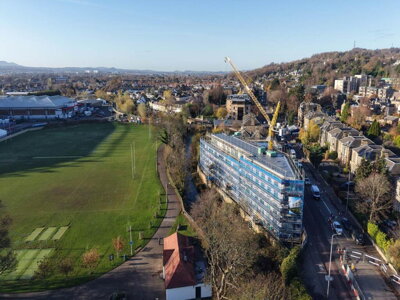
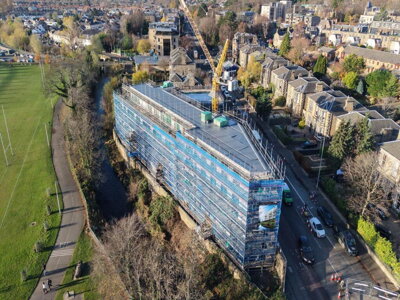
New build opportunities are limited but do exist, with developments like Village View on Belford Road offering contemporary apartments within the broader West End area. This development by AMA Homes features well-appointed two-bedroom, two-bathroom apartments designed to modern specifications while maintaining proximity to the West End's historic character. For those seeking something more traditional, mews properties such as 1 Rothesay Mews represent rare opportunities to acquire a listed mews house within a charming former stable block, with prices typically exceeding £995,000. Sunbury Mews, located in the adjacent EH4 postcode, offers larger townhouse options with fixed prices around £1,375,000 for four-bedroom properties. These limited new and recently converted options demonstrate the continued appetite for quality accommodation within this prestigious enclave.

The West End of Edinburgh represents the pinnacle of urban elegance in Scotland, combining grand period architecture with the sophisticated amenities expected of a world-class city address. The neighbourhood centres around the elegant streets of the New Town, characterised by their planned grid layout, handsome sandstone facades, and characteristic garden squares. Local sandstone, predominantly used in the construction of Georgian and Victorian buildings, gives the area its warm honey-coloured appearance that changes beautifully with Edinburgh's shifting light. Many properties retain their original timber sash windows, intricate cornicing, and plasterwork, features that lend the interiors an air of refined grandeur that simply cannot be replicated in modern construction.
The area benefits from an excellent selection of independent shops, artisan cafes, and acclaimed restaurants within easy walking distance. Queens Street and Brandon Parade offer boutique shopping opportunities, while the nearby West End Market operating on Randolph Place provides fresh local produce and artisan goods each week. Cultural attractions abound, with the Scottish National Gallery on The Mound, the Royal Scottish Academy, and the National Library of Scotland all nearby. The proximity to Princes Street Gardens provides a green oasis in the city, perfect for morning walks or evening strolls with views up to Edinburgh Castle. The West End also sits adjacent to the vibrant Stockbridge neighbourhood, known for its weekly farmers market and additional dining options along Raeburn Street and William Street.
The Water of Leith river corridor runs to the north of the West End, providing a attractive walking and cycling route connecting the area to the Botanic Gardens and beyond. For leisure activities, the West End is within easy reach of several private health clubs and the council-run Leith Walk Swimming Pool. Golf enthusiasts will find several prestigious courses within easy driving distance, including the Royal Edinburgh Golf Club in Aberlady and Duddingston Golf Club. The area's central position also means excellent access to the open spaces of Holyrood Park and Arthur's Seat for those who enjoy outdoor recreation within the city limits.

Education provision in the West End serves families well, with a selection of highly regarded primary and secondary schools within easy reach of the EH3 postcode area. For primary education, the catchment area for West End residents includes several well-performing schools, with St Mary's Music School offering specialist music education for pupils with suitable talents. The majority of West End families opt for the public schooling system, with schools like Bruntsfield Primary School and The Royal Mile Primary School serving the wider area with good Ofsted-equivalent ratings from Education Scotland.
Secondary education in the catchment includes some of Edinburgh's most sought-after schools, with strong academic records and excellent facilities. Schools such as George Watson's College and Stewart's Melville College provide outstanding independent education options, while the state sector offers gems like Boroughmuir High School with its strong senior-phase curriculum. For families considering private education, the West End's proximity to Charlotte Square places several leading independent schools within convenient travelling distance, including St George's School for Girls serving pupils from nursery through to senior school.
Edinburgh's education landscape includes the world-renowned University of Edinburgh and Heriot-Watt University, which contribute to the city's intellectual atmosphere and provide excellent higher education opportunities for students remaining in the area after school. The University of Edinburgh's main campus is located slightly to the east of the West End, but easily accessible by foot or public transport. The proximity of these institutions also means the West End attracts a diverse community of academics, researchers, and students, contributing to the vibrant cultural life of the neighbourhood.
Transport connections from the West End are excellent, making it one of Edinburgh's most accessible neighbourhoods for commuters and those who travel regularly. The area sits within easy walking distance of Edinburgh Waverley station, the city's main railway hub, which provides direct services to London with journey times of approximately four hours to King's Cross. Regular services also connect Edinburgh to Glasgow, with frequent trains completing the journey in under an hour, making the West End practical for those working in either city or considering cross-border moves. LNER, Avanti West Coast, and ScotRail all operate services from Waverley, offering extensive connectivity across the UK rail network.
Local public transport options include Lothian Buses services that connect the West End to all areas of Edinburgh, with stops throughout the neighbourhood providing easy access to routes including the 29, 42, and 67 buses serving destinations across the city. The Edinburgh Tramway on Princes Street provides convenient access to Edinburgh Airport, the Royal Botanic Garden, and the Ocean Terminal shopping and leisure complex. Travel times from the West End to Edinburgh Airport by tram typically take around 35 minutes, making international travel straightforward for residents.
For drivers, the West End's position near the city centre means easy access to the A1 for routes south and the M8 motorway connecting to Glasgow and the west of Scotland. However, parking in the West End itself can be challenging, with many properties lacking dedicated off-street parking. Visitors to the area should note that on-street parking is controlled via residents' permit schemes in most streets. Cycling infrastructure continues to improve, with dedicated lanes on key routes including the segregated cycleway along Randolph Place and the city's bike-sharing scheme operated bySantander Cycles providing flexible options for short journeys throughout the area.
Start by exploring current listings in Edinburgh's West End to understand what your budget buys you. With average prices around £576,000, you will find a range of period flats, Victorian terraces, and occasional mews properties. Consider engaging a local estate agent who specialises in the EH3 postcode area and can provide insights into off-market opportunities that may not appear on public listings. Our platform aggregates properties from all major estate agents, giving you a comprehensive view of available stock in this competitive market.
Before viewing properties, obtain a mortgage agreement in principle from a lender. This demonstrates your financial credibility to sellers and agents, particularly important in a competitive market like the West End where quality properties attract multiple interested buyers. Given the higher property values in this area, you may want to speak with a broker who specialises in high-value mortgages and can advise on the most competitive rates available for properties in the £500,000 to £1,500,000+ range typical of this postcode.
Schedule viewings of properties matching your criteria, paying attention to the specific considerations for West End homes. Georgian and Victorian properties require careful assessment of damp issues, roof conditions, and the age of electrical and plumbing systems. Many properties are listed buildings requiring specialist maintenance knowledge. We recommend viewing properties at different times of day and in various weather conditions to fully assess their characteristics and any potential issues.
Given that the majority of West End properties predate 1919, a thorough survey is essential. A RICS Level 2 Survey will identify defects common to period properties, including damp, timber issues, and masonry condition. Budget approximately £350-600 depending on property size, with the higher end applying to larger flats in converted townhouses or listed properties that require more detailed assessment. Our recommended surveyors have extensive experience inspecting West End properties and understand the specific construction methods used in Georgian and Victorian Edinburgh.
Once your offer is accepted, instruct a Scottish solicitor to handle the transaction. Your solicitor will conduct searches, handle Land and Buildings Transaction Tax (LBTT), and guide you through Scottish conveyancing procedures through to settlement. The missives process in Scotland differs from English conveyancing and typically involves a more extended negotiation period. We can recommend solicitors experienced in West End transactions who understand the particular considerations that apply to listed buildings and properties in conservation areas.
Purchasing a property in Edinburgh's West End requires awareness of several area-specific considerations that differ from other UK property markets. The vast majority of properties in the West End date from the Georgian or Victorian periods, meaning they were built with solid stone walls rather than the cavity wall construction common in modern properties. This construction type requires different approaches to insulation and ventilation, and potential buyers should understand how these older buildings perform in terms of energy efficiency. Our surveyors regularly identify properties with inadequate ventilation that has led to chronic damp issues, particularly in ground floor flats where damp-proof courses may have failed or were never installed.
The West End's status as a Conservation Area and its inclusion within the UNESCO World Heritage Site means that planning controls are particularly strict. Any external alterations, including window replacements or extensions, require consent from the City of Edinburgh Council planning authority. Properties may also be listed, which imposes additional requirements on owners regarding maintenance and changes to the building's fabric. Buyers should establish the listing status of any property they are considering and factor this into their decision-making process. Properties like the mews houses on Rothesay Mews or similar historic conversions often carry Category B or A listing designations that restrict what owners can do without consent.
Flood risk deserves consideration, particularly for properties close to the Water of Leith which runs nearby the northern edge of the West End area. While the Water of Leith is generally contained within its banks, properties in lower-lying positions near the river corridor may carry elevated flood risk, particularly during periods of heavy rainfall when surface water runoff can be significant. Our recommended surveys assess drainage conditions and any history of water ingress, including the condition of gutters, downpipes, and ground-level drainage systems that are critical in preventing water penetration in period properties.
For flats within converted townhouses, buyers should investigate the management company arrangements, service charge levels, and any planned maintenance works that might result in special assessments. Many West End townhouses were converted in the 1970s and 1980s, and some common areas may show signs of deferred maintenance. We recommend requesting copies of the last three years of management company minutes and accounts before proceeding with a purchase. Service charges in the West End typically range from £800 to £2,500 annually, depending on the size of the building and extent of communal areas.
The distinctive character of West End properties stems largely from the traditional construction methods employed during the Georgian and Victorian periods when much of the neighbourhood was built. The predominant building material is local Edinburgh sandstone, typically used in ashlar-faced finish for prestigious buildings, giving the area its characteristic elegant appearance. The stone was quarried from local sources including Craigmillar and Redhall, producing the warm honey and buff tones that define the West End's streetscape. Understanding these materials is essential for any buyer considering renovation or maintenance works.
Roof construction in the West End typically features pitched timber roofs covered with Welsh slate, which has proven durable over centuries but requires ongoing maintenance. Common defects our surveyors identify include slipped slates, deteriorated leadwork around chimneys and valleys, and inadequate ventilation in roof voids that can lead to timber decay. The original timber sash windows found in many properties represent both a character feature and a maintenance consideration, as they require regular painting and eventual renovation or replacement with heritage-compliant alternatives.
Internal construction features thick solid walls typically 400-600mm in depth for loadbearing walls, with timber suspended floors at upper levels supported by wooden beams. These construction details affect how properties perform thermally and acoustically, and any works to improve insulation must be approached carefully to avoid causing damp or condensation issues in buildings designed to breathe in specific ways. The original plasterwork, cornicing, and decorative features found in many West End properties add significant value but require specialist knowledge to maintain and restore correctly.
Our inspectors regularly identify several recurring defect patterns when surveying West End properties, and understanding these helps buyers prioritise their concerns. Rising damp affects many ground floor properties, particularly those where original damp-proof courses have failed or were never installed, which was common in buildings constructed before the mid-20th century. Penetrating damp can occur where masonry pointing has deteriorated or where flashings around windows and doors have failed, allowing water ingress during Edinburgh's wet winters.
Timber defects including wet rot, dry rot, and woodworm activity are frequently discovered in West End properties, particularly in areas with histories of damp or inadequate ventilation. Our surveyors pay close attention to floor joists, window lintels, and structural timbers, as these can suffer significant deterioration before becoming visually apparent. The timber suspended floors common in upper flats are particularly vulnerable if water leaks from bathrooms or kitchens above have gone undetected for periods.
Electrical and plumbing systems in West End properties often require complete replacement or substantial upgrading to meet modern standards. Original Victorian wiring and lead pipes remain in some properties, representing both a safety concern and a significant renovation cost that buyers should factor into their budgets. Gas installations should always be checked by a qualified engineer, as older systems may not meet current safety regulations. Our survey reports provide detailed assessments of these systems along with cost estimates for any remedial works identified.
The average house price in Edinburgh's West End stands at approximately £576,253 according to recent market data from Rightmove, with Zoopla reporting similar figures of £574,970 for sold properties over the past year. Flats average around £547,854, while terraced properties command higher prices averaging £744,400. Detached properties in this prestigious area reach significantly higher values, with averages around £1,337,000 reflecting their scarcity. Prices have risen approximately 3% over the past twelve months, though they remain around 7% below the 2023 peak of £617,070. OnTheMarket indicates more dramatic recent growth at 12.7%, suggesting the market may be recovering momentum as buyer confidence returns.
Council tax in Edinburgh is administered by the City of Edinburgh Council, with properties in the West End typically falling into higher bands due to their substantial values. Most period flats and townhouses in the area fall into bands D through H, reflecting the premium nature of the real estate. Exact banding depends on the property's assessed value, and prospective buyers can verify specific banding through the Scottish Assessors Portal at spa.gov.scot. The West End's position within the New Town Conservation Area and UNESCO World Heritage Site reflects its status as one of Edinburgh's most valuable residential addresses, and these designations also affect what works require planning permission.
The West End offers access to several well-regarded educational establishments within easy reach of the EH3 postcode. For primary education, local catchment schools serve the area, with additional options including faith schools and the specialist St Mary's Music School for musically talented pupils. Secondary options in the wider area include some of Edinburgh's most academically successful schools, with strong performance records in national examinations and excellent facilities. Many West End families opt for private education, with several prestigious independent schools accessible from the area, including schools in Charlotte Square and the surrounding New Town district offering education from nursery through to secondary level.
The West End enjoys excellent public transport connections, being within comfortable walking distance of Edinburgh Waverley station, the city's main railway hub offering services across the UK. Direct trains run to London King's Cross (approximately 4 hours), Glasgow (under 1 hour), and across the Scottish rail network operated by ScotRail, CrossCountry, LNER, and Avanti West Coast. The Edinburgh Tramway runs along Princes Street providing access to the airport and various city destinations including the Botanic Gardens, Murrayfield, and the waterfront at Ocean Terminal. Local bus services operated by Lothian Buses serve all areas of Edinburgh from stops throughout the West End, with the city's extensive network making car ownership optional for most residents.
Edinburgh's West End has historically proven to be a sound investment, supported by the area's UNESCO World Heritage Site status, strict planning controls that limit overdevelopment, and consistently strong demand from buyers seeking prestige city centre addresses. Property values have shown steady long-term growth, with recent data indicating 3% appreciation over twelve months and a more robust 12.7% increase reported by OnTheMarket. The limited supply of new housing in the area, combined with its proximity to financial and professional services employers in the city centre, sustains demand. However, buyers should note that the Conservation Area and listed building status can affect the types of alterations or improvements that might increase a property's value, and maintenance costs for period properties should be factored into any investment calculation.
As a property purchase in Scotland, buyers pay Land and Buildings Transaction Tax (LBTT) rather than Stamp Duty Land Tax. The current LBTT thresholds (from April 2025) set the nil rate band up to £145,000 for residential properties, with rates of 2% on the portion from £145,001 to £250,000, 5% from £250,001 to £400,000, 10% from £400,001 to £750,000, and 12% above £750,000. First-time buyers in Scotland receive additional relief, with the nil rate band increased to £175,000. On a typical West End flat priced at £550,000, LBTT would be approximately £12,250, calculated as £2,100 on the first £250,000 plus £7,500 on the next £150,000 plus £2,650 on the final £150,000.
Flats within converted West End townhouses present specific considerations that differ from other property types. You should investigate the management company structure and whether the freehold is owned jointly by flat owners or held by a separate entity. Request copies of the last three years of annual accounts and management meeting minutes to identify any planned major works or outstanding maintenance issues. Check the condition of shared elements including the roof, stairwell, and any exterior walls, as these are typically managed collectively. Many conversions have single glazing, outdated electrical consumer units, and plumbing systems that have not been updated since the original conversion, all of which represent potential costs. Our recommended surveys specifically address these common issues in converted townhouse flats across the West End EH3 postcode area.
Properties in the northern reaches of the West End that sit close to the Water of Leith corridor may carry elevated flood risk compared to other parts of the neighbourhood. The Water of Leith flows through Dean Village immediately north of the West End before joining the Firth of Forth at Leith. While the river is generally well-contained within its banks, significant rainfall events can cause water levels to rise, and properties in lower-lying positions may be affected. Surface water flooding can also occur during intense rainfall when drainage systems are overwhelmed. Our surveyors include specific flood risk assessments in their reports for properties near watercourses and can advise on appropriate investigations and insurance considerations.
Understanding the full costs of purchasing property in Edinburgh's West End is essential for budgeting effectively. Beyond the property price, buyers should account for Land and Buildings Transaction Tax (LBTT), which applies to all Scottish property purchases. On a typical West End flat priced at £550,000, you would pay approximately £12,250 in LBTT under current thresholds. First-time buyers benefit from an enhanced nil rate band, which can reduce this cost significantly depending on the purchase price and whether the property will be your only or main residence. Your solicitor will calculate the precise LBTT liability based on your specific circumstances and any relief you may be entitled to claim.
Additional purchase costs include solicitor fees, which typically range from £500 to £1,500 for conveyancing in the Edinburgh market, covering searches, title investigation, and transaction handling through to settlement. Survey costs deserve particular attention in the West End given the age of the housing stock and the prevalence of listed buildings. A RICS Level 2 Survey costs from approximately £350 for smaller flats, rising to £600 or more for larger period properties and potentially higher still for listed buildings requiring more detailed assessment. Given that over 90% of West End properties predate 1919, a thorough survey is money well spent to identify issues like damp, roof condition, or timber defects before you commit to purchase.
Other costs to budget include mortgage arrangement fees (often 0.5-1% of the loan amount), valuation fees, and moving costs. For flats within converted townhouses, you should also investigate the service charge and any planned reserve fund contributions. Properties in the West End's mews developments or purpose-built blocks may have annual service charges ranging from £1,000 to £3,000 or more, covering building insurance, maintenance of communal areas, and contribution to a sinking fund for future major works. Always request details of service charges and any outstanding major works before proceeding with a purchase. Factor in the cost of buildings insurance, which can be higher for period properties with increased rebuilding costs, and any Life Assurance or Critical Illness Cover your lender may require as conditions of the mortgage.
Expert mortgage advice for West End properties
From 3.89%
Scottish solicitors experienced in West End transactions
From £499
Essential for period properties in EH3
From £350
Energy performance for West End homes
From £60
Properties New Builds In London

Properties New Builds In Plymouth

Properties New Builds In Liverpool

Properties New Builds In Glasgow

Properties New Builds In Sheffield

Properties New Builds In Edinburgh

Properties New Builds In Coventry

Properties New Builds In Bradford

Properties New Builds In Manchester

Properties New Builds In Birmingham

Properties New Builds In Bristol

Properties New Builds In Oxford

Properties New Builds In Leicester

Properties New Builds In Newcastle

Properties New Builds In Leeds

Properties New Builds In Southampton

Properties New Builds In Cardiff

Properties New Builds In Nottingham

Properties New Builds In Norwich

Properties New Builds In Brighton

Properties New Builds In Derby

Properties New Builds In Portsmouth

Properties New Builds In Northampton

Properties New Builds In Milton Keynes

Properties New Builds In Bournemouth

Properties New Builds In Bolton

Properties New Builds In Swansea

Properties New Builds In Swindon

Properties New Builds In Peterborough

Properties New Builds In Wolverhampton

Enter your details to see if this property is within your budget.
Loans, cards, car finance
Estimated property budget
Borrowing + deposit
You could borrow between
Typical borrowing
Monthly repayment
Est. at 4.5%
Loan-to-value
This is an estimate only. Your actual budget may vary depending on interest rates, credit history, and personal circumstances. For an accurate affordability assessment, speak to one of our free mortgage advisors.
This calculator provides estimates for illustrative purposes only and does not constitute financial advice. Your home may be repossessed if you do not keep up repayments on your mortgage. Estimates based on 4.5% interest rate, repayment mortgage. Actual rates depend on your circumstances.
Homemove is a trading name of HM Haus Group Ltd (Company No. 13873779, registered in England & Wales). Homemove Mortgages Ltd (Company No. 15947693) is an Appointed Representative of TMG Direct Limited, trading as TMG Mortgage Network, which is authorised and regulated by the Financial Conduct Authority (FRN 786245). Homemove Mortgages Ltd is entered on the FCA Register as an Appointed Representative (FRN 1022429). You can check registrations at NewRegister or by calling 0800 111 6768.

We use cookies to show you personalised content and improve your experience of our website. Find out more in our Privacy policy and Cookie policy.