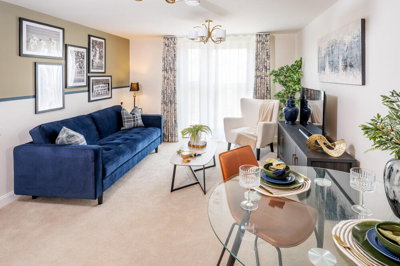
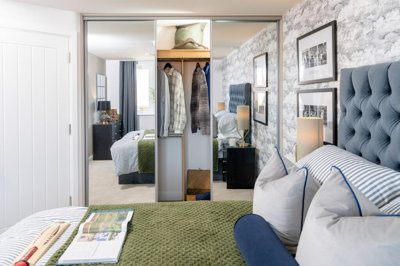
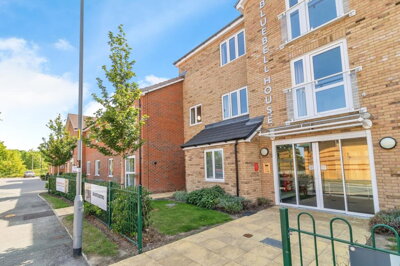
Browse 3 homes new builds in West Bletchley from local developer agents.
One bed apartments provide a separate bedroom alongside distinct living space, bathroom, and kitchen areas. Properties in West Bletchley are available in various building types including new apartment complexes and contemporary developments.
Poyntington's property market operates within a tight supply environment, with the village's limited housing stock ensuring that homes rarely remain on the market for long. Detached properties command the highest prices in the area, with the average for this property type reaching £625,000, reflecting the desirability of standalone homes with generous gardens and countryside views. Semi-detached properties offer a more accessible entry point at around £450,000, though these too represent excellent value given the village's exceptional setting and character. Our inspectors regularly assess properties across the DT9 4 postcode area, giving us unique insight into how the local market performs.
Property price growth in Poyntington has remained steady at 1.8% over the past twelve months, demonstrating consistent demand despite the broader national market fluctuations. The village's conservation area designation, combined with its high concentration of listed buildings, means that new development is strictly controlled, maintaining the exclusivity that defines the local property market. Prospective buyers should note that properties in Poyntington tend to be older, with the vast majority constructed before 1945 using traditional methods and local materials. This restriction on supply helps support property values even during periods of national market uncertainty.
Our data shows that Hamstone properties dominate the local housing stock, with this distinctive golden limestone lending the village its warm, timeless appearance. Roofs typically feature natural slate or clay tiles, and many properties retain original features such as inglenook fireplaces, exposed beam ceilings, and flagstone floors that appeal to buyers seeking authentic period character. Flats and terraced properties are exceptionally rare in Poyntington, making this an ideal location for those seeking generous space and privacy. The village's housing stock is overwhelmingly dominated by detached properties, which account for approximately 80-90% of available homes, with semi-detached properties making up most of the remainder.
The age and construction of Poyntington properties create both opportunities and considerations for buyers. The Jurassic limestone bedrock underlying the village provides generally stable foundations, though the presence of Fuller's Earth Clay in some areas introduces potential for ground movement during periods of extreme weather. We always recommend a thorough survey before committing to purchase in this area, as traditional construction methods require specialist knowledge to assess accurately. The combination of historic building techniques and the village's conservation status means that maintenance costs may differ significantly from modern properties.

Life in Poyntington offers an enviable blend of rural tranquility and practical accessibility that distinguishes this Dorset village from many of its counterparts. With a population of approximately 150 to 200 residents across roughly 60 to 80 households, the community maintains an intimate, village atmosphere where neighbours know one another and local events foster a genuine sense of belonging. The village's small scale belies its appeal, with residents enjoying sweeping views across the Dorset countryside, excellent walking routes, and a pace of life that feels a world away from urban pressures.
The underlying geology of Poyntington comprises Jurassic limestone, specifically Inferior Oolite and Fuller's Earth Clay, which has shaped both the landscape and the traditional building methods used throughout the village. This geological foundation contributes to the stable, free-draining character of the local terrain while also explaining the prevalence of traditional Hamstone construction that gives the village its distinctive appearance. The surrounding countryside supports diverse wildlife and offers extensive opportunities for outdoor recreation, including rambling along public footpaths and exploring nearby nature reserves.
Local amenities in Poyntington are limited by design, preserving the village's unspoiled character, though the nearby market towns of Sherborne and Yeovil provide comprehensive services within easy reach. The village itself retains a traditional public house, a place of worship, and community facilities that serve as focal points for village life. Sherborne, located just three miles away, offers an excellent range of shops, restaurants, and cultural attractions including the historic Sherborne Castle and its beautiful gardens.
Cultural attractions in the wider area include historic estates such as Stourhead and Longleat, traditional gardens including those at Iford Manor, and the county's renowned arts and food scene. The Dorset coast at Lyme Regis and Weymouth provides excellent days out, while the county town of Dorchester offers additional cultural and shopping opportunities. Residents of Poyntington find that the exceptional quality of their immediate environment more than compensates for the need to travel for certain services, with even routine journeys through the Dorset countryside becoming a pleasure rather than a chore.
Families considering a move to Poyntington will find a strong selection of educational options available within reasonable driving distance of the village. Primary education is well served by several village and small-town schools in the surrounding area, many of which benefit from good Ofsted ratings and small class sizes that support quality teaching. Schools in nearby villages and in Sherborne provide excellent options for primary-aged children, with many parents expressing satisfaction with the standard of education available within easy reach of the village.
The village's own heritage and community focus create an ideal environment for young children, with safe streets, rural surroundings, and a supportive local community contributing to an excellent quality of life for families. Children growing up in Poyntington benefit from the freedom and safety of village life while having access to the natural environment for play and exploration. The strong sense of community means that families are quickly integrated into village life, with children forming lasting friendships within the immediate locality.
Secondary education options in the vicinity include highly regarded schools in Sherborne, where the renowned Sherborne School provides private education alongside strong state secondary options. Sherborne School, founded in 1550, is one of the oldest boarding schools in England and attracts students from across the country and internationally. The state secondary schools in the area also maintain excellent reputations, providing quality education without the costs associated with private schooling.
Several schools in the area offer sixth form provision, while further and higher education is readily accessible through the colleges and universities of Dorset, Somerset, and the wider South West region. Yeovil College and Richard Huish College in Taunton provide strong further education options, while the universities of Exeter, Bristol, and Southampton are all within reasonable driving distance for older students. The village's position near the Dorset-Somerset border means that parents have access to educational options across two counties, each with its own distinct educational character and provision.
Poyntington's position in rural Dorset means that private transport remains essential for most residents, though the village's location provides reasonable access to the regional transport network. The A30 and A37 trunk roads pass through nearby towns, connecting Poyntington to the wider road network and providing routes to larger employment centres including Yeovil, Taunton, and the M5 motorway. Journey times by car to major regional destinations are competitive with many more accessible locations, while the scenic nature of local routes transforms routine commutes into pleasant drives through the Dorset countryside.
The nearest major road connections are found in Sherborne, where the A30 provides direct routes east to Shaftesbury and west towards Somerset. Yeovil, approximately 12 miles to the south-west, offers comprehensive shopping, employment, and services, while the M5 motorway at junction 25 (Taunton) is accessible within approximately 40 minutes for residents who need to travel further afield. Bristol can be reached in approximately 90 minutes by car, making it feasible for those working in the city on an occasional or hybrid basis.
Rail services are available from nearby stations in Sherborne and Gillingham, offering regular connections to destinations including London Waterloo, Bristol, and Exeter. Sherborne station provides direct services to the capital, with journey times to London Waterloo of approximately two and a half hours. This connection makes periodic commuting to London feasible for those with hybrid working arrangements, though the journey is at the longer end of what most would consider practical for daily commuting.
Local bus services connect Poyntington with surrounding villages and market towns, providing practical options for those who prefer not to drive, though frequencies may be limited compared to urban services. For those working from home, which is increasingly common in rural communities, Poyntington offers the peace and space necessary for productive remote working while maintaining good connectivity through modern broadband services. The village's location strikes an effective balance between rural character and practical accessibility, enabling residents to enjoy an exceptional quality of life without sacrificing employment opportunities or connectivity to urban centres.
Start by exploring current property listings in Poyntington through Homemove, reviewing available homes and understanding price points for different property types in the village. Consider attending any village events or speaking with local residents to gain insight into the community atmosphere and what makes the area special.
Speak to a mortgage broker to obtain an agreement in principle before viewing properties, demonstrating your financial readiness to sellers in a competitive market where village homes are prized. Given the higher average property prices in Poyntington, ensure your borrowing capacity is sufficient for properties typically priced between £450,000 and £625,000.
Visit properties in person to assess their character, condition, and suitability, paying particular attention to the age of construction, building materials, and any signs of maintenance needs. We recommend viewing properties across different seasons if possible, as drainage and garden conditions can vary significantly throughout the year.
Given the age of properties in Poyntington, book a comprehensive survey before proceeding, with costs typically ranging from £500 to £800 for a three-bedroom detached home. Our inspectors are experienced in assessing Hamstone construction and traditional building methods, identifying issues that less experienced surveyors might overlook.
Appoint a solicitor experienced in rural property transactions to handle legal work, searches, and the specific considerations that apply to conservation areas and listed buildings. Search requirements may be more extensive in Poyntington given the local geology and flood risk considerations.
Finalise your purchase through contract exchange and completion, with your solicitor handling the transfer of funds and registration of your ownership with the Land Registry. Budget additional time for any conditions attached to listed building consent if applicable to your chosen property.
Properties in Poyntington require careful assessment due to their age and traditional construction methods, which differ significantly from modern homes. The prevalence of Hamstone construction means that walls are typically solid rather than cavity constructed, which affects insulation performance, moisture management, and the approach to any alterations or extensions. Prospective buyers should look for signs of damp, particularly rising damp in ground floor rooms, which can be exacerbated by the solid wall construction common throughout the village.
Our inspectors frequently identify damp as a concern in Poyntington properties, particularly in ground floor rooms where moisture can rise through solid stone walls. Look for tide marks on walls, peeling wallpaper, and musty smells that may indicate moisture penetration. Ventilation is often inadequate in older properties, leading to condensation issues that can cause mould growth and timber decay over time. Properties with period features such as suspended timber floors over voids are particularly susceptible to woodworm and wet rot if moisture is allowed to accumulate.
Roof conditions warrant particularly close attention on Poyntington properties, where natural slate and clay tiles may show signs of age-related deterioration including slipped tiles, failed pointing, and deteriorating timber elements. We check ridge tiles, hip tiles, and valley gutters for signs of movement or deterioration. The presence of Fuller's Earth Clay in the local geology introduces a potential for ground movement, and buyers should look for any signs of structural cracking or movement that might indicate subsidence or heave issues. Chimney stacks often require maintenance, with deterioration of mortar, flaunching, and lead flashings representing common defects in older properties.
Electrical and plumbing systems in village properties frequently require updating to meet current standards, and buyers should factor potential re-wiring and re-plumbing costs into their purchasing decision. Original wiring that has not been updated for 30 years or more may present fire hazards and will likely need complete replacement. Properties within the conservation area or those that are listed buildings will be subject to specific regulations governing alterations, repairs, and external changes, requiring careful consideration before purchase.
Surface water flooding represents a localised risk in some parts of the village, particularly in low-lying areas and near minor watercourses, and buyers should review flood risk information and consider appropriate surveys for properties in these locations. While river and coastal flood risk is generally low in Poyntington, surface water can accumulate in depressions during heavy rainfall. We recommend checking the Environment Agency's flood maps for any specific property location and discussing any flood risk concerns with your surveyor before proceeding.

The average house price in Poyntington currently stands at £575,000 based on recent sales data, with approximately 4 properties changing hands in the village over the past year. Detached properties average £625,000 while semi-detached homes are typically priced around £450,000, reflecting the premium commanded by standalone properties with generous gardens and countryside views. The market has shown steady growth of 1.8% over the past twelve months, demonstrating consistent demand from buyers seeking the village's exceptional rural character and historic properties. Given the village's conservation area status and limited supply, prices for character properties with Hamstone construction and period features tend to command premiums over equivalent properties in less desirable locations.
While Poyntington itself is a small village without its own school, the surrounding area offers excellent educational options for families. Nearby primary schools in villages and small towns serve the community well, with several achieving good or outstanding Ofsted ratings within easy driving distance of the village. Secondary education is available in Sherborne, which hosts both highly regarded state schools and the prestigious Sherborne School for private education. Sherborne School, established in 1550, is one of England's oldest and most respected public schools, offering exceptional educational provision for secondary-aged children. School transport links connect Poyntington to these facilities, making quality education accessible for families choosing to live in the village.
Public transport options in Poyntington are limited, reflecting the village's rural character and small population of approximately 150-200 residents. Local bus services connect the village to surrounding towns and villages, though frequencies are lower than in urban areas, making private transport essential for most daily needs. The nearest railway stations are located in Sherborne and Gillingham, providing mainline services to London Waterloo, Bristol, and Exeter. Sherborne station offers direct trains to the capital with journey times of approximately two and a half hours, making hybrid working arrangements feasible for London-based commuters. The village's position provides reasonable access to the regional road network including routes to Yeovil and connections to the M5 motorway at Taunton.
Poyntington offers several attractive features for property investment, including its desirable rural location, conservation area status, and limited supply of available properties. The village's historic character and Hamstone construction create properties with enduring appeal, while restrictions on new development help maintain property values over time. However, investors should note that the small size of the village and limited local employment mean that rental demand may be concentrated among those specifically seeking the rural lifestyle rather than commuting workers. Property management in a village without local letting agents may also require more effort, and maintenance costs for period properties can be higher than for modern homes. The steady 1.8% annual price growth suggests moderate capital appreciation, though the small transaction volume means that exit opportunities may be limited.
Properties in Poyntington fall under the council tax jurisdiction of Dorset Council, with specific bands determined by property value and characteristics at the time of the last valuation in 1991. The village's mix of traditional Hamstone properties and period homes means that council tax bands vary across the housing stock, with larger detached properties typically occupying higher bands such as E, F, or G. Smaller cottages and semi-detached properties may fall into bands C or D. Prospective buyers should obtain current council tax band information for specific properties during the purchase process, as this information is readily available through the HMRC Valuation Office Agency.
Stamp Duty Land Tax rates for Poyntington properties follow standard UK thresholds, with 0% payable on purchases up to £250,000, 5% on the portion from £250,001 to £925,000, and 10% up to £1.5 million. First-time buyers benefit from relief on purchases up to £625,000, with 5% payable on the portion between £425,001 and £625,000. Given the village's average property price of £575,000, a typical purchase would attract stamp duty of approximately £16,250 for standard buyers or £7,500 for qualifying first-time buyers. Our team can provide a more detailed calculation based on your specific circumstances, including any additional properties you own or your residential status.
Properties in Poyntington are predominantly pre-1945 construction using traditional methods that present specific defect patterns. Our inspectors frequently identify damp issues related to solid Hamstone walls, which lack the cavity construction that helps keep modern properties dry. Rising damp and penetrating damp are common concerns, particularly in ground floor rooms and walls exposed to prevailing weather. Roof defects are also prevalent, with natural slate and clay tiles prone to slipped or broken tiles, failed mortar pointing, and deterioration of ridge elements over time. Timber elements including floor joists, roof timbers, and window frames may show signs of woodworm (common furniture beetle) or fungal decay if moisture has been allowed to accumulate. The presence of Fuller's Earth Clay in local geology means that some properties may exhibit historic or ongoing structural movement related to ground subsidence or heave during extreme weather conditions.
Properties listed under the Planning (Listed Buildings and Conservation Areas) Act 1990 require careful consideration before purchase, and a standard RICS Level 2 Survey may not be sufficient to identify all relevant issues. While a Level 2 Survey provides a good starting point for most properties, listed buildings often have unique construction characteristics and historical alterations that require more detailed investigation. We recommend discussing your specific property with our team, as we may advise upgrading to a RICS Level 3 Building Survey for properties with significant historical interest or unusual construction. Listed building consent is required for virtually any alterations or extensions, and your surveyor should be familiar with the additional considerations this creates for maintenance and renovation planning.
From 4.5%
specialist mortgages for Poyntington properties
From £499
rural property solicitors experienced in conservation areas
From £500
thorough inspection for period properties
From £800
comprehensive survey for listed buildings
From £80
energy performance certificate
Purchasing a property in Poyntington involves various costs beyond the purchase price, with stamp duty representing a significant consideration for most buyers. Standard SDLT rates apply in the village, with buyers paying 0% on the first £250,000 of the purchase price, 5% on the portion between £250,001 and £925,000, and 10% on the portion between £925,001 and £1.5 million. Given that the average property price in Poyntington is £575,000, a typical purchase attracts stamp duty of approximately £16,250 for buyers without first-time buyer relief. This figure can be calculated precisely using HMRC's online SDLT calculator, which accounts for your specific purchase price and circumstances.
First-time buyers purchasing in Poyntington benefit from enhanced SDLT relief, paying nothing on purchases up to £425,000 and 5% on the portion between £425,001 and £625,000. This relief means that a qualifying first-time buyer purchasing a typical £575,000 property in the village would pay approximately £7,500 in stamp duty. It is important to note that this relief is only available to buyers who have never previously owned property anywhere in the world, and the relief does not apply to purchases above £625,000. Those who previously owned property but have sold or given it away will not qualify for first-time buyer relief.
Beyond stamp duty, buyers should budget for survey costs, with RICS Level 2 Surveys for Poyntington properties typically ranging from £500 to £800 depending on property size and complexity. The age and traditional construction of village properties make professional surveys particularly valuable, with surveyors assessing the condition of Hamstone walls, slate or tile roofs, timber elements, and any signs of movement related to the local geology. Properties in conservation areas or those that are listed may warrant a more comprehensive RICS Level 3 Building Survey, which provides more detailed analysis of construction and defect patterns. Solicitors' fees for conveyancing typically start from around £500 to £1,500, while additional costs may include Land Registry fees, local authority search fees, and mortgage arrangement fees. Buyers purchasing listed properties or homes in the conservation area should also factor in potentially higher maintenance and renovation costs to meet appropriate standards when carrying out any works.
Properties New Builds In London

Properties New Builds In Plymouth

Properties New Builds In Liverpool

Properties New Builds In Glasgow

Properties New Builds In Sheffield

Properties New Builds In Edinburgh

Properties New Builds In Coventry

Properties New Builds In Bradford

Properties New Builds In Manchester

Properties New Builds In Birmingham

Properties New Builds In Bristol

Properties New Builds In Oxford

Properties New Builds In Leicester

Properties New Builds In Newcastle

Properties New Builds In Leeds

Properties New Builds In Southampton

Properties New Builds In Cardiff

Properties New Builds In Nottingham

Properties New Builds In Norwich

Properties New Builds In Brighton

Properties New Builds In Derby

Properties New Builds In Portsmouth

Properties New Builds In Northampton

Properties New Builds In Milton Keynes

Properties New Builds In Bournemouth

Properties New Builds In Bolton

Properties New Builds In Swansea

Properties New Builds In Swindon

Properties New Builds In Peterborough

Properties New Builds In Wolverhampton

Enter your details to see if this property is within your budget.
Loans, cards, car finance
Estimated property budget
Borrowing + deposit
You could borrow between
Typical borrowing
Monthly repayment
Est. at 4.5%
Loan-to-value
This is an estimate only. Your actual budget may vary depending on interest rates, credit history, and personal circumstances. For an accurate affordability assessment, speak to one of our free mortgage advisors.
This calculator provides estimates for illustrative purposes only and does not constitute financial advice. Your home may be repossessed if you do not keep up repayments on your mortgage. Estimates based on 4.5% interest rate, repayment mortgage. Actual rates depend on your circumstances.
Homemove is a trading name of HM Haus Group Ltd (Company No. 13873779, registered in England & Wales). Homemove Mortgages Ltd (Company No. 15947693) is an Appointed Representative of TMG Direct Limited, trading as TMG Mortgage Network, which is authorised and regulated by the Financial Conduct Authority (FRN 786245). Homemove Mortgages Ltd is entered on the FCA Register as an Appointed Representative (FRN 1022429). You can check registrations at NewRegister or by calling 0800 111 6768.

We use cookies to show you personalised content and improve your experience of our website. Find out more in our Privacy policy and Cookie policy.