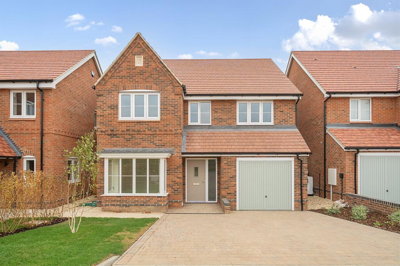
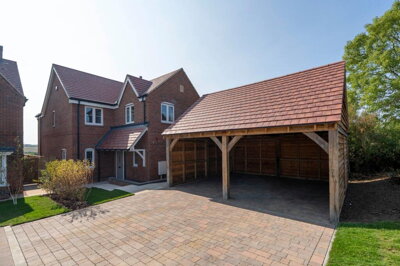
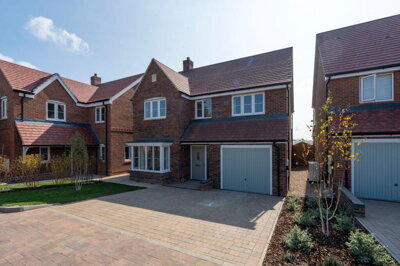
Browse 3 homes new builds in Twyford from local developer agents.
The Twyford property market offers detached, semi-detached, and terraced houses spanning various price ranges and neighbourhoods. Each listing includes detailed property information, photographs, and direct contact with the marketing agent.
The Twyford property market offers a diverse range of housing types to suit different buyer requirements and budgets. Detached properties command the highest prices, averaging between £630,000 and £792,000 depending on the data source, reflecting the premium placed on space and privacy in this desirable village location. Semi-detached homes provide more accessible entry points at £403,000 to £537,000, while terraced properties average around £442,000, making them attractive options for first-time buyers or those seeking a smaller footprint. The sales mix in nearby Buckinghamshire shows detached properties accounting for roughly 30% of transactions, with semi-detached at 29% and terraced homes at 24%. Property listings in Twyford show a mix of detached and semi-detached properties, with some inter-war properties from the 1930s period also available in the village.
Recent market activity shows Twyford experiencing a period of relative stability after significant growth. Price trends indicate approximately 1-1.7% growth over the past twelve months, following a previous peak of £525,000 to £595,936 depending on the measurement period used. Historical data reveals that sold prices were 66% higher than the previous year at one measurement point, though current conditions suggest a more measured market with prices sitting around 4-12% below recent peaks. Property Solvers reported 113 residential property sales in Twyford over the last year as of March 2024, representing a 0.88% decrease from the previous year. This creates opportunities for buyers who missed previous booms to enter the market at more realistic valuations while still benefiting from the village's historical character and community atmosphere.
New build activity in Twyford itself has been limited, with no specific named developments identified within the village itself. However, Buckinghamshire county-wide data indicates an average new build property price of £541,000 with 426 sales of newly built properties in the last twelve months. For buyers specifically seeking new homes, developments in surrounding postcode areas including HP22, HP1, and neighbouring villages may offer options, though these fall outside the Twyford parish boundary. The limited new build supply in Twyford itself contributes to the village's character and the demand for period properties within the conservation area, where opportunities to purchase historic homes with genuine character remain more common than in larger towns.

Twyford, Buckinghamshire, is a village that rewards those who appreciate rural England at its most authentic. The parish sits within the Aylesbury Vale district, characterised by rolling farmland and the tranquil presence of the River Ouse along its western boundary. The population of 545 residents enjoy a close-knit community where village life centres on the conservation area encompassing the High Street and London Road. Here, centuries of architectural heritage create a streetscape of genuine character, with buildings featuring the mixture of rendered and red brick frontages that define Buckinghamshire's vernacular tradition. The predominantly heavy clay soil of the parish has shaped both the landscape and the local building traditions, with properties throughout the village reflecting the materials quarried from local geology.
The village atmosphere is enhanced by Twyford's rich heritage, with the Twyford Conservation Area protecting the historic fabric of the settlement. Properties in this area date from the 16th century through to the Victorian era, with notable buildings including the 15th-century St Mary's House, formerly the vicarage, and the medieval earthworks surrounding the parish church. Local amenities include traditional establishments such as The Red Lion pub, while Twyford Mill represents another historic landmark. The parish church of the Assumption of the Blessed Virgin Mary dates to the 12th century with 13th-century additions, standing as the spiritual centre of the community for nearly a millennium. The concentration of listed buildings in Twyford includes numerous Grade II properties such as Bay Tree Cottage, Claydon Place, Old Post Cottage, The Old Post Office, and Cottages to North of Junction with Mill Lane, all contributing to the village's architectural significance.
The heavy clay soil prevalent in the parish presents particular considerations for property ownership and due diligence. Historically, builders used locally-sourced materials including chalk, clay for brickmaking, gravel, sand, and flint, with the Clay-with-Flints deposits in southern Buckinghamshire traditionally producing high-quality bricks. This connection between the land and the built environment gives Twyford a sense of place that newer developments often lack. The geology of Buckinghamshire includes Oxford Clays and Boulder Clays in the north and Kimmeridge clays in the south, with the Oxford-Cambridge arc identified as an area with increased risk of subsidence due to the shrink-swell cycle of clay soil. Properties in Twyford should be assessed for foundation conditions and potential movement, particularly those with mature trees or changes in nearby drainage that may affect soil moisture levels over time.

Families considering a move to Twyford will find educational provision within reasonable reach, though the village itself has limited school facilities given its small scale of 545 residents. The parish falls within the catchment area for primary schools in surrounding villages and towns, with several good options within a short drive. Buckinghamshire maintains a selective education system, and the county's grammar schools are among the most sought-after in the region. Parents should research specific catchment areas and admission criteria, as these can vary significantly depending on exact residence within the parish. The nearest primary schools serve villages across the Aylesbury Vale area, and families are advised to verify current arrangements with Buckinghamshire Council before committing to a purchase.
For secondary education, pupils typically travel to nearby towns such as Aylesbury, Buckingham, or Winslow, where secondary schools serve wider catchment areas across the Aylesbury Vale district. Buckingham School and Royal Latin School in Buckingham are notable options for families seeking grammar school education within reasonable travelling distance. These institutions offer a range of academic and vocational pathways, with the county's schools generally performing well in national rankings. Sixth form provision is available at secondary schools in larger nearby towns, while further education colleges in Aylesbury provide additional options for older students. Given the rural nature of the area, families should factor school transport arrangements into their decision-making process when considering properties further from main roads.
The property age distribution in Twyford, with properties dating from the 16th century through to inter-war and later periods, means that families purchasing period properties should be aware of potential renovation costs that might affect their budget flexibility for educational commitments. Additionally, families with children of different ages should consider the logistical implications of school runs to multiple institutions across different villages or towns. The close-knit community atmosphere in Twyford often sees families connecting through village activities and events, providing informal support networks that can be valuable for those new to the area navigating the school application process.
Despite its rural character, Twyford benefits from transport connections that make commuting to major centres feasible for those who need it. The village sits within the MK18 postcode area of Buckinghamshire, with road connections via the A418 providing access to Aylesbury, the county town. The strategic position of Buckinghamshire between Oxford and Cambridge places Twyford within reach of innovation corridors and employment hubs in both university cities. The M40 motorway is accessible via nearby towns, connecting the area to London, Birmingham, and the national motorway network. For those working in the knowledge economy sectors that characterise the Oxford-Cambridge arc, the regional connectivity offers genuine opportunity while maintaining village quality of life.
Rail connections are available from stations in surrounding towns, with journey times to London Marylebone making commuter living a possibility for those working in the capital. The Oxford-Cambridge arc, which encompasses Buckinghamshire, is recognised for its economic potential and infrastructure investment, with plans for improved transport links across the region including better east-west connections between the university cities. Bus services connect Twyford to nearby villages and towns, though frequencies reflect the rural nature of the area with services typically operating at levels suited to occasional rather than daily commuter use. For those working locally or from home, the transport picture is one of peaceful countryside living without the daily frustrations of congested urban commutes, with quieter country lanes popular with recreational cyclists.
The River Ouse forms much of Twyford's western boundary, and while this creates pleasant riverside walks and contributes to the village's rural charm, it also means that properties on the western edge of the village may be affected by local traffic using minor roads to access riverside locations. The predominantly agricultural character of the surrounding parish means that seasonal agricultural traffic may occasionally affect road conditions, particularly on narrow lanes. Properties nearer to the A418 will benefit from more consistent road surfaces and better winter maintenance, while those on minor lanes should budget for potential minor disruptions during harvest periods and adverse weather events that can affect rural road conditions more significantly than urban highways.
Before viewing properties, get a mortgage agreement in principle from a lender to understand your true budget. The average price in Twyford is around £460,000-£532,100, so factor in associated costs including stamp duty, legal fees, and surveys. Given the village's conservation area status and concentration of listed buildings, also factor in potential additional costs for specialist surveys or listed building consents if purchasing a period property.
Use Homemove to browse all available properties in Twyford, Buckinghamshire. Shortlist homes that match your requirements and arrange viewings through the listed estate agents. Pay attention to the conservation area restrictions if buying a period property, and check whether any listed building status applies. The limited supply of village properties means that Twyford homes rarely appear on the market in large numbers, so acting quickly when suitable properties become available is advisable.
Once you have an offer accepted, instruct a RICS Level 2 survey to assess the property condition. Given Twyford's older housing stock and clay soil conditions, a thorough survey is essential to identify any potential issues with damp, structural movement, or roofing. Properties built before 1900 may require the more detailed RICS Level 3 building survey, and listed buildings may need specialist assessment by surveyors experienced in historic building conservation.
Appoint a solicitor to handle the legal work involved in purchasing your Twyford home. They will conduct searches with Buckinghamshire Council, handle the title registration, and manage the transfer of ownership. Given the concentration of listed buildings and conservation area status in Twyford, your solicitor should specifically investigate any planning history that might affect the property and flag any obligations associated with owning a listed or conservation area property.
Your solicitor will arrange for contracts to be signed and deposits paid at the exchange stage. Completion typically follows within 2-4 weeks, when the remaining funds are transferred and you receive the keys to your new Twyford home. Given the village's small population and tight-knit community, moving to Twyford often means becoming part of a established social fabric where neighbours are known and community events bring residents together throughout the year.
Property buyers in Twyford should be aware of several local-specific factors that could affect their purchase. The Twyford Conservation Area covers the historic core around the High Street and London Road, meaning properties within this zone may be subject to conservation area consents for certain alterations including extensions, dormer loft conversions, and the installation of solar panels or satellite dishes. The concentration of listed buildings, including the Grade I church and numerous Grade II properties such as Bay Tree Cottage, Claydon Place, Old Post Cottage, The Old Post Office, and Twyford Mill, means that many homes will carry listed building status or be within proximity to protected structures. This affects what works you can carry out without planning permission and may influence insurance requirements and premiums.
The heavy clay soil prevalent in the parish presents particular considerations for property condition and insurance. Clay soils are prone to shrink-swell movement in response to moisture levels, which can lead to subsidence issues in properties built on or with foundations in such ground. The Oxford-Cambridge arc is identified as an area with increased risk of subsidence due to the shrink-swell cycle of clay soil, a risk that climate change may exacerbate through increasingly variable rainfall patterns. Prospective buyers should look for signs of cracking, uneven floors, or doors and windows that stick, which might indicate movement. The age of much of the housing stock, with properties dating from the 16th century through to inter-war and later periods, means that electrical systems, plumbing, and insulation may require updating, and a thorough survey is strongly recommended before committing to purchase.
Flood risk considerations should also form part of due diligence, as the River Ouse forms much of Twyford's western boundary. While specific flood risk data for individual properties may not be widely publicised, the proximity to the river and the clay-heavy soils that characterise the area suggest that water management and drainage should be assessed. Properties with basements or cellars warrant particularly careful inspection given the groundwater conditions typical of clay areas in Buckinghamshire, and basement impact assessments in the county consider groundwater and drainage particularly in flood zones or areas with clay-heavy soils. When viewing properties, check guttering, downpipes, and ground levels around the property to assess how effectively surface water is managed away from the building structure.
The average house price in Twyford, Buckinghamshire, ranges from £460,000 to £532,100 depending on the data source, with Rightmove and Zoopla reporting around £460,000 and Property Solvers citing £532,100 as of early 2024. Another Rightmove data point states an average of £569,887. Detached properties average £630,000 to £792,000, semi-detached homes around £403,000 to £537,000, and terraced properties approximately £442,000. The market has shown modest growth of 1-1.7% over the past year, with prices sitting slightly below the 2021-2023 peaks of £525,000 to £595,936.
Properties in Twyford fall under Buckinghamshire Council's jurisdiction for council tax purposes following the local government reorganisation that created the unitary authority. Bands range from A to H depending on the property's assessed value, with most traditional village homes in this conservation area likely to fall in bands C through E given their character and setting. Twyford's concentration of period properties and listed buildings means that bands often reflect historic valuations that may not correlate directly with current market values. Prospective buyers should check the specific banding with Buckinghamshire Council or via the government council tax valuation service, as bands affect ongoing running costs and those purchasing listed buildings should be aware that any alterations affecting the property's valuation may trigger re-banding.
Twyford itself is a small village with limited educational facilities within the parish, so primary school options are available in nearby villages across the Aylesbury Vale district. Secondary education is typically provided by schools in nearby towns such as Aylesbury or Buckingham, with Buckingham School and Royal Latin School offering grammar school options within reasonable travelling distance. Buckinghamshire operates a selective grammar school system, and several highly-regarded grammars serve the wider area. Families should verify current catchment areas and admission policies with Buckinghamshire Council before purchasing, as catchment boundaries can change and competition for popular schools can be intense in rural areas where school transport options are limited.
Twyford benefits from bus services connecting to surrounding villages and towns, though frequencies reflect its rural location with services typically suited to occasional rather than daily commuter use. Rail connections are available from stations in nearby towns, with journey options to London and other regional centres making the village accessible to those working in the capital. The A418 road provides access to Aylesbury and the wider road network, with the M40 accessible via nearby towns connecting to London, Birmingham, and beyond. The village's position within the Oxford-Cambridge arc means that planned infrastructure improvements may enhance regional connectivity over coming years. Those working locally or remotely will find the transport situation most convenient, while commuters should factor journey times and frequencies into their decision.
Twyford offers appeal for buyers seeking a stable village environment with strong community ties and historical character, with the conservation area protecting property values in the historic core. The village forms part of the Oxford-Cambridge arc, an area of significant economic investment and infrastructure development that continues to attract attention from planners and developers. While property values have shown modest recent growth of around 1-1.7%, the character of the conservation area, concentration of listed buildings, and limited supply of village properties suggest continued demand. However, the rural nature of the location means that capital growth may be more modest than in commuter belt areas closer to major cities, and buyers should view Twyford as a long-term commitment to village living rather than a short-term investment opportunity.
Stamp duty rates for 2024-25 are 0% on the first £250,000, 5% on £250,001 to £925,000, 10% on £925,001 to £1.5 million, and 12% on amounts above £1.5 million. First-time buyers benefit from relief on the first £425,000, with 5% charged between £425,001 and £625,000. For a typical Twyford property averaging £460,000, a standard buyer would pay £10,500 in stamp duty, while a first-time buyer would pay £1,750. Additional SDLT surcharges of 3% apply for second properties, and those buying with help-to-buy equity loans or shared ownership arrangements may have different calculations. Always verify current thresholds with HMRC as these can change with each budget statement.
From 4.5% APR
Expert mortgage advice with competitive rates for Twyford buyers
From £499
Conveyancing solicitors experienced in Buckinghamshire property transactions
From £350
Professional property survey by qualified inspectors covering Twyford's period properties
From £60
Energy performance certificate for your Twyford property
Purchasing a property in Twyford involves several costs beyond the purchase price that buyers should budget for in advance. The stamp duty land tax (SDLT) represents the most significant additional cost, with standard rates of 0% up to £250,000, 5% on the portion from £250,001 to £925,000, 10% on £925,001 to £1.5 million, and 12% above £1.5 million. For the typical Twyford property priced at £460,000, a non-first-time buyer would pay £10,500 in stamp duty on completion. Given the village's property prices spanning £403,000 for semi-detached homes up to £792,000 for premium detached properties, stamp duty costs will vary significantly depending on the property type purchased.
First-time buyers benefit from increased thresholds, paying 0% up to £425,000 and 5% between £425,001 and £625,000. This means a first-time buyer purchasing a typical Twyford property at £460,000 would pay £1,750 in SDLT, representing a significant saving compared to the standard buyer. The relief is subject to eligibility criteria, and buyers who have previously owned property anywhere in the world will not qualify, even if they have since sold or transferred that property. Additionally, those purchasing second homes or investment properties in Twyford will face a 3% SDLT surcharge on all bands, which can add substantially to the total cost for those buying rental properties or holiday homes in the village.
Additional purchase costs include conveyancing fees, typically ranging from £500 to £1,500 depending on complexity, plus disbursements such as search fees with Buckinghamshire Council, Land Registry fees, and bank transfer charges. Given the concentration of listed buildings and conservation area properties in Twyford, conveyancing may involve additional searches and legal checks that can increase costs compared to standard transactions. A RICS Level 2 survey costs from around £350 to £800 depending on property size and complexity, with older properties in Twyford potentially attracting higher fees due to their age, construction type, and any non-standard features. Properties over 100 years old may require the more comprehensive RICS Level 3 survey, which provides deeper analysis of defects but at higher cost. Buildings insurance should be arranged from exchange of contracts, and removals costs vary based on distance and volume. Buyers using a Homemove mortgage broker may find competitive rates available, with typical residential mortgages starting from around 4.5% APR, though actual rates depend on individual circumstances and creditworthiness.
Properties New Builds In London

Properties New Builds In Plymouth

Properties New Builds In Liverpool

Properties New Builds In Glasgow

Properties New Builds In Sheffield

Properties New Builds In Edinburgh

Properties New Builds In Coventry

Properties New Builds In Bradford

Properties New Builds In Manchester

Properties New Builds In Birmingham

Properties New Builds In Bristol

Properties New Builds In Oxford

Properties New Builds In Leicester

Properties New Builds In Newcastle

Properties New Builds In Leeds

Properties New Builds In Southampton

Properties New Builds In Cardiff

Properties New Builds In Nottingham

Properties New Builds In Norwich

Properties New Builds In Brighton

Properties New Builds In Derby

Properties New Builds In Portsmouth

Properties New Builds In Northampton

Properties New Builds In Milton Keynes

Properties New Builds In Bournemouth

Properties New Builds In Bolton

Properties New Builds In Swansea

Properties New Builds In Swindon

Properties New Builds In Peterborough

Properties New Builds In Wolverhampton

Enter your details to see if this property is within your budget.
Loans, cards, car finance
Estimated property budget
Borrowing + deposit
You could borrow between
Typical borrowing
Monthly repayment
Est. at 4.5%
Loan-to-value
This is an estimate only. Your actual budget may vary depending on interest rates, credit history, and personal circumstances. For an accurate affordability assessment, speak to one of our free mortgage advisors.
This calculator provides estimates for illustrative purposes only and does not constitute financial advice. Your home may be repossessed if you do not keep up repayments on your mortgage. Estimates based on 4.5% interest rate, repayment mortgage. Actual rates depend on your circumstances.
Homemove is a trading name of HM Haus Group Ltd (Company No. 13873779, registered in England & Wales). Homemove Mortgages Ltd (Company No. 15947693) is an Appointed Representative of TMG Direct Limited, trading as TMG Mortgage Network, which is authorised and regulated by the Financial Conduct Authority (FRN 786245). Homemove Mortgages Ltd is entered on the FCA Register as an Appointed Representative (FRN 1022429). You can check registrations at NewRegister or by calling 0800 111 6768.

We use cookies to show you personalised content and improve your experience of our website. Find out more in our Privacy policy and Cookie policy.