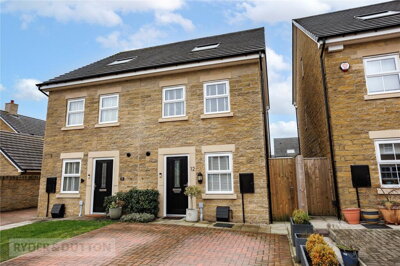
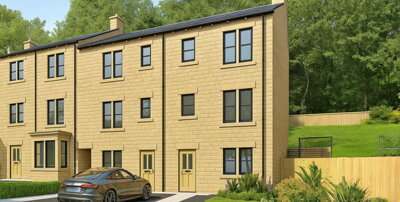
Browse 3 homes new builds in Tintwistle, High Peak from local developer agents.
£255k
17
3
50
Source: home.co.uk
Source: home.co.uk
Terraced
6 listings
Avg £209,992
Semi-Detached
4 listings
Avg £337,000
Detached
3 listings
Avg £370,000
End of Terrace
2 listings
Avg £249,975
Cottage
1 listings
Avg £270,000
House
1 listings
Avg £210,000
Source: home.co.uk
Source: home.co.uk
--- PASSAGE 1 --- The Tintwistle property market has demonstrated steady and sustainable growth over recent years, with house prices increasing by 2% over the last year alone. This follows a longer-term upward trend, with current prices sitting approximately 11% above the 2021 peak of £235,000, indicating continued demand for properties in this desirable High Peak location. The market benefits from a healthy mix of property types, catering to various budgets and lifestyle requirements while maintaining the character that makes Tintwistle an attractive place to call home.
--- PASSAGE 2 --- Property prices in Tintwistle reflect the variety of housing stock available throughout the village. Terraced properties, which often include traditional stone-built cottages characteristic of the area, average around £209,575, making them an accessible entry point for first-time buyers. Semi-detached homes, averaging approximately £330,883, represent the most common property type and offer excellent value for families seeking additional space and garden areas. Detached properties command higher prices averaging £424,286, appealing to buyers prioritising privacy, larger accommodations, and views across the surrounding moorland and countryside.
New build activity in the SK13 postcode area has been limited, meaning the majority of properties available are existing homes with established character and history. This includes a significant proportion of older properties, many dating from the Victorian and Edwardian eras, which feature traditional construction methods and period details that appeal to buyers seeking character properties. The absence of extensive new development has helped preserve Tintwistle's village atmosphere and architectural heritage, though it does mean that buyers may encounter properties requiring modernisation or renovation works.

Life in Tintwistle revolves around the village's strong sense of community and its extraordinary natural surroundings. The village forms part of the Longdendale Valley, a designated area of outstanding natural beauty that forms the gateway to the Peak District National Park. Residents enjoy immediate access to extensive moorland, ancient woodlands, and theornamental lakes created in the 19th century to supply Manchester's water needs. The Sett Valley Trail, a popular bridleway and cycling route, passes through the village, connecting Tintwistle to Hayfield and beyond while providing safe routes for outdoor recreation.
The village centre maintains a traditional character with a selection of local amenities serving everyday needs. A convenience store provides essential groceries and household items, while a popular pub offers a focal point for social gatherings and community events. The village hall hosts various activities throughout the year, from craft groups and exercise classes to seasonal celebrations that bring residents together. For more extensive shopping, dining, and entertainment options, the nearby towns of Glossop and Chapel-en-le-Frith are easily accessible by car or public transport.
The surrounding area offers exceptional opportunities for outdoor enthusiasts and families seeking an active lifestyle. Kinder Scout, the highest point in the Peak District, is within easy reach, as are numerous trails suitable for walking, cycling, and horse riding. The Trans Pennine Trail passes nearby, connecting the village to broader regional cycling networks. Local primary schooling, combined with the strong community atmosphere, makes Tintwistle particularly appealing to families with children, while the peaceful environment and scenic setting attract retirees and those seeking a slower pace of life away from urban centres.

Families considering a move to Tintwistle will find a selection of educational options available within the local area, catering to children of various ages. Tintwistle CofE (VA) Infant and Nursery School serves the village directly, providing early years and Key Stage 1 education with a focus on developing strong foundational skills in a nurturing environment. The school maintains a close relationship with the local community, and parents frequently cite the caring atmosphere and individual attention given to each pupil as significant advantages of the village-based education provision.
Secondary education is available at Whaley Bridge School, approximately five miles from Tintwistle, which serves students from across the High Peak area including Tintwistle, Chapel-en-le-Frith, and surrounding villages. The school offers a comprehensive curriculum and various extracurricular activities, with students typically travelling by school bus service. For families seeking grammar school education, the schools in the Stockport and Manchester areas are accessible for older children willing to travel, with good transport connections making this a viable option for secondary-aged students.
Further education opportunities are readily accessible for older students and adults. Colleges in Stockport, Manchester, and Sheffield offer a wide range of vocational and academic courses, while the proximity to these major cities provides access to universities and specialist training providers. Parents should note that catchment areas for both primary and secondary schools can influence property values in specific neighbourhoods, and we recommend contacting local schools directly or consulting the local education authority to confirm current arrangements before finalising a property purchase.

Tintwistle enjoys surprisingly good connectivity considering its rural village location, with multiple transport options linking residents to major employment centres. The village sits just off the A628, the main route through the Longdendale Valley, which connects to the M67 motorway providing direct access to Manchester city centre. The Snake Pass road, a scenic but sometimes challenging route, offers an alternative connection to Sheffield and the motorway network to the east. For commuters working in Manchester, Sheffield, or the surrounding areas, the journey times are manageable compared to many other Peak District locations, making Tintwistle a practical choice for those who need to travel regularly.
Public transport options include bus services connecting Tintwistle to surrounding towns and villages. The 236 and 237 bus routes operate through the village, providing connections to Glossop, Chapel-en-le-Frith, and Buxton, with some services extending to Manchester. These buses are particularly useful for school travel, shopping trips, and accessing railway stations. Glossop railway station, approximately three miles away, offers direct train services to Manchester Piccadilly with a journey time of around 35-40 minutes, making it practical for daily commuters who prefer to avoid driving.
For those working in Manchester or Sheffield who drive, parking at local railway stations can be challenging, and many residents choose to commute by train from Glossop or Hadfield stations. Cycling is a popular alternative for shorter journeys, with the flat valley bottom providing relatively easy cycling conditions, though the surrounding hills present challenges for recreational rides. The Trans Pennine Trail and other bridleways offer car-free routes for leisure and commuting where distances allow, with secure bike storage available at some local facilities and railway stations.

Before beginning your property search, obtain a mortgage agreement in principle from a lender to understand your budget and demonstrate your seriousness to sellers. Our mortgage partners can help you compare rates and find the most suitable deal for your circumstances.
Explore current listings in Tintwistle and comparable villages to understand what is available within your budget. Consider factors such as property age, construction type, and proximity to local amenities when prioritising your requirements.
Contact estate agents in the High Peak area to arrange viewings of properties that match your criteria. View multiple properties to compare condition, character, and value before making offers.
Once your offer is accepted, commission a RICS Level 2 Survey to assess the property's condition and identify any issues that may affect your decision or require negotiation. This is particularly important for older properties common in Tintwistle.
Appoint a solicitor to handle the legal aspects of your purchase, including searches, contracts, and registration with the Land Registry. Our conveyancing partners offer competitive rates for buyers in the High Peak area.
Once all legal work is satisfactory and finances are confirmed, exchange contracts to commit to the purchase. Complete your transaction and collect your keys, then move into your new Tintwistle home.
Properties in Tintwistle span several architectural periods, from Victorian terraces built for textile workers to mid-20th century detached homes constructed during the post-war housing boom. When viewing properties, pay particular attention to the construction and condition of older stone-built homes, which may have solid walls rather than cavity walls and could benefit from additional insulation. Traditional features such as stone flagged floors, exposed beams, and open fireplaces add character but may require ongoing maintenance, and understanding these characteristics helps buyers make informed decisions about renovation costs and practicalities.
The local geology of the Longdendale Valley means that some properties may be affected by natural ground conditions, including the potential for movement in clay soils during periods of drought or heavy rainfall. While significant structural problems are not widespread, we recommend that all buyers commission a professional survey before purchasing. A RICS Level 2 Survey provides a thorough assessment of the property's condition, identifying any structural concerns, damp issues, roof defects, or outdated electrical and plumbing systems that may not be apparent during a visual inspection.
Flood risk is a consideration for properties located near the River Etherow, particularly those in lower-lying areas of the village. While major flooding events are infrequent, prospective buyers should enquire about historical flood events and review the government's flood risk maps for the area. Properties on higher ground or set back from the river valley may offer lower flood risk but could face different considerations such as exposure to wind or reliance on private drainage systems. Your solicitor should conduct appropriate drainage and environmental searches as part of the conveyancing process.

--- PASSAGE 3 --- The average house price in Tintwistle over the last year was £288,550, with prices having increased by 2% compared to the previous year. Property types range significantly in price, with terraced properties averaging around £209,575, semi-detached homes at approximately £330,883, and detached properties reaching an average of £424,286. Prices are currently 11% above the 2021 peak of £235,000, indicating sustained demand for properties in this desirable Peak District village location.
Properties in Tintwistle fall within the High Peak Borough Council area and are assigned council tax bands A through F, depending on the property's value and type. Victorian and Edwardian terraced cottages typically fall into bands A or B, making them among the most affordable council tax options in the area. Larger detached properties and those with higher values may be placed in higher bands. Prospective buyers should check the specific band for any property they are considering, as council tax forms part of the ongoing cost of homeownership.
Tintwistle is served by Tintwistle CofE (VA) Infant and Nursery School, which provides early years and Key Stage 1 education within the village itself. Secondary school students typically attend Whaley Bridge School, approximately five miles away, which offers a comprehensive curriculum and good GCSE results. The village's proximity to larger towns provides access to grammar schools and specialist educational options in Manchester and Sheffield for families willing to travel, with direct bus services and train connections making longer journeys feasible for older students.
Tintwistle is served by bus routes connecting the village to Glossop, Chapel-en-le-Frith, Buxton, and Manchester, providing practical options for daily travel and access to amenities. The nearest railway stations at Glossop and Hadfield offer direct trains to Manchester Piccadilly with journey times of around 35-40 minutes, making daily commuting viable for those working in the city. The A628 road provides direct access by car to Manchester to the west and Sheffield to the east, though journey times vary depending on traffic conditions, particularly through the Snake Pass.
The Tintwistle property market has demonstrated consistent growth over recent years, with prices rising 11% since the 2021 peak and continuing to increase by approximately 2% annually. The village's location at the edge of the Peak District, combined with good transport links to Manchester, makes it attractive to buyers seeking countryside living within commuting distance of major employment centres. Limited new build development helps maintain property values by preserving the village's character and restricting supply, while strong demand from buyers priced out of Manchester continues to support the local market.
--- PASSAGE 4 --- Stamp Duty Land Tax (SDLT) rates for standard purchases in England start at 0% for properties up to £250,000, rising to 5% on the portion between £250,001 and £925,000. First-time buyers benefit from relief on properties up to £425,000, paying 0% on the first £425,000 and 5% on amounts between £425,001 and £625,000. For a typical Tintwistle property at the average price of £288,550, a first-time buyer would pay no SDLT, while a additional purchaser would pay approximately £1,928 in stamp duty.
When viewing properties in Tintwistle, pay attention to the construction type and age of the property, as many homes are Victorian or Edwardian with solid walls rather than modern cavity wall construction. Check the condition of stonework, roofs, and any original features such as windows and fireplaces, which may require maintenance or updating. Properties near the River Etherow should be assessed for flood risk, and all buyers should commission a professional RICS Level 2 Survey to identify any structural or maintenance issues before committing to a purchase.
From 4.5% APRC
Compare mortgage rates from leading lenders to find the best deal for your Tintwistle purchase
From £499
Expert solicitors to handle your property purchase in Tintwistle
From £350
Essential homebuyer report for your new Tintwistle property
From £85
Energy performance certificate required for all property sales
--- PASSAGE 5 --- Understanding the full costs of purchasing a property in Tintwistle helps buyers budget accurately and avoid financial surprises during the transaction. The most significant additional cost beyond the purchase price is Stamp Duty Land Tax, which applies to all property purchases above £250,000 in England. At the current average price of £288,550 for a Tintwistle property, a buyer purchasing with a mortgage or who is not a first-time buyer would pay approximately £1,928 in stamp duty. This is calculated at 0% on the first £250,000 and 5% on the remaining £38,550.
--- PASSAGE 6 --- First-time buyers benefit from more generous SDLT thresholds that can significantly reduce or eliminate this cost. Properties up to £425,000 qualify for first-time buyer relief, meaning those purchasing at the Tintwistle average price would pay no stamp duty at all. This relief makes homeownership particularly accessible in the Tintwistle market for first-time buyers who have not previously owned property anywhere in the world. Buyers should ensure they meet all eligibility criteria for first-time buyer relief, as penalties for incorrect claims can be substantial.
--- PASSAGE 7 --- Beyond stamp duty, buyers should budget for solicitor fees typically ranging from £500 to £1,500 depending on the complexity of the transaction and whether the property is freehold or leasehold. Survey costs for a RICS Level 2 Survey range from approximately £350 to £600 depending on property size, while an Energy Performance Certificate costs around £85 to £120. Mortgage arrangement fees typically range from 0% to 2% of the loan amount, though many lenders offer fee-free mortgages. Local searches conducted by your solicitor may cost £250 to £350 and cover environmental, drainage, and planning searches specific to the High Peak area. Factor in removal costs, mortgage valuation fees, and a contingency of around 5% for unexpected expenses to ensure your budget is realistic and comprehensive.

Properties New Builds In London

Properties New Builds In Plymouth

Properties New Builds In Liverpool

Properties New Builds In Glasgow

Properties New Builds In Sheffield

Properties New Builds In Edinburgh

Properties New Builds In Coventry

Properties New Builds In Bradford

Properties New Builds In Manchester

Properties New Builds In Birmingham

Properties New Builds In Bristol

Properties New Builds In Oxford

Properties New Builds In Leicester

Properties New Builds In Newcastle

Properties New Builds In Leeds

Properties New Builds In Southampton

Properties New Builds In Cardiff

Properties New Builds In Nottingham

Properties New Builds In Norwich

Properties New Builds In Brighton

Properties New Builds In Derby

Properties New Builds In Portsmouth

Properties New Builds In Northampton

Properties New Builds In Milton Keynes

Properties New Builds In Bournemouth

Properties New Builds In Bolton

Properties New Builds In Swansea

Properties New Builds In Swindon

Properties New Builds In Peterborough

Properties New Builds In Wolverhampton

Enter your details to see if this property is within your budget.
Loans, cards, car finance
Estimated property budget
Borrowing + deposit
You could borrow between
Typical borrowing
Monthly repayment
Est. at 4.5%
Loan-to-value
This is an estimate only. Your actual budget may vary depending on interest rates, credit history, and personal circumstances. For an accurate affordability assessment, speak to one of our free mortgage advisors.
This calculator provides estimates for illustrative purposes only and does not constitute financial advice. Your home may be repossessed if you do not keep up repayments on your mortgage. Estimates based on 4.5% interest rate, repayment mortgage. Actual rates depend on your circumstances.
Homemove is a trading name of HM Haus Group Ltd (Company No. 13873779, registered in England & Wales). Homemove Mortgages Ltd (Company No. 15947693) is an Appointed Representative of TMG Direct Limited, trading as TMG Mortgage Network, which is authorised and regulated by the Financial Conduct Authority (FRN 786245). Homemove Mortgages Ltd is entered on the FCA Register as an Appointed Representative (FRN 1022429). You can check registrations at NewRegister or by calling 0800 111 6768.

We use cookies to show you personalised content and improve your experience of our website. Find out more in our Privacy policy and Cookie policy.