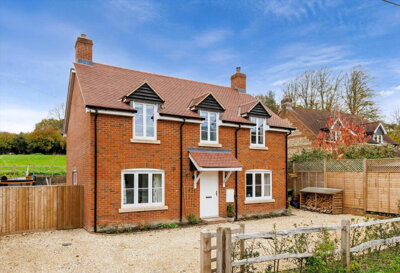
Browse 1 home new builds in Tangley, Test Valley from local developer agents.
£513k
4
0
151
Source: home.co.uk
Source: home.co.uk
Detached Bungalow
2 listings
Avg £667,500
Semi-Detached
2 listings
Avg £400,000
Source: home.co.uk
Source: home.co.uk
The Throwleigh property market reflects the unique character of this small Dartmoor village. Our data shows current average prices hovering around £650,000, with detached properties commanding premium prices of approximately £650,000 for premium locations like St Madron. Semi-detached properties offer relatively more accessible entry points at around £460,000, making the market varied for different buyer budgets and requirements. The village has seen notable recent sales including Wooda Farmhouse which sold in January 2025, demonstrating continued activity in the traditional property segment.
Price trends in Throwleigh have shown significant movement over the years. While house prices have increased by approximately 34% compared to the previous year, they currently sit around 13% below the 2002 peak of £750,000. More recently, sold prices have experienced a 12.2% fall over the last 12 months according to OnTheMarket, suggesting a market in adjustment. This creates opportunities for buyers who may find previously overpriced properties now more competitively valued. However, the small number of transactions in any given year means individual sales can have a significant impact on average figures.
The local housing stock predominantly consists of character properties including exposed stone cottages, traditional farmhouses, and detached homes set within generous plots. New build activity in the village itself remains minimal, with no active developments specifically within Throwleigh. This scarcity of new supply means buyers are largely looking at existing period properties, many of which will be constructed from the distinctive Dartmoor stone that gives the area its characteristic appearance. The limited availability of planning permissions within the National Park means new development opportunities are extremely rare, protecting the established character of the village.
Our local insight indicates that properties in Throwleigh are typically marketed through specialist country property agents rather than high street chains. The EX20 2HX postcode encompasses the village and surrounding rural area, with properties often featuring large gardens, traditional outbuildings, and stunning views across the moorland. Buyers should be prepared for competitive situations when quality properties come to market, as the limited stock attracts buyers from across the South West and beyond who are seeking that rare combination of village charm and National Park setting.

Throwleigh embodies the essence of Dartmoor village life, offering residents a genuine sense of community and belonging. As an idyllic village within Dartmoor National Park, Throwleigh provides direct access to some of Devon's most breathtaking landscapes. The village sits surrounded by moorland, with walking routes and bridleways threading through ancient clapper bridges, historic settlements, and expansive views across the granite uplands that define this protected landscape. The Two Moors Way long-distance footpath passes through the village, connecting walkers to Ivybridge and south to the coast.
The local economy in Throwleigh and surrounding West Devon areas revolves primarily around agriculture, tourism, and local services. Many residents embrace the rural working life, with farms and smallholdings dotting the surrounding countryside. The proximity to Okehampton provides access to additional employment opportunities and amenities for those who may commute to work, while the village itself offers a traditional community atmosphere that has been preserved through generations of careful stewardship. Local events including fetes, craft markets, and seasonal celebrations maintain the strong community spirit that defines village life here.
The demographic of Throwleigh reflects typical Dartmoor village patterns, with a mix of long-established families, newcomers drawn by the lifestyle, and retirees seeking peaceful retirement. Properties in the village are predominantly older constructions, many dating from the pre-1919 era when traditional building techniques produced the characterful stone cottages and farmhouses that remain highly desirable today. The village maintains its traditional character despite the passage of time, making it particularly appealing to those who value heritage and authenticity in their living environment. Local amenities include the popular Granite Way cafe cycle route nearby and the historic Treatments Hall community venue.
For those considering a move to Throwleigh, the village offers a genuinely supportive community environment. The historic St Mary's Church provides regular services and community events, while the village hall hosts everything from yoga classes to local history talks. The nearby town of Okehampton provides access to supermarkets including Tesco and Lidl, medical facilities at the community hospital, and a weekly market that has traded for over 700 years.

Families considering a move to Throwleigh will find educational options available within reasonable driving distance of the village. Primary education is typically accessed through schools in surrounding villages and towns, with many small rural primaries serving the local communities across Dartmoor. The close-knit nature of these schools often provides excellent opportunities for young children to develop academically and socially in supportive environments. Class sizes in these rural schools tend to be smaller than urban equivalents, allowing for more individual attention and a strong community feel among pupils and staff.
Secondary education options in the region include schools in Okehampton, which serves as the principal town for much of West Devon. Okehampton College is a comprehensive secondary school serving the area, while families may also consider schools in Tavistock and further afield in Exeter, depending on individual circumstances and preferences. The county of Devon maintains a network of schools with varying specialisms, and parents are advised to research specific Ofsted ratings and admission criteria for schools they are considering. School transport arrangements should be factored into property selection, as journey patterns will significantly impact family routines.
For families with specific educational requirements or preferences, the wider Dartmoor and Devon area offers various options including grammar schools, faith schools, and independent educational establishments. Exeter, approximately 30 miles away, provides access to the renowned Exeter School and other independent options for those seeking private education. The travel implications of these choices should be carefully considered when purchasing property in a rural village like Throwleigh, as journey times to schools may be longer than in urban areas. Many families find that the benefits of village life more than compensate for the additional travel involved in school runs.
Parents should note that school catchment areas can be complex in rural areas, with admission policies often based on proximity rather than parish boundaries. We recommend contacting Devon County Council's education admission team and visiting potential schools before committing to a property purchase. Some families choose to relocate to Throwleigh when children are older, taking advantage of the village's peaceful environment while their children travel to secondary school or college in nearby towns.
Transport connections from Throwleigh reflect its rural Dartmoor location, with residents typically relying on private vehicles as the primary means of transport. The village sits approximately 5-6 miles from Okehampton, which provides access to a wider range of amenities, supermarkets, and services. The journey by car to Okehampton takes approximately 15-20 minutes via the A30, which runs through the area and connects to the broader Devon road network. Okehampton itself has seen significant investment in recent years, with the completion of the A30 bypass improving traffic flow and making the town more accessible.
For those needing to commute to larger employment centres, the A30 provides a direct route towards Exeter and Plymouth. Exeter, approximately 30 miles from Throwleigh, offers direct rail connections to London Paddington taking around two hours and twenty minutes, as well as access to Bristol and beyond. Plymouth is similarly accessible for those seeking employment or urban amenities, with the city offering major retail, healthcare, and administrative services for the region. The drive to Exeter takes around 45 minutes under normal traffic conditions, making Throwleigh potentially viable for occasional commuters who can work from home for several days each week.
Public transport options in rural Dartmoor villages are limited, with bus services operating on reduced timetables compared to urban areas. The 118 bus service connects Okehampton with surrounding villages including Throwleigh, though passengers should check current timetables as services can be infrequent. The nearest railway station is in Okehampton, which has seen service improvements in recent years with additional train services reinstated following the reopening of the line. For buyers who regularly need to travel for work, the practicalities of rural commuting should be carefully assessed during the property search process.
Many residents find that the peaceful environment and quality of life benefits of village living outweigh the additional transport considerations. Electric vehicle ownership is increasing in the area, with home charging facilities making rural motoring more practical and cost-effective. The Granite Way, a former railway line now converted to a cycling and walking route, passes near Okehampton and connects to the wider National Cycle Network, providing car-free access to the town for leisure and some commuting purposes.
Start by exploring the Throwleigh property market on Homemove, comparing prices across Rightmove, Zoopla, and OnTheMarket. Understand that this is a small village market with limited stock, so patience may be required to find the right property. Consider both current asking prices and recent sale prices to gauge fair value in this Dartmoor market. Set up property alerts to be notified immediately when new listings appear, as quality properties in the village sell quickly to buyers who are well-prepared and ready to move.
Before viewing properties, arrange a mortgage agreement in principle with a lender. This strengthens your position when making offers and demonstrates to sellers that you are a serious buyer. Given Throwleigh's premium property values, ensure your budget aligns with the £460,000 to £650,000 price range for most properties. Speak to a mortgage broker who understands rural property markets, as some lenders have specific criteria for properties in National Parks or those with unusual construction methods.
View properties in person to assess their condition, especially given the age of most village properties. Look beyond cosmetic features to identify potential issues with stone walls, roofs, and traditional construction methods that are common in this Dartmoor National Park village. We recommend visiting at different times of day and in various weather conditions to fully understand how the property performs. Ask the vendor about the history of maintenance and any works carried out in recent years.
For any property you intend to purchase, especially older stone-built properties, arrange a Level 2 Survey before proceeding. This homebuyer report will identify defects common in traditional Dartmoor properties, including potential damp issues, roof condition, and any structural concerns requiring attention. Our inspectors are experienced in assessing period properties and will provide detailed guidance on the specific construction methods used locally. The survey cost represents a small fraction of the property value but provides essential information for negotiating and budgeting.
Choose an experienced solicitor to handle the legal aspects of your purchase. They will conduct searches, handle contracts, and manage the registration process. Given the rural location and potential for listed buildings, your solicitor should have experience with Dartmoor National Park properties and understand the implications of conservation area restrictions. Local searches will include drainage and water authority records, planning history, and environmental data specific to the West Devon area.
Once all searches are satisfactory and finances are confirmed, you will exchange contracts and pay your deposit. Completion typically follows within weeks, at which point you will receive your keys and become the official owner of your Throwleigh property. We recommend arranging buildings insurance from exchange of contracts, as this is typically a condition of your mortgage offer. Consider arranging a final inspection shortly before completion to ensure the property is in the expected condition.
Buying property in Throwleigh requires careful attention to matters specific to this Dartmoor village location. Given that the village sits within Dartmoor National Park, planning restrictions are typically more stringent than in non-protected areas. If you plan any modifications, extensions, or outbuilding conversions, you will need to obtain the relevant consents from the National Park Authority, which prioritises preserving the natural and built character of the area. The authority has specific guidelines on materials, design, and scale that must be followed, and we recommend early engagement with their planning team if you have specific renovation plans.
The age of properties in Throwleigh means that many homes will have experienced generations of occupation and maintenance. Stone-built properties, which are prevalent in the village, may show signs of traditional construction methods that differ from modern standards. Look for evidence of damp, particularly in ground floor rooms and basements, and check the condition of lime mortar pointing which may require renewal. Roof conditions on older properties should be assessed carefully, as slate or thatch repairs can be costly. Our inspectors frequently find issues with outdated electrical systems and plumbing in properties of this age, so budget accordingly for potential upgrades.
Flood risk should be investigated for any property, particularly those situated near streams or low-lying ground. While specific flood risk data for Throwleigh was not found in our research, rural properties near water features should be carefully assessed. Properties within Dartmoor National Park may also be listed buildings, requiring specialist consideration for any alterations and potentially benefiting from grant assistance for appropriate maintenance and restoration work. The village's historic properties may be listed at Grade I, Grade II*, or Grade II, each with different implications for permitted works.
Energy efficiency should be considered when purchasing traditional stone properties. While these homes offer tremendous character, they may have higher heating costs than modern equivalents. Look for evidence of insulation improvements, secondary glazing, and efficient heating systems. Some properties may qualify for Green Homes Grant assistance or other energy efficiency schemes. Our surveyors will assess the current energy performance and identify priority improvements that could reduce ongoing costs while preserving the property's historic character.
Properties in Throwleigh showcase the distinctive building traditions that have shaped Dartmoor's built environment for centuries. The predominant construction method uses local granite and shillet, materials that were quarried from the moor itself and reflect the geological character of the area. These traditional stone walls, typically 400-600mm thick, provide excellent thermal mass but require specific maintenance approaches that differ significantly from modern cavity wall construction.
Lime mortar pointing is a critical element of traditional Dartmoor properties and one that our surveyors always assess carefully. Unlike modern cement-based mortars, lime mortar allows the walls to breathe, preventing moisture from becoming trapped within the stone fabric. Properties that have been incorrectly pointed with cement can suffer from deterioration as moisture cannot escape, leading to spalling stone faces and internal damp issues. We recommend budgeting for re-pointing using appropriate NHL (Natural Hydraulic Lime) mortars if required.
Roofing in Throwleigh properties typically features either natural slate sourced from Welsh quarries or traditional Devon thatch, both of which require specialist tradespeople for installation and repair. The steep pitches common in Dartmoor properties reflect the heavy rainfall typical of the area and help ensure effective water runoff. Our inspectors are experienced in assessing these traditional roof structures, identifying issues with battens, underfelt, and the condition of parapet gutters that can be prone to deterioration in period properties.
Many Throwleigh properties include traditional outbuildings, barns, and shippons that may offer conversion potential subject to obtaining the necessary consents. The National Park Authority generally supports the sensitive conversion of traditional agricultural buildings to residential use, as this helps maintain the fabric of these important structures while providing additional accommodation. Any potential conversion should be discussed with the planning authority before committing to a purchase, as consent may be subject to conditions relating to design, materials, and access.
The average house price in Throwleigh currently sits around £646,000 according to aggregated data from Rightmove, Zoopla, and OnTheMarket. Detached properties typically achieve around £650,000, while semi-detached properties have sold for approximately £460,000 based on recent sales such as Wooda Farmhouse. The market has seen significant price fluctuations, with a 34% year-on-year increase but a 12.2% fall over the last 12 months. Prices remain approximately 13% below the 2002 peak of £750,000, suggesting potential value opportunities for long-term buyers.
Properties in Throwleigh fall under West Devon Borough Council and Devon County Council. Council tax bands will vary depending on property type and value, with most traditional stone cottages and farmhouses likely in bands C through F. Exact bandings can be checked on the Valuation Office Agency website using the property address, and we recommend verifying this before purchase as band reassessments can occur following changes to the property.
Throwleigh is a small village, so primary schools are located in surrounding communities within Dartmoor. Northlew Primary School serves some families from the Throwleigh area, while others travel to schools in Sticklepath or South Tawton. Secondary education is typically accessed through schools in Okehampton, approximately 15-20 minutes drive away including Okehampton College. Parents should research specific schools' Ofsted ratings and admission catchment areas when considering a purchase, as travel arrangements will be an important practical consideration for families.
Public transport options in Throwleigh are limited, reflecting its rural Dartmoor location. Bus services operate on reduced timetables with the 118 service connecting to Okehampton, though passengers should check current schedules as routes may change. The nearest railway station is in Okehampton, which has seen improved rail services in recent years with direct connections to Exeter and Exeter St Davids. For commuting to Exeter or Plymouth, a car is typically necessary, with journey times of around 45 minutes to Exeter via the A30.
Throwleigh offers potential for property investment, particularly given its location within Dartmoor National Park where new build supply is extremely limited and planning consent is rarely granted. The village attracts buyers seeking rural lifestyle properties, and period cottages and character homes typically maintain their value well over the long term. However, the small market size means liquidity may be lower than in urban areas, with perhaps only a handful of sales occurring in any given year. Any investment should be considered long-term, and buyers should understand that the National Park designation restricts future development opportunities that might otherwise increase property values.
Stamp Duty Land Tax rates for 2024-25 are 0% on the first £250,000, 5% on £250,001 to £925,000, 10% on £925,001 to £1.5 million, and 12% above £1.5 million. First-time buyers pay 0% on the first £425,000, with 5% on £425,001 to £625,000. For most Throwleigh properties at £460,000-£650,000, standard buyers would pay between £10,500 and £20,000 in stamp duty, while first-time buyers would pay around £1,750 on a £500,000 purchase. Additional SDLT surcharges apply for non-UK residents.
When purchasing property in Throwleigh, budget carefully for the additional costs beyond the purchase price. Stamp Duty Land Tax applies to all property purchases above £250,000 at standard rates. For a typical Throwleigh property priced around £500,000, you would pay approximately £12,500 in stamp duty. First-time buyers purchasing properties up to £625,000 can benefit from relief, reducing costs to around £3,750 for a £500,000 property. Non-UK resident buyers should budget for the additional 2% SDLT surcharge that applies on top of standard rates.
Additional buying costs include solicitor fees for conveyancing, which typically range from £499 to £1,500 depending on complexity. For older Throwleigh properties, searches may be more detailed given the rural location and National Park designation, potentially adding to legal costs. A RICS Level 2 Survey is essential for traditional stone properties, with costs starting from around £350 for standard homes but potentially higher for larger or more complex properties with multiple outbuildings. The survey cost should be considered an investment that could save you thousands by identifying defects before you commit to purchase.
Factor in removal costs, potential renovation expenses if the property requires updating, and ongoing costs such as council tax, utilities, and buildings insurance. Properties in Dartmoor National Park may have higher insurance premiums due to flood risk considerations and the age of properties, and traditional stone construction may require specialist insurers who understand historic buildings. Setting aside a contingency fund of at least 10-15% of the purchase price for unexpected works is advisable when buying character property in rural Devon. Many older properties will have maintenance requirements that are not immediately apparent during viewings.
Regular ongoing costs should also be factored into your budget. Traditional properties often have higher heating costs than modern equivalents, particularly those with single glazing or solid walls. Council tax for properties in Throwleigh will depend on the band assigned, which is typically C through F for period properties. Water and drainage charges are handled by South West Water, and many rural properties also have septic tank or private drainage arrangements that require maintenance and periodic emptying.
Properties New Builds In London

Properties New Builds In Plymouth

Properties New Builds In Liverpool

Properties New Builds In Glasgow

Properties New Builds In Sheffield

Properties New Builds In Edinburgh

Properties New Builds In Coventry

Properties New Builds In Bradford

Properties New Builds In Manchester

Properties New Builds In Birmingham

Properties New Builds In Bristol

Properties New Builds In Oxford

Properties New Builds In Leicester

Properties New Builds In Newcastle

Properties New Builds In Leeds

Properties New Builds In Southampton

Properties New Builds In Cardiff

Properties New Builds In Nottingham

Properties New Builds In Norwich

Properties New Builds In Brighton

Properties New Builds In Derby

Properties New Builds In Portsmouth

Properties New Builds In Northampton

Properties New Builds In Milton Keynes

Properties New Builds In Bournemouth

Properties New Builds In Bolton

Properties New Builds In Swansea

Properties New Builds In Swindon

Properties New Builds In Peterborough

Properties New Builds In Wolverhampton

Enter your details to see if this property is within your budget.
Loans, cards, car finance
Estimated property budget
Borrowing + deposit
You could borrow between
Typical borrowing
Monthly repayment
Est. at 4.5%
Loan-to-value
This is an estimate only. Your actual budget may vary depending on interest rates, credit history, and personal circumstances. For an accurate affordability assessment, speak to one of our free mortgage advisors.
This calculator provides estimates for illustrative purposes only and does not constitute financial advice. Your home may be repossessed if you do not keep up repayments on your mortgage. Estimates based on 4.5% interest rate, repayment mortgage. Actual rates depend on your circumstances.
Homemove is a trading name of HM Haus Group Ltd (Company No. 13873779, registered in England & Wales). Homemove Mortgages Ltd (Company No. 15947693) is an Appointed Representative of TMG Direct Limited, trading as TMG Mortgage Network, which is authorised and regulated by the Financial Conduct Authority (FRN 786245). Homemove Mortgages Ltd is entered on the FCA Register as an Appointed Representative (FRN 1022429). You can check registrations at NewRegister or by calling 0800 111 6768.

We use cookies to show you personalised content and improve your experience of our website. Find out more in our Privacy policy and Cookie policy.