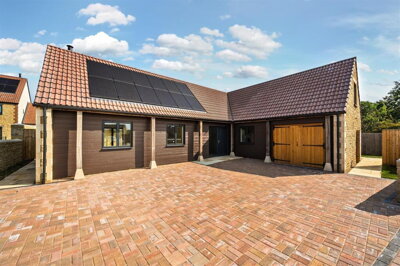
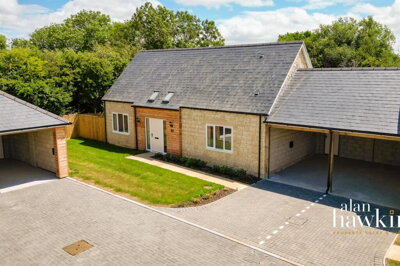
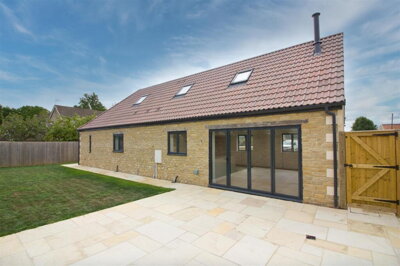
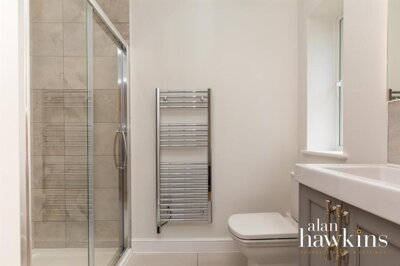
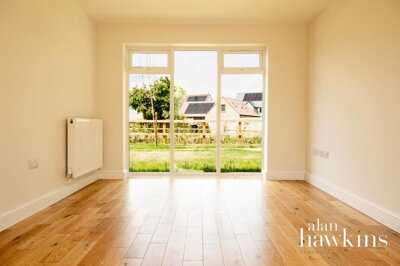
Browse 5 homes new builds in Sutton Benger from local developer agents.
Three bedroom properties represent a significant portion of the Sutton Benger housing market, offering space for families with multiple reception rooms and gardens in many cases. Browse detached, semi-detached, and terraced options ranging across new residential developments.
The Pentewan Valley property market has demonstrated remarkable stability despite broader national fluctuations, with overall prices decreasing by just 1.4% over the past twelve months. This modest correction reflects a market that has not experienced the dramatic boom-and-bust cycles seen in more urban areas, making it an attractive proposition for buyers prioritising long-term value over speculative gains. Detached properties command the highest prices in the valley, averaging £440,000, while semi-detached homes offer more accessible entry at around £290,000. Terraced properties, often featuring the traditional Cornish charm of local stone construction, average approximately £260,000. Flats in the valley, typically found in conversions of period properties or as part of small blocks, start from around £180,000.
One of the notable features of the local market is The View development by Gilbert & Goode, which offers a selection of 2, 3, and 4-bedroom homes priced between £290,000 and £450,000. This contemporary development provides buyers with the opportunity to purchase a brand-new property while still benefiting from the valley's established character and community atmosphere. Beyond this development, occasional small infill sites appear on the market, offering bespoke opportunities for buyers seeking something unique. The limited volume of sales, approximately 15 transactions annually, indicates a relatively tight market where properties can move quickly when correctly priced. Our local insight helps you understand how each property type compares to recent sales data, ensuring you pay a fair price for your new home in Pentewan Valley.
Price trends across property types show consistent modest decreases over the past year. Detached properties have seen the smallest decline at 1.1%, reflecting continued demand for larger homes with gardens and flexible accommodation. Semi-detached properties decreased by 1.7%, while terraced properties saw the largest adjustment at 1.9%. Flats proved most resilient with just a 0.5% decrease, suggesting strong rental demand from young professionals and couples drawn to the area's lifestyle credentials. For buyers, these stable conditions offer a comfortable window to enter the market without the pressure of rapidly rising prices or intense bidding wars that characterise more competitive locations.

Pentewan Valley presents a lifestyle defined by its extraordinary natural setting, where the St Austell River winds its way through countryside dotted with mining heritage and traditional farming to meet the sea at Pentewan Sands. The population of approximately 1,000 to 1,500 residents creates a close-knit community atmosphere where neighbours recognise each other and local events draw participation from across the valley. The area's economic foundation rests on tourism, with Pentewan Sands Holiday Park serving as a major employer, alongside agriculture, local services, and proximity to St Austell's wider employment opportunities. Many residents enjoy the best of both worlds, living in a peaceful rural setting while commuting to nearby towns for work.
The village of Pentewan itself sits at the valley's mouth and carries significant historic character as a former port and fishing community, reflected in its Conservation Area designation. Several Grade II Listed Buildings, including remnants of the old railway structures and traditional cottages, punctuate the village and serve as reminders of Pentewan's industrial past when china clay and tin were transported through the port. The surrounding valley showcases the distinctive Pentewan Beds geology, a sequence of sands, silts, and clays that give the landscape its particular character and influence building foundations in the area. Walking routes through the valley connect residents with the coast path, making the area popular with outdoor enthusiasts who appreciate the blend of woodland walks and sea views.
Day-to-day life in Pentewan Valley balances rural tranquility with practical convenience. The nearby town of St Austell, approximately 5 miles inland, provides supermarkets, healthcare facilities, and a choice of primary and secondary schools. For larger shopping trips or cultural activities, Truro offers a comprehensive range of retail and dining options. The valley's position on the south Cornwall coast provides relatively mild winters compared to inland areas, though coastal exposure can bring strong winds during autumn and winter storms. Community life centres on the village pub, local events, and the beach, creating an atmosphere that many residents describe as genuinely welcoming to newcomers while retaining its authentic Cornish character.
Families considering a move to Pentewan Valley will find a selection of educational options within reasonable driving distance, though the valley's rural nature means primary education is accessed through nearby villages and towns. The closest primary schools serve the surrounding communities, with many parents travelling to St Austell for primary education where several well-regarded options exist. Schools in St Austell include Bothawn Primary School, which has earned recognition for its inclusive approach, and Sandy Hill Academy, which serves families across the eastern part of the town. For Reception and Key Stage 1 places, St Mewan Community Primary School provides another popular option in the nearby area.
Secondary education centres on St Austell, which offers a choice of secondary schools catering to different academic and vocational pathways. Brannel School serves the surrounding rural communities and has developed strong programmes in science and technology, while Penrice Academy offers a broad curriculum with particular strengths in arts and humanities. For families seeking grammar school provision, travel to Truro or other centres may be necessary, depending on current admissions criteria. Specialist schools for children with additional needs are concentrated in the larger towns, requiring families to factor travel arrangements into their planning. We recommend visiting potential schools during the application process, as catchment areas can significantly influence placement decisions.
The area attracts parents willing to navigate the logistics of rural schooling in exchange for the lifestyle benefits of valley living. Many families choose Pentewan Valley for its outdoor learning opportunities, strong community connections, and the chance for children to grow up in a safe, picturesque environment. School transport arrangements are managed through Cornwall Council, with bus services connecting the valley to schools in St Austell. Further education opportunities are readily accessible in Truro, Plymouth, and Falmouth, which offer sixth form provision and college courses across a wide range of subjects. For buyers prioritising educational provision, we recommend researching specific school catchments and admission arrangements, as these can change and may influence which year groups are most suitable for a particular location.
Connectivity from Pentewan Valley centres on the road network linking the valley to St Austell, which lies approximately 5 miles inland and serves as the main local hub for shopping, healthcare, and employment. The A390 provides access to St Austell and onwards to Truro, while the A3057 connects the area to the south coast and harbour towns like Fowey and Mevagissey. For those travelling further afield, the M5 motorway at Exeter provides access to the national motorway network, though journey times of around two hours to Bristol or London reflect Cornwall's geographic position. Newquay Airport, approximately 20 miles away, offers domestic flights and seasonal connections to European destinations, making international travel accessible for valley residents.
Public transport options are more limited than in urban areas, reflecting the valley's rural character. Bus services operated by Start Buses connect Pentewan and the surrounding villages to St Austell, providing essential access for those without vehicles. The Route 24 service runs regular connections between St Austell and St Mawes, passing through the valley and providing access to the Roseland Peninsula. Rail services are accessed via St Austell station, which offers direct connections to Truro, Plymouth, and the national rail network, with services to London Paddington taking approximately four and a half hours. Many Pentewan Valley residents find that driving becomes part of daily life, though the relatively short distances to amenities mean that journeys are typically manageable rather than arduous.
For remote workers, superfast broadband availability varies across the valley, with newer developments like The View offering modern connectivity infrastructure. Properties in more remote parts of the valley may experience slower broadband speeds, which is worth investigating before purchase if you work from home. Mobile coverage is generally good for most networks in the valley, though some areas near the coast may experience intermittent reception. Our team can advise on current broadband availability for specific properties, helping you assess whether a property meets your connectivity requirements for remote working or streaming needs.
Before beginning your property search, secure a mortgage agreement in principle from a lender. This demonstrates your buying capacity to sellers and estate agents, giving you a competitive edge in a market where properties can attract multiple interested parties. Contact several lenders to compare rates, as mortgage products vary significantly between providers. Having this documentation ready shows sellers that you are a serious buyer capable of proceeding quickly once your offer is accepted.
Study current listings, recent sales data, and local property types in Pentewan Valley. Understanding the difference between a traditional stone cottage in the Conservation Area and a modern home on The View development will help you identify properties that truly match your requirements and budget. Our platform provides access to comprehensive market data, including average prices by property type and recent transaction volumes. Consider engaging with local estate agents who have in-depth knowledge of the area and may be aware of properties coming to market before they appear online.
Schedule viewings of shortlisted properties, taking time to explore the neighbourhood at different times of day and in various weather conditions. Consider factors such as flood risk areas near the river, proximity to local amenities, and your daily commute requirements. Pay particular attention to the property's exposure to the elements, as coastal properties can experience strong winds and salt spray. For Listed Buildings or properties in the Conservation Area, check what restrictions apply to potential modifications.
Given that over 60% of properties in Pentewan Valley are likely over 50 years old, a thorough survey is essential before committing to a purchase. For a typical 3-bedroom property, expect to pay between £450 and £700 for a Level 2 Survey that will identify structural issues, damp, timber defects, and any concerns related to the local geology and mining history. Our inspectors are experienced with Cornwall's housing stock and understand the specific defect patterns common in traditional stone-built properties and post-war construction alike.
Choose a solicitor experienced with Cornwall property transactions to handle legal work, searches, and contracts. They will investigate flood risk along the St Austell River, planning restrictions affecting properties in the Conservation Area, and any mining history that might impact the property. Local knowledge is valuable here, as Cornwall's specific regulations and historical records require expertise to interpret correctly. Budget for searches including drainage and water searches, mining searches, and local authority searches.
Once all surveys, searches, and finances are in order, you will exchange contracts and pay your deposit, typically 10% of the purchase price. Completion typically follows within days or weeks, at which point you will receive your keys and can begin your new life in Pentewan Valley. On the day of completion, our team can recommend local services including removal companies, utility providers, and tradespeople who work throughout the valley and surrounding area.
Properties in Pentewan Valley require careful examination of several area-specific factors that may not be immediately apparent to buyers unfamiliar with Cornwall's geography. The local geology presents particular considerations, as the Pentewan Beds contain significant clay deposits that can shrink and swell with moisture changes, potentially causing subsidence and structural movement. Any property with large trees nearby, particularly those with extensive root systems close to foundations, warrants additional scrutiny as tree roots can exacerbate clay movement and lead to foundation damage over time. We strongly recommend requesting a mining search for any property in the valley, given the area's history of china clay and tin mining that could affect ground stability and lead to insurance complications.
Flood risk assessment is essential before committing to a purchase, as the St Austell River flows through the valley and can pose fluvial flooding threats to properties in low-lying areas and those adjacent to the watercourse. Properties near Pentewan Sands face additional coastal flooding considerations, while the valley's topography can concentrate surface water during heavy rainfall events. Our inspectors check drainage patterns, examine evidence of past flooding such as tide marks or water staining, and assess the property's elevation relative to surrounding land. Properties with flood resilience measures in place, such as raised electrics or hard flooring downstairs, may be more suitable for the area.
Buildings in the Conservation Area, particularly Listed Buildings, carry planning restrictions that affect what alterations owners can undertake, and buyers should understand these constraints before purchase. Properties like the former railway cottages and industrial buildings may have specific requirements regarding materials, colours, and window styles that limit renovation options. Modern properties on developments like The View offer more predictable construction but may carry service charges and different maintenance responsibilities than traditional buildings. Our team can help you understand which category a property falls into and what implications this has for your purchase and future plans.
The current average house price in Pentewan Valley is £357,983 based on data from the past 12 months. Detached properties average £440,000, semi-detached homes around £290,000, terraced properties at approximately £260,000, and flats at around £180,000. Prices have decreased slightly by 1.4% over the past year, suggesting a stable market suitable for careful buyers rather than one experiencing volatile price swings. This stability makes Pentewan Valley particularly attractive for buyers seeking long-term value rather than quick capital gains.
Primary schools are accessed in nearby villages and St Austell, approximately 5 miles away, where several well-regarded options serve the local community. Bothawn Primary School and Sandy Hill Academy in St Austell provide strong options for younger children, while St Mewan Community Primary serves families in the surrounding area. Secondary education is primarily provided through schools in St Austell, with Brannel School and Penrice Academy offering various academic and vocational pathways. For grammar school provision or specialist options, families may need to consider schools in Truro or travel further afield depending on current admissions policies and catchment area boundaries.
Public transport options reflect the rural nature of Pentewan Valley, with Start Buses operating services that connect Pentewan and the surrounding villages to St Austell. The Route 24 service provides regular connections through the valley, while St Austell station offers rail services to Truro, Plymouth, and London Paddington. Many residents rely on private vehicles for daily transport, though the proximity of St Austell means most amenities are within a short drive of 10-15 minutes. Newquay Airport, approximately 20 miles away, offers domestic and seasonal European flights, providing international connectivity without requiring a long journey to a major airport.
Pentewan Valley offers potential for buyers seeking lifestyle-driven purchases rather than speculative investment. The area attracts families, retirees, and remote workers who value the coastal proximity, natural beauty, and community atmosphere. Tourism from Pentewan Sands Holiday Park supports the local economy, while proximity to St Austell provides employment access across retail, healthcare, and service sectors. The stable price trends and limited property supply suggest steady rather than dramatic value changes, making the valley suitable for those planning to enjoy their property rather than trade it quickly. Holiday let potential exists near Pentewan Sands, though planning permission and mortgage considerations differ from standard residential purchases.
Flood risk is a significant consideration in Pentewan Valley, where the St Austell River poses fluvial flooding threats to properties in low-lying areas and those adjacent to the watercourse. Properties immediately alongside the river or in the valley floor face the highest risk during periods of heavy rainfall and high tides. Coastal flooding risk exists at the very mouth of the valley around Pentewan Sands, where storm surges can combine with river outflows to create challenging conditions. Surface water flooding can occur during heavy rainfall due to the valley's topography, which channels water toward the river channel. Any buyer should investigate flood risk for specific properties using the Environment Agency's flood maps, consider past flood events, and assess what flood resilience measures the property may have in place.
Standard SDLT rates apply in Pentewan Valley, with 0% tax on purchases up to £250,000, 5% on the portion from £250,001 to £925,000, 10% from £925,001 to £1.5 million, and 12% above £1.5 million. First-time buyers benefit from relief on purchases up to £625,000, paying 0% on the first £425,000 and 5% on the remainder between £425,001 and £625,000. Given average property prices in the valley, most buyers will fall into the 5% bracket. For a typical semi-detached property at £290,000, non-first-time buyers would pay approximately £2,000 in SDLT, while first-time buyers would benefit from relief on the portion below £425,000.
Pentewan Valley has a history of china clay and tin mining that can affect ground conditions and property insurance. While the immediate valley floor was more associated with transport and processing of minerals rather than deep mining, surrounding areas to the north and east contain historic mine workings. A mining search is strongly recommended for any property purchase in the valley, as this will reveal whether the property sits on or near recorded mine entries, old shafts, or areas of underground extraction. Some mortgage lenders require a mining search as part of their conditions, and properties with significant mining history may face higher insurance premiums or require specialist cover.
Purchasing property in Pentewan Valley involves several costs beyond the purchase price, with stamp duty land tax representing a significant consideration for most buyers. For a typical semi-detached property priced around £290,000, a buyer who is not a first-time owner would pay approximately £2,000 in SDLT, calculated at 5% on the £40,000 portion above the £250,000 threshold. First-time buyers purchasing properties under £625,000 would benefit from relief, potentially reducing their SDLT liability to zero on the first £425,000 of a £290,000 purchase. These savings can make a meaningful difference to the funds required at completion and should be factored into your overall budget planning.
Beyond stamp duty, buyers should budget for solicitor conveyancing fees typically ranging from £499 to over £1,500 depending on the complexity of the transaction and property type. A RICS Level 2 Survey will cost between £450 and £900 depending on property size and complexity, with larger detached homes in Pentewan Valley attracting higher fees than terraced properties or flats. For Listed Buildings or properties in the Conservation Area, additional specialist surveys may be required, potentially adding £500 or more to the upfront costs. An Energy Performance Certificate is mandatory and typically costs between £85 and £150. Factor in removals, potential renovation costs if the property requires updating, and ongoing costs such as council tax and buildings insurance. Our team can provide a detailed breakdown of expected costs for your specific situation.
The majority of properties in Pentewan Valley are over 50 years old, meaning traditional construction methods and materials dominate the local housing stock. Traditional stone-built cottages and farmhouses, common throughout the valley and concentrated in the Conservation Area around Pentewan village, often feature solid walls constructed from local granite or stone with lime mortar pointing. These properties can suffer from rising damp where the original damp-proof course has failed or was never installed, penetrating damp through degraded render or pointing, and timber decay in floor joists and roof structures. Our inspectors pay particular attention to these issues, which are common in Cornwall's older properties but can be expensive to remedy if left unaddressed.
Roof condition is a significant consideration across the valley's older properties, many of which retain original slate coverings. While Welsh slate was traditionally used on better-quality buildings, some properties feature local stone slates or man-made slates of varying quality. Our surveyors check for slipped or missing slates, deteriorated ridge pointing, and the condition of leadwork around chimneys and valleys. Gutters and downpipes require inspection for blockages and leaks, as failing drainage can direct water into wall heads and cause penetrating damp. Properties with complex rooflines, including those with multiple dormers common in converted agricultural buildings, require particularly thorough examination.
Outdated electrical and plumbing systems frequently appear in properties built before the 1970s. Original wiring may not meet current standards and can pose safety risks, particularly if the system has been added to over the years without proper updating. Lead pipes, once standard, remain in some older properties and can affect water quality. Heating systems in period properties often prove inadequate by modern standards, with open fires or storage heaters providing uneven and expensive warmth. Our inspectors document these service deficiencies clearly, allowing you to budget for necessary upgrades or negotiate the purchase price to reflect the cost of bringing systems up to modern specifications.
Properties New Builds In London

Properties New Builds In Plymouth

Properties New Builds In Liverpool

Properties New Builds In Glasgow

Properties New Builds In Sheffield

Properties New Builds In Edinburgh

Properties New Builds In Coventry

Properties New Builds In Bradford

Properties New Builds In Manchester

Properties New Builds In Birmingham

Properties New Builds In Bristol

Properties New Builds In Oxford

Properties New Builds In Leicester

Properties New Builds In Newcastle

Properties New Builds In Leeds

Properties New Builds In Southampton

Properties New Builds In Cardiff

Properties New Builds In Nottingham

Properties New Builds In Norwich

Properties New Builds In Brighton

Properties New Builds In Derby

Properties New Builds In Portsmouth

Properties New Builds In Northampton

Properties New Builds In Milton Keynes

Properties New Builds In Bournemouth

Properties New Builds In Bolton

Properties New Builds In Swansea

Properties New Builds In Swindon

Properties New Builds In Peterborough

Properties New Builds In Wolverhampton

Enter your details to see if this property is within your budget.
Loans, cards, car finance
Estimated property budget
Borrowing + deposit
You could borrow between
Typical borrowing
Monthly repayment
Est. at 4.5%
Loan-to-value
This is an estimate only. Your actual budget may vary depending on interest rates, credit history, and personal circumstances. For an accurate affordability assessment, speak to one of our free mortgage advisors.
This calculator provides estimates for illustrative purposes only and does not constitute financial advice. Your home may be repossessed if you do not keep up repayments on your mortgage. Estimates based on 4.5% interest rate, repayment mortgage. Actual rates depend on your circumstances.
Homemove is a trading name of HM Haus Group Ltd (Company No. 13873779, registered in England & Wales). Homemove Mortgages Ltd (Company No. 15947693) is an Appointed Representative of TMG Direct Limited, trading as TMG Mortgage Network, which is authorised and regulated by the Financial Conduct Authority (FRN 786245). Homemove Mortgages Ltd is entered on the FCA Register as an Appointed Representative (FRN 1022429). You can check registrations at NewRegister or by calling 0800 111 6768.

We use cookies to show you personalised content and improve your experience of our website. Find out more in our Privacy policy and Cookie policy.