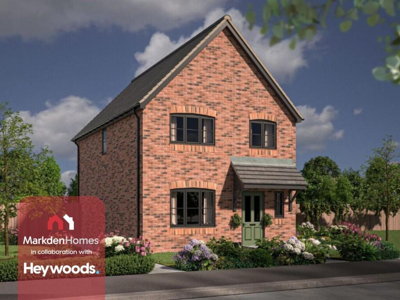
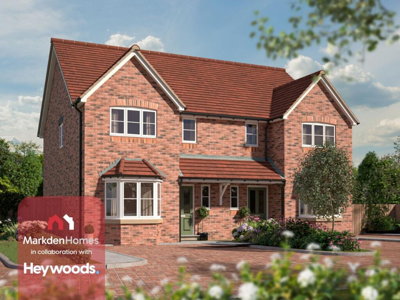
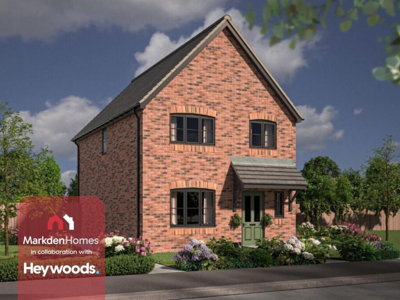
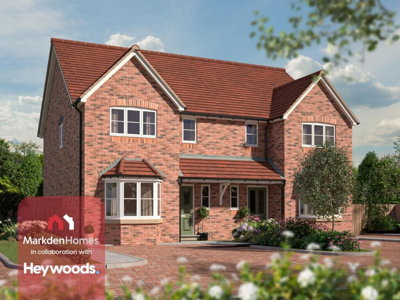
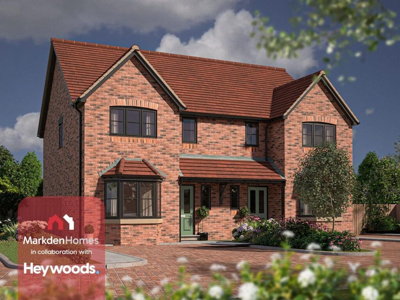
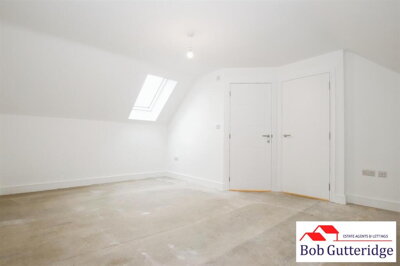
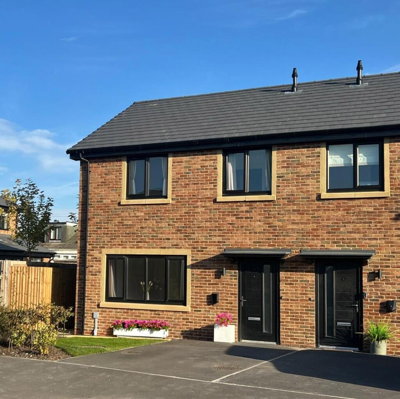
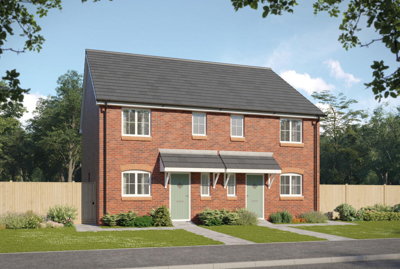
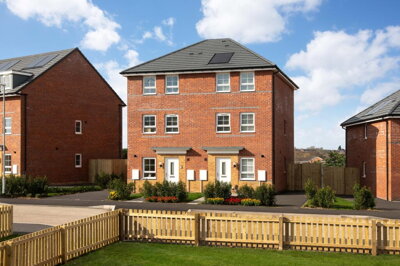
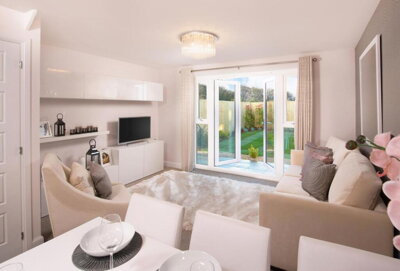
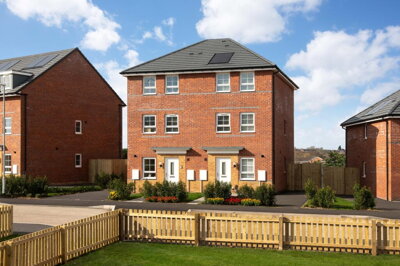
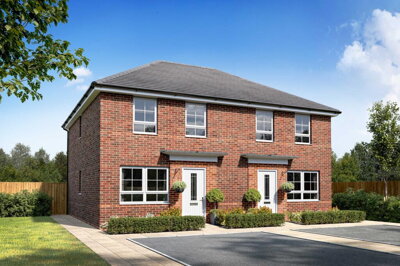
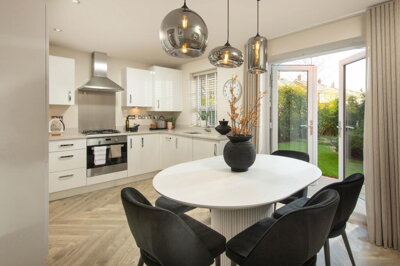
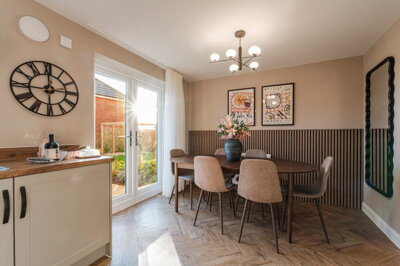
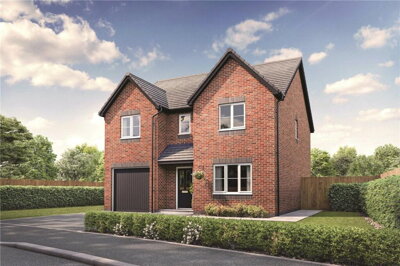
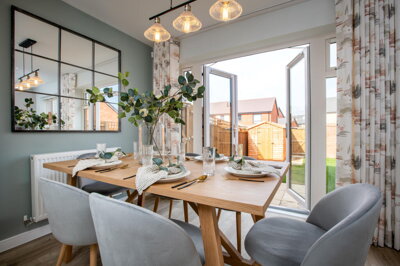
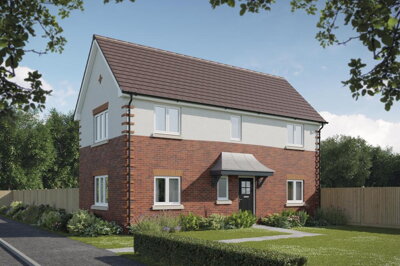
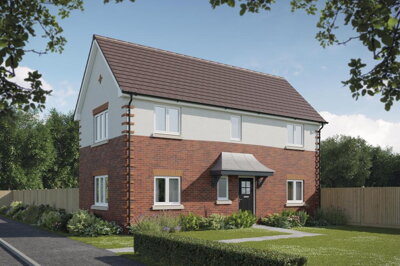
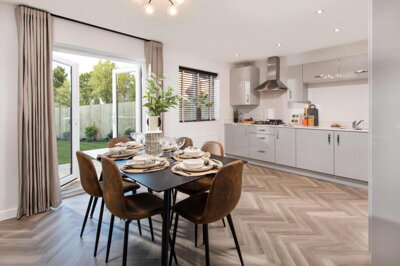
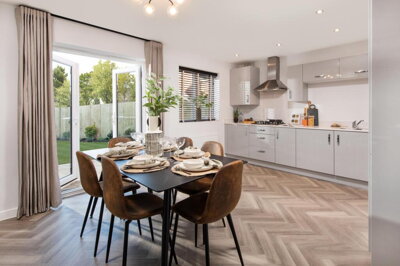
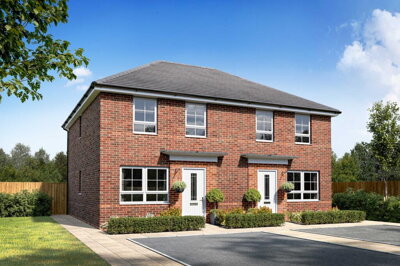
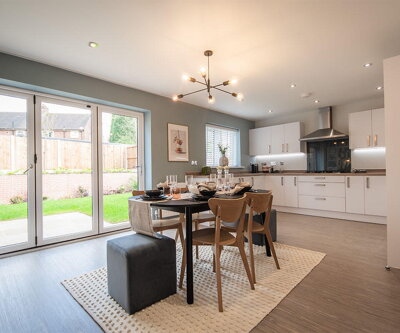
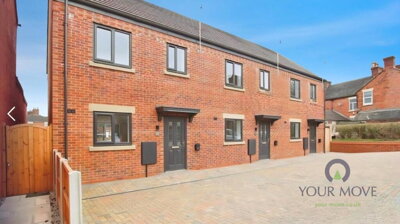
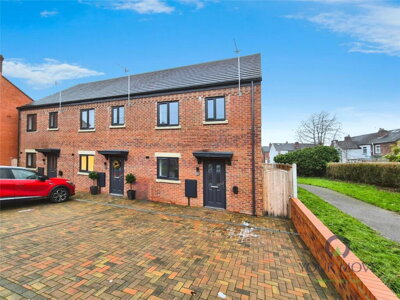
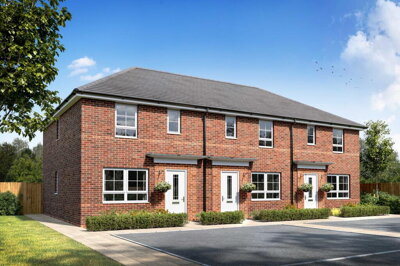
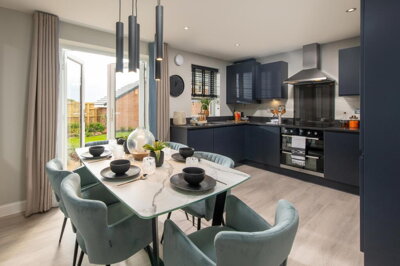
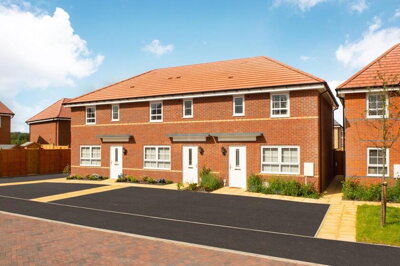
Browse 35 homes new builds in Stoke-on-Trent from local developer agents.
Three bedroom properties represent a significant portion of the Stoke On Trent housing market, offering space for families with multiple reception rooms and gardens in many cases. Browse detached, semi-detached, and terraced options ranging across new residential developments.
The Stoke-on-Trent property market presents compelling opportunities for buyers at every level. Current data shows overall average prices of £158,111, with terraced homes averaging £124,191, semi-detached properties at £160,950, and detached houses reaching £255,251. Flats remain the most accessible entry point at around £90,123, making them ideal for first-time buyers or investors seeking rental yield. Over the past year, prices have remained relatively stable with just a 1% decrease compared to the previous year, while the market sits 2% above the 2021 peak of £155,070, indicating sustained buyer confidence in the area.
New build activity continues to breathe fresh life into the local market with six active developments across the city. The Croft in Meir Hay offers homes from St. Modwen Homes, while Lime Tree Park brings Keepmoat Homes developments to the same area. Bellway's Park View in ST4 8GR and Lovell Homes at Victoria Park provide further options for buyers seeking modern specifications. Those looking for family-sized properties might consider Barratt Homes at Berryhill Gardens or Taylor Wimpey's Kingsland Fields in Trentham, where new homes typically range from £180,000 for smaller properties to over £350,000 for detached family homes.
The city divides into six distinctive towns, each with its own property character and price variations. Burslem, known as the Mother Town, features Victorian terraces and converted pottery buildings at accessible prices. Hanley serves as the commercial centre with a mix of period properties and modern apartments. Trentham commands higher prices due to its family-friendly reputation and good schools, while Tunstall and Fenton offer more affordable options with traditional terraced housing. Longton provides a balance of period properties and newer developments with excellent local amenities.
With approximately 3,000 property sales recorded over the past twelve months, Stoke-on-Trent maintains healthy transaction volumes for a city of its size. The market benefits from its strategic position within the Midlands, attracting buyers from across the region seeking value for money whilst maintaining access to major employment centres. First-time buyers will find the lower average prices particularly advantageous when calculating mortgage requirements and deposit thresholds.

Stoke-on-Trent comprises six distinctive towns historically known as the Potteries: Burslem, Tunstall, Hanley, Longton, Fenton, and Stoke. Each town maintains its own character while benefiting from the shared infrastructure of the larger city. Burslem, often called the Mother Town, preserves the most intact Victorian pottery heritage with bottle kilns and industrial architecture defining its streetscape. Hanley serves as the commercial centre with shopping precincts and cultural venues, while Longton offers a quieter residential atmosphere with good schools and local amenities.
The city's population of 258,400 across 109,700 households creates vibrant communities with strong local identities. Census data reveals the housing stock is predominantly terraced properties at 39.5%, with semi-detached houses making up 33.0% of homes. Detached properties account for 14.0% while flats represent 13.5% of the housing stock. This mix provides options across all budgets, from affordable terraced starter homes to spacious detached properties for families seeking more room.
A significant proportion of Stoke-on-Trent's housing dates from before 1919, particularly in areas like Burslem and Longton where terraced streets were built during the pottery industry boom. Properties from this era often feature solid brick walls, original sash windows, and period fireplaces that require maintenance awareness. The inter-war period of 1919 to 1945 brought semi-detached development to areas like Trentham and Hartshill, while post-war expansion created council estates in suburbs including Blurton, Normacot, and Dresden. Understanding the age of local properties helps buyers anticipate common maintenance requirements and potential defects.
The local economy benefits from diverse employment sectors including manufacturing, logistics, healthcare, and education. Royal Stoke University Hospital serves as a major employer, while Staffordshire University and the nearby Keele University campus provide educational and research opportunities. The city's strategic location has attracted logistics companies, with excellent motorway connections via the M6 making commuting to Manchester, Birmingham, and Liverpool practical for workers in those cities.

Families considering a move to Stoke-on-Trent will find a comprehensive range of educational options across all levels. The city hosts numerous primary schools, with several achieving good or outstanding Ofsted ratings. Keele High School and St Peter's Academy in Trentham are notable secondary schools serving the southern areas, while Birches Head Academy serves the northern communities. St Thomas More Catholic College in Longton provides faith-based secondary education with a strong reputation for academic achievement.
For younger children, primary education is well distributed throughout the city with options including St George's Primary School in Preeswood, Hanley Primary School, and the newly established Discovery Academy in Bucknall. Many parents specifically target postcodes around Trentham and Barlaston for access to highly rated primary schools, with properties in these areas commanding premiums reflecting the school catchment desirability. The ST4 postcode covering Trentham, Barlaston, and Stone Road consistently ranks among the most sought-after areas for families due to school quality and neighbourhood character.
Beyond school education, Stoke-on-Trent offers further and higher education opportunities that add to its appeal as a place to put down roots. Staffordshire University's Stoke campus provides degree courses and vocational qualifications, while Keele University, located just outside the city boundary, offers a broader range of undergraduate and postgraduate programmes. The presence of these institutions supports the local economy and provides educational pathways for residents without requiring travel to larger cities. Students and university staff also contribute to rental demand, making properties near campus locations attractive for buy-to-let investments.
Stoke-on-Trent offers excellent transport connectivity that makes it attractive to commuters working in major cities whilst enjoying more affordable housing costs. The city sits directly on the West Coast Main Line with Stoke-on-Trent railway station providing regular services to London Euston in approximately 90 minutes, Manchester Piccadilly in 40 minutes, and Birmingham New Street in around an hour. This makes day commuting to these employment centres entirely feasible for those who need to travel occasionally or regularly for work.
Road connections are equally impressive, with the M6 motorway running north-south through the city and providing direct access to Manchester to the north and Birmingham to the south. The A500 dual carriageway, known locally as the D-Road, connects the six towns and provides rapid access to the motorway network. For air travel, Manchester Airport is accessible within 40 minutes by car, while Liverpool John Lennon Airport takes approximately an hour. East Midlands Airport is also within reasonable reach at around 50 minutes for those needing international connections.
Local public transport within Stoke-on-Trent operates via bus services connecting all six towns, with the city benefiting from the Potteries Bus Station in Hanley as a central hub. First Potteries operates the majority of local routes, making travel between towns and to key amenities relatively straightforward without a car. For cyclists, the National Cycle Network passes through the area with routes along canal towpaths and former railway lines providing traffic-free options for recreational cycling and local journeys. However, car ownership remains common given the dispersed nature of the city and the convenience it provides for accessing amenities spread across the six towns.
Before you start viewing properties, obtain an agreement in principle from a mortgage lender. This confirms your budget and shows estate agents and sellers that you are a serious buyer with financing already considered. Given the average property price of £158,111, most buyers will need a mortgage of around £130,000-£140,000 assuming a 10-15% deposit.
Explore the different towns and estates to find areas matching your priorities. Consider commute times, school catchment zones, local amenities, and property types available. The wide price variations between terraced homes averaging £124,191 and detached properties at £255,251 mean budget can significantly influence location options.
Contact local estate agents to arrange viewings of properties matching your criteria. With 3,000+ properties available, using multiple agents ensures you see the full market. Take notes and photographs during viewings to help compare properties later. Pay attention to the condition of older properties, particularly checking walls for cracks, roof condition, and signs of damp.
Once your offer is accepted, arrange a RICS Level 2 Survey (HomeBuyer Report) before proceeding. Given Stoke-on-Trent's predominantly older housing stock with high clay geology shrink-swell risks and potential mining legacy issues, a thorough survey is essential to identify any structural concerns. Survey costs in Stoke-on-Trent typically range from £400 to £700 depending on property size.
Appoint a solicitor to handle the legal work involved in purchasing your property. They will conduct searches including the crucial mining search report for properties in former coalfield areas, review contracts, and coordinate with your mortgage lender to ensure a smooth transaction through to completion.
Once all searches are satisfactory and your mortgage is formally approved, you will exchange contracts and pay your deposit. Completion typically follows within a few weeks, when you receive the keys to your new Stoke-on-Trent home. Budget for additional costs including stamp duty, solicitor fees, and survey costs when planning your move.
Buying property in Stoke-on-Trent requires awareness of several area-specific factors that could affect your investment. The local geology presents particular considerations, as the city sits on Carboniferous rocks including coal measures and Etruria Marl with high clay content. This creates moderate to high shrink-swell potential, meaning properties may experience ground movement during dry periods or where mature trees are present near foundations. When viewing properties, look for signs of subsidence such as diagonal cracks extending from door and window frames, sticking doors or windows, and rippling wallpaper.
The mining legacy of Stoke-on-Trent as a former coalfield requires specific attention during the purchase process. Properties in areas with historical shallow mining may be at risk of ground instability. Requesting a mining search report is strongly recommended, and your conveyancing solicitor should flag properties in potentially affected zones. While deep mining has ceased, legacy issues can occasionally cause problems years after operations ended. Areas particularly worth checking include those near former collieries and locations where historical maps show mining activity.
The predominant construction materials in Stoke-on-Trent reflect the local industrial heritage. Most older properties feature solid brick walls, with cavity wall construction becoming standard from the 1930s onwards. Roofs typically use slate or clay tiles on older properties, with concrete tiles appearing on post-war builds. Suspended timber floors are common in pre-war properties, while concrete ground floors became standard from the mid-20th century. Understanding these construction methods helps buyers anticipate maintenance needs and survey findings for properties throughout the city.
Flood risk varies significantly across the city, with areas along the River Trent and its tributaries including River Fowlea and Lyme Brook requiring particular caution. Surface water flooding also affects low-lying areas and locations where drainage systems struggle during heavy rainfall. Parts of Hanley, Fenton, Longton, and properties adjacent to the Trent and Mersey Canal warrant extra investigation. Check the Environment Agency flood maps and factor appropriate insurance costs into your budget before committing to a purchase in affected areas.
Conservation areas cover significant portions of Burslem, Longton, and Hanley, with numerous listed buildings related to the pottery industry and Victorian architecture. If purchasing a listed building or property within a conservation area, be aware of planning restrictions on alterations, Listed Building Consent requirements, and potentially higher maintenance costs for period features. Properties in these areas often require specialist surveys beyond a standard RICS Level 2 assessment.
The current average house price in Stoke-on-Trent is £158,111 according to recent Land Registry data. This makes the city one of the most affordable major urban areas in Britain. Property prices vary significantly by type: terraced homes average £124,191, semi-detached properties £160,950, detached houses £255,251, and flats around £90,123. Prices have remained stable over the past year with just a 1% decrease, sitting 2% above the 2021 peak. First-time buyers will find the lower entry costs particularly attractive compared to cities like Manchester or Birmingham where average prices exceed £250,000.
Stoke-on-Trent City Council sets council tax bands that vary by property valuation. Most terraced and semi-detached homes in the city fall into bands A through C, with larger properties and those in more desirable areas such as Trentham potentially in bands D or E. You can check the specific band for any property via the Valuation Office Agency website using the property address. Council tax in Stoke-on-Trent remains competitive compared to neighbouring authorities in Cheshire and Staffordshire, making it an affordable option for families and professionals alike.
Stoke-on-Trent offers good educational options at all levels. Notable primary schools include St George's Primary School in Preeswood and Hanley Primary School. At secondary level, St Thomas More Catholic College in Longton, Keele High School, and St Peter's Academy in Trentham have strong reputations for academic achievement and student development. The city also benefits from further and higher education via Staffordshire University's Stoke campus and proximity to Keele University. Families should check current Ofsted ratings and catchment areas, as these can influence which schools serve specific postcodes and properties in areas like Trentham (ST4) often command a premium due to school quality.
Stoke-on-Trent has excellent transport connections for a city of its size. The railway station offers direct services to London Euston in 90 minutes, Manchester Piccadilly in 40 minutes, and Birmingham New Street in 60 minutes on the West Coast Main Line. Local bus services operated by First Potteries connect all six towns via the central hub at Hanley Bus Station, making it practical to live in Stoke-on-Trent without a car if you work locally or from home. The M6 motorway provides easy road access to major cities, and Manchester Airport is reachable within 40 minutes for those needing air travel.
Stoke-on-Trent offers several advantages for property investors. The relatively low average house price of £158,111 means strong potential for capital growth as the city continues its regeneration programme, particularly in areas like Hanley where investment is transforming the city centre. Rental yields can be attractive, particularly for terraced properties and flats where demand from students, young professionals, and families remains consistent. The diverse economy with Royal Stoke University Hospital, Staffordshire University, and growing logistics sector supports tenant demand. However, as with any investment, thorough research into specific areas and property conditions is essential before committing funds.
For standard purchases, stamp duty land tax (SDLT) applies at 0% on the first £250,000, 5% on £250,001 to £925,000, 10% on £925,001 to £1.5 million, and 12% on any amount above £1.5 million. First-time buyers benefit from relief on the first £425,000 (0% rate) with 5% applying between £425,001 and £625,000. Given Stoke-on-Trent's average price of £158,111, most purchases will fall below the zero-rate threshold, meaning first-time buyers may pay no SDLT at all on typical terraced homes or flats. However, relief is reduced for properties above £625,000 and does not apply above that threshold.
Flood risk in Stoke-on-Trent varies by location but requires investigation before purchasing. Areas along the River Trent and its tributaries face fluvial flooding risk, while surface water flooding affects low-lying areas during heavy rainfall. Parts of Hanley, Fenton, Longton, and properties near the Trent and Mersey Canal have elevated flood risk. Your solicitor should arrange appropriate environmental searches, and you should check Environment Agency flood maps for the specific property address. Properties in flood risk zones may face higher insurance premiums, so factor these costs into your budget when comparing properties across different areas of the city.
Stoke-on-Trent has numerous conservation areas reflecting its rich industrial and architectural heritage, particularly in Burslem, Longton, Hanley, and areas along the Trent and Mersey Canal. The city has a significant concentration of listed buildings related to the pottery industry, including bottle kilns, former pottery factories, civic buildings, and Victorian terraced housing. If you are considering purchasing a listed building or property within a conservation area, be aware that planning restrictions apply to alterations and modifications. These properties may require more detailed surveys and potentially a RICS Level 3 Building Survey rather than a standard Level 2 assessment, as period features and non-standard construction methods often require specialist expertise to evaluate properly.
Get competitive mortgage rates tailored to your purchase
From 4.5%
Expert legal support for your Stoke-on-Trent property purchase
From £499
Professional home survey identifying defects before purchase
From £400
Energy performance certificate for your new property
From £80
Understanding the full costs of purchasing property in Stoke-on-Trent helps you budget accurately and avoid surprises during the transaction. Stamp duty land tax (SDLT) represents the most significant additional cost for most buyers. The current thresholds for standard buyers see no SDLT charged on the first £250,000 of property value, with 5% applied to the portion between £250,001 and £925,000. Given Stoke-on-Trent's average house price of £158,111, many buyers purchasing at or below average prices will pay no stamp duty at all.
First-time buyers enjoy enhanced SDLT relief, paying nothing on the first £425,000 and 5% on amounts between £425,001 and £625,000. This relief can be substantial for those purchasing terraced homes averaging £124,191 or flats at £90,123, meaning first-time buyers could complete their purchase without any SDLT liability. However, relief is reduced for properties priced above £625,000 and does not apply above that threshold. Use the government's online SDLT calculator to estimate your exact liability based on your specific purchase price and circumstances.
Beyond stamp duty, budget for solicitor conveyancing costs typically ranging from £500 to £1,500 depending on complexity, search fees around £300 to £500, and mortgage arrangement fees of 0% to 1.5% of the loan amount. Survey costs for a RICS Level 2 HomeBuyer Report in Stoke-on-Trent range from £400 to £700 depending on property size, with terraced homes and flats generally at the lower end and larger detached properties at the higher end. Factor in removal costs, potential renovation expenses for older properties, and always maintain a contingency fund equivalent to 10-15% of your purchase price for unexpected issues discovered during surveys or after moving.
Properties New Builds In London

Properties New Builds In Plymouth

Properties New Builds In Liverpool

Properties New Builds In Glasgow

Properties New Builds In Sheffield

Properties New Builds In Edinburgh

Properties New Builds In Coventry

Properties New Builds In Bradford

Properties New Builds In Manchester

Properties New Builds In Birmingham

Properties New Builds In Bristol

Properties New Builds In Oxford

Properties New Builds In Leicester

Properties New Builds In Newcastle

Properties New Builds In Leeds

Properties New Builds In Southampton

Properties New Builds In Cardiff

Properties New Builds In Nottingham

Properties New Builds In Norwich

Properties New Builds In Brighton

Properties New Builds In Derby

Properties New Builds In Portsmouth

Properties New Builds In Northampton

Properties New Builds In Milton Keynes

Properties New Builds In Bournemouth

Properties New Builds In Bolton

Properties New Builds In Swansea

Properties New Builds In Swindon

Properties New Builds In Peterborough

Properties New Builds In Wolverhampton

Enter your details to see if this property is within your budget.
Loans, cards, car finance
Estimated property budget
Borrowing + deposit
You could borrow between
Typical borrowing
Monthly repayment
Est. at 4.5%
Loan-to-value
This is an estimate only. Your actual budget may vary depending on interest rates, credit history, and personal circumstances. For an accurate affordability assessment, speak to one of our free mortgage advisors.
This calculator provides estimates for illustrative purposes only and does not constitute financial advice. Your home may be repossessed if you do not keep up repayments on your mortgage. Estimates based on 4.5% interest rate, repayment mortgage. Actual rates depend on your circumstances.
Homemove is a trading name of HM Haus Group Ltd (Company No. 13873779, registered in England & Wales). Homemove Mortgages Ltd (Company No. 15947693) is an Appointed Representative of TMG Direct Limited, trading as TMG Mortgage Network, which is authorised and regulated by the Financial Conduct Authority (FRN 786245). Homemove Mortgages Ltd is entered on the FCA Register as an Appointed Representative (FRN 1022429). You can check registrations at NewRegister or by calling 0800 111 6768.

We use cookies to show you personalised content and improve your experience of our website. Find out more in our Privacy policy and Cookie policy.