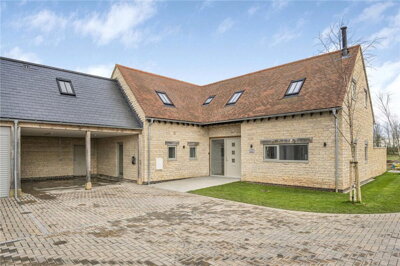
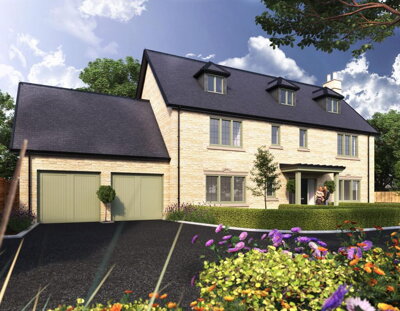
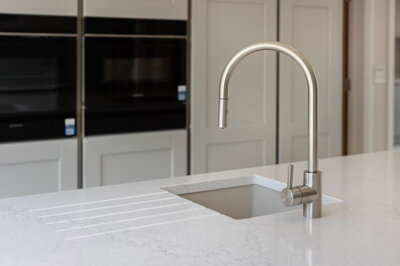
Browse 3 homes new builds in Standlake, West Oxfordshire from local developer agents.
The Standlake property market offers detached, semi-detached, and terraced houses spanning various price ranges and neighbourhoods. Each listing includes detailed property information, photographs, and direct contact with the marketing agent.
£1.20M
7
0
129
Source: home.co.uk
Showing 7 results for Houses new builds in Standlake, West Oxfordshire. The median asking price is £1,200,000.
Source: home.co.uk
Detached
7 listings
Avg £1.11M
Source: home.co.uk
Source: home.co.uk
£810,000
Average Property Price
-1.2%
12-Month Price Change
102 residents
Population (2021 Census)
43
Households
The Fonthill Gifford property market centres predominantly on detached family homes, with the average property price standing at approximately £810,000. This figure reflects the village's position as an upscale rural location where traditional period properties command significant premiums. The market has shown a modest adjustment over the past twelve months, with prices declining by around 1.2%, suggesting a stable market that has not experienced the volatility seen in more urban areas. Properties here typically consist of substantial detached houses set within generous plots, often dating from the Georgian or Victorian periods.
No active new-build developments exist within Fonthill Gifford itself, as the village's Conservation Area designation and listed building concentration severely restrict new construction. This absence of new supply means that buyers seeking property here are purchasing exclusively from the existing housing stock, which includes many historic homes built from local limestone and flint using traditional methods. The typical property age distribution skews heavily towards pre-1919 construction, with numerous homes pre-dating the Victorian era. First-time buyers may find the entry threshold challenging, with limited starter homes available and most stock consisting of substantial period properties suitable for families or those seeking countryside retirement.
The village's property market attracts a specific type of buyer, typically those seeking a primary residence in an exceptional rural setting rather than a holiday home or investment property. Demand for Fonthill Gifford properties remains consistent due to the village's proximity to Salisbury, excellent road connections via the A30, and the enduring appeal of owning a historic home in a designated Conservation Area. Properties occasionally come to market when long-term residents downsize or relocate, creating infrequent but valued opportunities for new buyers to join the community.

Life in Fonthill Gifford centres on the village's rich heritage and connection to the surrounding natural landscape. The village sits within a designated Conservation Area, ensuring that its historic character remains preserved for future generations. Residents enjoy proximity to Fonthill Lake, a prominent local feature that forms part of the River Nadder system flowing north of the village. The Fonthill Estate, though private, contributes to the area's economic and social fabric, with agricultural activities and land management providing employment for some residents while supporting the broader rural economy of this part of Wiltshire.
The demographic profile of Fonthill Gifford reflects its status as a small, prosperous rural community. With a population of just 102 people, the village offers an intimate scale of living that is increasingly sought after by families seeking to escape larger towns and cities. The local economy relies on agriculture, estate management, and commuting to nearby market towns including Salisbury and Shaftesbury, both of which are accessible within a reasonable drive. Community life, while modest in scale, centres on the historic St Nicholas's Church and informal gatherings among residents who value the village's peaceful atmosphere and strong sense of local identity. The absence of commercial high street amenities contributes to the tranquil environment, though essential services are available in surrounding villages and towns.
The surrounding Wiltshire countryside offers extensive opportunities for walking, cycling, and outdoor pursuits, with numerous public footpaths crossing farmland and woodland in the vicinity of Fonthill Gifford. The village's position provides easy access to several Areas of Outstanding Natural Beauty, making it an ideal base for those who appreciate rural recreation. Local pubs and restaurants in nearby villages provide opportunities for socialising, while cultural attractions including historic houses, gardens, and museums are within easy driving distance. The proximity to Salisbury, with its cathedral, theatres, and comprehensive shopping facilities, ensures that residents have access to urban amenities without sacrificing their countryside lifestyle.
Families moving to Fonthill Gifford should note that the village itself has no schools within its boundaries, reflecting its extremely small scale of just 43 households. Primary education is typically accessed through schools in nearby villages such as Chilmark, Tisbury, or the surrounding area, with several village primary schools serving the wider Fonthill estate region. These schools generally offer small class sizes that reflect the rural nature of the area, providing children with individual attention and a strong community feel. Parents should research specific catchment areas and admissions criteria, as availability in rural schools can be limited and oversubscribed in popular areas.
Secondary education options for Fonthill Gifford residents include schools in nearby towns, with Salisbury offering several secondary schools and sixth form colleges accessible via school transport or family travel. The presence of highly regarded grammar schools in Salisbury, including Bishop Wordsworth's School for boys and South Wilts Grammar School for girls, makes the city an attractive option for families prioritising academic achievement. For those seeking independent education, Wiltshire hosts several well-regarded preparatory and senior schools within reasonable driving distance. Transport arrangements for secondary school pupils typically involve school bus services or family-provided transport, so prospective buyers should factor these logistics into their property decision.
Daily travel to schools is a practical reality for families in Fonthill Gifford, and understanding school transport options is an important part of the property buying process. Many families establish car-sharing arrangements with neighbours who have children attending the same schools, while others rely on the school bus services that operate from the village to nearby educational establishments. The journey times vary depending on the specific school and the child's age, but parents should expect that school runs will form a significant part of daily life. Some families choose to relocate to Fonthill Gifford when children are older and less dependent on school transport, or alternatively, choose to remain within closer proximity to schools until children have completed their secondary education.
Transport connections from Fonthill Gifford reflect its rural character, with the village relying primarily on road transport for daily commuting needs. The A30 provides the main road route through the area, connecting to broader Wiltshire road networks and offering access to Salisbury approximately 12 miles to the east and Shaftesbury around 8 miles to the south-west. The village's position away from major motorways means that commuting to larger employment centres requires some planning, though journey times to Bristol or Southampton remain feasible for those working in these cities. Most residents who commute do so by car, with home working becoming increasingly common and helping to offset the limitations of rural public transport.
Public transport options are limited in Fonthill Gifford, with bus services serving the village on a reduced frequency typical of rural Wiltshire communities. The nearest railway stations are located in the surrounding towns, with Salisbury offering direct rail connections to London Waterloo, Bristol, and Southampton. Tisbury station on the West of England Main Line provides another option for rail travel, serving destinations including London and the south coast. Cyclists will find that while the local roads can be quiet, the undulating Wiltshire countryside presents moderate to challenging terrain. For international travel, Southampton Airport and Bristol Airport are the most accessible major airports, both reachable within approximately 90 minutes by car.
The proximity of Fonthill Gifford to the A30 makes it reasonably well-connected for a village of its size, with straightforward access to the A303 for longer journeys towards the South West or towards London via the M3 corridor. Many residents have embraced flexible working arrangements that reduce the frequency of commuting, making the rural location more practical for those with professional careers. For daily essentials, the nearby towns of Tisbury and Shaftesbury provide supermarkets, shops, and services, reducing the need for longer journeys for routine purchases. The village's location also offers good access to healthcare facilities, with GP surgeries and pharmacies available in surrounding villages and more comprehensive services in Salisbury.
Start by exploring the Fonthill Gifford property market through Homemove, comparing available properties against the village average of £810,000 for detached homes. Understanding the Conservation Area restrictions and listed building implications will help you make informed decisions about which properties suit your requirements and budget.
Before viewing properties, obtain a mortgage agreement in principle from a lender. This strengthens your position when making offers and demonstrates your seriousness to sellers in a competitive rural market where properties may attract multiple interested buyers.
Visit properties that match your requirements, paying particular attention to the age and condition of historic homes. Older properties in Fonthill Gifford often require more maintenance, so factor potential renovation costs into your assessment and consider what works may be needed to bring any property up to your standards.
Given the age of most properties in Fonthill Gifford, we strongly recommend a RICS Level 2 Survey to identify any structural issues, damp, timber defects, or other common problems in period properties built from traditional materials like limestone, flint, and lime mortar.
Appoint a solicitor experienced in rural and listed property transactions to handle the legal aspects of your purchase, including any Conservation Area requirements or planning conditions that may affect the property you are buying.
Once all searches and surveys are satisfactory, your solicitor will coordinate the exchange of contracts and set a completion date. Arrange buildings insurance for the property from this point, as your financial liability begins on exchange.
Purchasing a property in Fonthill Gifford requires careful consideration of the area's unique characteristics, beginning with the geology that underlies much of the village. The presence of Gault Formation clay beneath parts of Fonthill Gifford creates a moderate to high shrink-swell risk, meaning that properties may be susceptible to ground movement particularly during periods of drought or heavy rainfall. Buyers should inspect for any signs of subsidence or structural cracking, and a thorough survey is essential for any property in this area. The proximity of the River Nadder and Fonthill Lake also means that some low-lying properties may face surface water flooding risks, so reviewing flood history and drainage arrangements forms an important part of due diligence.
The village's Conservation Area status brings specific planning considerations that affect what works homeowners can undertake. Any exterior alterations, extensions, or significant changes to properties within the Conservation Area typically require consent from Wiltshire Council, adding complexity to renovation projects. Properties that are listed buildings, such as Fonthill House and St Nicholas's Church, are subject to additional listed building consent requirements that protect their historic fabric. Building materials used locally, including limestone, flint, and traditional lime mortars, require specialist knowledge for maintenance and repair, and buyers should budget for the higher costs associated with caring for historic properties.
Traditional construction methods used in Fonthill Gifford properties, such as solid wall builds, mean that thermal performance may be below modern standards, requiring consideration of insulation upgrades that must be undertaken sensitively to avoid damaging historic fabric. Properties in the village often feature traditional sash windows, original fireplaces, and period features that contribute to their character but may require ongoing maintenance. Electrical systems and plumbing in older properties frequently do not meet current regulations and may require updating, adding to the overall cost of any purchase. A thorough survey by a qualified RICS surveyor will identify these issues and help you budget accurately for any purchase.
Understanding the traditional construction methods used in Fonthill Gifford properties helps buyers appreciate both the character and the maintenance requirements of historic homes in this Wiltshire village. The predominant building materials reflect the local geology and resources, with local limestone and flint featuring prominently in properties throughout the village. These materials have been used in the area for centuries, with the distinctive cream-coloured limestone from local quarries providing the characteristic warm tones seen in many period properties. Flint, often combined with limestone in a technique known as knapped flint work, appears in boundary walls and some older buildings, demonstrating the traditional building practices of rural Wiltshire.
The Upper Greensand Formation that underlies much of the Fonthill Gifford area has historically provided excellent building stone, with properties in the village often featuring locally sourced materials that blend harmoniously with the natural landscape. Traditional lime mortars were used throughout the construction of period properties, allowing the buildings to breathe and managing moisture effectively. Modern cement-based mortars and renders can cause significant damage to historic structures by trapping moisture within the walls, leading to deterioration of the stonework and timber elements. Any restoration or repair work on Fonthill Gifford properties should use appropriate traditional materials and techniques that respect the original construction methods.
Roof construction in older Fonthill Gifford properties typically features traditional timber roof trusses with pitched roofs covered in slate or clay tiles. Leadwork is commonly found around chimneys, dormers, and valleys, and this material requires specialist knowledge for repair and replacement. The timber elements within these roofs, including rafters, purlins, and structural beams, can be susceptible to woodworm, wet rot, or dry rot if moisture enters the roof space. Given the age of many properties in the village, a comprehensive survey is particularly valuable for identifying any timber defects that may not be immediately visible during a standard viewing. Solid floor constructions, often consisting of compacted earth or flagstones on a rubble base, are another characteristic of period properties in the area and may present challenges if replacement or damp-proofing becomes necessary.
The average house price in Fonthill Gifford stands at approximately £810,000, with detached properties commanding this figure. The market has shown modest stability with a 12-month price change of around -1.2%, suggesting that property values have remained relatively steady despite broader national fluctuations. Given the village's rural character, Conservation Area status, and concentration of period properties, prices reflect the premium associated with historic homes in desirable Wiltshire countryside locations. Properties in Fonthill Gifford typically sell for significantly above the Wiltshire and national averages, reflecting the village's exclusive positioning and limited supply.
Properties in Fonthill Gifford fall under Wiltshire Council's jurisdiction. Specific council tax bands vary by individual property depending on its valuation, though larger period homes in the village typically occupy higher bands reflecting their substantial size and value. Prospective buyers should check the specific banding for any property they are considering through the Valuation Office Agency website or by requesting this information during the conveyancing process. The banding will affect ongoing annual costs, so understanding this before purchase helps with accurate budgeting.
Fonthill Gifford itself has no schools within its boundaries due to its tiny population of 102 residents. Primary education is available in nearby villages including Chilmark and Tisbury, with parents advised to research specific catchment areas as these can be oversubscribed. Secondary schools and highly regarded grammar schools are located in Salisbury, approximately 12 miles away, with Bishop Wordsworth's School and South Wilts Grammar School being notable options for families prioritising academic achievement. Daily transport arrangements should be factored into property decisions, as school runs will form a significant part of family life for those with children of school age.
Public transport connections in Fonthill Gifford are limited, consistent with its status as a small rural village. Bus services operate on reduced frequencies, and residents typically rely on car travel for daily needs. The nearest railway stations are in Salisbury and Tisbury, offering rail connections to London and the south-west, with Tisbury providing direct services to London Waterloo. Most residents commute by car to employment centres including Salisbury, Shaftesbury, and occasionally further afield, though home working has become increasingly prevalent and helps offset the limitations of rural public transport.
Fonthill Gifford offers strong appeal for buyers seeking a long-term investment in rural Wiltshire property. The village's Conservation Area status, limited supply of available properties, and consistent demand for period homes in desirable countryside locations suggest that property values are likely to remain resilient. The absence of new-build development helps protect the character and value of existing properties. Buyers should recognise that the very small population and limited amenities mean the market is niche and potentially less liquid than urban property markets, so resale may take longer if circumstances change. For those planning to stay long-term, the village offers an exceptional quality of life that is difficult to replicate elsewhere in Wiltshire.
Stamp duty Land Tax rates for 2024-25 are 0% on the first £250,000 of property value, 5% on £250,001 to £925,000, 10% on £925,001 to £1.5 million, and 12% on anything above that. First-time buyers benefit from relief on the first £425,000, paying 5% between £425,001 and £625,000. Given that the average property price in Fonthill Gifford is approximately £810,000, a standard buyer purchasing at this price would pay £28,000 in stamp duty, while a first-time buyer would pay £19,250. These figures should be incorporated into your overall buying budget alongside solicitor fees, survey costs, and moving expenses.
Fonthill Gifford faces some surface water flooding risk, particularly in low-lying areas near the River Nadder and Fonthill Lake. The village is inland with no coastal flood risk, and river flooding from the River Nadder is generally limited to areas immediately adjacent to the watercourse. Properties in areas adjacent to watercourses should be checked for flood history and appropriate insurance arrangements, as flood risk can affect both insurance premiums and future saleability. A RICS Level 2 Survey will help identify any existing flood-related damage or damp issues that may be relevant to your purchase decision.
Given that the vast majority of properties in Fonthill Gifford are over 50 years old, and many significantly predate the Victorian era, a professional survey is essential before committing to purchase. Common issues in the village's period properties include damp affecting walls and timbers, deterioration of traditional lime mortar pointing, timber defects such as woodworm and rot in structural elements, and potential movement related to the clay geology underlying parts of the village. A RICS Level 2 Survey typically costs between £400 and £1,000 depending on property size and value, but provides detailed condition information that can save thousands in unexpected repair costs. For listed buildings or particularly old properties, a more comprehensive RICS Level 3 Survey may be recommended to assess the building's condition thoroughly.
From 4.5%
Find competitive mortgage deals for your Fonthill Gifford purchase
From £499
Expert solicitors for your property transaction
From £400
Professional survey for your period property
From £80
Energy performance certificate for your property
Budgeting for a property purchase in Fonthill Gifford requires careful consideration of stamp duty alongside the property purchase price. With the average detached property priced at approximately £810,000, standard buyers not claiming first-time buyer relief would calculate stamp duty as follows: 0% on the first £250,000 equals £0, then 5% on the remaining £560,000 equals £28,000. First-time buyers, who have relief on the first £425,000, would pay 5% on the £385,000 above this threshold, equating to £19,250. These costs should be factored into your overall budget alongside legal fees, survey costs, and moving expenses.
Additional buying costs in Fonthill Gifford include solicitor fees for conveyancing, which typically range from £500 to £2,000 depending on complexity. Given the age of most properties in the village and potential Conservation Area or listed building considerations, rural property transactions often require more extensive legal work, potentially pushing costs toward the higher end of this range. A RICS Level 2 Survey costs between £400 and £1,000 depending on property size and value, while an EPC assessment typically costs from £80. Buildings insurance should be arranged from the point of exchange, and removal costs will vary based on distance and volume of belongings. Buyers should also budget for potential renovation costs, as period properties in Fonthill Gifford may require updates to electrical systems, plumbing, or insulation to meet modern standards while preserving their historic character.

Properties New Builds In London

Properties New Builds In Plymouth

Properties New Builds In Liverpool

Properties New Builds In Glasgow

Properties New Builds In Sheffield

Properties New Builds In Edinburgh

Properties New Builds In Coventry

Properties New Builds In Bradford

Properties New Builds In Manchester

Properties New Builds In Birmingham

Properties New Builds In Bristol

Properties New Builds In Oxford

Properties New Builds In Leicester

Properties New Builds In Newcastle

Properties New Builds In Leeds

Properties New Builds In Southampton

Properties New Builds In Cardiff

Properties New Builds In Nottingham

Properties New Builds In Norwich

Properties New Builds In Brighton

Properties New Builds In Derby

Properties New Builds In Portsmouth

Properties New Builds In Northampton

Properties New Builds In Milton Keynes

Properties New Builds In Bournemouth

Properties New Builds In Bolton

Properties New Builds In Swansea

Properties New Builds In Swindon

Properties New Builds In Peterborough

Properties New Builds In Wolverhampton

Enter your details to see if this property is within your budget.
Loans, cards, car finance
Estimated property budget
Borrowing + deposit
You could borrow between
Typical borrowing
Monthly repayment
Est. at 4.5%
Loan-to-value
This is an estimate only. Your actual budget may vary depending on interest rates, credit history, and personal circumstances. For an accurate affordability assessment, speak to one of our free mortgage advisors.
This calculator provides estimates for illustrative purposes only and does not constitute financial advice. Your home may be repossessed if you do not keep up repayments on your mortgage. Estimates based on 4.5% interest rate, repayment mortgage. Actual rates depend on your circumstances.
Homemove is a trading name of HM Haus Group Ltd (Company No. 13873779, registered in England & Wales). Homemove Mortgages Ltd (Company No. 15947693) is an Appointed Representative of TMG Direct Limited, trading as TMG Mortgage Network, which is authorised and regulated by the Financial Conduct Authority (FRN 786245). Homemove Mortgages Ltd is entered on the FCA Register as an Appointed Representative (FRN 1022429). You can check registrations at NewRegister or by calling 0800 111 6768.

We use cookies to show you personalised content and improve your experience of our website. Find out more in our Privacy policy and Cookie policy.