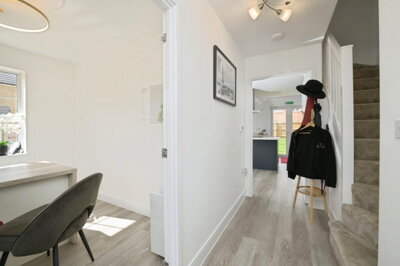
Browse 1 home new builds in Stamford, South Kesteven from local developer agents.
The Stamford property market offers detached, semi-detached, and terraced houses spanning various price ranges and neighbourhoods. Each listing includes detailed property information, photographs, and direct contact with the marketing agent.
£350k
113
0
136
Source: home.co.uk
Showing 113 results for Houses new builds in Stamford, South Kesteven. The median asking price is £350,000.
Source: home.co.uk
Detached
40 listings
Avg £572,725
Terraced
39 listings
Avg £290,206
Semi-Detached
34 listings
Avg £356,441
Source: home.co.uk
Source: home.co.uk
The Knockholt property market reflects its desirable rural location and proximity to London, with detached properties commanding the highest prices. Zoopla data shows detached homes averaging £1,216,750, while semi-detached properties typically sell for around £547,500. Terraced homes in the village average between £450,000 and £687,500, with flats achieving approximately £637,500. Rightmove reports that historical sold prices in Knockholt over the last year were 3% up on the previous year, though they remain 9% down on the 2023 peak of £889,854, suggesting a market that has stabilised after a period of adjustment.
Housing stock in Knockholt is predominantly houses and bungalows, accounting for 95.9% of properties according to the 2021 Census, with flats comprising just 3.9%. This overwhelming majority of houses reflects the village's character as a residential area of family homes rather than high-density apartment living. The Knockholt Housing Needs Survey from July 2024 identified specific gaps in the local market, including a need for at least 6 affordable homes and 3 open market properties suitable for older homeowners looking to downsize, highlighting opportunities for developers and indicating where demand is currently unmet.
New build activity in the immediate Knockholt area remains limited, with the village's Green Belt designation protecting the surrounding countryside from significant development. A planning application for land west of The Tally Ho on Main Road was awaiting decision as of February 2026, but specific details regarding home types and pricing are not yet available. For buyers seeking modern specification homes, broader searches in nearby Sevenoaks, Dunton Green, and Halstead may yield more options, though these lie outside Knockholt's village boundary and may involve different council tax arrangements and commuting considerations.
Knockholt sits astride the Kent-Surrey border on the northern edge of the Sevenoaks District, characterised by its hilly terrain on the North Downs and sweeping views across the surrounding countryside. The village is surrounded entirely by Green Belt land, ensuring strict planning controls preserve the rural character and prevent urban sprawl from neighbouring London boroughs. This protective designation means Knockholt's landscape remains largely unchanged, with mixed arable farmland, ancient woodlands, and traditional orchards forming the backdrop to daily life. The population of approximately 1,233 residents across 490 households creates an intimate community where neighbours frequently know one another and local events foster genuine connections.
The local geology shapes both the landscape and property considerations in Knockholt. The northern part of the Sevenoaks District, which includes Knockholt, sits on White Chalk characterised by dry valleys and a steep scarp to the south. Beneath this lie bands of Lower Chalk, mudstone, sandstone, and limestone, while the Wealden beds with their heavy clay soils are found further south in the Low Weald. Properties built on the heavier clay soils may be susceptible to shrink-swell movement, where expansion during wet periods and contraction during dry spells can cause foundation stress. Understanding the underlying ground conditions is important when purchasing period properties in the area.
Architectural heritage thrives in Knockholt, with the village designated as one of 41 Conservation Areas within the Sevenoaks District. The National Heritage List for England records one Grade II* listed building and 17 Grade II listed structures, including the Church of St Katherine, Park Farmhouse, and several historic farm buildings converted to residential use. Traditional building materials throughout the area reflect Kent's vernacular architecture, with timber-framed structures featuring plaster or brick infill, weatherboarding, tile hanging, and red brick. Roofing typically uses clay plain tiles, historically Kent peg tiles, with occasional thatch on the oldest properties. These construction methods contribute to the village's distinctive appearance but may require specialist maintenance knowledge.

Families considering a move to Knockholt will find a selection of educational establishments within reasonable driving distance, though the village itself does not host a primary or secondary school. Primary education is available at several nearby schools, with Knole Paddock Primary School and St. John's Church of England Primary School in Sevenoaks serving the local area. For secondary education, families typically consider institutions in Sevenoaks, with The Knole Academy and Trinity School among the options providing education for pupils aged 11 through sixth form. Grammar school provision exists in Kent, with parents often exploring options in Maidstone and surrounding areas through the county's selective testing process.
The broader Sevenoaks District offers diverse educational provision beyond state-funded schools, with several independent schools serving families seeking alternative educational approaches. Schools in the surrounding area cater to various age groups and educational philosophies, from traditional independent preparatory schools to comprehensive secondary options. Given the competitive nature of school admissions in desirable rural areas, parents are advised to research catchment areas, Ofsted ratings, and admissions criteria well in advance of any property purchase to ensure alignment with their educational preferences for their children.
For sixth form and further education, Sevenoaks School provides a well-regarded option, while broader further education colleges are accessible in nearby Tonbridge, Maidstone, and Bromley. The proximity to London also opens possibilities for specialist educational institutions and the extensive range of sixth form colleges available in the capital. Transport connections from nearby Sevenoaks station make commuting to educational establishments across Kent and into London entirely feasible for older students pursuing specific courses or extracurricular activities.
Knockholt enjoys strong transport connections that make commuting to London entirely practical, despite its rural village setting. While Knockholt itself no longer has a railway station, the nearby Sevenoaks station provides regular National Rail services to London Bridge, Cannon Street, and Charing Cross, with journey times to central London typically under 30 minutes. This rapid access to the capital makes Knockholt particularly attractive to professionals working in the City, Canary Wharf, or elsewhere in central London who seek countryside living without sacrificing commute convenience. The station also provides connections to other Kent destinations including Tonbridge and Ashford International for broader travel needs.
Road transport options are equally comprehensive, with the village positioned near major motorway connections. The M25 orbital motorway provides access to the national motorway network, while the M20 offers routes toward Folkestone and the Channel ports. Gatwick Airport is reachable within approximately 45 minutes by car, and Heathrow is accessible via the M25 and M4, making international travel convenient for both business and leisure purposes. Local bus services connect Knockholt to surrounding villages and Sevenoaks town centre, providing essential transport for those without private vehicles.
For cycling enthusiasts, the Kent countryside offers numerous scenic routes through the North Downs and beyond, though the hilly terrain presents challenges. The National Cycle Network connects with routes across the region, while local lanes provide quieter options for experienced cyclists. Walking opportunities abound with footpaths crossing farmland and through ancient woodlands, with the Greensand Ridge and North Downs Way offering longer-distance routes for exploration. Parking availability within the village is generally adequate given the lower population density, though weekend visitors to local pubs and countryside attractions may find spaces more limited during peak periods.
Spend time exploring Knockholt at different times of day and week to understand the village atmosphere, traffic patterns, and noise levels from nearby roads. Visit local amenities in Sevenoaks, check broadband speeds, and speak with residents about their experiences of living in the area. Review the Knockholt Housing Needs Survey and Sevenoaks District planning portal to understand any proposed developments that might affect your purchase.
Obtain a mortgage agreement in principle before viewing properties, as this demonstrates your seriousness to sellers and estate agents. With Knockholt's average property prices exceeding £800,000, most buyers will require a substantial mortgage. Speak with multiple lenders or a mortgage broker to secure the best possible rate, and ensure you understand the total costs involved including stamp duty, solicitor fees, and survey costs.
Work with local estate agents who know the Knockholt market intimately to arrange viewings of suitable properties. Pay attention to the construction materials, age of the property, and any signs of damp, structural movement, or roof issues, particularly given the prevalence of older properties in the village. Take photographs and notes during viewings to help compare properties later.
For any property you seriously consider purchasing, commission a RICS Level 2 Survey to assess the condition of the property and identify any defects. Properties in Knockholt often feature traditional construction methods and may be subject to conservation area restrictions, so a thorough survey is essential. For older properties or those of non-standard construction, a more comprehensive RICS Level 3 Survey may be recommended.
Choose a solicitor with experience handling rural property purchases in Kent to manage the legal aspects of your transaction. They will conduct local authority searches, check planning permissions and building regulations, and ensure the title is clean. Given Knockholt's conservation area status, additional checks regarding permitted development rights and any village enhancement schemes may be necessary.
Once surveys are satisfactory and legal queries are resolved, you will exchange contracts and pay your deposit. Completion typically follows within weeks, after which you will receive the keys to your new home in Knockholt. Register your ownership with HM Land Registry and update your address with relevant organisations.
Purchasing a property in Knockholt requires attention to specific local factors that may not affect urban buyers. The village's position within a Conservation Area means planning restrictions are typically more stringent than in non-designated areas, potentially limiting extensions, alterations, and exterior modifications. Before purchasing, verify what works have been carried out on the property previously and whether any permissions were obtained. The presence of listed buildings nearby does not automatically impose restrictions on unlisted properties, but any works visible from a listed building or public right of way may require careful consideration.
Flood risk in Knockholt is generally low, with no current flood warnings or alerts in the adjacent TN15 area and very low risk forecast for the following five days as of February 2026. However, the Sevenoaks District has experienced historical river flooding from the River Darent and River Eden tributaries, with significant events occurring in Winter 2013/14, Ightham in June 2016, and Swanley in June 2019. Surface water flooding remains a consideration during periods of heavy rainfall, and the underlying clay soils in parts of the district can affect drainage. A thorough survey should assess the property's flood resilience and drainage systems.
Properties in Knockholt are predominantly freehold houses, which eliminates concerns about leasehold ground rent and service charges that affect many urban properties. However, older properties may have unusual tenure arrangements or covenants affecting their use. Given the traditional building methods prevalent in the area, including timber-framing, clay tile roofing, and potentially thatch, buyers should budget for ongoing maintenance costs that may exceed those for modern construction. Specialist contractors for historic building work may be required, and the use of appropriate materials for any repairs is essential to maintain both property value and compliance with planning requirements.
Common defects found in Knockholt properties reflect the age and construction methods of the local housing stock. Damp issues frequently arise in period properties due to inadequate waterproofing, failed damp-proof courses, or defective gutters and downpipes. Timber decay, including wet rot, dry rot, and woodworm infestation, affects properties with exposed timber frames. Roof defects, particularly deterioration of clay plain tiles, are common and can lead to leaks and structural damage. Electrical systems in older homes often require updating to meet current regulations, and foundation movement caused by shrink-swell clay soils may result in structural cracks requiring professional assessment.
Purchasing a property in Knockholt involves several costs beyond the purchase price itself, with stamp duty land tax representing the most significant upfront expense. For properties purchased at the current average price of around £812,000, buyers would typically pay stamp duty of approximately £15,600 under standard rates. This calculation works on the portion from £250,001 to £925,000 being taxed at 5%, with no amount falling into the higher brackets. First-time buyers benefit from increased thresholds, paying 0% on the first £425,000 and 5% between £425,001 and £625,000, potentially reducing their stamp duty liability to approximately £19,350 on the same property value, though relief is not available above £625,000.
Survey costs should be factored into your budget, particularly given the age and traditional construction of many Knockholt properties. A RICS Level 2 Survey typically costs between £400 and £600 depending on property size and value, with larger detached homes attracting higher fees. For Knockholt's older properties or those of non-standard construction such as timber-framed houses or thatched properties, a more comprehensive RICS Level 3 Survey may be advisable, typically ranging from £550 to over £1,000 depending on property complexity. These surveys identify defects that may not be visible during viewings and can provide valuable negotiating leverage on price or require sellers to address issues before completion.
Legal fees for conveyancing typically start from around £499 for basic transactions, rising to £1,500 or more for complex purchases involving properties with unusual tenure, listed building status, or planning conditions requiring additional investigation. Local authority searches through Sevenoaks District Council, drainage and water enquiries, and Land Registry fees add several hundred pounds to costs. Buildings insurance must be in place from exchange of contracts, and removals costs, furnishing, and potential renovation expenses should also be budgeted for. Given the comprehensive nature of these costs, buyers typically need funds equivalent to at least 5% of the property value beyond their mortgage deposit to cover all purchase-related expenses comfortably.

The average house price in Knockholt ranges from approximately £812,312 according to Rightmove to £928,375 according to Zoopla, depending on the data source and reporting period. Detached properties command the highest prices at around £1,216,750, while semi-detached homes typically sell for £547,500 to £674,583. Terraced properties average between £450,000 and £687,500, with flats achieving approximately £637,500. Recent market data shows prices have stabilised, with Rightmove reporting a 3% increase over the previous year but remaining 9% below the 2023 peak of £889,854.
Properties in Knockholt fall under Sevenoaks District Council's jurisdiction for council tax purposes. Specific bandings depend on the property's assessed value, with the district's council tax rates set according to Kent County Council's framework. Band D properties in Sevenoaks District typically pay around £1,800 to £2,000 annually for district and county council services combined, though exact figures should be confirmed with the local authority or on the government council tax lookup service using the specific property address.
Knockholt village itself does not have schools on-site, but nearby Sevenoaks offers several well-regarded educational options. Primary schools in Sevenoaks include Knole Paddock Primary School and St. John's Church of England Primary School. Secondary options include The Knole Academy and Trinity School, with grammar school places accessible through Kent's selective testing system in schools across the county. Independent schooling options are also available in the broader Sevenoaks District and surrounding areas.
Knockholt benefits from excellent transport connections despite its rural setting. While the village no longer has its own railway station, Sevenoaks station is nearby and provides regular services to London Bridge, Cannon Street, and Charing Cross in under 30 minutes. Local bus services connect Knockholt to Sevenoaks town centre and surrounding villages. The M25 and M20 motorways are accessible for road travel, providing connections to Gatwick and Heathrow airports, with Gatwick approximately 45 minutes away by car.
Knockholt offers several factors that make it attractive for property investment, including its Green Belt location that restricts supply, strong transport links to London, and the village's Conservation Area status that helps preserve property values. The Knockholt Housing Needs Survey identified unmet demand for both affordable housing and downsizing options, suggesting potential for rental yield in appropriate properties. However, the high entry price point and limited rental stock may affect returns, and buyers should carefully consider their investment horizons and objectives before purchasing.
Stamp duty rates for 2024-25 are 0% on the first £250,000 of property value, 5% on the portion from £250,001 to £925,000, 10% on the portion from £925,001 to £1,500,000, and 12% on any value exceeding £1,500,000. For a typical Knockholt property averaging £812,000, this would result in approximately £15,600 in stamp duty. First-time buyers benefit from relief on the first £425,000, with 5% applying between £425,001 and £625,000, meaning first-time buyers purchasing at the average price would pay around £19,350. Always verify current thresholds with HMRC or your solicitor.
New build activity in Knockholt remains very limited due to the village's protected Green Belt status, which restricts significant development. A planning application for land west of The Tally Ho on Main Road was awaiting decision as of February 2026, but specific details regarding home types and pricing are not yet available. For buyers specifically seeking newly constructed properties, searches in nearby Sevenoaks, Dunton Green, and Halstead may yield more options, though these lie outside Knockholt's village boundary and may involve different council tax arrangements and longer commuting times.
Older properties in Knockholt, many of which feature traditional timber-framed construction, clay tile roofing, and weatherboard finishes, face several common risks that surveys can identify. Damp is frequently encountered due to the age of properties and their original construction methods lacking modern damp-proof courses. Timber decay including wet rot, dry rot, and woodworm can affect structural elements. Roof deterioration and structural movement related to the underlying chalk and clay geology are also concerns. A thorough RICS Level 2 or Level 3 Survey before purchase will identify any such defects and allow you to negotiate repairs or price adjustments with the seller.
From 4.5%
Expert mortgage advice for Knockholt properties with prices averaging £800,000+
From £499
Specialist solicitors handling rural Kent property transactions
From £350
Comprehensive condition report ideal for Knockholt's period properties
From £550
Detailed structural survey for older or non-standard construction properties
Properties New Builds In London

Properties New Builds In Plymouth

Properties New Builds In Liverpool

Properties New Builds In Glasgow

Properties New Builds In Sheffield

Properties New Builds In Edinburgh

Properties New Builds In Coventry

Properties New Builds In Bradford

Properties New Builds In Manchester

Properties New Builds In Birmingham

Properties New Builds In Bristol

Properties New Builds In Oxford

Properties New Builds In Leicester

Properties New Builds In Newcastle

Properties New Builds In Leeds

Properties New Builds In Southampton

Properties New Builds In Cardiff

Properties New Builds In Nottingham

Properties New Builds In Norwich

Properties New Builds In Brighton

Properties New Builds In Derby

Properties New Builds In Portsmouth

Properties New Builds In Northampton

Properties New Builds In Milton Keynes

Properties New Builds In Bournemouth

Properties New Builds In Bolton

Properties New Builds In Swansea

Properties New Builds In Swindon

Properties New Builds In Peterborough

Properties New Builds In Wolverhampton

Enter your details to see if this property is within your budget.
Loans, cards, car finance
Estimated property budget
Borrowing + deposit
You could borrow between
Typical borrowing
Monthly repayment
Est. at 4.5%
Loan-to-value
This is an estimate only. Your actual budget may vary depending on interest rates, credit history, and personal circumstances. For an accurate affordability assessment, speak to one of our free mortgage advisors.
This calculator provides estimates for illustrative purposes only and does not constitute financial advice. Your home may be repossessed if you do not keep up repayments on your mortgage. Estimates based on 4.5% interest rate, repayment mortgage. Actual rates depend on your circumstances.
Homemove is a trading name of HM Haus Group Ltd (Company No. 13873779, registered in England & Wales). Homemove Mortgages Ltd (Company No. 15947693) is an Appointed Representative of TMG Direct Limited, trading as TMG Mortgage Network, which is authorised and regulated by the Financial Conduct Authority (FRN 786245). Homemove Mortgages Ltd is entered on the FCA Register as an Appointed Representative (FRN 1022429). You can check registrations at NewRegister or by calling 0800 111 6768.

We use cookies to show you personalised content and improve your experience of our website. Find out more in our Privacy policy and Cookie policy.