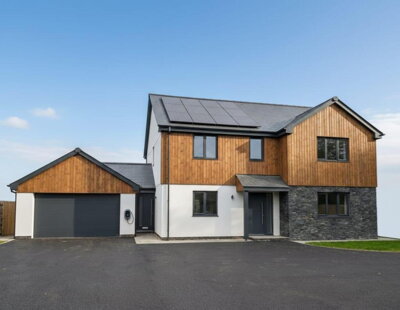
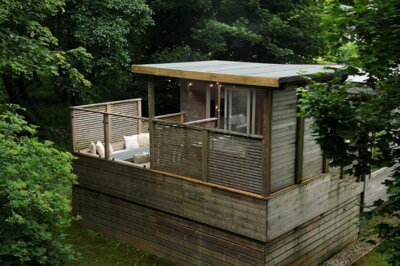
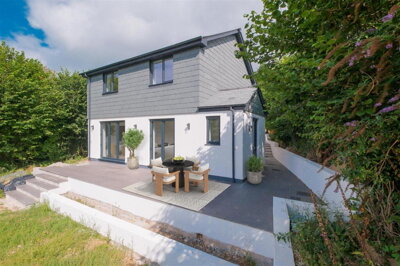
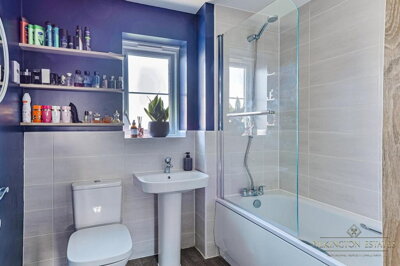
Browse 4 homes new builds in St. Cleer from local developer agents.
The Disley property market has demonstrated steady and consistent growth, with overall house prices increasing by 1.9% over the past 12 months. This moderate but sustained appreciation reflects the enduring appeal of the village as a place to put down roots while maintaining access to major employment centres in Manchester and Stockport. Detached properties command the highest prices in the area, averaging around £600,000, which reflects the desirability of larger family homes with generous gardens in a semi-rural setting. The detached sector also saw price growth of 1.7% year-on-year, indicating continued demand from buyers seeking space and privacy away from urban density.
Semi-detached properties, which represent approximately 30.2% of the housing stock according to Census 2021 data, average around £350,000 and increased by 1.4% in the last year. These homes are particularly popular with families looking for a balance between character and modern convenience, as many date from the post-war expansion period between 1945 and 1980 when Disley saw significant residential development to meet growing demand from commuters. Terraced properties average £275,000 with the strongest price growth of 2.2%, suggesting growing interest in more affordable entry points to the Disley market. Flats remain the most accessible option at approximately £175,000, though they represent only around 11.2% of the housing stock, making them less commonly available on the market.
New build activity in Disley is limited, with no large-scale developments currently marketing homes within the SK12 postcode area. Most new build opportunities in the surrounding area are concentrated in neighbouring towns such as Poynton and High Lane. This scarcity of new supply contributes to the enduring value of existing properties, particularly those in the village's Conservation Area where planning restrictions help preserve the architectural character and kerb appeal that makes Disley desirable. The combination of constrained supply and persistent demand from commuters creates a resilient market environment for existing homeowners.

Disley sits at the southern edge of the Peak District National Park, offering residents an exceptional quality of life that combines village charm with immediate access to outstanding natural scenery. The village has a population of approximately 4,800 people across 2,000 households, creating an intimate community atmosphere where neighbours recognise one another and local businesses thrive on repeat custom. The village centre features a range of amenities including independent shops, a post office, traditional pubs serving real ale, and cafes where residents gather for morning coffee or Sunday lunch. The presence of Lyme Park, a magnificent National Trust estate with over 1,400 acres of moorland, woodland, and formal gardens, serves as both a cultural landmark and a recreational resource for residents throughout the year.
The local economy of Disley is shaped by its commuter belt status, with many residents travelling to Manchester, Stockport, Macclesfield, or other larger towns for work. However, the village also supports local employment through retail, hospitality, education, and small businesses that serve the community. Tourism plays a meaningful role, with Lyme Park attracting visitors throughout the year and supporting local pubs, cafes, and shops that depend on both residents and visitors. The village hosts various community events throughout the year, fostering a strong sense of belonging among residents who appreciate the slower pace of life compared to nearby urban centres.
The character of housing in Disley reflects its historical development, with around 25-30% of properties predating 1919 and featuring traditional gritstone construction typical of the Peak District fringe. These older properties often have solid stone walls, steeply pitched slate roofs, and original features such as exposed beams and stone fireplaces that appeal to buyers seeking period character. Victorian and Edwardian properties, often built in red brick with decorative detailing, account for a significant portion of the housing stock, while post-war development between 1945 and 1980 added semi-detached family homes to the mix. This variety in property ages and styles means buyers can choose between period charm, mid-century practicality, and more contemporary designs, all within a compact village setting.

Education is a significant factor for families considering a move to Disley, and the village offers access to a range of educational establishments for children of all ages. Primary education is served by Disley Primary School, which provides education for children from Reception through to Year 6. The school has historically performed well in local assessments and benefits from a strong community ethos, with parents appreciating its convenient location within the village and relatively small class sizes that allow for individual attention. The school draws pupils from across the village and surrounding hamlets, creating a familiar environment where children can build lasting friendships from an early age.
Secondary education options for Disley residents include travel to nearby towns where several well-regarded secondary schools and academies are located. Parents should research current Ofsted ratings and admissions criteria for schools in surrounding areas including Macclesfield, Stockport, and High Peak to identify the most suitable options for their children. Transport arrangements for secondary school pupils typically involve school bus services or parental transport, as is common in semi-rural areas where catchment schools may be several miles from home. Several schools in the broader area offer sixth form provision, providing pathways to A-level qualifications and further education.
For families requiring childcare or early years education, Disley has several nursery settings and preschools that cater to children from toddler age upwards. These provisions are valuable for working parents and contribute to the family-friendly nature of the village. Grammar schools in the broader area provide options for academically selective pupils, with selective entrance based on the 11-plus examination. Further education colleges in Macclesfield and Stockport offer vocational qualifications and apprenticeships for older students, complementing the academic routes available through sixth form provision.
Transport connectivity is one of Disley's strongest selling points, with the village offering regular rail services that make commuting to major cities highly practical. Disley railway station provides direct trains to Manchester Piccadilly with a journey time of approximately 35-40 minutes, making the village particularly attractive to professionals working in the city centre who wish to avoid the costs and stresses of city centre living. The station also offers connections to Stockport, Sheffield, and other regional destinations, expanding employment options for residents who prefer not to drive or who work in different locations throughout the week.
For those who drive, Disley benefits from proximity to the A6, which runs through the village and connects to the wider road network including the M60 motorway that orbits Greater Manchester. The A6 provides access to Stockport to the north and Buxton to the south, while the M60 offers connections to the M6, M62, and other major motorways for longer distance travel. However, traffic congestion on local roads during peak hours can be a consideration, particularly on the single-track sections that are characteristic of village roads in the area, and drivers should allow extra time for journeys during busy periods.
Local bus services operated by various providers connect Disley with surrounding villages and towns, offering an alternative to rail travel for those without access to a car. Routes typically serve destinations including Stockport, Macclesfield, and surrounding villages in the High Peak borough. Cycling is popular in the area thanks to the proximity of scenic routes through the Peak District, although the hilly terrain can be challenging for less experienced cyclists, particularly on routes towards Axe Edge and the moors. Parking in the village centre is limited, which is worth noting for residents who regularly commute by car or who receive frequent deliveries.
Explore current listings on Homemove and familiarise yourself with average prices for different property types in the area. Given that detached homes average £600,000 and terraced properties around £275,000, understanding your budget in context of local values will help you identify the right properties. Consider which neighbourhoods within Disley suit your lifestyle preferences, whether that means proximity to the station for commuting or quieter locations near the village centre and Lyme Park.
Before arranging viewings, approach a mortgage broker or lender to obtain an agreement in principle. This demonstrates your financial credibility to sellers and estate agents, giving you a competitive edge when you find your ideal property in Disley. Given that most Disley properties exceed the £250,000 stamp duty threshold, having your financing arranged early shows sellers that you are a serious buyer who can proceed quickly once your offer is accepted.
Visit a selection of properties that match your criteria, paying attention to the condition of older properties which make up approximately 80-85% of the housing stock. Take notes on the character of different neighbourhoods within Disley and consider factors such as proximity to the station, local amenities, and flood risk areas. Many properties in the Conservation Area have period features that require maintenance, so assess whether the asking price reflects any work needed.
Once you have had an offer accepted, instruct a RICS Level 2 Survey to assess the property condition. For a typical 3-bedroom semi-detached home in Disley, expect to pay between £450 and £700. Given the prevalence of older properties with potential issues such as damp, outdated electrics, or timber defects, this survey is particularly valuable. Our inspectors at Homemove understand local construction methods and can identify issues specific to gritstone and brick properties built before 1980.
Appoint a solicitor to handle the legal aspects of your purchase, including local searches that will reveal any issues specific to Disley such as coal mining reports, flood risk assessments, or conservation area restrictions. A mining report is particularly important given the historical coal mining activity in the area. Your solicitor will also handle Land Registry searches, local authority enquiries, and the transfer of ownership documentation.
Once all searches are satisfactory and your mortgage is approved, you will exchange contracts and pay your deposit. Completion typically follows within 2-4 weeks, after which you will receive the keys to your new Disley home. On the day of completion, our team can connect you with local tradespeople and service providers to help you settle into your new property quickly and efficiently.
Purchasing a property in Disley requires attention to several area-specific factors that could affect your investment. The geology of the area includes glacial till deposits with significant clay content, which presents a moderate to high shrink-swell risk that can affect foundations, particularly during dry summers or where large trees are present near buildings. This risk means buyers should pay close attention to signs of subsidence or heave, such as cracks in walls, sticking doors or windows, and uneven floors. Our inspectors frequently identify foundation movement in properties near mature trees where roots have extracted moisture from clay soils over extended periods.
Flood risk is another consideration for Disley property buyers. While the village is not coastal, the River Goyt runs nearby and some properties immediately adjacent to the river may be at risk of fluvial flooding. Surface water flooding is a more widespread concern across various parts of Disley, particularly during periods of heavy rainfall when drainage capacity can be exceeded. The Environment Agency provides detailed flood risk maps that buyers should consult before purchasing, and properties in higher-risk areas may face challenges with insurance or future resale. Properties on lower-lying ground near the river require particular scrutiny and should be surveyed carefully.
Disley has a designated Conservation Area centred around the historic village core, including areas around Buxton Road and the approach to Lyme Park. Numerous listed buildings, including Lyme Park itself which is Grade I listed, are situated within the village and surrounding countryside. If you are purchasing a property in the Conservation Area or a listed building, be aware that planning restrictions will apply to any alterations, extensions, or significant changes to the exterior. These properties often require specialist surveys and may involve higher maintenance costs, but they also benefit from protections that preserve their character and value over time.
Given that Disley falls within a historical coal mining area, buyers should consider ordering a mining report as part of their conveyancing searches. While many mines are long disused, potential for ground instability due to old mine workings can exist in some localised areas. This is particularly relevant for properties on or near the former mining districts that operated during the 19th and early 20th centuries. The presence of traditional building materials such as gritstone and solid wall construction in older properties also means that modern insulation standards may be harder to achieve without careful renovation, a factor worth considering for energy efficiency and comfort.
The overall average house price in Disley is £391,332 according to recent market data. Detached properties average around £600,000, semi-detached homes approximately £350,000, terraced properties £275,000, and flats £175,000. Prices have increased by 1.9% over the past 12 months, indicating a stable and growing market. The strongest price growth was in the flats sector at 2.9% and terraced properties at 2.2%, suggesting strong demand across all price points in this desirable Cheshire village. This consistent growth reflects Disley's enduring appeal as a commuter location with access to the Peak District.
Properties in Disley fall under Cheshire East Council administration. Council tax bands range from A to H depending on the property value, with most terraced homes and smaller semis falling into bands A to C, larger semis and detached properties typically in bands D to F, and larger detached homes or conversions potentially in bands G or H. Prospective buyers should check the specific band for any property they are considering, as this forms part of the ongoing cost of homeownership alongside mortgage payments and utility bills. Band information is available on the HMRC valuation website or through the local authority.
Disley Primary School serves the village for children aged 5-11 and has a strong local reputation for both academic achievement and community involvement. For secondary education, families typically access schools in surrounding towns including options in Macclesfield, Stockport, and High Peak, with several well-regarded establishments within reasonable commuting distance. Parents should research current Ofsted ratings and admissions criteria, as catchment areas and oversubscription criteria can affect placement. The presence of grammar schools in the broader area provides additional options for academically selective families who pass the 11-plus examination.
Disley benefits from excellent rail connectivity via Disley railway station, which provides direct services to Manchester Piccadilly in approximately 35-40 minutes and connections to Stockport, Sheffield, and other destinations. Local bus services operated by various providers connect the village with surrounding towns and villages, offering alternatives to rail travel. For drivers, the A6 runs through the village providing access to the M60 motorway network. However, parking in the village centre is limited, which is worth considering for daily commuters or those who receive frequent deliveries.
Disley offers several factors that make it attractive for property investment. The village has seen consistent price growth of 1.9% over the past year, and its proximity to Manchester combined with semi-rural character maintains strong demand from buyers seeking a better quality of life. Limited new build supply in the immediate area supports values for existing properties, while the presence of a Conservation Area and listed buildings preserves neighbourhood character. The combination of commuter appeal, local amenities, and access to the Peak District suggests continued demand from buyers seeking the lifestyle that Disley offers.
Stamp Duty Land Tax rates for standard buyers start at 0% on the first £250,000 of property value, then 5% on the portion between £250,001 and £925,000, 10% on the portion between £925,001 and £1.5 million, and 12% on any value above £1.5 million. First-time buyers benefit from increased thresholds, paying 0% on the first £425,000 and 5% between £425,001 and £625,000. Given that the average Disley property is priced at £391,332, many buyers may qualify for reduced rates or first-time buyer relief. Consulting with a conveyancing solicitor before completing your purchase is recommended to confirm your exact liability.
Approximately 80-85% of properties in Disley were built before 1980, meaning most homes are over 50 years old and may exhibit common issues found in period properties. These include damp (particularly rising or penetrating damp in properties without modern damp-proof courses), roof deterioration on slate or tile coverings, timber defects such as woodworm or rot, and outdated electrical wiring and plumbing systems. The presence of clay soils in the area also creates a shrink-swell risk that can lead to subsidence or foundation movement, particularly near large trees. A RICS Level 2 Survey before purchase is strongly recommended to identify any such issues.
Understanding the full cost of purchasing a property in Disley is essential for budgeting effectively. Stamp Duty Land Tax represents a significant upfront cost, with standard rates of 0% on the first £250,000 of purchase price, 5% between £250,001 and £925,000, 10% between £925,001 and £1.5 million, and 12% on any portion exceeding £1.5 million. Given that the average Disley property is priced at £391,332, a typical buyer purchasing at this price point would pay approximately £7,067 in stamp duty after the nil-rate threshold. This calculation assumes the property is not a second home or additional property, which would attract the higher rates including the 3% surcharge.
First-time buyers in Disley benefit from more generous thresholds, paying 0% on the first £425,000 and 5% on the portion between £425,001 and £625,000. This means a first-time buyer purchasing an average-priced property at £391,332 would pay no stamp duty at all, providing meaningful savings compared to those who have previously owned property. It is important to note that first-time buyer relief is not available for purchases exceeding £625,000, and buyers who have previously owned property anywhere in the world do not qualify for this relief.
Beyond stamp duty, buyers should budget for additional costs including solicitor conveyancing fees which typically range from £500 to £1,500 depending on the complexity of the transaction, mortgage arrangement fees which can be 0-2% of the loan amount, and survey costs such as the RICS Level 2 Survey at £450-£700 for a typical 3-bedroom semi-detached in Disley. Local searches, including drainage and water searches, mining reports, and environmental searches, can add several hundred pounds to the total. Moving costs, buildings insurance from completion date, and any immediate renovation or repair works should also be factored into your overall budget when calculating the true cost of your Disley home purchase.
Properties New Builds In London

Properties New Builds In Plymouth

Properties New Builds In Liverpool

Properties New Builds In Glasgow

Properties New Builds In Sheffield

Properties New Builds In Edinburgh

Properties New Builds In Coventry

Properties New Builds In Bradford

Properties New Builds In Manchester

Properties New Builds In Birmingham

Properties New Builds In Bristol

Properties New Builds In Oxford

Properties New Builds In Leicester

Properties New Builds In Newcastle

Properties New Builds In Leeds

Properties New Builds In Southampton

Properties New Builds In Cardiff

Properties New Builds In Nottingham

Properties New Builds In Norwich

Properties New Builds In Brighton

Properties New Builds In Derby

Properties New Builds In Portsmouth

Properties New Builds In Northampton

Properties New Builds In Milton Keynes

Properties New Builds In Bournemouth

Properties New Builds In Bolton

Properties New Builds In Swansea

Properties New Builds In Swindon

Properties New Builds In Peterborough

Properties New Builds In Wolverhampton

Enter your details to see if this property is within your budget.
Loans, cards, car finance
Estimated property budget
Borrowing + deposit
You could borrow between
Typical borrowing
Monthly repayment
Est. at 4.5%
Loan-to-value
This is an estimate only. Your actual budget may vary depending on interest rates, credit history, and personal circumstances. For an accurate affordability assessment, speak to one of our free mortgage advisors.
This calculator provides estimates for illustrative purposes only and does not constitute financial advice. Your home may be repossessed if you do not keep up repayments on your mortgage. Estimates based on 4.5% interest rate, repayment mortgage. Actual rates depend on your circumstances.
Homemove is a trading name of HM Haus Group Ltd (Company No. 13873779, registered in England & Wales). Homemove Mortgages Ltd (Company No. 15947693) is an Appointed Representative of TMG Direct Limited, trading as TMG Mortgage Network, which is authorised and regulated by the Financial Conduct Authority (FRN 786245). Homemove Mortgages Ltd is entered on the FCA Register as an Appointed Representative (FRN 1022429). You can check registrations at NewRegister or by calling 0800 111 6768.

We use cookies to show you personalised content and improve your experience of our website. Find out more in our Privacy policy and Cookie policy.