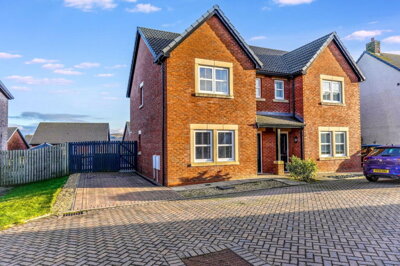
Browse 1 home new builds in St. Bees from local developer agents.
Bees from developers. Three bedroom properties represent a significant portion of the St. Bees housing market, offering space for families with multiple reception rooms and gardens in many cases. Browse detached, semi-detached, and terraced options ranging across new residential developments.
The St. Bees property market presents a compelling opportunity for buyers seeking coastal living without Lake District price premiums. Detached properties command the highest values, averaging around £350,000 to £364,000 depending on the portal consulted. These homes typically offer generous gardens, off-street parking, and stunning views across the Irish Sea or toward the Lakeland fells. The village's architecture reflects its heritage, with stone-built detached homes dominating the residential streets near the seafront.
Semi-detached properties in St. Bees average approximately £233,000 to £254,000, making them an attractive option for first-time buyers and growing families. These homes often feature the traditional Cumbrian aesthetic of local stone facades with rendered extensions, providing characterful accommodation at more accessible price points than their detached equivalents. For buyers seeking more space than a terraced property but working within a tighter budget than detached prices demand, this category deserves serious consideration.
Terraced properties provide the most affordable entry point, with average prices around £153,000 to £184,000. These compact homes suit downsizers, young couples, or investors seeking rental opportunities in this sought-after coastal location. Properties on Sea Mill Lane and the streets surrounding the village green frequently appear in this price bracket, offering genuine character and convenient access to local amenities. The lower entry cost combined with consistent rental demand makes terraced properties particularly attractive to landlords looking for yield.
Flat sales in St. Bees remain relatively limited, with average prices around £166,000 to £170,000. The village has seen relatively little new-build development, with most housing stock consisting of established properties. Market trends indicate prices have softened by approximately 10% compared to the previous year, according to Rightmove data, offering motivated buyers negotiating opportunities in a market where 320 properties have changed hands over the past decade.

St. Bees derives its name from Saint Mary Bees, an early Irish saint who established a monastery on the site in the 7th century, leaving a rich historical legacy woven into the fabric of this coastal community. The village centre centres around a traditional green, with a selection of essential amenities including a post office, convenience store, traditional public house, and a highly regarded primary school. The Priory, a notable historic landmark, serves as a focal point for community events and heritage appreciation, reflecting the village's deep roots in English history.
The coastline at St. Bees draws visitors from across the region, with a magnificent sandy beach stretching toward St. Bees Head, a protected Area of Outstanding Natural Beauty. The dramatic clifftop paths offer spectacular walking opportunities, with the Cumbria Coastal Path passing through the village and connecting walkers to destinations north toward Whitehaven and south toward the Duddon Valley. Marine wildlife thrives in the area, with seabird colonies nesting on the cliffs and occasional sightings of dolphins and seals visible from the shore during calmer months.
The village maintains a close-knit community atmosphere, with regular events including summer fairs, Christmas celebrations, and charity fundraisers centred around the village hall and local church. St. Bees School, a prestigious independent secondary school on the village outskirts, contributes significantly to local life and draws families to the area from further afield. The presence of this institution stabilises property values and ensures the village maintains excellent facilities including sports grounds, a bowling green, and tennis courts available for resident use.
The village offers a rare combination of coastal charm and genuine community spirit that attracts buyers seeking a different pace of life from larger towns. Residents enjoy the sandy beach, clifftop walks, and proximity to the Lake District while benefiting from the village's own selection of shops, pubs, and services. For those seeking coastal living without the premium prices of the Lake District national park itself, St. Bees presents an attractive alternative that does not require compromise on scenery or quality of life.

Education provision in St. Bees serves families at every stage of their children's development, starting with the St. Bees School, an established independent preparatory and senior school offering education from age 3 through to sixth form. Founded in 1583, this historic institution combines traditional academic excellence with modern facilities set within extensive grounds on the northern edge of the village. The school attracts pupils from across Cumbria and beyond, with boarding options available for families requiring flexible arrangements.
For state-educated families, St. Bees Village Primary School serves the immediate community, providing education for children from Reception through to Year 6. The school maintains strong links with secondary schools in the surrounding area, with pupils typically progressing to settings in Workington, Whitehaven, or the Copeland area. The village also benefits from several well-regarded nursery and preschool options, ensuring younger children have access to quality early years education within walking distance of family homes.
Secondary education options within reasonable commuting distance include the West Lakes Academy in Whitehaven, offering GCSE and A-level programmes, along with several other secondary schools in the broader Copeland district. Sixth form provision extends beyond school sixth forms to include colleges in Workington and Carlisle for students seeking specialist vocational or academic pathways. Families relocating to St. Bees should verify catchment areas and admission policies directly with Cumbria County Council, as arrangements may be subject to policy updates.

St. Bees railway station provides direct connections along the Cumbrian Coast Line, offering regular services to Workington, Whitehaven, and Carlisle, where passengers can connect to the West Coast Main Line for journeys to major UK cities including Glasgow, Edinburgh, Manchester, and London. The journey time to Carlisle typically takes around one hour, making St. Bees viable for commuters seeking to work in the county capital while enjoying coastal village life. Northern Rail operates most services, with regular weekday timetables serving both morning and evening commuters.
Road connectivity from St. Bees operates via the A595 trunk road, connecting the village to Workington approximately eight miles to the north and to Whitehaven around five miles to the south. The A595 provides links to the M6 motorway at Penrith, approximately 40 miles inland, completing the connection to Manchester, Birmingham, and London beyond. Local bus services operated by Stagecoach provide additional options for travel without a vehicle, with routes connecting St. Bees to surrounding towns and villages throughout the week.
For air travel, the nearest commercial airport at Carlisle Lake District Airport offers flights to London Stansted, Dublin, and several other UK and European destinations, typically reachable within one hour by car. Newcastle International Airport and Liverpool John Lennon Airport provide additional options for longer-haul travel, accessible within approximately two to three hours by road. Cyclists benefit from the traffic-free paths connecting to the Cumbria Coastal Cycleway, offering scenic routes for recreation and sustainable commuting to nearby towns.

Begin by exploring our listings for homes for sale in St. Bees to understand what is available within your budget. Review average prices for different property types on our platform, and set up property alerts to receive notifications when new listings match your criteria.
Before arranging viewings, approach a lender to obtain a mortgage agreement in principle. This document demonstrates your financial credibility to sellers and estate agents, strengthening your position when making offers on properties in this competitive coastal market.
Contact estate agents directly through our platform to schedule viewings of properties that interest you. Take notes on property condition, garden orientation, and neighbour proximity. Consider returning for a second viewing at a different time of day to assess light and noise levels.
Once your offer is accepted, instruct a RICS Level 2 HomeSurvey on the property before proceeding to exchange contracts. Given St. Bees' coastal setting and the age of many properties in the village, this survey will identify any structural issues, damp, or roof concerns that may require attention.
Appoint a solicitor to handle the legal transfer of ownership, conduct local searches, and liaise with the Land Registry. Your solicitor will report on any planning restrictions, rights of way, or flood risk considerations specific to your chosen property in St. Bees.
Finalise your mortgage with your chosen lender, pay your deposit, and coordinate a completion date with all parties. On completion day, you will receive the keys to your new St. Bees home.
Properties in St. Bees require careful inspection given the coastal environment and the age of much of the housing stock. The proximity to the Irish Sea means salt air exposure can accelerate wear on external finishes, roof coverings, and window frames. Examine renders, paints, and timber elements closely for signs of weathering or deterioration. Properties nearer the cliff edge may face additional considerations regarding coastal erosion and should be assessed for their long-term positioning relative to any designated erosion lines.
Many homes in St. Bees predate modern building regulations, and some properties may retain original features such as stone walls, exposed beams, and traditional sash windows. These characteristics add charm and value but may require ongoing maintenance investment. Check the condition of plumbing and electrical systems, as older properties may still operate with dated infrastructure that would benefit from upgrading. A Grade II listed property exists on Finkle Street, demonstrating that some homes carry listed status requiring special permissions for alterations.
Flood risk warrants specific investigation despite no widespread flood plain designations appearing in general searches. The coastal location means storm surges and exceptional weather events could potentially affect lower-lying properties near the beach or stream courses. Review the Environment Agency flood risk maps and query any history of flooding with current owners during your survey process. Drainage conditions around the property should also be assessed, particularly for older properties with potentially aging soakaway systems.

According to recent market data from Zoopla and Rightmove, the average sold house price in St. Bees over the past year sits around £246,000 to £251,000. Detached properties average approximately £350,000 to £364,000, semi-detached homes around £233,000 to £254,000, and terraced properties from £153,000 to £184,000. Flat prices average approximately £166,000 to £170,000. The market has seen a softening of around 10% compared to the previous year, offering potential buyers negotiating opportunities in a market where 320 properties have changed hands over the past decade.
Properties in St. Bees fall under Copeland Borough Council jurisdiction and are subject to Cumbria County Council services. Most residential properties in the village occupy bands A through D, with the exact allocation depending on property value and type. Band A properties typically attract annual charges around £1,200 to £1,400, while higher-band homes command proportionally higher amounts. Prospective buyers should verify the specific band for any property through the Valuation Office Agency website.
St. Bees Village Primary School serves the local community for primary education, while the independent St. Bees School provides preparatory and secondary education from age 3 through sixth form. Founded in 1583, St. Bees School occupies extensive grounds on the northern edge of the village and attracts families from across Cumbria and beyond. For state secondary options, families commonly consider settings in Workington and Whitehaven, with West Lakes Academy in Whitehaven among the nearest options. Families relocating to St. Bees should verify current catchment areas and admission policies directly with Cumbria County Council, as arrangements may be subject to policy updates.
St. Bees railway station provides direct services along the Cumbrian Coast Line, with connections to Workington, Whitehaven, and Carlisle where links to the West Coast Main Line enable travel to major UK cities. The journey to Carlisle takes around one hour, making the village viable for commuters working in the county capital. Road access operates via the A595, linking to the M6 motorway at Penrith approximately 40 miles away. Local bus services connect St. Bees to surrounding villages and towns, while the nearest airports at Carlisle Lake District Airport and Newcastle offer domestic and international flights within reasonable driving distance.
St. Bees offers several characteristics appealing to property investors, including its coastal location, heritage appeal, and the presence of St. Bees School which draws families from wider regions. Terraced properties and small flats represent potentially affordable options for buy-to-let arrangements, though rental demand in this small village may be more limited than in larger towns. The local economy benefits from proximity to the Sellafield nuclear facility and associated supply chain employers in the broader West Cumbria area, supporting employment and housing demand. Investors should carefully assess tenant demand before committing, as the village's small population limits the rental market compared to nearby towns.
For standard purchases, stamp duty land tax applies at 0% on the first £250,000 of property value, 5% on the portion from £250,001 to £925,000, 10% on £925,001 to £1.5 million, and 12% above £1.5 million. First-time buyers benefit from relief on the first £425,000, with 5% applicable between £425,001 and £625,000. Given average St. Bees prices around £250,000, most standard purchases would attract minimal or no stamp duty, while first-time buyers purchasing at average prices would typically pay nothing.
Older properties in St. Bees require inspection of roof condition, given the exposure to coastal weather conditions. Check for signs of damp in walls and foundations, examine the condition of stonework and pointing, and assess whether original features such as windows and doors have been sympathetically maintained or replaced. Electrical and plumbing systems in period properties may require updating to meet current standards. Always commission a RICS Level 2 survey to identify any structural concerns before committing to purchase.
The majority of properties for sale in St. Bees fall within price ranges that minimise stamp duty costs for buyers. With average sold prices around £250,000, standard buyers purchasing at this level would pay no stamp duty on the first £250,000 of value. First-time buyers purchasing properties up to £425,000 benefit from full relief, meaning a typical St. Bees terraced home or flat would incur no stamp duty whatsoever. This favourable position makes the village particularly attractive to those entering the property market for the first time.
Beyond stamp duty, purchasing a home in St. Bees involves several additional costs to budget for. Mortgage arrangement fees typically range from £0 to £2,000 depending on the lender and product selected. Survey costs for a RICS Level 2 HomeSurvey start from approximately £350 for a standard property, rising for larger homes. Conveyancing fees typically commence from £499 for straightforward purchases, though complications such as leasehold elements or listed building status may increase costs. Local search fees, Land Registry registration, and bankruptcy checks typically add around £300 to £400 to solicitor charges.
When calculating your total budget, factor in removal costs, which vary depending on distance and volume of belongings, typically ranging from £500 to £2,500 for local moves within Cumbria. Buildings insurance must be in place from the point of completion, with annual premiums for typical St. Bees homes starting from around £200 depending on property value and construction type. Setting aside a contingency fund of around 10% of the purchase price for unexpected works identified in surveys is prudent, particularly given the age of many properties in this historic coastal village.

Properties New Builds In London

Properties New Builds In Plymouth

Properties New Builds In Liverpool

Properties New Builds In Glasgow

Properties New Builds In Sheffield

Properties New Builds In Edinburgh

Properties New Builds In Coventry

Properties New Builds In Bradford

Properties New Builds In Manchester

Properties New Builds In Birmingham

Properties New Builds In Bristol

Properties New Builds In Oxford

Properties New Builds In Leicester

Properties New Builds In Newcastle

Properties New Builds In Leeds

Properties New Builds In Southampton

Properties New Builds In Cardiff

Properties New Builds In Nottingham

Properties New Builds In Norwich

Properties New Builds In Brighton

Properties New Builds In Derby

Properties New Builds In Portsmouth

Properties New Builds In Northampton

Properties New Builds In Milton Keynes

Properties New Builds In Bournemouth

Properties New Builds In Bolton

Properties New Builds In Swansea

Properties New Builds In Swindon

Properties New Builds In Peterborough

Properties New Builds In Wolverhampton

Enter your details to see if this property is within your budget.
Loans, cards, car finance
Estimated property budget
Borrowing + deposit
You could borrow between
Typical borrowing
Monthly repayment
Est. at 4.5%
Loan-to-value
This is an estimate only. Your actual budget may vary depending on interest rates, credit history, and personal circumstances. For an accurate affordability assessment, speak to one of our free mortgage advisors.
This calculator provides estimates for illustrative purposes only and does not constitute financial advice. Your home may be repossessed if you do not keep up repayments on your mortgage. Estimates based on 4.5% interest rate, repayment mortgage. Actual rates depend on your circumstances.
Homemove is a trading name of HM Haus Group Ltd (Company No. 13873779, registered in England & Wales). Homemove Mortgages Ltd (Company No. 15947693) is an Appointed Representative of TMG Direct Limited, trading as TMG Mortgage Network, which is authorised and regulated by the Financial Conduct Authority (FRN 786245). Homemove Mortgages Ltd is entered on the FCA Register as an Appointed Representative (FRN 1022429). You can check registrations at NewRegister or by calling 0800 111 6768.

We use cookies to show you personalised content and improve your experience of our website. Find out more in our Privacy policy and Cookie policy.