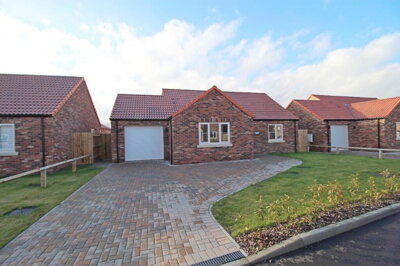
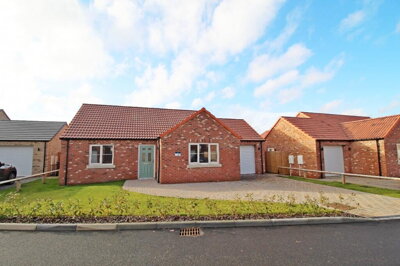
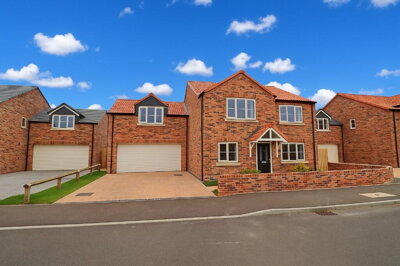
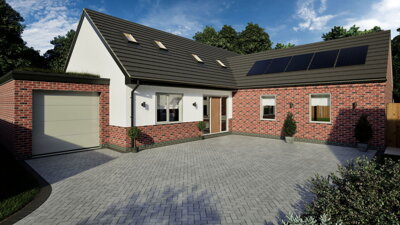
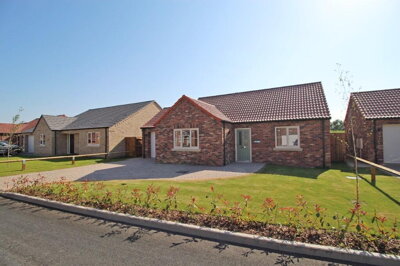
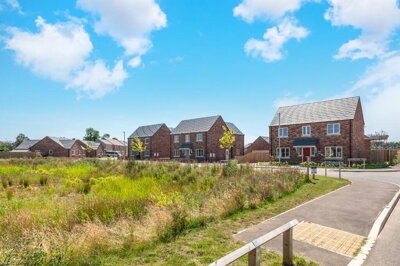
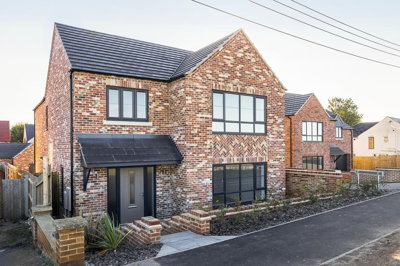
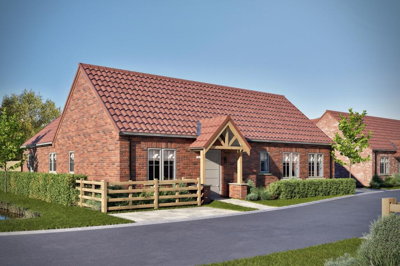
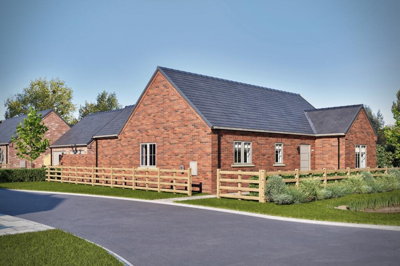
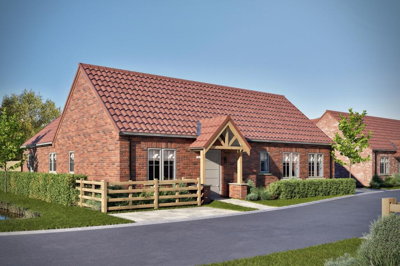
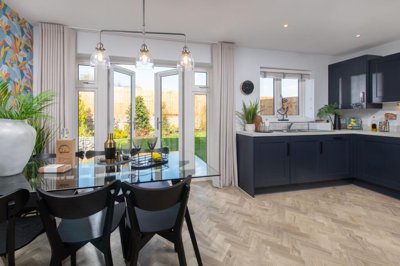
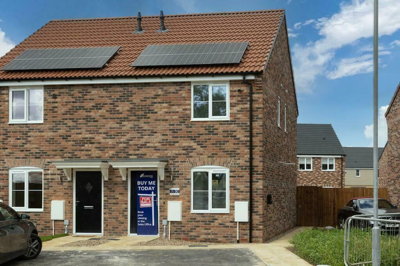
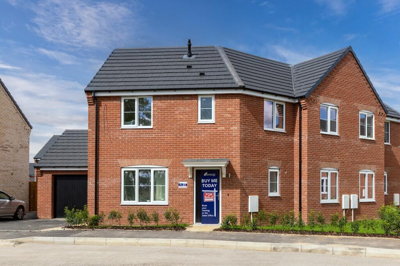
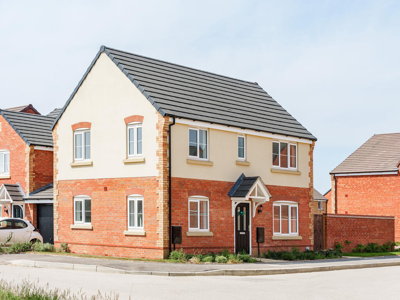
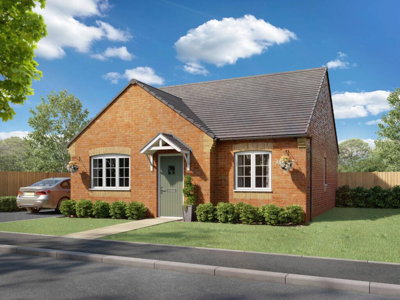
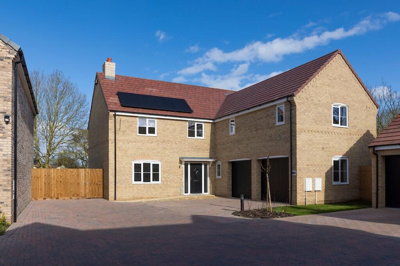
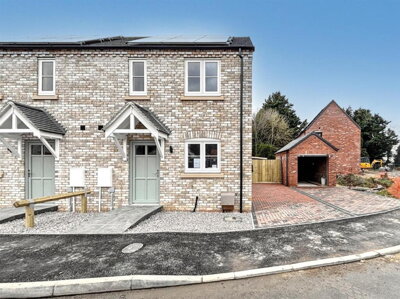
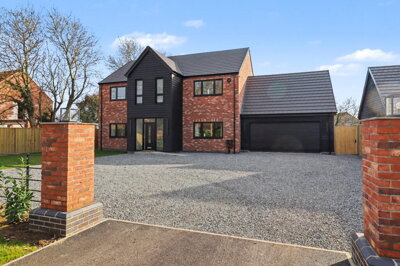
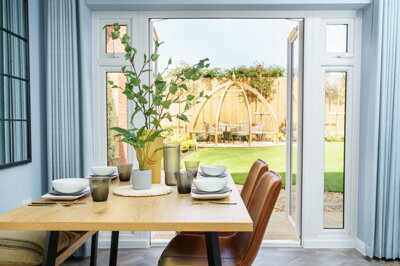
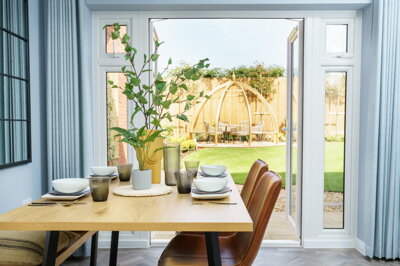
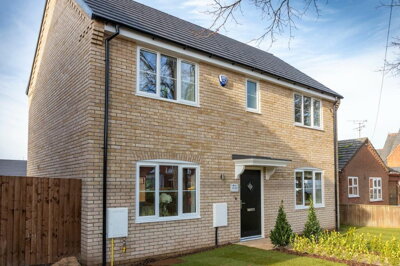
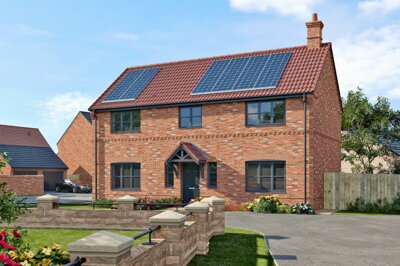
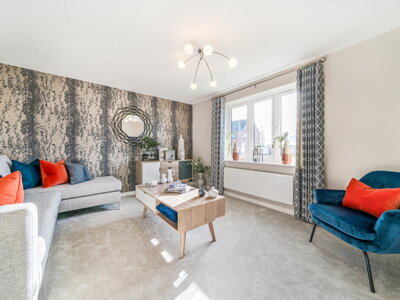
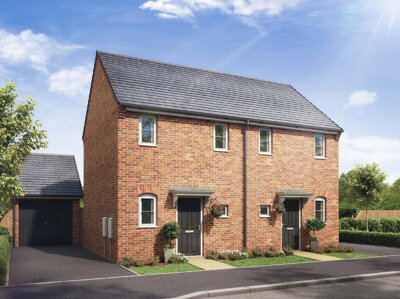
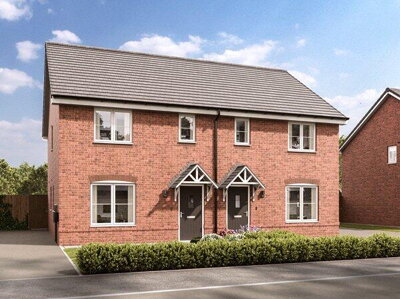
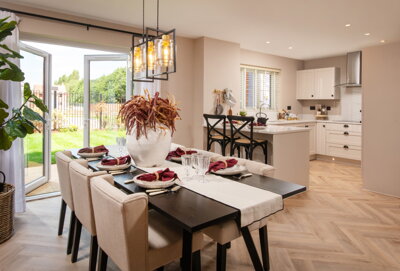
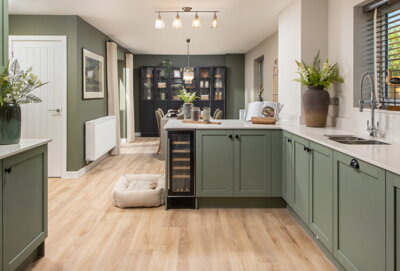
Browse 167 homes new builds in South Holland from local developer agents.
The South Holland property market has demonstrated remarkable stability over the past twelve months, with overall prices decreasing by just 0.5% according to the latest Rightmove data. This modest adjustment reflects a balanced market where buyer demand meets steady supply, making it an ideal time for purchasers looking to secure property without the intense competition found in major cities. Our platform lists properties across all price points, from affordable terraced homes around £163,500 to substantial detached houses reaching £300,566 on average. The market saw 1,029 property sales completed in the twelve months to February 2026, including 477 detached homes, 332 semi-detached properties, 179 terraced houses, and 41 flats, indicating healthy transaction volumes for a district of this size.
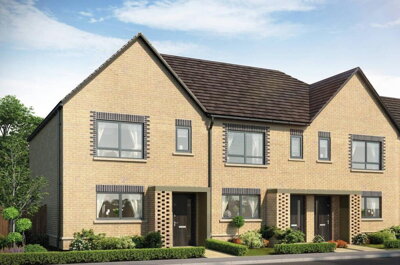
Several new build developments are currently underway across South Holland, providing opportunities for buyers seeking modern construction and energy-efficient homes. Holbeach Meadows offers 2, 3, and 4-bedroom homes from Ashwood Homes, while The Orchards in Pinchbeck provides additional options from the same developer. Larkfleet Homes is building at Penny Royal Place in Spalding, and Chestnut Homes has The Brambles development in Donington offering properties from 2 to 5 bedrooms. Springfield Gardens in Spalding from Cannon Kirk Homes completes the current new build offering. These developments range across the district's towns, providing choices for buyers prioritising new construction while the established housing stock offers character properties in conservation areas and traditional village settings.
The local economy plays a significant role in supporting the property market, with South Holland's agricultural and food production sectors providing stable employment for residents. Major employers include food packing plants, agricultural machinery suppliers, and logistics companies operating from the area's strategic location. The growing logistics sector, supported by excellent road connections to the A1(M) and A16, continues to attract workers who need quality housing in the district. This economic diversity helps maintain consistent demand for properties across all segments of the market, from first-time buyer terraced homes to executive detached properties.

South Holland district is home to a population of approximately 99,819 residents across 42,000 households, creating communities where neighbours know each other and local events bring people together throughout the year. The housing stock reflects the area's agricultural heritage, with 44.1% of properties being detached homes, the highest proportion in the district and well above the national average, offering families generous space both inside and out. Semi-detached properties comprise 30.6% of the housing stock, with terraced homes at 19.3% and flats accounting for just 5%, meaning most residents enjoy the privacy and garden space that larger properties provide. This predominance of family homes makes South Holland particularly attractive to buyers seeking room to grow or those who value outdoor space for gardening and recreation.
The towns and villages of South Holland are characterised by their distinctive brick-built architecture, often featuring red brick with rendered or pebble-dashed finishes on older properties, while concrete tiles and slate roofs are common throughout the area. The low-lying fenland landscape means properties benefit from wide skies and expansive views across farmland, though buyers should note the area's flat topography and proximity to watercourses. Properties built before 1945 typically feature solid 9-inch brick walls with timber floor joists and timber roof structures, while post-war construction from 1945 to 1980 introduced cavity wall construction with brick outer leaves and concrete ground floors. Modern properties from the 1980s onwards continue standard cavity wall methods but often incorporate improved insulation standards and contemporary designs.
Local amenities are well-distributed across the district, with Spalding serving as the main retail centre offering supermarkets, independent shops, and a twice-weekly market. The town's Ayscoughfee Gardens and Museum provide cultural attractions, while Holbeach offers excellent local services including schools, shops, and pubs. Community life centres around local events, country fairs, and the celebrated Spalding Flower Parade, making South Holland an ideal place to put down roots. The market towns of Donington and Long Sutton provide additional shopping and service facilities, while smaller villages offer local pubs and village shops that serve their immediate communities.

Families considering a move to South Holland will find a good selection of educational establishments across all age groups, with Ofsted-rated schools serving communities throughout the district. Primary education is well-represented with schools including Spalding Primary School, The Holbeach Primary Academy, and Donington-on-Baise Church of England Primary School, providing local options for families with young children. The district maintains several primary schools that have achieved good or outstanding Ofsted ratings, and catchment areas are generally manageable compared to those in larger urban areas, meaning children can often attend schools within reasonable distance of home. Parents should research specific school performance and catchment boundaries when considering properties, as popular schools can have waiting lists, particularly for Reception Year admissions.
Secondary education options include The Spalding Grammar School, a historic selective grammar school accepting pupils based on the 11-plus examination, alongside non-selective secondary schools providing comprehensive education across the district. Prince William School in Spalding and the University Academy Holbeach provide strong academic and vocational programmes, with good GCSE and A-level results contributing to the district's educational reputation. For post-16 education, the district has sixth form provision at grammar schools and colleges, with Peterborough colleges easily accessible for students seeking a wider range of A-level or vocational courses. The presence of good schools within the district means families can often avoid lengthy daily commutes for education, contributing to South Holland's appeal as a place to raise children.
South Holland enjoys excellent road connections, with the A16 running through the heart of the district and providing direct routes to Peterborough to the south and Grimsby and the coast to the north. The A151 connects Spalding to the surrounding villages and provides access to the A1(M) motorway network for longer distance travel, making commuting to cities including Peterborough, Nottingham, and Lincoln feasible for those working in regional centres. The flat terrain of the Fens means cycling is popular for shorter journeys, with dedicated cycle paths available in areas and quiet country lanes ideal for recreational cycling. Bus services operate throughout the district, connecting the main towns and villages, though private transport remains essential for those living in more rural settlements or working irregular hours.
Rail connections are available from Spalding station, which offers direct services to Peterborough where connections to London, Birmingham, and the north are readily available. The journey time from Spalding to Peterborough is approximately 30-40 minutes by train, positioning South Holland within reasonable commuting distance of the capital for those who work from home several days per week or travel occasionally. Peterborough station provides fast services to London King's Cross, with journey times of around 45 minutes to the capital, making South Holland a viable option for buyers priced out of London but needing occasional access. For those travelling by air, East Midlands Airport and Birmingham Airport are within reasonable driving distance, while London Stansted and London Luton offer additional international travel options.
Before searching for properties, research specific neighbourhoods in South Holland to find areas that match your lifestyle preferences. Consider factors such as school catchments, distance from your workplace, and proximity to amenities. Obtain a mortgage agreement in principle from a lender to understand your borrowing capacity, as this strengthens your position when making offers and demonstrates you are a serious buyer. The flat terrain of the fenland means properties can offer excellent views across open farmland, and proximity to conservation areas may affect future development plans.
Browse the Homemove listings for South Holland properties, filtering by property type, number of bedrooms, and price range to narrow your options. Once you have identified properties of interest, arrange viewings to assess the condition of the home, check the surrounding neighbourhood, and envision yourself living there. Take notes and photographs during viewings to help compare properties later, and do not hesitate to revisit properties that particularly appeal to you. Pay attention to the property's construction type, as older solid brick properties may require more maintenance than modern cavity-wall constructions.
When you find your ideal home, submit an offer through the estate agent with your agreement in principle attached to demonstrate your financial capability. Be prepared to negotiate on price or conditions, particularly for properties that have been on the market for some time. Once your offer is accepted, the estate agent will take the property off the market while legal work progresses, and you will pay a holding deposit to secure the property. In South Holland's balanced market, multiple offers are less common than in major cities, giving buyers more room to negotiate on price and terms.
Before completing your purchase, arrange a RICS Level 2 Survey to assess the property's condition and identify any defects that may need attention or negotiation. Given South Holland's geology, with areas of shrink-swell clay and peat, paying for a thorough survey is particularly important to check for signs of subsidence or drainage issues. The survey typically costs between £400 and £700 for a standard 3-bedroom property and can reveal issues invisible during a standard viewing, including damp, timber defects, and structural movement. For older properties built before 1976, the survey should specifically check for asbestos-containing materials and outdated electrical systems.
Choose a conveyancing solicitor to handle the legal transfer of ownership, checking contracts, searches, and ensuring all documentation is in order. Your solicitor will conduct local authority searches, environmental searches (particularly important given South Holland's flood risk areas), and liaise with the seller's solicitor to resolve any queries. The legal process typically takes 8-12 weeks from offer acceptance to completion, though this can vary depending on the chain and complexity of the transaction. Properties in conservation areas or listed buildings may require additional searches to verify planning permissions for any alterations.
Once all legal work is satisfactory and finances are confirmed, you and the seller will exchange contracts, legally committing to the sale. On the agreed completion date, your solicitor will transfer the remaining funds to the seller's solicitor, and you will receive the keys to your new home. Celebrate your purchase and start settling into your new South Holland community. Remember to arrange buildings insurance from the day of completion and update your address with banks, employers, and utility providers.
Property buyers in South Holland should pay particular attention to the local geology and flood risk, as the fenland landscape presents unique considerations not found in other parts of the country. The area sits on deposits of marine and fluvial silts, clays, and peats, with underlying shrink-swell clay deposits that can cause ground movement affecting properties with shallow foundations. When viewing properties, look for signs of subsidence such as diagonal cracks in walls, doors that stick or do not close properly, and uneven floors. Properties near large trees may be more susceptible to ground movement as tree roots extract moisture from the soil, causing shrinkage in clay conditions. A thorough survey is essential to identify any existing or potential structural issues before committing to a purchase.
The construction type of properties in South Holland significantly affects their maintenance requirements and potential defect patterns. Pre-1945 solid brick properties often have shallow brick footings that are vulnerable to ground movement, while timber floor joists and roof structures may be affected by wet rot or dry rot if ventilation is inadequate. Properties built between 1945 and 1980 with cavity wall construction generally offer better thermal performance but may have inadequate insulation by current standards. Many older properties throughout the district show signs of damp, either rising damp due to missing or failed damp-proof courses, or penetrating damp caused by damaged render, missing tiles, or deteriorated leadwork.
Flood risk is another critical consideration in South Holland, with the district's low-lying position and proximity to the River Welland, River Glen, and the Wash creating multiple flood risk scenarios. Check the property's Flood Risk from Rivers and Sea classification and review surface water flood maps, as the flat landscape and heavy soils can lead to surface water pooling during heavy rainfall. Properties in flood zones may face higher insurance premiums and may require flood resilience measures such as raised electrical outlets and waterproof render. The conservation areas in Spalding, Holbeach, Crowland, Donington, and Long Sutton offer protection for historic buildings but also come with planning restrictions that limit permitted development rights. Buyers should verify that any extensions or alterations to listed buildings or properties in conservation areas have the necessary planning permissions and listed building consents.
Electrical and plumbing systems in older properties frequently require upgrading to meet current safety standards and accommodate modern living requirements. Properties built before 1976 may still have original fuse boards with no circuit protection, and wiring may be deteriorating rubber or fabric insulated cable that requires complete replacement. Plumbing from this era may feature galvanized steel pipes prone to internal corrosion and reduced water pressure. Properties built before 2000 should be checked for asbestos-containing materials in textured coatings, pipe insulation, or garage roofs, which require specialist removal if disturbed.
The average house price in South Holland was £240,432 as of February 2026, according to Rightmove data. This breaks down to £300,566 for detached properties, £194,528 for semi-detached homes, £163,500 for terraced properties, and £100,000 for flats. Property prices have decreased by 0.5% over the past twelve months, indicating a stable market where prices have remained relatively consistent. This makes South Holland significantly more affordable than many other parts of the UK, particularly compared to southern England and major cities. First-time buyers will find terraced properties in the district particularly accessible, with average prices around £163,500 offering an entry point to homeownership in a desirable rural area.
Properties in South Holland fall under South Holland District Council for council tax purposes, with bands ranging from A to H depending on property value. The district generally offers competitive council tax rates compared to metropolitan areas, with Band A properties being the lowest rated and Band H the highest. You can check the specific band of any property through the Valuation Office Agency website using the property address, and this information should be confirmed during the conveyancing process along with any outstanding council tax liabilities. Council tax payments fund local services including waste collection, street cleaning, and community facilities throughout the district.
South Holland offers good educational options across all levels, with several primary schools in towns including Spalding, Holbeach, Donington, and surrounding villages receiving positive Ofsted ratings. The Spalding Grammar School is a well-regarded selective grammar school with a strong academic record, while the Prince William School and University Academy Holbeach provide comprehensive secondary education. School catchment areas are generally more accessible than in larger urban areas, though parents should research specific admissions criteria and current performance data when choosing properties, as popular schools can fill quickly during the admissions process.
South Holland benefits from rail services at Spalding station, offering direct trains to Peterborough with connections to London, Birmingham, and destinations nationwide. The journey from Spalding to Peterborough takes approximately 30-40 minutes, and from Peterborough to London King's Cross takes around 45 minutes on fast services. Bus services operate throughout the district connecting main towns and villages via routes including the 66 service between Spalding and King's Lynn, though private transport is essential for those in rural areas or working non-standard hours. The A16 provides excellent road connections north-south through the district, while the A151 connects to the A1(M) for regional motorway access toward Newark and Grantham.
South Holland offers solid investment fundamentals, with stable property prices, a diverse local economy driven by agriculture, food production, and logistics, and good transport links to larger employment centres. The district's affordable prices compared to national averages may offer better value appreciation potential as demand increases from buyers priced out of more expensive areas. Rental demand is supported by workers in the agricultural and food processing sectors, local service workers, and those waiting for or completing new build purchases. The ongoing new build activity at developments including Holbeach Meadows, Penny Royal Place, and Springfield Gardens indicates continued interest in the area. However, investors should be aware of flood risk in certain areas and the unique geology that may affect older properties, and should factor these considerations into their investment calculations.
For standard buyers purchasing a property in South Holland, stamp duty rates are 0% on the portion up to £250,000, 5% on the portion from £250,001 to £925,000, 10% on the portion from £925,001 to £1,500,000, and 12% on any amount above £1,500,000. First-time buyers benefit from relief on the first £425,000 (paying 0% on this portion, 5% on £425,001 to £625,000), though no relief applies above £625,000. For a typical South Holland property at the average price of £240,432, most buyers would pay no stamp duty, while first-time buyers would pay nothing on properties up to £425,000. Always verify your stamp duty liability with a solicitor or use the HMRC calculator before budgeting for your purchase.
South Holland has significant flood risk due to its low-lying fenland topography, proximity to the River Welland and River Glen, and its eastern boundary with the Wash. Properties in designated flood zones may face higher buildings insurance premiums and potential difficulties obtaining mortgages without specialist insurers. Surface water flooding can also be an issue during periods of heavy rainfall due to the flat landscape and heavy soils that drain slowly. Before purchasing, check the property's flood risk classification through the Gov.uk flood map for planning, consider having a flood risk assessment included in your survey, and verify that the property has appropriate flood resilience measures in place. Properties with a history of flooding should be investigated carefully to understand the cause and any remediation work undertaken.
South Holland's housing stock is dominated by detached properties, which account for 44.1% of all homes - the highest proportion in the district and well above the national average. Semi-detached homes make up 30.6% of the stock, while terraced properties comprise 19.3% and flats account for just 5%. This distribution reflects the area's family-oriented character and the prevalence of larger properties with generous gardens. The housing stock includes significant pre-1919 construction in historic market towns like Spalding, Holbeach, and Crowland, as well as inter-war and post-war developments, with newer construction concentrated in areas like Pinchbeck and around Spalding's outskirts.
From 3.5% APR
Compare mortgage rates from leading lenders to find the best deal for your South Holland property purchase.
From £499
Professional conveyancing solicitors to handle your property purchase legal work, including local searches in South Holland.
From £400
A thorough condition survey essential for South Holland properties given local geology and flood risk considerations.
From £80
Required energy performance certificate for your South Holland property.
Buying a property in South Holland involves several costs beyond the purchase price, and understanding these expenses helps you budget accurately for your move. Stamp Duty Land Tax (SDLT) is the most significant additional cost, though at the South Holland average house price of £240,432, most buyers purchasing at or below this level would pay no SDLT. First-time buyers purchasing properties up to £425,000 can benefit from first-time buyer relief, meaning they pay nothing on the first £425,000 of the purchase price. For properties above these thresholds, the standard SDLT rates apply, with 5% charged on the portion between £250,001 and £925,000, rising to higher rates for more expensive properties. Your solicitor will calculate and submit the SDLT return to HMRC on your behalf as part of the conveyancing process.
Other buying costs include solicitor's fees for conveyancing, which typically range from £500 to £1,500 depending on the complexity of the transaction and whether the property is freehold or leasehold. A RICS Level 2 Survey costs between £400 and £700 for a standard 3-bedroom property in South Holland, though larger detached homes with more complex structures may cost £600 to £900. An Energy Performance Certificate (EPC) is legally required and typically costs between £80 and £150. If you are buying with a mortgage, you will need a valuation survey arranged by your lender, usually costing between £200 and £500, though some lenders offer this free as part of their mortgage deal. Removal costs vary based on the volume of belongings and distance moved, while buildings insurance must be in place from the day of completion. Setting aside approximately 3-5% of the purchase price for these additional costs is a sensible approach to ensure you are fully prepared for your move to South Holland.
Properties New Builds In London

Properties New Builds In Plymouth

Properties New Builds In Liverpool

Properties New Builds In Glasgow

Properties New Builds In Sheffield

Properties New Builds In Edinburgh

Properties New Builds In Coventry

Properties New Builds In Bradford

Properties New Builds In Manchester

Properties New Builds In Birmingham

Properties New Builds In Bristol

Properties New Builds In Oxford

Properties New Builds In Leicester

Properties New Builds In Newcastle

Properties New Builds In Leeds

Properties New Builds In Southampton

Properties New Builds In Cardiff

Properties New Builds In Nottingham

Properties New Builds In Norwich

Properties New Builds In Brighton

Properties New Builds In Derby

Properties New Builds In Portsmouth

Properties New Builds In Northampton

Properties New Builds In Milton Keynes

Properties New Builds In Bournemouth

Properties New Builds In Bolton

Properties New Builds In Swansea

Properties New Builds In Swindon

Properties New Builds In Peterborough

Properties New Builds In Wolverhampton

Enter your details to see if this property is within your budget.
Loans, cards, car finance
Estimated property budget
Borrowing + deposit
You could borrow between
Typical borrowing
Monthly repayment
Est. at 4.5%
Loan-to-value
This is an estimate only. Your actual budget may vary depending on interest rates, credit history, and personal circumstances. For an accurate affordability assessment, speak to one of our free mortgage advisors.
This calculator provides estimates for illustrative purposes only and does not constitute financial advice. Your home may be repossessed if you do not keep up repayments on your mortgage. Estimates based on 4.5% interest rate, repayment mortgage. Actual rates depend on your circumstances.
Homemove is a trading name of HM Haus Group Ltd (Company No. 13873779, registered in England & Wales). Homemove Mortgages Ltd (Company No. 15947693) is an Appointed Representative of TMG Direct Limited, trading as TMG Mortgage Network, which is authorised and regulated by the Financial Conduct Authority (FRN 786245). Homemove Mortgages Ltd is entered on the FCA Register as an Appointed Representative (FRN 1022429). You can check registrations at NewRegister or by calling 0800 111 6768.

We use cookies to show you personalised content and improve your experience of our website. Find out more in our Privacy policy and Cookie policy.