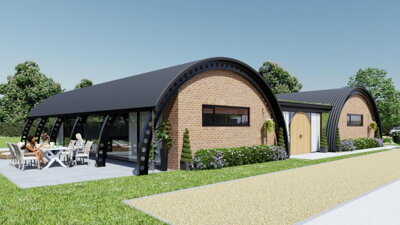
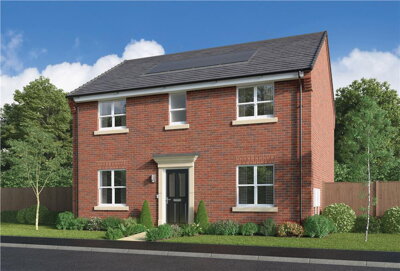
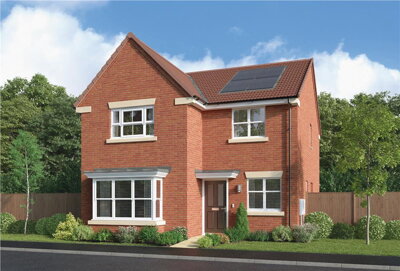
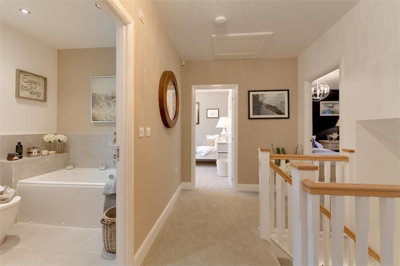
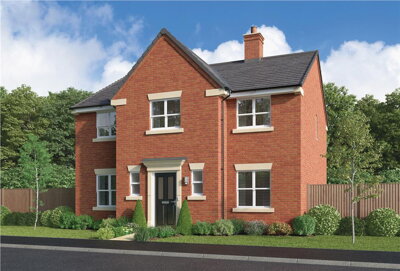
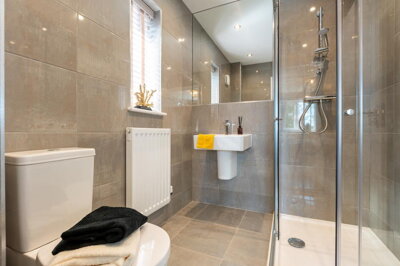
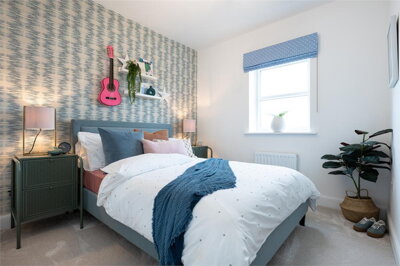
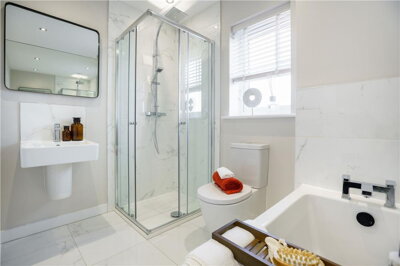
Browse 8 homes new builds in Skelton from local developer agents.
The larger property sector typically features multiple bathrooms, substantial reception space, and private gardens or off-street parking. Four bedroom houses in Skelton span detached, semi-detached, and occasionally terraced configurations, with styles ranging from period properties to modern executive homes.
The Skelton property market reflects the broader York area's desirability while offering prices that provide relative value compared to central York. Detached properties command the highest prices, with averages around £478,803, making them ideal for families seeking generous space and mature gardens. Semi-detached homes average approximately £194,250, representing an accessible entry point to this attractive village location. Terraced properties, many dating from the Victorian and Edwardian periods, average around £237,200 and often feature the distinctive creamy white Pease bricks that characterise Skelton's architectural heritage.
The housing stock breakdown in the YO30 postcode area reveals a balanced mix of property types. Detached homes account for approximately 30.5% of sales, semi-detached properties represent around 32.7%, terraced houses make up 25% of transactions, and flats comprise approximately 11.8% of sales. This variety means buyers have genuine choice across different budgets and lifestyle preferences, from compact terraced cottages suitable for first-time buyers to substantial detached family homes with generous gardens.
Recent market data indicates a cooling trend, with overall prices falling approximately 19.4% over the twelve months leading to January 2026, down 15% on the previous year and 12% below the 2022 peak of £399,181. This correction follows a period of significant growth and presents opportunities for buyers who have been waiting for more favourable conditions. The broader York postcode area saw 8,000 property sales in the previous twelve months, representing a 16% decline as higher mortgage rates and economic uncertainty affected buyer confidence nationally. However, falling mortgage rates are expected to support renewed activity throughout 2026, and the village's fundamental appeal remains unchanged.

Skelton's character is defined by its extraordinary blend of historic architecture and modern residential development. The Skelton Conservation Area, designated in 1973, encompasses The Green, Skelton Hall, and Skelton Manor, preserving the village's essential character through careful management of buildings, trees, and open spaces. The Village Trust actively takes an interest in maintaining Skelton's special atmosphere, ensuring that new developments respect the traditional building materials that unify the area: magnesium limestone, Westmorland slate, handmade bricks, and clay pantiles that have characterised local construction for centuries.
The local economy centres on essential services rather than industry, with residents relying on the village post office and general store, a welcoming public house, social club, and a doctor's surgery. The commercial district sits to the south-west of the village, providing everyday conveniences without compromising Skelton's residential character. Village life remains anchored by community events and the strong sense of place that comes from living in a settlement with documented history stretching back to the 8th century.
Broader York economic factors significantly benefit Skelton residents, with the city offering employment across thriving sectors including tourism, digital and creative industries, two major universities, financial services with major firms like Aviva and NFU Mutual, rail industry engineering, and biotechnology research at the York Biotech Campus. This economic diversity creates stable employment opportunities that support the local housing market and attract new residents to the village each year.

Families considering Skelton will find educational provision within the village itself and easy access to York's celebrated schools. Skelton's own primary school serves the immediate community, while the broader York area offers an impressive range of educational institutions across all phases. The proximity to York means families can access highly regarded secondary schools, grammar schools, and sixth form colleges without lengthy commutes, making Skelton particularly attractive to parents prioritising educational outcomes.
The University of York and York St John University both contribute significantly to the area's educational ecosystem, creating a vibrant learning environment that extends beyond school-age provision. The University of York's campus on Heslington Lane attracts thousands of students and staff each year, many of whom seek housing in surrounding villages like Skelton for its peaceful residential character and convenient transport links to the campus. This steady demand from university-affiliated households supports the local rental market and provides a pool of potential buyers for family-sized properties.
Further education colleges in York provide vocational routes and apprenticeships through institutions offering courses from construction trades to digital technology. Prospective buyers with school-age children should research specific catchment areas and admission policies, as competition for places at popular schools can be intense given York's reputation for academic excellence. School Ofsted reports and performance data are publicly available to help inform decisions, and we recommend visiting schools directly to assess their suitability for your family's needs.
Skelton's transport connections make it exceptionally well-suited to commuters working in York or further afield. The village sits just a few miles from York city centre, with regular bus services providing convenient access to the city's railway station, shopping districts, and employment centres. The A1237 York outer ring road passes nearby, providing efficient road connections to the A1(M) and the broader motorway network for those travelling to Leeds, Newcastle, or the south.
York railway station offers excellent national connections, with fast trains to London reaching the capital in approximately two hours, while Edinburgh is accessible in around three hours. The station also provides regular services to major northern cities including Leeds, Newcastle, Sheffield, and Manchester. The £25m York Station Gateway regeneration project has further enhanced the city's transport hub, improving facilities, accessibility, and the overall passenger experience for the millions of travellers who use the station each year.
For cyclists, York's expanding cycle network provides car-free commuting options along traffic-free routes into the city centre. National Cycle Route 65 passes through the York area, connecting Skelton to surrounding villages and the city beyond. Within the village itself, most daily amenities including the post office, shop, pub, and doctor's surgery can be reached on foot, supporting a sustainable lifestyle that reduces reliance on private vehicles for everyday journeys.
Explore current property listings on Homemove to understand what is available within your budget. Skelton offers properties ranging from historic cottages near The Green to modern family homes in developments like The Meadows, The Vale, and The Dell. Consider working with a local estate agent who knows the village intimately, as they can provide insights into properties that may not yet be publicly listed and advise on the nuances of different neighbourhoods within the village.
Before arranging viewings, obtain a mortgage agreement in principle from a lender. This strengthens your position when making offers and demonstrates to sellers that you have financing secured. With average detached prices around £478,803, understanding your borrowing capacity is essential for focused property searching. First-time buyers should also check their eligibility for government schemes such as Shared Ownership if purchasing a newly built property, and those with larger deposits should compare specialist mortgage products that may offer better rates.
Visit properties that match your criteria, paying particular attention to the property's condition, construction materials, and proximity to local amenities. The village centre, conservation area boundaries, and flood risk considerations near the River Ouse should all factor into your assessment. Take time to visit the area at different times of day and week to gauge noise levels, traffic patterns, and the general atmosphere before committing to an offer.
Once your offer is accepted, arrange a comprehensive survey before exchanging contracts. Given Skelton's mix of historic properties and post-war housing, a Level 2 survey is particularly valuable for identifying defects common to older buildings such as damp, roof condition issues, and structural movement related to the local clay geology. Our inspectors understand the specific construction methods used in Skelton properties, from Victorian brickwork to post-war cavity wall construction, and can provide detailed advice on any issues identified. Budget between £400-600 for this essential protection on standard properties, with costs varying based on property size, age, and construction type.
Appoint a conveyancing solicitor to handle the legal aspects of your purchase. They will conduct local authority searches specific to City of York Council, check flooding and drainage records, and ensure the property's title is clear. For properties near the River Ouse or within areas of known flood risk, your solicitor should obtain specific flood risk reports and advise on any historic flooding affecting the property. Exchange contracts typically occurs 4-6 weeks after instruction, with completion following shortly after.
On completion day, your solicitor transfers the remaining funds to the seller's representative, and you receive the keys to your new Skelton home. Congratulations on joining this historic village community. Remember to arrange buildings insurance from exchange of contracts, notify utility companies of your moving date, and update your electoral registration at your new address.
Buying property in Skelton requires awareness of several area-specific considerations that go beyond the usual property search criteria. The village's geology presents particular challenges: the old village centre sits on boulder clay reaching approximately 25 metres above sea level, while the remainder of the village occupies strong clay resting on gravel and sand. Clay soils are susceptible to shrink-swell behaviour, a significant geohazard that can cause subsidence or heave as moisture content changes with seasonal rainfall patterns and drought conditions. Properties with mature trees nearby require extra vigilance, as root systems can significantly influence the depth affected by these movements. A thorough survey should assess foundation conditions and any signs of historic movement, including diagonal cracking, sticking doors, or uneven floor levels.
Flood risk is another important consideration given Skelton's position on the east bank of the River Ouse. The Environment Agency monitoring station at Skelton records usual river levels between 0.51m and 6.10m, with property flooding possible above 6.40m. The highest recorded level of 6.79m occurred on November 4, 2000, and historical flooding has affected properties on Alma Terrace and Postern Close. Potential buyers should investigate the flood defence status of any property near the river, including the age and condition of any flood barriers or barriers that protect the village. Buildings insurance should reflect these local risks, and mortgage lenders will require appropriate flood risk assessment before proceeding.
For properties within the Skelton Conservation Area or those that are listed buildings, additional considerations apply beyond standard property purchases. The village features numerous listed structures including the Grade I Church of St Giles, Grade II* Skelton Manor, and multiple Grade II buildings such as Skelton Hall, Grange Farmhouse, and Toll Bar Cottage. Purchasing a listed property or one within the conservation area subjects you to planning controls that affect permitted development rights, exterior alterations, and even window specifications. Specialist surveys may be advisable for historic properties, and appropriate conservation-grade materials must be used for any works. These requirements protect the village's character but represent additional responsibilities for owners.
The age distribution of Skelton's housing stock means that buyers are likely to encounter properties requiring careful assessment of their condition and potential maintenance needs. The village has an historic core with buildings dating back to the 13th century, 16th century manor house origins, and 19th century hall. Post-war expansion brought developments like Brecksfield from 1957 and Grange Park in the 1970s, meaning significant portions of the housing stock are now between 50 and 70 years old. This age profile means that issues such as outdated electrical systems, original plumbing, and aging roof coverings are commonly encountered during surveys.
Understanding the construction methods used in Skelton properties helps you appreciate their characteristics and identify potential issues during the buying process. The village's historic buildings demonstrate a progression of building techniques spanning several centuries. The Church of St Giles, dating from around 1240, is built of magnesium limestone with Westmorland slate roofing, showcasing the materials available to medieval builders. Skelton Manor, with origins in the mid-16th century, was originally timber-framed before being cased in brick, with a plain tile roof that reflects the transition from medieval to Renaissance construction methods.
Victorian and Edwardian properties in Skelton, particularly those featuring the distinctive creamy white Pease bricks, represent some of the village's most characterful homes. These handmade bricks were produced locally and give terraced properties their unique appearance that distinguishes Skelton from surrounding villages. Many of these properties were built as solid-walled construction without cavity insulation, meaning they may lack modern damp-proof courses and rely on traditional breathable materials for their structural integrity.
Post-war developments in Skelton followed the construction conventions of their era. Properties built from the 1950s onwards typically feature cavity wall construction with brick outer leaves and concrete or timber frame internal structures. Standard brick and tile construction became the norm for semi-detached and terraced homes in developments such as Brecksfield and Grange Park. These properties, while generally more straightforward to maintain than their historic counterparts, may have specific issues related to their construction period, including potential problems with cavity wall insulation fitted in later years or original components reaching the end of their serviceable life.
Roofing materials across Skelton reflect the available materials of each era. Clay pantiles were introduced in the 17th century and remain a characteristic feature of older roofs, while grey, blue, and black Welsh slate became predominant in the mid-19th century. More recent developments have used man-made slates and concrete tiles. Our inspectors assess roof condition with full awareness of these local materials, identifying issues such as cracked or slipped tiles, deteriorating mortar on ridge lines, and the condition of flashing around chimneys and junctions with adjacent walls.
Our inspectors regularly identify several categories of defect when surveying properties in Skelton, and understanding these helps you prioritie your investigations during viewings. Dampness issues are among the most common findings, particularly in solid-walled historic properties built before modern building regulations. Penetrating damp, rising damp, and condensation can all affect older Skelton homes, sometimes exacerbated by inappropriate modern materials such as non-breathable paints, cements, and renders that trap moisture within traditional walls that were designed to breathe.
Roof problems represent another frequent category of defect identified in Skelton surveys. Missing or cracked tiles, damaged flashing around chimneys and valleys, weathered flat roof coverings, and sagging roof structures all occur in properties across the village's age range. Poorly fitted loft insulation can lead to moisture build-up and wood rot in roof timbers, particularly where ventilation has been reduced by later improvements. Our inspectors thoroughly examine accessible roof spaces, checking for signs of water penetration, timber decay, and evidence of previous repairs.
Structural movement related to Skelton's clay geology requires careful assessment during any property survey. The shrink-swell behaviour of clay soils can cause foundation movement that manifests as cracking in walls, particularly diagonal cracks extending from window and door frames, or stepped cracks following mortar lines. While minor movement is common and often benign, more serious issues require specialist investigation. Signs that warrant further assessment include large or spreading cracks, tilting chimney stacks, gaps where walls meet floors or ceilings, and doors or windows that stick or fail to close properly.
Electrical and plumbing systems in older Skelton properties frequently require updating to meet modern standards. Many homes built before the 1980s retain original wiring that may not have been upgraded, creating potential fire risks and making properties difficult to insure. Similarly, lead pipework or galvanised steel pipes, once common in domestic plumbing, should be replaced to avoid leaks and ensure clean water supply. Our survey reports flag these issues clearly, helping you negotiate repairs with sellers or budget for necessary upgrades after purchase.
The overall average house price in Skelton is approximately £351,866 according to recent data from the YO30 postcode area. Detached properties average around £478,803, semi-detached homes approximately £194,250, and terraced properties around £237,200. The market has experienced a correction, with prices falling approximately 19.4% over the twelve months to January 2026, offering potentially better value for buyers entering the market now compared to the 2022 peak of £399,181. The average price paid for properties in Skelton was £357,000 as of January 7, 2026.
Properties in Skelton fall under City of York Council administration. Council tax bands range from A through to H and are based on the property's assessed value at the time of construction. Specific bands depend on individual properties and their characteristics, with Band A properties typically being the least valuable and Band H the most expensive. Prospective buyers should check the specific band for any property they are considering, as bands affect ongoing annual costs and may influence purchasing decisions relative to property value. Band information is available through the City of York Council website or the Valuation Office Agency.
Skelton has its own primary school serving the local community, providing education for children up to age eleven within the village itself. The village benefits from proximity to York's excellent educational provision, including highly regarded secondary schools, grammar schools, and further education colleges. Both the University of York on Heslington Lane and York St John University in the city centre are accessible for higher education, with York St John offering a range of undergraduate and postgraduate programmes. Families should research specific catchment areas and admission policies, as popular schools can be oversubscribed and catchment boundaries can change annually.
Skelton has good transport connections despite its village character. Regular bus services link the village to York city centre, where the railway station provides excellent national rail connections to London, Edinburgh, and major northern cities. The A1237 outer ring road provides easy road access to the A1(M) and broader motorway network for travel to Leeds, Newcastle, or destinations further south. York's expanding cycle network offers car-free commuting options along traffic-free routes into the city centre. The city benefits from the £25m York Station Gateway regeneration, which has significantly improved facilities and accessibility for all transport users.
Skelton offers several investment attractions for property buyers. Its proximity to York makes it desirable for commuters and families seeking village life with city access. The historic conservation area and listed buildings help maintain the village's character and protect property values. York's broader economic factors including tourism, digital industries, universities, and financial services firms like Aviva and NFU Mutual support steady demand for housing. However, recent price corrections and the area's geology with clay soils presenting shrink-swell risk, combined with flood proximity to the River Ouse, require consideration. As with any investment, thorough research and professional advice is recommended before purchasing.
Stamp duty land tax applies based on purchase price and your buyer status. Standard rates are 0% up to £250,000, 5% from £250,001 to £925,000, 10% from £925,001 to £1.5 million, and 12% above £1.5 million. First-time buyers receive relief on purchases up to £625,000, paying 0% up to £425,000 and 5% between £425,001 and £625,000. Given Skelton's average price around £351,866, many properties fall within the lower tax brackets, meaning a typical terraced property would incur approximately £5,093 in stamp duty. However, more expensive detached homes priced around £478,803 will incur higher rates on the portion exceeding £250,000.
Older properties in Skelton, particularly those in the conservation area or built before the 1950s, require careful inspection for common defects. These include damp issues in solid-walled buildings without modern damp-proof courses, roof condition problems with aging tiles and flashing, structural movement related to clay soil shrink-swell behaviour, and potentially outdated electrical systems that may not meet current safety standards. Properties built between the 1950s and 1980s may contain asbestos in insulation, artex coatings, or floor tiles. Given Skelton's building materials including timber framing, stone, and traditional bricks, specialist surveys are advisable for historic properties, and you should always check for flood risk history given the River Ouse proximity.
RICS Level 2 survey costs in Skelton typically range from £400 to £600 for standard properties in the village. The exact cost depends on factors including property size, number of bedrooms, value, and complexity. Larger homes with four or more bedrooms typically cost more due to increased inspection time, while older properties with non-standard construction or listed building status may incur additional charges. Given that Skelton has many properties over 50 years old with varied construction methods from Victorian brickwork to post-war housing, our pricing reflects the expertise required to assess these properties accurately. Properties above £500,000 typically average around £586 for a Level 2 survey.
From £400
A detailed inspection of the property's condition, identifying defects and providing advice on repairs and maintenance. Essential for Skelton's mix of historic and modern properties.
From £600
A comprehensive building survey suitable for larger, older, or non-standard properties. Recommended for listed buildings and historic properties in the conservation area.
From £60
Energy Performance Certificate required for all property sales. Provides energy efficiency ratings and recommendations for improvements.
From £499
Legal services for your property purchase, including local authority searches, title checks, and contract preparation.
Understanding the full costs of purchasing property in Skelton helps you budget accurately and avoid surprises during what can be a complex process. The purchase price represents the largest expense, but additional costs quickly accumulate and should be factored into your financial planning from the outset. For a typical Skelton property priced at the village average of £351,866, stamp duty land tax would be approximately £5,093, calculated at 5% on the portion exceeding £250,000.
First-time buyers benefit from relief that increases the nil-rate threshold to £425,000, with 5% applying between £425,001 and £625,000. This means many first-time buyer purchases in Skelton, including terraced and semi-detached properties priced up to around £350,000, would incur no stamp duty at all. However, first-time buyer relief does not apply to purchases above £625,000, so buyers of detached properties priced around £478,803 should calculate their liability carefully and factor this into their overall budget.
Beyond stamp duty, budget for solicitor conveyancing fees typically ranging from £500-1,500 depending on complexity and whether the transaction involves a chain. Search fees of approximately £250-400 cover local authority, drainage, and environmental searches specific to City of York Council, with additional searches potentially required for properties near the River Ouse floodplain. Survey costs of £400-600 cover a RICS Level 2 Home Survey on a standard property, with larger or more complex properties attracting higher fees. Mortgage arrangement fees vary from zero to around 2% of the loan amount depending on the product chosen. Buildings insurance should be in place from exchange of contracts, and removals costs vary based on distance and volume. Factor in Land Registry fees of approximately £200-500 for registering your ownership transfer.
Properties New Builds In London

Properties New Builds In Plymouth

Properties New Builds In Liverpool

Properties New Builds In Glasgow

Properties New Builds In Sheffield

Properties New Builds In Edinburgh

Properties New Builds In Coventry

Properties New Builds In Bradford

Properties New Builds In Manchester

Properties New Builds In Birmingham

Properties New Builds In Bristol

Properties New Builds In Oxford

Properties New Builds In Leicester

Properties New Builds In Newcastle

Properties New Builds In Leeds

Properties New Builds In Southampton

Properties New Builds In Cardiff

Properties New Builds In Nottingham

Properties New Builds In Norwich

Properties New Builds In Brighton

Properties New Builds In Derby

Properties New Builds In Portsmouth

Properties New Builds In Northampton

Properties New Builds In Milton Keynes

Properties New Builds In Bournemouth

Properties New Builds In Bolton

Properties New Builds In Swansea

Properties New Builds In Swindon

Properties New Builds In Peterborough

Properties New Builds In Wolverhampton

Enter your details to see if this property is within your budget.
Loans, cards, car finance
Estimated property budget
Borrowing + deposit
You could borrow between
Typical borrowing
Monthly repayment
Est. at 4.5%
Loan-to-value
This is an estimate only. Your actual budget may vary depending on interest rates, credit history, and personal circumstances. For an accurate affordability assessment, speak to one of our free mortgage advisors.
This calculator provides estimates for illustrative purposes only and does not constitute financial advice. Your home may be repossessed if you do not keep up repayments on your mortgage. Estimates based on 4.5% interest rate, repayment mortgage. Actual rates depend on your circumstances.
Homemove is a trading name of HM Haus Group Ltd (Company No. 13873779, registered in England & Wales). Homemove Mortgages Ltd (Company No. 15947693) is an Appointed Representative of TMG Direct Limited, trading as TMG Mortgage Network, which is authorised and regulated by the Financial Conduct Authority (FRN 786245). Homemove Mortgages Ltd is entered on the FCA Register as an Appointed Representative (FRN 1022429). You can check registrations at NewRegister or by calling 0800 111 6768.

We use cookies to show you personalised content and improve your experience of our website. Find out more in our Privacy policy and Cookie policy.