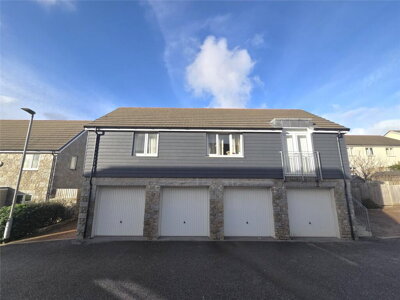
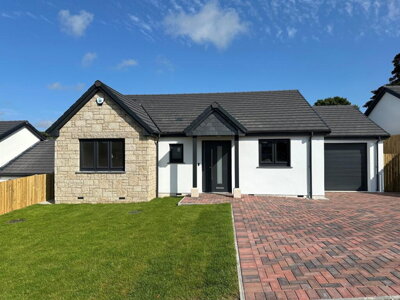
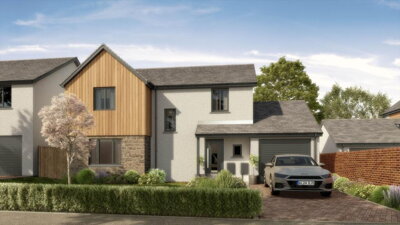
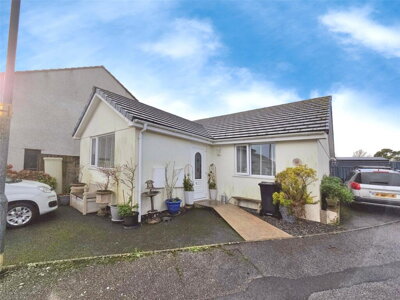
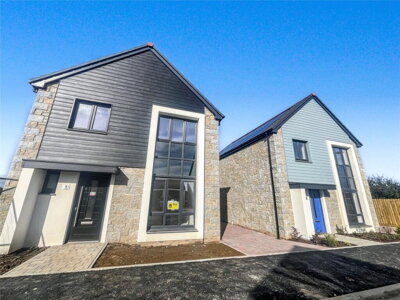
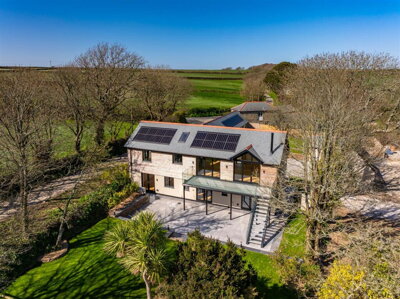
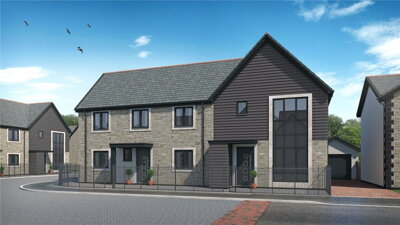
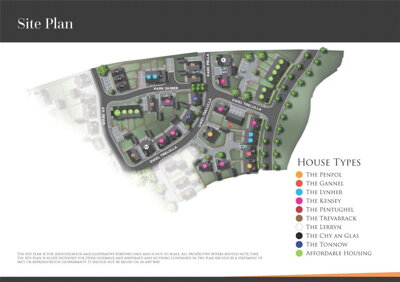
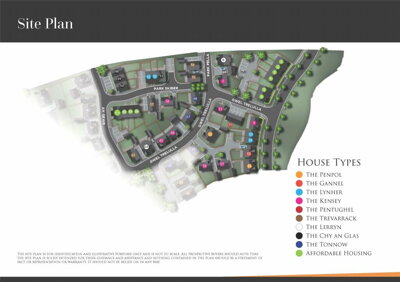
Browse 10 homes new builds in Sithney, Cornwall from local developer agents.
The Sithney property market offers detached, semi-detached, and terraced houses spanning various price ranges and neighbourhoods. Each listing includes detailed property information, photographs, and direct contact with the marketing agent.
£637k
8
0
54
Source: home.co.uk
Showing 8 results for Houses new builds in Sithney, Cornwall. The median asking price is £637,400.
Source: home.co.uk
Detached
7 listings
Avg £834,971
Terraced
1 listings
Avg £400,000
Source: home.co.uk
Source: home.co.uk
The Cotterstock property market is characterised by its exceptional quality and limited availability. Detached properties dominate the village's housing stock at 80.5%, with the average detached home priced at £500,000. This figure reflects the premium nature of rural Northamptonshire property, where stone-built period homes on generous plots command strong prices. Semi-detached properties comprise 14.5% of the housing stock, while terraced homes make up just 5%, with no flats in the village at all.
Property prices have remained relatively stable over the past twelve months, recording a modest decline of 1.0%. This minor adjustment follows a period of steady demand for rural village properties, as buyers increasingly seek space, character, and access to countryside during and after the pandemic years. The market has seen limited new build activity, with no major developments within the PE8 5XX postcode area. Properties that do come to market tend to be older character homes, many built from local limestone dating back to the 19th century or earlier.
The village's housing stock reflects its historical development, with 45% of properties dating from the pre-1919 era. A further 25% were constructed between 1945 and 1980, with the remaining 20% representing later additions to the village. This age profile means that prospective buyers are more likely to encounter solid wall construction, traditional timber floors, and period features than modern cavity wall insulation or contemporary fittings. Understanding the implications of these construction methods is essential when evaluating properties in Cotterstock.

Life in Cotterstock offers a quintessential English village experience, where the rhythm of the seasons shapes daily routines and community connections run deep. The village sits within a landscape of rolling Northamptonshire countryside, with the River Nene providing both scenic beauty and a gentle riparian backdrop. Local geology here consists of Oolitic Limestone and Jurassic Clay, the same stone that many historic properties were constructed from, giving the village its warm honey-coloured appearance. Approximately 80% of properties were built before 1980, with 45% dating from the pre-1919 era, lending Cotterstock an established, settled character.
The village community is close-knit and welcoming to newcomers, with annual events often centred around the church and village hall. For everyday amenities, residents typically travel to nearby market towns including Oundle, where a range of shops, pubs, and services await. The proximity to the River Nene means certain properties may fall within flood zones 2 or 3, so prospective buyers should investigate specific locations and consider appropriate surveys. The presence of the Conservation Area designation ensures that the village's historic character is protected, which helps maintain property values over time.
Cotterstock Hall stands as one of the village's most significant historical assets, while St Andrew's Church anchors the spiritual and social life of the community. The village's location within the Nene Valley provides excellent walking opportunities, with public footpaths crossing farmland and riverside meadows. The local economy remains primarily agricultural, with some residents commuting to Oundle, Corby, or Peterborough for employment. This blend of rural tranquility and accessibility makes Cotterstock particularly attractive to buyers seeking to escape urban pressures without sacrificing connectivity.

Families considering a move to Cotterstock will find educational options primarily in the surrounding market towns and villages. The village itself is served by primary schools in nearby communities, with several rated Good or Outstanding by Ofsted within a reasonable driving distance. For secondary education, pupils typically attend schools in Oundle, Thrapston, or Corby, with several established secondary schools drawing students from across rural Northamptonshire. Parents should research specific catchment areas and school admissions criteria when considering properties in the village.
For secondary education, Oundle School deserves particular mention as one of the region's most prestigious independent schools. This co-educational institution educates students from age 11 through to sixth form, drawing families from across Northamptonshire and beyond. The school's presence in the nearby town enhances the appeal of the broader Cotterstock area for families prioritising academic excellence. Several grammar schools in surrounding towns provide additional options for academically selective families, with competitive entrance processes that attract high-performing students from the wider region.
Several grammar schools in nearby towns provide additional options for academically selective families. For families prioritising independent education, the concentration of excellent schools in the region makes Cotterstock an attractive base, with reasonable commute times to a variety of educational establishments across Northamptonshire and Cambridgeshire. Primary school children in Cotterstock typically attend schools in surrounding villages, with Tansor Church of England Primary School and nearby Oundle primary schools serving the local population.
Cotterstock enjoys a strategic position within rural Northamptonshire, offering reasonable connectivity to larger towns and cities despite its village setting. The village sits approximately 6 miles from Oundle, 10 miles from Corby, and around 15 miles from Peterborough, providing access to comprehensive retail, healthcare, and employment options. For commuters, the A605 runs through nearby villages, connecting to the A14 and A1 corridor for those travelling further afield. The proximity to Peterborough railway station opens up East Coast Main Line services to London, Birmingham, and the North.
Local bus services operate between Cotterstock and surrounding villages, though frequencies are limited, reflecting the rural nature of the area. Residents who commute regularly typically rely on private vehicles for daily travel. Cyclists can enjoy scenic routes through the Northamptonshire countryside, though the rural road network requires caution during busy periods. Parking in the village is generally straightforward, with properties typically offering off-street parking or garages. Those working from home will appreciate the rural setting and connectivity options, with many residents taking advantage of the peaceful environment for remote work.
Peterborough station provides regular services to London King's Cross, with journey times of approximately 45 minutes to an hour. This makes day commuting to the capital feasible for those working in professional services, finance, or government roles. The A1 corridor accessible via the A605 offers routes north to Yorkshire and south towards London, while the A14 provides connections to the Midlands. For international travel, Luton Airport and East Midlands Airport are within reasonable driving distance, typically 60-90 minutes from the village.
Understanding the predominant construction methods in Cotterstock is essential for any prospective buyer evaluating properties in this historic village. The majority of properties here were built using local Oolitic Limestone, the same creamy stone that defines the visual character of the village and surrounding Northamptonshire countryside. This traditional building material has been quarried locally for centuries and gives Cotterstock its distinctive warm, honey-coloured appearance that distinguishes it from brick-built villages in neighbouring counties.
Older properties in Cotterstock typically feature solid wall construction rather than modern cavity wall insulation. Solid walls, typically 9-12 inches thick, were built without gaps between inner and outer leaves, meaning they breathe differently than contemporary homes. This construction type means that damp management differs from newer properties - rising damp through capillary action is more common, and penetrating damp through driving rain can affect exposed elevations. Proper maintenance of rainwater goods becomes particularly important for these solid wall properties to prevent water ingress that could damage internal plaster and timber elements.
Timber construction features prominently in Cotterstock's older properties, from exposed beams in ceilings to timber floor joists and traditional window casements. These elements can be susceptible to woodworm, wet rot, or dry rot if moisture penetrates the building envelope. A RICS Level 2 Survey will assess the condition of these timbers, checking for signs of infestation or decay. The roofs on these period properties typically feature traditional pitched construction with slate or clay tile coverings, often with lead flashing at junctions and valleys. The condition of these roof elements should be carefully evaluated, as repairs to traditional materials can be costly.
Begin by exploring Cotterstock's property market, understanding average prices of £500,000 for detached homes, and securing a mortgage agreement in principle before approaching estate agents. Consider the additional costs of surveys, legal fees, and stamp duty that apply to purchases in this price range. The intimate nature of the Cotterstock market means that properties come to market infrequently, so registering with local estate agents can help you spot new listings quickly.
Arrange viewings of available homes, paying particular attention to the condition of older stone-built properties, flood risk for properties near the River Nene, and the maintenance requirements of listed buildings or Conservation Area properties. Our platform makes it easy to arrange viewings and compare properties. When viewing stone properties, look for cracking around door and window openings, uneven floors, and the condition of external stonework and mortar pointing.
Given that approximately 80% of Cotterstock properties are over 50 years old, a thorough RICS Level 2 Survey is essential. Budget between £400 and £900 for this homebuyer report, which identifies defects common to stone construction, timber elements, and older plumbing and wiring systems. For particularly complex or historic properties, a RICS Level 3 Building Survey may be more appropriate, providing a more detailed assessment of construction and condition.
Appoint a solicitor with experience in rural Northamptonshire properties to handle searches, title checks, and the legal transfer of ownership. Conveyancing costs typically start from around £499 for standard purchases in this region. Your solicitor should be familiar with Conservation Area requirements and listed building implications that may affect your purchase.
Once searches are satisfactory and mortgage finance is confirmed, you will exchange contracts and pay your deposit. Completion typically follows within 28 days, after which you will receive your keys and take ownership of your new Cotterstock home.
Prospective buyers should understand the typical defect patterns found in Cotterstock's older housing stock. Given that 45% of properties pre-date 1919 and a further 35% were built before 1980, the village's homes require careful inspection. Common issues include damp problems - rising damp due to failed or absent damp proof courses, penetrating damp through solid walls or defective rainwater goods, and condensation in areas of poor ventilation. These damp issues are particularly relevant given the solid wall construction prevalent in the village.
Timber defects represent another significant category of concern in Cotterstock properties. Woodworm infestation can affect structural timbers including floor joists, roof rafters, and ceiling beams. Wet rot and dry rot both require prolonged moisture exposure to establish, meaning any water ingress from roof leaks, plumbing faults, or rising damp can trigger these destructive processes. A thorough RICS Level 2 Survey will probe suspected timbers and report on their condition. Older wiring systems, potentially including rubber or lead sheathed cables, may also be present and may require upgrading to meet modern safety standards.
Properties built on the underlying Jurassic clay face potential foundation movement due to shrink-swell behaviour. During prolonged dry periods, clay soils contract and can cause subsidence, while re-wetting after drought can cause heave. Watch for diagonal cracking extending from corners of windows and doors, sticking doors and windows, and rippling wallpaper not caused by damp. Large trees close to properties can exacerbate clay-related movement by extracting moisture from the soil. Any signs of movement should be assessed by a structural engineer before proceeding with a purchase.
Prospective buyers in Cotterstock should pay particular attention to the construction and condition of properties given the village's geological and historical characteristics. The underlying Jurassic clay presents a moderate to high shrink-swell risk, which can affect foundations over time. Watch for signs of cracking, subsidence, or movement in walls and ceilings. A comprehensive RICS Level 2 Survey will identify these issues and assess their severity. Properties with mature trees nearby face additional risk from root systems, which can exacerbate ground movement and moisture changes.
Flood risk is another important consideration for Cotterstock properties, particularly those situated close to the River Nene or in low-lying areas. The Environment Agency flood maps indicate areas at risk from river flooding and surface water accumulation during heavy rainfall. Buyers should request copies of these maps and check the flood zone classification of any property under offer. Properties in flood zones 2 or 3 may require specialist insurance and may face restrictions on certain renovations or extensions. Surface water flooding can also occur in low-lying areas during intense rainfall events, so checking drainage and gradient around the property is advisable.
The village's Conservation Area status brings both benefits and obligations. Properties here are subject to certain planning restrictions aimed at preserving the historic character, which can limit permitted development rights. If you are considering extending or altering a property, you will need to apply for Conservation Area consent in addition to standard planning permission. Listed buildings carry additional requirements for sympathetic maintenance using appropriate traditional materials. These factors should be considered alongside purchase costs when budgeting for your Cotterstock home. Any alterations should use materials matching the original construction - local limestone for matching stonework, lime mortar for pointing rather than cement, and traditional timber windows rather than UPVC.
The average house price in Cotterstock is £500,000 for detached properties, which make up over 80% of the village's housing stock. With only 2 sales recorded in the past twelve months, the market is very limited. Semi-detached and terraced properties are rare, making up just 14.5% and 5% of stock respectively. Prices have remained relatively stable, showing a modest 1.0% decline over the past year. The premium nature of detached properties in this Conservation Area reflects the scarcity of available homes and the character of the village's stone-built period properties.
Cotterstock itself is a small village without its own primary or secondary school. Nearby primary schools can be found in surrounding villages and Oundle, with several rated Good or Outstanding by Ofsted. For secondary education, pupils typically travel to schools in Oundle, Thrapston, and Corby. Oundle School provides excellent independent secondary education from age 11 through to sixth form, drawing students from across the region. Grammar schools in nearby towns offer academically selective alternatives for families pursuing state-funded options.
Public transport options in Cotterstock are limited, reflecting its rural village status. Local bus services connect to surrounding villages and market towns, though frequencies are reduced compared to urban areas. The nearest railway station is Peterborough, offering East Coast Main Line services to London, Birmingham, and beyond with journey times from approximately 45 minutes to the capital. Most residents rely on private vehicles for daily commuting and access to amenities, though the A605 provides reasonable road connectivity to surrounding towns.
Cotterstock's status as a Conservation Area with a scarcity of available properties suggests that values are likely to remain resilient. The village's desirable rural location, historic character, and proximity to good transport links appeal to buyers seeking countryside living. However, with only 2 recent sales, liquidity in the market is low. Properties near the River Nene should be assessed for flood risk, and older stone-built homes require ongoing maintenance investment. The village's protective status and limited development potential help preserve its character and desirability over time.
With average prices around £500,000, most buyers in Cotterstock will pay stamp duty at the standard rate. For a property priced at £500,000, stamp duty calculates as 0% on the first £250,000 and 5% on the remaining £250,000, totalling £12,500. First-time buyers paying up to £625,000 may qualify for relief, reducing the bill to £3,750 on a £500,000 purchase. Properties above £925,000 lose first-time buyer relief entirely and attract higher rates on the portion above that threshold.
Properties in Cotterstock fall under East Northamptonshire District Council jurisdiction. Most period properties in the village will likely be in bands D through F, reflecting their character, size, and historic values. Band G or H may apply to larger detached homes and converted properties. Prospective buyers should check specific properties on the Valuation Office Agency website. The village's Conservation Area status and the quality of its historic properties often result in higher valuations than comparable properties in non-designated areas.
Properties in Cotterstock, particularly those near the River Nene, carry a risk of flooding. The Environment Agency designates certain areas as flood zones 2 and 3, indicating moderate to high probability of river flooding. Surface water flooding can also occur in low-lying areas during periods of heavy rainfall. A thorough survey and flood risk assessment should form part of any purchase due diligence. Insurance costs may be higher for properties in affected zones, and certain improvements or changes of use may require Flood Risk Assessment approval.
Cotterstock's Conservation Area designation means that external alterations require consent from the local planning authority. This includes extensions, significant cladding changes, demolition of outbuildings, and works to trees protected by preservation orders. Permitted development rights may be reduced compared to properties outside Conservation Areas. If purchasing a listed building, additional controls apply to ensure works preserve historic character. Using traditional materials - local limestone, lime mortar, timber - is typically required for any sympathetic works.
Purchasing a property in Cotterstock involves several costs beyond the purchase price itself. Stamp Duty Land Tax (SDLT) is calculated based on the property price, with standard rates applying 0% on the first £250,000, 5% on the portion from £250,001 to £925,000, 10% on the next bracket, and 12% on any value exceeding £1.5 million. For a typical Cotterstock property at £500,000, the SDLT liability would be £12,500 at current rates. First-time buyers may benefit from relief on purchases up to £625,000, reducing this to £3,750.
Legal costs for conveyancing typically start from around £499 for a straightforward purchase, though Cotterstock's older properties and Conservation Area status may require additional searches and specialist work. Budget for local authority searches, Land Registry fees, and bank transfer charges as part of your legal costs. A RICS Level 2 Survey, essential for the village's older housing stock, costs between £400 and £900 depending on property size and complexity. For stone-built or listed properties, a more detailed Level 3 Building Survey at £600 or more may be advisable to assess construction methods and identify period-specific defects.
Removal costs, furniture purchases, and potential renovation expenses should also be factored into your overall budget. Properties in Cotterstock may require ongoing investment in maintenance, particularly for older stone properties or those with historic features. Setting aside a contingency fund equivalent to 10-15% of the purchase price is prudent for unexpected works discovered after purchase. By planning for these costs alongside your mortgage, you can approach your Cotterstock purchase with confidence and financial clarity.
Properties New Builds In London

Properties New Builds In Plymouth

Properties New Builds In Liverpool

Properties New Builds In Glasgow

Properties New Builds In Sheffield

Properties New Builds In Edinburgh

Properties New Builds In Coventry

Properties New Builds In Bradford

Properties New Builds In Manchester

Properties New Builds In Birmingham

Properties New Builds In Bristol

Properties New Builds In Oxford

Properties New Builds In Leicester

Properties New Builds In Newcastle

Properties New Builds In Leeds

Properties New Builds In Southampton

Properties New Builds In Cardiff

Properties New Builds In Nottingham

Properties New Builds In Norwich

Properties New Builds In Brighton

Properties New Builds In Derby

Properties New Builds In Portsmouth

Properties New Builds In Northampton

Properties New Builds In Milton Keynes

Properties New Builds In Bournemouth

Properties New Builds In Bolton

Properties New Builds In Swansea

Properties New Builds In Swindon

Properties New Builds In Peterborough

Properties New Builds In Wolverhampton

Enter your details to see if this property is within your budget.
Loans, cards, car finance
Estimated property budget
Borrowing + deposit
You could borrow between
Typical borrowing
Monthly repayment
Est. at 4.5%
Loan-to-value
This is an estimate only. Your actual budget may vary depending on interest rates, credit history, and personal circumstances. For an accurate affordability assessment, speak to one of our free mortgage advisors.
This calculator provides estimates for illustrative purposes only and does not constitute financial advice. Your home may be repossessed if you do not keep up repayments on your mortgage. Estimates based on 4.5% interest rate, repayment mortgage. Actual rates depend on your circumstances.
Homemove is a trading name of HM Haus Group Ltd (Company No. 13873779, registered in England & Wales). Homemove Mortgages Ltd (Company No. 15947693) is an Appointed Representative of TMG Direct Limited, trading as TMG Mortgage Network, which is authorised and regulated by the Financial Conduct Authority (FRN 786245). Homemove Mortgages Ltd is entered on the FCA Register as an Appointed Representative (FRN 1022429). You can check registrations at NewRegister or by calling 0800 111 6768.

We use cookies to show you personalised content and improve your experience of our website. Find out more in our Privacy policy and Cookie policy.