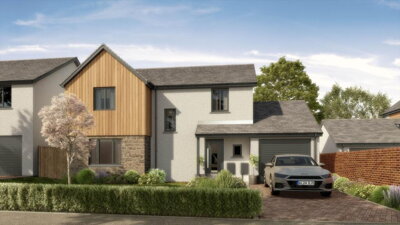
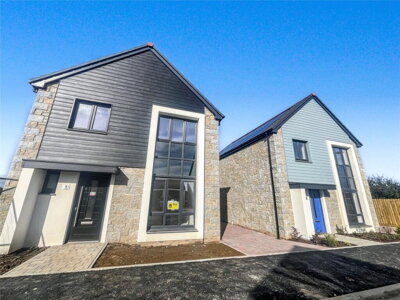
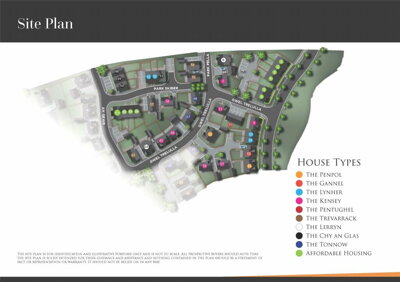
Browse 3 homes new builds in Sithney, Cornwall from local developer agents.
The larger property sector typically features multiple bathrooms, substantial reception space, and private gardens or off-street parking. Four bedroom houses in Sithney span detached, semi-detached, and occasionally terraced configurations, with styles ranging from period properties to modern executive homes.
£625k
5
0
51
Source: home.co.uk
Showing 5 results for 4 Bedroom Houses new builds in Sithney, Cornwall. The median asking price is £624,800.
Source: home.co.uk
Detached
4 listings
Avg £754,950
Terraced
1 listings
Avg £400,000
Source: home.co.uk
Source: home.co.uk
The Cotterstock property market is characterised by its limited volume and premium pricing. With only 2 property sales recorded in the past 12 months, opportunities to purchase in this village are infrequent and highly sought after. The average house price of £500,000 reflects the desirability of rural North Northamptonshire, where properties command a premium for their setting, character, and privacy. The market has shown a slight contraction of 1.0% over the past year, typical of smaller rural villages where transaction volumes naturally fluctuate.
Property types in Cotterstock are overwhelmingly detached, comprising 80.5% of the housing stock according to ONS Census 2021 data. Semi-detached homes account for 14.5% of properties, while terraced properties represent just 5.0%. Notably, there are no flats within the village boundaries, reinforcing Cotterstock's appeal to buyers seeking generous space, gardens, and a sense of exclusivity. No active new-build developments exist within the PE8 5XX postcode area, meaning prospective buyers should expect to purchase from the existing, established housing stock.
The age profile of properties in Cotterstock further demonstrates the village's historic character. Approximately 45% of homes pre-date 1919, built with traditional local limestone and brick techniques that reflect the craftsmanship of earlier eras. A further 10% of properties were constructed between 1919 and 1945, with 25% built during the post-war period up to 1980. Only 20% of the housing stock was built after 1980, meaning buyers are largely purchasing established homes with mature gardens and established boundaries. This predominantly older housing stock means that properties often come with rich architectural details such as original fireplaces, exposed stonework, timber beams, and solid wall construction.

Life in Cotterstock revolves around community, countryside, and a pace of living that has remained largely unchanged over generations. The village sits within the Nene Valley, with the River Nene providing both scenic beauty and recreational opportunities for walking and wildlife appreciation. Residents enjoy easy access to rolling agricultural land, public footpaths, and the natural heritage that defines rural North Northamptonshire. The village's Conservation Area designation ensures that new development is carefully controlled, preserving the historic stone buildings, traditional layouts, and architectural character that make Cotterstock distinctive.
Local amenities in Cotterstock itself are limited, as expected for a village of just 172 residents. However, the nearby market town of Oundle, approximately 4 miles away, provides essential services including shops, restaurants, a doctors surgery, and primary schools. Peterborough, a larger city with comprehensive shopping, entertainment, and employment opportunities, lies within easy driving distance. The strong community spirit in Cotterstock is evident through local events, parish meetings, and the shared pride residents take in their historic environment, including notable landmarks such as Cotterstock Hall and the Grade I listed St Andrew's Church.
The local economy surrounding Cotterstock is primarily agricultural, with surrounding farmland supporting arable crops and livestock. Many residents commute to nearby towns including Oundle, Corby, and Peterborough for employment, benefiting from the village's position within reasonable driving distance of these larger centres. The proximity to the A605 and A1(M) makes longer-distance commuting feasible for those working in cities beyond the immediate area. For remote workers and those with flexible employment arrangements, Cotterstock offers an enviable combination of rural tranquility and digital connectivity, with ultrafast broadband now available in many parts of the village.
Families considering a move to Cotterstock will find educational options within reasonable travelling distance. The village falls within the catchment area of several well-regarded primary schools in the surrounding North Northamptonshire area, with Oundle Primary School serving as a local option for younger children. Parents often travel to Oundle for its combination of primary and secondary education, with The Prince William School providing secondary education and sixth form facilities in the town. Transport arrangements for school children are typically managed through local bus services connecting Cotterstock to nearby educational institutions.
For those seeking independent education, the region offers several preparatory and senior schools within commuting distance. Schools in Stamford, Oundle, and Market Deeping are popular choices for families residing in the Nene Valley. Cotterstock's rural location means that school runs require careful planning, particularly for secondary-aged children attending specialist or selective schools. However, many families consider the trade-off worthwhile, benefiting from the village's outstanding natural environment, strong community values, and excellent preparation for children attending quality local schools.
The village's small population means there is no school within Cotterstock itself, with children typically travelling to nearby Oundle for their education. Oundle Primary School has earned a good reputation among local families, while The Prince William School offers comprehensive secondary education including A-level courses in the sixth form. For families prioritising independent education, the historic market town of Stamford offers several highly regarded preparatory and senior schools including Stamford School and Stamford Endowed Schools, which are accessible via a short drive through the surrounding countryside.

Cotterstock benefits from a strategic position within rural North Northamptonshire, offering reasonable connectivity to major urban centres while maintaining its peaceful village atmosphere. The village is located approximately 8 miles from Peterborough, which provides excellent rail connections to London King's Cross with journey times of around 50 minutes. The A1(M) motorway is accessible via the A605, providing direct routes north to York and south towards London. For commuters working in Cambridge, Northampton, or Leicester, Cotterstock offers a manageable base from which to travel.
Local bus services operate in the area, connecting Cotterstock with Oundle, Thrapston, and Peterborough, although frequencies are limited, reflecting the rural nature of the location. Many residents rely on private vehicles for daily transport, with ample parking available at properties given the predominance of detached homes with driveways. Cyclists enjoy the quieter rural lanes, while the nearby Nene Valley provides scenic routes for leisure cycling. The nearest railway station is in Peterborough, serving the East Coast Main Line with frequent services to London, Edinburgh, and cross-country destinations.
The A605 road passing through nearby villages provides the primary route for accessing the A1(M) at junction 17 near Stilton. This connection opens up routes to Peterborough to the north-east and Northampton to the south-west. For air travel, Luton Airport and London Stansted are within reasonable driving distance, offering international connections for residents who travel frequently for business or leisure. The village's position in the heart of the Nene Valley means that scenic drives through the surrounding countryside are a daily pleasure rather than a necessity.
Explore current listings and recent sales data for Cotterstock to understand pricing and property types available. With only a handful of properties selling annually, patience is essential. Review the character of different neighbourhoods within the village and consider proximity to the River Nene, listed buildings, and Conservation Area boundaries. Our team can provide up-to-date market intelligence on available properties and recent transactions in this village and surrounding North Northamptonshire.
Contact local estate agents active in the Oundle and North Northamptonshire area to arrange viewings. Given the village's small size, opportunities arise infrequently, so registration with agents and setting up property alerts is advisable. Viewings allow you to assess the condition of older stone-built properties and their proximity to potential flood risk areas. Many properties in Cotterstock have been in private ownership for generations, meaning they may require updating or renovation.
Obtain a mortgage agreement in principle before making offers. With average prices around £500,000, most buyers will require substantial lending. Consult with mortgage brokers who understand the rural property market and can advise on self-build or non-standard construction mortgages if applicable to older properties. Properties built with traditional methods or those with non-standard construction may require specialist mortgage products.
Given that 80% of Cotterstock properties were built before 1980, a thorough survey is essential. We recommend a RICS Level 2 Survey for most homes, or a Level 3 Building Survey for period properties, listed buildings, or those showing signs of structural movement. Survey costs typically range from £400 to £900 depending on property size. The village's clay soils and proximity to the River Nene make professional surveys particularly valuable for identifying potential issues.
Once your offer is accepted, instruct a conveyancing solicitor to handle the legal transfer. Your solicitor will conduct searches specific to North Northamptonshire, including drainage and water searches, environmental searches, and checks on any planning restrictions affecting Conservation Area properties. Properties within Conservation Areas often have additional planning considerations that require specialist legal advice.
After satisfactory survey results and contract negotiations, you will exchange contracts and pay your deposit. Completion typically follows within 2-4 weeks, at which point you will receive your keys and take ownership of your new Cotterstock home. We recommend arranging buildings insurance before completion, particularly for properties near the River Nene where flood risk may affect insurance premiums.
Purchasing a property in Cotterstock requires careful consideration of factors specific to this rural village and its historic housing stock. Flood risk is a genuine concern for some properties, particularly those close to the River Nene and its tributaries. The Environment Agency flood maps indicate areas at risk from river flooding (Zones 2 and 3) and surface water flooding in low-lying areas. Prospective buyers should request specific flood risk assessments and consider the potential impact on insurance premiums and future resale value.
The prevalence of clay soils beneath Cotterstock creates a moderate to high shrink-swell risk that can affect property foundations, particularly for older structures. Properties with large trees nearby or inadequate original foundations may show signs of movement or cracking. A thorough RICS Level 2 Survey will identify any structural concerns, and buyers should pay particular attention to walls, floors, and the condition of damp proof courses. Given that 45% of properties pre-date 1919, issues such as timber decay, outdated electrics, and solid wall construction without modern insulation are commonly encountered.
Cotterstock's Conservation Area status imposes restrictions on external alterations, extensions, and planning permissions. Buyers considering properties for renovation or improvement should consult with North Northamptonshire Council's planning department before committing. Listed buildings, which include Cotterstock Hall and St Andrew's Church alongside various residential properties, require listed building consent for any works affecting their character or structure. These properties may require specialist insurance, traditional building materials for repairs, and longer-term maintenance commitments. Properties built with traditional solid wall construction often lack modern cavity insulation, meaning buyers should budget for potential energy efficiency improvements.
Understanding the construction methods used in Cotterstock properties helps buyers appreciate both the character and potential challenges of homes in this village. The predominant building material is local limestone, which has been quarried from the surrounding area for centuries and used in the construction of many period properties. This oolitic limestone gives Cotterstock buildings their distinctive warm golden appearance, but requires specific maintenance approaches that differ from modern brick or concrete construction.
Older properties in Cotterstock typically feature solid wall construction, meaning walls are constructed without cavities and are often 300-450mm thick. While this provides excellent thermal mass and a comfortable internal environment, it also means that these properties lack modern insulation levels. Timber floors, rather than concrete, are common in older homes, as are traditional pitched roofs covered with slate or clay tiles. These construction features contribute to the authentic character of Cotterstock homes but require understanding when budgeting for maintenance and improvement works.
The underlying geology of the Nene Valley includes both Oolitic Limestone and Jurassic Clay, which influences foundation design across the village. Properties built on clay soils may be susceptible to foundation movement during periods of drought or heavy rainfall, particularly those with large trees planted close to the structure. Our team regularly sees evidence of historic foundation movement in Cotterstock properties, which is usually manageable with appropriate structural advice but should always be investigated thoroughly before purchase.
The average house price in Cotterstock is currently £500,000, based on sales data from February 2026. This figure reflects the detached-focused nature of the village's housing stock, with 80.5% of properties being detached homes. The market has shown a slight decline of 1.0% over the past 12 months, though transaction volumes are very low with only 2 sales recorded, making the market highly specialised and pricing sensitive to individual property characteristics. The premium pricing also reflects the limited supply of properties in this sought-after Conservation Village, where opportunities to purchase are rare.
Properties in Cotterstock fall under East Northamptonshire Council (now part of North Northamptonshire Council following local government reorganisation). Council tax bands range from A to H depending on property value and type. Given the village's premium rural pricing, with average values around £500,000, most properties are likely to fall in bands D through F. Properties with higher values or larger detached homes may fall into bands G or H. Prospective buyers should verify the specific band with the local council as part of their due diligence, as bands can affect both the purchase decision and ongoing costs of ownership.
Cotterstock itself has no schools within the village boundaries. Primary-aged children typically attend schools in nearby Oundle, such as Oundle Primary School, while secondary education is provided at The Prince William School in Oundle. The village falls within catchment areas for these schools, though spaces are subject to availability and distance criteria. Independent schools in Stamford, Oundle, and Market Deeping are popular alternatives for families seeking private education within reasonable commuting distance. Parents should confirm current catchment arrangements with North Northamptonshire Council before purchasing, as school admission policies can change.
Public transport options in Cotterstock are limited, reflecting its rural village status. Local bus services connect the village to Oundle and Peterborough, though frequencies are modest, typically operating at hourly or less frequent intervals on weekdays. The nearest railway station is Peterborough, offering direct services to London King's Cross (approximately 50 minutes), Cambridge, Birmingham, and Edinburgh. Most residents rely on private vehicles for daily transport, though cycling on quiet rural lanes is a pleasant alternative for shorter journeys. Those considering Cotterstock should factor in the need for at least one car per household for practical daily living.
Cotterstock offers solid investment fundamentals for buyers seeking a rural lifestyle asset. Property values have remained relatively stable, with only a 1% annual decline despite broader market fluctuations. The village's Conservation Area status limits new development, which helps protect property values by maintaining scarcity and character. However, the very low transaction volume (just 2 sales annually) means liquidity is limited, and investors should be prepared for a long-term hold. Rental demand in the village is likely modest given its size and lack of local employment, making Cotterstock more suitable as a primary residence or weekend retreat than a buy-to-let investment.
Stamp Duty Land Tax (SDLT) rates from April 2025 are 0% on the first £250,000 of purchase price, 5% between £250,000 and £925,000, 10% between £925,000 and £1.5 million, and 12% above £1.5 million. For a typical Cotterstock property at £500,000, a buyer would pay £12,500 in SDLT. First-time buyers enjoy relief on the first £425,000 (0% rate), reducing their SDLT to £3,750 on a £500,000 purchase. Additional 3% surcharge applies for second homes and investment properties. Those purchasing listed buildings should also factor in potentially higher maintenance costs into their overall budget planning.
The main risks when purchasing in Cotterstock relate to its older housing stock, with 80% of properties built before 1980. Common issues include damp (rising, penetrating, and condensation), timber defects (woodworm and rot), roof deterioration, and subsidence related to clay soils and tree roots. Flood risk from the River Nene affects certain properties. Older properties may have outdated electrical systems, single-glazed windows, and limited insulation. A comprehensive RICS Level 2 or Level 3 Survey is strongly recommended before purchase, and buyers should budget for potential renovation costs when assessing the true cost of purchasing a period property in this village.
Properties close to the River Nene and its tributaries may be located within Environment Agency flood zones 2 or 3, which indicates a higher probability of river flooding. Surface water flooding can also occur in low-lying areas during periods of heavy rainfall, particularly where drainage is constrained by the village's aging infrastructure. Before purchasing any property in Cotterstock, we strongly recommend requesting a detailed flood risk assessment and checking the property's flood zone designation. Properties in higher flood risk areas may face challenges obtaining affordable buildings insurance, and this should be factored into your purchase decision and ongoing cost calculations.
Purchasing a property in Cotterstock involves several costs beyond the purchase price that buyers should factor into their budget. The primary additional cost is Stamp Duty Land Tax (SDLT), which applies to all residential property purchases above £250,000. For the average Cotterstock property at £500,000, standard buyers would pay £12,500 in SDLT. First-time buyers benefit from increased thresholds, paying only £3,750 on the same property value thanks to the relief on the first £425,000 of purchase price. Buyers purchasing second homes or investment properties should budget for an additional 3% SDLT surcharge on the full purchase price.
Survey costs represent an essential investment given Cotterstock's older housing stock. A RICS Level 2 Survey typically costs between £400 and £900 depending on the property's size, value, and complexity. For the village's older stone-built properties, period cottages, or listed buildings, a RICS Level 3 Building Survey may be more appropriate, providing more detailed analysis of construction and condition. Conveyancing fees for legal work, local authority searches, and registration typically start from £499 for straightforward transactions, rising for leasehold properties or those with complex titles involving Conservation Area restrictions.
Additional buying costs include mortgage arrangement fees (typically 0-0.5% of loan amount), valuation fees, and removal costs. Buyers purchasing period properties should also budget for potential renovation work if the property requires updating to modern standards. Buildings insurance is essential from exchange of contracts, and premiums may be higher for properties near the River Nene due to flood risk considerations. Setting aside 10-15% of the purchase price for these associated costs ensures buyers are fully prepared for the financial commitment of purchasing in this desirable North Northamptonshire village.
Properties New Builds In London

Properties New Builds In Plymouth

Properties New Builds In Liverpool

Properties New Builds In Glasgow

Properties New Builds In Sheffield

Properties New Builds In Edinburgh

Properties New Builds In Coventry

Properties New Builds In Bradford

Properties New Builds In Manchester

Properties New Builds In Birmingham

Properties New Builds In Bristol

Properties New Builds In Oxford

Properties New Builds In Leicester

Properties New Builds In Newcastle

Properties New Builds In Leeds

Properties New Builds In Southampton

Properties New Builds In Cardiff

Properties New Builds In Nottingham

Properties New Builds In Norwich

Properties New Builds In Brighton

Properties New Builds In Derby

Properties New Builds In Portsmouth

Properties New Builds In Northampton

Properties New Builds In Milton Keynes

Properties New Builds In Bournemouth

Properties New Builds In Bolton

Properties New Builds In Swansea

Properties New Builds In Swindon

Properties New Builds In Peterborough

Properties New Builds In Wolverhampton

Enter your details to see if this property is within your budget.
Loans, cards, car finance
Estimated property budget
Borrowing + deposit
You could borrow between
Typical borrowing
Monthly repayment
Est. at 4.5%
Loan-to-value
This is an estimate only. Your actual budget may vary depending on interest rates, credit history, and personal circumstances. For an accurate affordability assessment, speak to one of our free mortgage advisors.
This calculator provides estimates for illustrative purposes only and does not constitute financial advice. Your home may be repossessed if you do not keep up repayments on your mortgage. Estimates based on 4.5% interest rate, repayment mortgage. Actual rates depend on your circumstances.
Homemove is a trading name of HM Haus Group Ltd (Company No. 13873779, registered in England & Wales). Homemove Mortgages Ltd (Company No. 15947693) is an Appointed Representative of TMG Direct Limited, trading as TMG Mortgage Network, which is authorised and regulated by the Financial Conduct Authority (FRN 786245). Homemove Mortgages Ltd is entered on the FCA Register as an Appointed Representative (FRN 1022429). You can check registrations at NewRegister or by calling 0800 111 6768.

We use cookies to show you personalised content and improve your experience of our website. Find out more in our Privacy policy and Cookie policy.