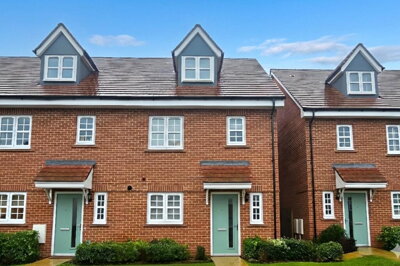
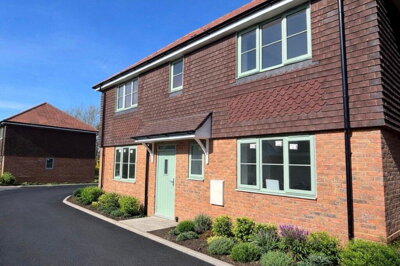
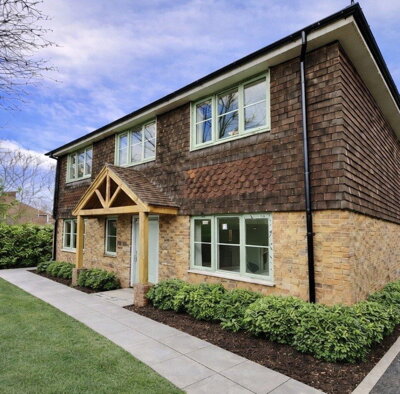
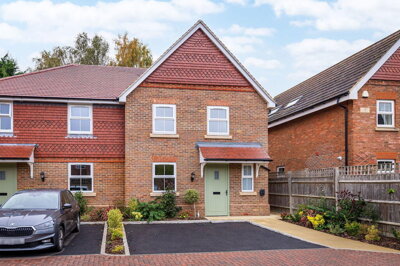
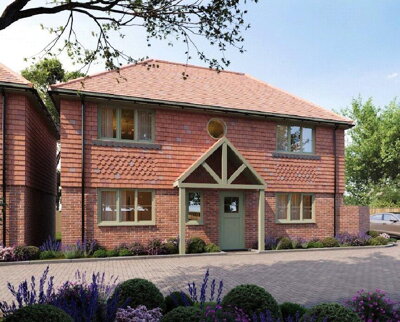
Browse 5 homes new builds in Shalford from local developer agents.
The Shalford property market offers detached, semi-detached, and terraced houses spanning various price ranges and neighbourhoods. Each listing includes detailed property information, photographs, and direct contact with the marketing agent.
The Whichford property market reflects the village's status as a premium Cotswold location, with detached properties commanding an average price of £655,000 according to recent Rightmove data. PropertyResearch.uk records a median sale price for detached homes of £625,000 across 3 sales in 2025, though this represents a decrease of 68.8% compared to 2024 figures, suggesting some market normalisation following previous peaks. The village's limited supply of period stone properties consistently attracts strong interest from buyers seeking authentic Cotswold character, and competition for well-presented homes can be intense despite broader market fluctuations.
Semi-detached homes in Whichford achieved a median sale price of £508,750 across 2 sales in 2024, representing a 6.0% increase compared to 2023. Terraced properties provide more accessible entry points to the local market, with recent sales averaging £230,000. Notably, no flat sales data is currently available for Whichford, reflecting the village's predominantly house-based housing stock that dates predominantly to the 19th and early 20th centuries. The dominant property type around the CV36 5PG postcode area consists of period houses built between 1800 and 1911, many featuring the distinctive golden-orange tones of Hornton stone that characterise the local architecture.
New build activity within the village itself remains limited, with the most significant development being a barn conversion at Leasowe Farm offering three new dwellings, pending planning approval. This conversion project will transform traditional agricultural buildings into residential dwellings while preserving the historic character of the farmstead. For buyers seeking newer properties, the wider CV36 postcode area around nearby Shipston-on-Stour offers additional options, though these fall outside the village itself. The constrained supply of new housing in Whichford reinforces the premium attached to existing period properties and contributes to the village's exclusive character.

Whichford embodies the timeless appeal of North Cotswolds village life, with a population of approximately 303 residents across 136 households according to 2024 estimates. The village centre features The Norman Knight, a historic pub offering local ales and seasonal dishes, which serves as the social heart of the community and has done so for generations. Regulars and visitors alike gather here for village events, casual meals, and the warm hospitality that characterises rural pub culture in this part of Warwickshire. The pub's presence as a focal point for community life adds significantly to the village's appeal for those seeking a genuine sense of belonging.
The renowned Whichford Pottery, established in 1976, draws visitors from across the region with its handmade, frost-proof flowerpots crafted from local Cotswold clays. The pottery's workshop and shop occupy prominent positions in the village, and the adjacent Straw Kitchen cafe provides a welcoming spot for refreshments after exploring the village's winding lanes and countryside trails. The pottery employs local craftspeople and contributes to the village economy while maintaining traditions of handmade production that connect to the area's geological heritage. Weekend visitors to the pottery cafe often combine their visit with walks through the surrounding countryside.
The village sits within the Cotswolds Area of Outstanding Natural Beauty, surrounded by working farmland including the Whichford Estate's 80 acres of agricultural land. Traitors Ford Quarries within the parish expose Middle Jurassic Great Oolite Limestone, revealing the geological heritage that shaped the distinctive golden-orange tones of local Hornton stone buildings. These geological features underpin the village's distinctive architecture and attract geology enthusiasts to the area. The majority of Whichford lies within a Conservation Area, designated in 1970 and revised in 1994, ensuring the preservation of its historic character for future generations of residents and visitors alike.

Families considering a move to Whichford will find a selection of educational options within reasonable travelling distance. The village itself is served by primary schools in surrounding villages, with several Ofsted-rated Good or Outstanding primary schools located within a 10-mile radius. These smaller, rural schools often benefit from strong community ties and individual attention for pupils, reflecting the values that make village education distinctive. Parents frequently cite the nurturing environment and outdoor learning opportunities as significant advantages of rural primary education in this area.
Secondary education options in the broader Stratford-on-Avon district include well-regarded comprehensive schools and grammar schools, with several sixth-form colleges offering further education opportunities nearby. The historic town of Stratford-upon-Avon, approximately 15 miles from Whichford, provides additional educational options including grammar schools that serve the wider region. Families should research specific school catchments and admission criteria, as rural school catchments can operate differently from urban areas and may prioritise proximity or siblings already enrolled at the school.
Parents should note that catchment areas for schools can be competitive in popular rural areas, and early research into school admissions criteria is advisable when planning a family move to Whichford. The 11-plus examination for grammar school entry requires preparation, and some families choose to supplement primary education with tutoring. The historic Whichford House area (CV36 5PG) features predominantly period houses built between 1800 and 1911, many of which have accommodated generations of families within their substantial rooms and gardens. Several families have remained in the village for decades, with children attending local primary schools before progressing to secondary education in surrounding towns.
While Whichford is a quintessential rural village, it benefits from reasonable connectivity to the wider region despite the absence of a railway station within the village itself. The nearest mainline railway stations are located in Banbury and Stratford-upon-Avon, providing access to London Marylebone and Birmingham respectively. Banbury station offers regular services to London Marylebone with journey times of approximately one hour, making it practical for regular commuters who can work from home on other days. Stratford-upon-Avon provides direct services to Birmingham and connections to the national rail network via Worcester.
The A429 and A3400 roads provide routes towards larger towns, though journey times reflect the winding Cotswold lanes that contribute to the area's charm. These country roads, while scenic, require confident driving skills and add time to journeys compared to direct motorway routes. For those working in nearby market towns, Shipston-on-Stour offers local amenities and is approximately 5 miles from Whichford, while Banbury provides comprehensive shopping and services within roughly 15 miles. Many residents combine local shopping in Shipston with larger weekly shops in Banbury or Stratford-upon-Avon.
Bus services connect Whichford to surrounding villages and towns, though private transport remains advantageous for full flexibility given the reduced frequencies typical of rural routes. Those considering a move to Whichford should factor in the necessity of vehicle ownership for everyday practicality, though the village's compact size means that once parked, most amenities are accessible on foot. Cyclists appreciate the quiet country lanes and designated routes through the Cotswolds, though the hilly terrain requires appropriate fitness levels and the stamina to handle gradients common in this part of Warwickshire. Parking within the village reflects its rural character, with limited on-street parking typical of a settlement of its size, a consideration for households with multiple vehicles.
Explore Whichford thoroughly before committing to a purchase. Visit at different times of day and week, speak with locals in The Norman Knight or at Whichford Pottery, and understand the practical realities of village life including broadband speeds, mobile coverage, and nearest amenities. The village's Conservation Area status and local planning constraints may affect any intended modifications to a property, so understanding these requirements early helps avoid disappointment later.
Contact local estate agents to arrange viewings of properties that match your requirements. Given the village's limited property supply, be prepared to move quickly on properties that meet your criteria and consider arranging a mortgage agreement in principle before viewing. Properties in Whichford attract interest from buyers across the South Midlands and beyond, so being financially prepared strengthens your negotiating position when you find the right home.
Commission an RICS Level 2 Survey before completing your purchase. Given Whichford's predominantly older housing stock built from traditional Cotswold stone and Hornton stone, a professional survey is essential to identify any structural concerns, damp issues, or period property maintenance requirements. Properties with large gardens and mature trees warrant particular attention, as root systems can exacerbate clay soil subsidence issues common in areas underlain by Lias clays.
Appoint a conveyancing solicitor with experience in rural Warwickshire property transactions. They will handle legal checks, searches, and the transfer of ownership, including any specific considerations for Conservation Area or Listed Building status. Properties carrying Listed Building status require specialist knowledge, as alterations may require Listed Building Consent from Stratford-on-Avon District Council before proceeding.
Once all searches are satisfactory and finances are confirmed, your solicitor will coordinate the exchange of contracts with the seller. Completion typically follows within days or weeks, after which you will receive the keys to your new Whichford home. Factor in removal logistics well in advance, as the village's narrow lanes and limited parking require careful planning for moving day.
Properties in Whichford require careful scrutiny given the village's concentration of historic buildings and traditional construction methods. The predominant use of Cotswold stone and Hornton stone in local properties creates stunning homes but can present maintenance challenges that differ from modern brick or timber-frame construction. Hornton stone, an iron-rich limestone quarried from the Middle Lias, weathers to a distinctive golden-orange colour but can be susceptible to erosion and frost damage over time, requiring periodic maintenance and repointing of mortar joints. Understanding these material characteristics helps buyers appreciate the maintenance obligations that accompany period stone properties in this area.
Look for signs of cracking in stonework, mortar deterioration, and any evidence of water penetration, which can be particularly problematic in properties without modern damp-proof courses. Many Whichford properties were constructed before damp-proof membranes became standard practice, meaning rising damp may affect ground-floor walls unless remedial work has been carried out. The solid-wall construction of traditional Cotswold stone properties provides good thermal mass when properly insulated, though achieving adequate energy efficiency in these homes often requires specialist retrofits that respect the building's historic fabric.
The regional presence of Lias clays means potential buyers should investigate foundations carefully, as expansive clay soils can cause subsidence, especially during prolonged dry spells followed by wet periods. Trees and large shrubs planted close to buildings on clay soils are significant contributors to clay shrinkage subsidence, as their root systems absorb moisture from the surrounding soil during summer months. Look for signs of structural movement such as cracking to internal walls, uneven floors, or doors and windows that stick or fail to close properly, as these may indicate foundation issues requiring further investigation by a structural engineer.
Many Whichford properties fall within the Conservation Area and carry Listed Building status, meaning any alterations or renovations require consent from Stratford-on-Avon District Council. Before purchasing, verify whether planning permission or Listed Building Consent is needed for any intended changes, and factor specialist survey costs into your budget. Properties with large gardens and mature trees near buildings warrant additional attention, as root systems can exacerbate clay soil subsidence issues. Energy efficiency may be a consideration in older properties, though the solid-wall construction of many period homes can actually provide good thermal mass when properly insulated using appropriate heritage-compatible methods.
The average property price in Whichford over the last year is £513,333 according to Rightmove, with Zoopla reporting £566,250 and OnTheMarket at £566,000 for the 12-month period. Detached properties average £655,000, while semi-detached homes achieved £508,750 in 2024. Terraced properties provide more accessible options at around £230,000. Price trends show variation across different data sources, with Land Registry indicating a 16.5% increase year-on-year, though some sources report corrections from previous peaks. The discrepancy between sources reflects different methodologies and recording periods, so buyers should examine specific comparable properties when assessing value.
Properties in Whichford fall under Stratford-on-Avon District Council for council tax purposes. The majority of homes in this rural Warwickshire village are likely to be in Bands D through H, reflecting the higher value of traditional Cotswold stone properties and larger period homes. Given that the village contains numerous Grade II and Grade II* listed buildings alongside substantial detached homes, council tax bands tend towards the upper end of the scale. Prospective buyers should verify the specific band with the local council or check the Valuation Office Agency website, as valuations can vary significantly between properties based on size, condition, and historical assessments.
Whichford itself has limited schooling facilities within the village, with families typically relying on primary schools in surrounding villages and secondary schools within reasonable driving distance. Several Ofsted-rated Good or Outstanding primary schools operate within a 10-mile radius, and the broader Stratford-on-Avon area offers well-regarded secondary education options including grammar schools. Parents should check current Ofsted ratings and admission catchment boundaries, as these can change and may be competitive in this popular rural area where school transport arrangements require advance planning.
Whichford is a rural village with limited public transport options, making private vehicle ownership advisable for most residents. Bus services connect Whichford to surrounding villages and towns including Shipston-on-Stour, though frequencies are typically reduced compared to urban routes. The nearest mainline railway stations are in Banbury and Stratford-upon-Avon, providing connections to London and Birmingham respectively. Those commuting to work should factor in journey times and consider whether home working or flexible commuting arrangements might suit the village lifestyle, as the scenic Cotswold lanes that make Whichford desirable also extend travel times.
Whichford's location within the Cotswolds Area of Outstanding Natural Beauty and its Conservation Area status suggest strong long-term appeal for property investment. The village's limited supply of period stone homes consistently attracts buyers seeking authentic Cotswold character, supporting property values over time. However, buyers should note that the rural location, limited amenities, and smaller population may limit rental demand compared to urban areas. Recent market data shows some price normalisation following peaks, creating potential opportunities for long-term value appreciation as the market adjusts, though investment returns in small rural villages typically manifest over longer holding periods than urban markets.
Stamp Duty Land Tax rates for 2024-25 are 0% on properties up to £250,000, 5% on the portion from £250,001 to £925,000, 10% from £925,001 to £1.5 million, and 12% above £1.5 million. First-time buyers benefit from relief on properties up to £625,000, paying 0% on the first £425,000 and 5% on the remainder. Given Whichford's average property price of £513,333, a typical purchase would attract approximately £13,167 in stamp duty for standard buyers, or £4,417 for first-time buyers claiming relief. Additional costs including Land Transaction Tax in Wales or Scottish LBTT may apply depending on residency.
The primary risks when purchasing a period property in Whichford relate to traditional construction methods and materials that differ significantly from modern building standards. Stone properties built before the mid-20th century typically lack modern damp-proof courses, making rising damp a common issue requiring assessment during survey. The presence of Lias clay soils in the broader region creates potential for subsidence, particularly for properties with trees planted close to the building or those that have experienced extended periods of dry weather. Conservation Area and Listed Building status imposes restrictions on alterations and renovations that buyers must understand before committing to a purchase, as unauthorised works can become the new owner's responsibility to rectify.
From £400
A detailed inspection of the property condition before purchase
From £550
Comprehensive structural survey for older or complex properties
From £85
Energy performance certificate required for sale
From £499
Legal services for property purchase
Budgeting for a property purchase in Whichford requires careful consideration of all associated costs beyond the sale price. The average property price of £513,333 means standard buyers would typically pay approximately £13,167 in Stamp Duty Land Tax under current 2024-25 thresholds. First-time buyers could benefit from significant savings, paying around £4,417 in stamp duty thanks to the increased nil-rate threshold of £425,000 for first-time purchases up to £625,000. These figures assume a residential purchase of an existing dwelling, as additional rates apply to additional properties purchased.
Additional purchase costs include survey fees, which for a RICS Level 2 Survey on a property of this value typically range from £400 to £800 depending on property size, age, and complexity. Given Whichford's predominantly older housing stock, survey costs may be at the higher end of this range for period properties requiring detailed inspection of traditional construction. Properties with Listed Building status or complex historical modifications may require a RICS Level 3 Building Survey rather than a standard Level 2, which increases costs but provides more comprehensive assessment of structural issues and fabric condition.
Conveyancing costs generally start from around £499 for standard transactions, though properties with Listed Building status or complex title issues may incur additional fees. Local search fees from Stratford-on-Avon District Council cover drainage and environmental searches specific to the Warwickshire area. Land Registry fees, mortgage arrangement fees, and removal costs should also be factored into your overall budget when purchasing in this Warwickshire village. First-time buyers should also budget for surveys and searches even if buying with a mortgage, as lenders typically require these before releasing funds.
Properties New Builds In London

Properties New Builds In Plymouth

Properties New Builds In Liverpool

Properties New Builds In Glasgow

Properties New Builds In Sheffield

Properties New Builds In Edinburgh

Properties New Builds In Coventry

Properties New Builds In Bradford

Properties New Builds In Manchester

Properties New Builds In Birmingham

Properties New Builds In Bristol

Properties New Builds In Oxford

Properties New Builds In Leicester

Properties New Builds In Newcastle

Properties New Builds In Leeds

Properties New Builds In Southampton

Properties New Builds In Cardiff

Properties New Builds In Nottingham

Properties New Builds In Norwich

Properties New Builds In Brighton

Properties New Builds In Derby

Properties New Builds In Portsmouth

Properties New Builds In Northampton

Properties New Builds In Milton Keynes

Properties New Builds In Bournemouth

Properties New Builds In Bolton

Properties New Builds In Swansea

Properties New Builds In Swindon

Properties New Builds In Peterborough

Properties New Builds In Wolverhampton

Enter your details to see if this property is within your budget.
Loans, cards, car finance
Estimated property budget
Borrowing + deposit
You could borrow between
Typical borrowing
Monthly repayment
Est. at 4.5%
Loan-to-value
This is an estimate only. Your actual budget may vary depending on interest rates, credit history, and personal circumstances. For an accurate affordability assessment, speak to one of our free mortgage advisors.
This calculator provides estimates for illustrative purposes only and does not constitute financial advice. Your home may be repossessed if you do not keep up repayments on your mortgage. Estimates based on 4.5% interest rate, repayment mortgage. Actual rates depend on your circumstances.
Homemove is a trading name of HM Haus Group Ltd (Company No. 13873779, registered in England & Wales). Homemove Mortgages Ltd (Company No. 15947693) is an Appointed Representative of TMG Direct Limited, trading as TMG Mortgage Network, which is authorised and regulated by the Financial Conduct Authority (FRN 786245). Homemove Mortgages Ltd is entered on the FCA Register as an Appointed Representative (FRN 1022429). You can check registrations at NewRegister or by calling 0800 111 6768.

We use cookies to show you personalised content and improve your experience of our website. Find out more in our Privacy policy and Cookie policy.