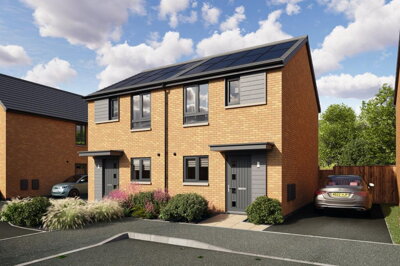
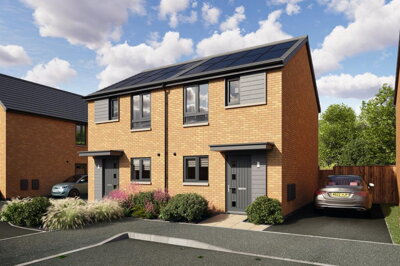
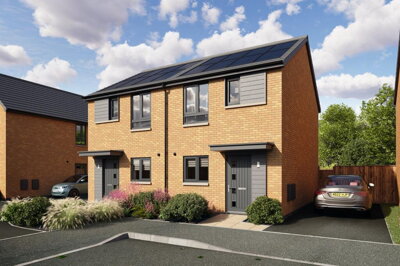
Browse 3 homes new builds in Rumney, Cardiff from local developer agents.
The 2 bed house market features detached, semi-detached, and terraced properties with two separate bedrooms plus living spaces. Properties in Rumney range across contemporary developments, with pricing varying across different neighbourhoods.
£223k
2
0
17
Source: home.co.uk
Showing 2 results for 2 Bedroom Houses new builds in Rumney, Cardiff. The median asking price is £222,500.
Source: home.co.uk
Terraced
2 listings
Avg £222,500
Source: home.co.uk
Source: home.co.uk
129+
Properties Available
£295,000
Average Price
£318,500
Detached Average
£211,556
Semi-Detached Average
The Carlton property market offers a diverse range of housing types to suit different buyer requirements and budgets. Detached properties dominate the local housing stock, accounting for approximately 44% of homes in the broader Camblesforth and Carlton area. These larger properties command premium prices, with the average detached property in Carlton reaching around £318,500. For families requiring substantial accommodation, four-bedroom detached houses in the DN14 postcode area have sold for approximately £387,000, reflecting the significant premium placed on larger family homes in this sought-after village location.
Semi-detached properties represent 28% of the local housing mix and provide excellent value for first-time buyers and growing families looking to enter the Carlton market. The average semi-detached property in Carlton sells for approximately £211,556, making this property type one of the most accessible entry points to local homeownership. Terraced properties, comprising around 16% of local housing stock, offer an affordable alternative with average prices around £167,500, while those seeking smaller accommodations will find flat options in the wider area with average prices starting from £120,000.
Recent market data indicates that property prices in Carlton, DN14, have settled approximately 16% below the 2022 peak of £319,173, creating potential buying opportunities for those entering the market at a more favourable entry point. The 12-month change data for the broader North Yorkshire county shows a modest decline of approximately 1%, suggesting a stable market environment where buyers can make informed decisions without the pressure of rapidly rising prices that characterised the pandemic-era boom. This price correction has brought some properties back to more realistic valuations, particularly for detached family homes that had seen significant inflation during 2020-2022.
Understanding the distinction between different data sources matters when researching Carlton property prices. Zoopla reports an average of £295,000 for Carlton, North Yorkshire, while Rightmove data shows £267,920, and DN14-specific figures indicate approximately £326,326. These variations reflect different reporting methodologies and property sale periods. For buyers, this data suggests a typical entry-level property in Carlton costs around £167,500 for a terraced home, rising to £211,556 for a semi-detached, with detached family homes commanding £318,500 or more depending on size and condition.
Carlton, North Yorkshire, embodies the timeless appeal of traditional English village life within one of England's most picturesque counties. The village sits within the Vale of York, offering residents panoramic views across surrounding farmland and direct access to the Yorkshire Dales National Park for weekend adventures and outdoor recreation. The local community is welcoming and well-established, with village events throughout the year, traditional pubs serving Yorkshire ales and hearty local cuisine, and scenic walks along public footpaths that criss-cross the surrounding countryside. The village provides essential everyday amenities while the nearby market town of Selby offers expanded shopping, dining, and leisure facilities within a short drive.
The broader Carlton area, particularly the Camblesforth and Carlton ward, represents a growing residential community where residents value both rural tranquility and practical accessibility to urban centres. The presence of traditional Dales stone properties throughout the area speaks to the architectural heritage of the region, with many homes featuring the characteristic Yorkshire stone construction that defines the rural landscape. Period cottages and traditional farmhouses sit alongside newer developments that have been designed to complement the village aesthetic while adding modern family homes to the local housing stock.
Residents of Carlton enjoy excellent recreational opportunities, with local parks, sports facilities, and community centres providing venues for social engagement and physical activity. The proximity to York provides easy access to cultural attractions including museums, theatres, and historical sites, while Leeds offers major retail and entertainment destinations accessible via the region's efficient road network. For families with children, the area provides a safe and nurturing environment where young people can explore outdoor spaces, develop connections with the natural world, and grow up within a supportive community setting.

Understanding the predominant property types and construction methods in Carlton helps buyers appreciate the local housing stock and anticipate maintenance requirements. The village features a significant proportion of detached properties built during various periods, from traditional stone-built farmhouses and period cottages through to more recent developments constructed using modern brick and tile methods. This variety means buyers encounter properties ranging from characterful older homes requiring ongoing maintenance to newer builds that may offer better energy efficiency but lack the unique character of their older counterparts.
Traditional Dales stone construction features prominently in older properties throughout Carlton and the surrounding North Yorkshire countryside. These traditional buildings typically feature solid wall construction rather than the cavity wall insulation found in post-war properties, which affects both thermal performance and condensation management. Buyers of older stone properties should expect features such as single-glazed windows, original floorboards, and exposed beam ceilings that contribute to the character but require appropriate maintenance and potentially upgrades to meet modern living standards.
The semi-detached and terraced properties in Carlton represent various construction eras, from Victorian and Edwardian terraces built for industrial workers through to post-war housing constructed in the mid-twentieth century. These properties often feature different maintenance requirements compared to detached homes, including shared boundary walls, potential issues with damp penetration between properties, and the need to coordinate maintenance with neighbouring owners. Understanding these shared responsibilities helps buyers budget appropriately for ongoing property maintenance.
For buyers considering any property in Carlton, particularly those built before 1980, we recommend arranging a thorough RICS Level 2 survey before committing to purchase. Our inspectors frequently identify issues in properties of this age that may not be immediately apparent during viewings, including signs of damp in solid wall construction, roof condition concerns, outdated electrical systems, and potential structural movement. A professional survey costs from £350 and provides essential information for negotiating price adjustments or requiring sellers to address defects before completion.
Education provision in Carlton and the surrounding area serves families at all levels of schooling, from early years through to further education. Primary education is available within the village or nearby communities, with local primary schools typically serving the immediate Carlton catchment area. Parents should verify current catchment arrangements with North Yorkshire County Council, as school admission policies can affect placement decisions. The presence of primary schools within practical walking distance represents a significant advantage for families with young children, reducing reliance on car travel for everyday school runs.
Secondary education students from Carlton generally travel to schools in the nearby town of Selby, where comprehensive secondary schools and academies provide curriculum provision across all required subjects. Selby High School serves the local area, providing education for students aged 11-16, with sixth form provision available at select schools and colleges in surrounding towns. For families prioritising academic excellence, the wider North Yorkshire area includes several well-regarded grammar schools and specialist academies that attract students from across the county, though admission to these selective schools requires passing the entrance examination.
Researching individual school performance data, including Ofsted inspection results and public examination outcomes, helps families make informed decisions about education options when buying in Carlton. The Department for Education publishes detailed performance data for all schools, allowing parents to compare outcomes across different institutions. Early years and nursery provision is available within Carlton and the nearby Camblesforth area, offering flexible childcare options for working parents. Childminders and preschool groups provide additional choice for families with younger children, complementing formal nursery provision.
Further education opportunities abound in nearby York and Leeds, where colleges and universities offer vocational and academic courses for students progressing beyond secondary education. York College and Leeds City College provide accessible options for young people seeking vocational qualifications or A-levels, while the universities of York and Leeds offer undergraduate and postgraduate programmes across a wide range of disciplines. The excellent transport connections from Carlton make these educational opportunities accessible without requiring students to relocate from the family home.
Carlton benefits from strategic positioning within North Yorkshire that provides excellent road connectivity to major northern cities and employment centres. The village sits adjacent to the A19 trunk road, which runs north-south through the region and connects residents to York in the north and Doncaster and Sheffield in the south. The M62 motorway is accessible within reasonable driving distance, providing a direct route to Leeds and Manchester for those commuting to major employment centres. The A1(M) motorway lies to the east, offering connections to Newcastle and the wider north-eastern road network for residents working in that direction.
Public transport options serve Carlton and surrounding communities, with bus routes connecting the village to nearby towns including Selby and York. The market town of Selby provides essential transport links, with regular bus services connecting to surrounding villages and towns. For rail travel, the nearest mainline railway stations are located in York and Leeds, offering direct services to London, Edinburgh, and other major destinations. York station provides particularly excellent connections, with regular trains to London Kings Cross completing the journey in approximately two hours. Selby railway station, while a smaller station, provides regional connections and links to the wider rail network for local travel.
For commuters working in York or Leeds, Carlton offers a viable base that balances rural living with practical accessibility to major employment markets. Journey times to York city centre typically range from 30-45 minutes by car, while Leeds city centre is accessible within approximately one hour depending on traffic conditions on the M1 and M62 motorways. The village provides adequate parking provision for residents, avoiding the parking challenges and costs often associated with city centre living. Cyclists benefit from scenic country lanes for recreational cycling, though longer commuting routes by bicycle require careful planning, appropriate fitness levels, and consideration of shower and changing facilities at the workplace.
Begin by exploring current listings on our platform to understand the local property landscape. We showcase 129 properties currently available in Carlton, with prices ranging from approximately £120,000 for flats to over £387,000 for larger four-bedroom detached homes. Familiarise yourself with property prices by type, noting that terraced properties average around £167,500, semi-detached homes approximately £211,556, and detached properties around £318,500. Understanding these price points helps you identify realistic properties within your budget and recognise good value when it arises.
Before viewing properties, obtain a mortgage agreement in principle from a lender to confirm your borrowing capacity. This written indication of how much a lender would be willing to lend demonstrates your financial readiness to estate agents and sellers, strengthening your position when making offers on properties in competitive village locations like Carlton. Having this document ready shows sellers that you are a serious buyer capable of proceeding quickly, which can be decisive in areas where demand occasionally exceeds supply.
Schedule viewings of properties matching your requirements, paying attention to property condition, storage space, garden access, and the surrounding neighbourhood character. Consider visiting properties at different times of day to assess traffic levels, noise from neighbouring properties, and the general community atmosphere. For period properties in Carlton, look specifically at the condition of original features, windows, and any signs of damp or structural movement that might indicate maintenance requirements.
Once your offer is accepted, arrange a RICS Level 2 HomeBuyer Report to assess the property's condition professionally. Given Carlton's mix of older properties including traditional stone cottages and period farmhouses, a professional survey can identify issues such as damp in solid wall construction, roof condition concerns, outdated electrical systems, or structural movement before you commit to purchase. Survey costs start from £350 for standard properties, with more complex or larger homes requiring higher fees.
Appoint a solicitor to handle the legal aspects of your purchase, including property searches, contract review, and registration with the Land Registry. Your solicitor will conduct essential searches including local authority checks, environmental searches to identify any potential contamination or flood risk, and water/drainage searches. They will coordinate with the seller's legal team to progress your transaction through to completion, typically taking 8-12 weeks for standard purchases.
Once all legal searches are satisfactory and both parties are ready, your solicitor will exchange contracts and agree a completion date. At exchange, the transaction becomes legally binding and you will typically pay a deposit of 10% of the purchase price. On completion day, the remaining funds are transferred and you receive the keys to your new Carlton home, ready to begin unpacking and settling into village life.
The average sold house price in Carlton, North Yorkshire, is approximately £295,000 according to recent Zoopla data, though Rightmove reports £267,920 and DN14-specific figures show around £326,326, reflecting different reporting periods and methodologies. Detached properties average around £318,500, with larger four-bedroom homes reaching approximately £387,000, while semi-detached homes sell for approximately £211,556 and terraced properties for around £167,500. Flats in the wider Camblesforth and Carlton area start from approximately £120,000. Prices have settled approximately 16% below the 2022 peak of £319,173, creating buying opportunities for those entering the market at more realistic valuations.
Properties in Carlton fall under Selby District Council for council tax purposes, administered alongside North Yorkshire County Council for regional services. Council tax bands in the area range from Band A for lower-value properties through to Band H for the most expensive homes, with the specific band determined by the property's assessed value as of April 1991. A typical Carlton property at the average price of £295,000 would likely fall into Band C or D. Prospective buyers can verify the council tax band for any specific property through the Valuation Office Agency website or by checking the property listing details.
Carlton is served by local primary schools within the village or nearby communities including Camblesforth, which provides education for children aged 5-11. Secondary school students typically attend schools in Selby, such as Selby High School, which provides comprehensive education for students aged 11-16. The wider North Yorkshire area includes several well-regarded grammar schools and academies accessible to Carlton residents, particularly the selective schools in York for secondary and sixth form education. Parents should research individual school performance data, including recent Ofsted inspection results and public examination outcomes, which are published by the Department for Education and available through school websites.
Carlton has bus services connecting to nearby towns including Selby and York, with regular services operated by local bus companies. The village's proximity to the A19 trunk road provides straightforward access for car travel to major cities including York, Leeds, and Sheffield. Nearest mainline railway stations are located in York and Leeds, offering direct services to London, Edinburgh, and other major destinations, with York providing the fastest London connection at approximately two hours. For commuting to York or Leeds, journey times by car typically range from 30 minutes to one hour depending on traffic conditions and the specific destination.
Carlton offers several factors that may appeal to property investors, including its attractive village location, good transport connections to major employment centres in York, Leeds, and Sheffield, and an average property price of approximately £295,000 providing an accessible entry point compared to city centre locations. The local housing mix includes family homes, period cottages, and modern properties that attract different tenant demographics. Market data shows relative price stability with a 16% correction from the 2022 peak, suggesting balanced conditions for buyers. Rental demand may exist from commuters and families seeking village accommodation, though prospective investors should research current rental values and tenant demand in the local area.
Stamp duty land tax applies to property purchases in Carlton at the following rates for standard buyers: 0% on the first £250,000 of purchase price, 5% on the amount from £250,001 to £925,000, 10% on amounts from £925,001 to £1.5 million, and 12% on amounts exceeding £1.5 million. For a typical Carlton property priced at £295,000, a non-first-time buyer would pay approximately £2,250 in stamp duty, calculated at 5% on the £45,000 excess over £250,000. First-time buyers benefit from more generous thresholds, paying 0% on the first £425,000 and 5% between £425,001 and £625,000, meaning a first-time buyer purchasing a £295,000 property in Carlton would pay no stamp duty.
Carlton offers a diverse housing mix reflecting its varied property history and development. Detached properties represent approximately 44% of the local stock, commanding the highest average prices around £318,500. Semi-detached homes at 28% of stock provide popular family accommodation averaging approximately £211,556. Terraced properties comprise 16% of local housing, offering the most affordable entry point averaging around £167,500. Traditional stone-built cottages and period farmhouses exist alongside modern family homes, with new build activity adding contemporary properties to the housing stock. Flats represent approximately 13% of accommodation, with average prices starting from £120,000.
Older properties in Carlton, particularly those built before 1980, may feature traditional Dales stone construction with solid walls, original single-glazed windows, and older electrical and plumbing systems that require assessment. When viewing period properties, look for signs of damp on walls and in corners, condition of the roof including missing or damaged tiles, any cracking or movement in walls that might indicate structural concerns, and the age and condition of heating systems. We strongly recommend arranging a RICS Level 2 survey for any older property, as our inspectors frequently identify defects that are not visible during standard viewings. The survey cost from £350 provides essential information for price negotiation and helps you budget for any remedial work required after purchase.
Understanding the full costs of buying property in Carlton helps buyers budget effectively and avoid financial surprises during the transaction. Stamp duty land tax represents a significant cost for most buyers, with current thresholds applying 0% to the first £250,000 of purchase price for standard buyers. For a typical Carlton property at £295,000, a non-first-time buyer would incur stamp duty costs of approximately £2,250, calculated at 5% on the £45,000 excess over £250,000. First-time buyers benefit from more generous thresholds, paying no stamp duty on properties up to £425,000, making Carlton an attractive option for those taking their first steps on the property ladder.
Beyond stamp duty, buyers should budget for additional purchase costs including mortgage arrangement fees, which typically range from £500 to £2,000 depending on the lender and product chosen, plus booking fees for the mortgage valuation that lenders conduct to assess the property as security for the loan. Survey costs for a RICS Level 2 HomeBuyer Report typically start from £350 for standard properties in Carlton, rising for larger detached homes or those with complex construction that require more detailed inspection. Conveyancing fees generally start from around £499 for standard purchases, covering legal work including property searches, contract review, and Land Registry registration.
Removal services, packing materials, and potential storage requirements add further expense to the moving budget. Buildings insurance must be in place from the point of completion to protect your investment, while contents insurance is advisable from moving day onwards. For properties with gardens in Carlton's rural setting, factor in costs for garden maintenance equipment, fencing repairs, or specialist insurance requirements. Setting aside a contingency fund equivalent to 10-15% of the purchase price for unforeseen costs, including any issues identified during survey or renovation work required on period properties, provides essential financial protection throughout the buying process.
From 4.5% APR
Expert mortgage advice and competitive rates for Carlton property buyers
From £499
specialist property solicitors handling all legal aspects of your Carlton purchase
From £350
Thorough condition report for your Carlton property from our certified inspectors
From £75
Energy performance certificate required for property sales and rentals
Properties New Builds In London

Properties New Builds In Plymouth

Properties New Builds In Liverpool

Properties New Builds In Glasgow

Properties New Builds In Sheffield

Properties New Builds In Edinburgh

Properties New Builds In Coventry

Properties New Builds In Bradford

Properties New Builds In Manchester

Properties New Builds In Birmingham

Properties New Builds In Bristol

Properties New Builds In Oxford

Properties New Builds In Leicester

Properties New Builds In Newcastle

Properties New Builds In Leeds

Properties New Builds In Southampton

Properties New Builds In Cardiff

Properties New Builds In Nottingham

Properties New Builds In Norwich

Properties New Builds In Brighton

Properties New Builds In Derby

Properties New Builds In Portsmouth

Properties New Builds In Northampton

Properties New Builds In Milton Keynes

Properties New Builds In Bournemouth

Properties New Builds In Bolton

Properties New Builds In Swansea

Properties New Builds In Swindon

Properties New Builds In Peterborough

Properties New Builds In Wolverhampton

Enter your details to see if this property is within your budget.
Loans, cards, car finance
Estimated property budget
Borrowing + deposit
You could borrow between
Typical borrowing
Monthly repayment
Est. at 4.5%
Loan-to-value
This is an estimate only. Your actual budget may vary depending on interest rates, credit history, and personal circumstances. For an accurate affordability assessment, speak to one of our free mortgage advisors.
This calculator provides estimates for illustrative purposes only and does not constitute financial advice. Your home may be repossessed if you do not keep up repayments on your mortgage. Estimates based on 4.5% interest rate, repayment mortgage. Actual rates depend on your circumstances.
Homemove is a trading name of HM Haus Group Ltd (Company No. 13873779, registered in England & Wales). Homemove Mortgages Ltd (Company No. 15947693) is an Appointed Representative of TMG Direct Limited, trading as TMG Mortgage Network, which is authorised and regulated by the Financial Conduct Authority (FRN 786245). Homemove Mortgages Ltd is entered on the FCA Register as an Appointed Representative (FRN 1022429). You can check registrations at NewRegister or by calling 0800 111 6768.

We use cookies to show you personalised content and improve your experience of our website. Find out more in our Privacy policy and Cookie policy.